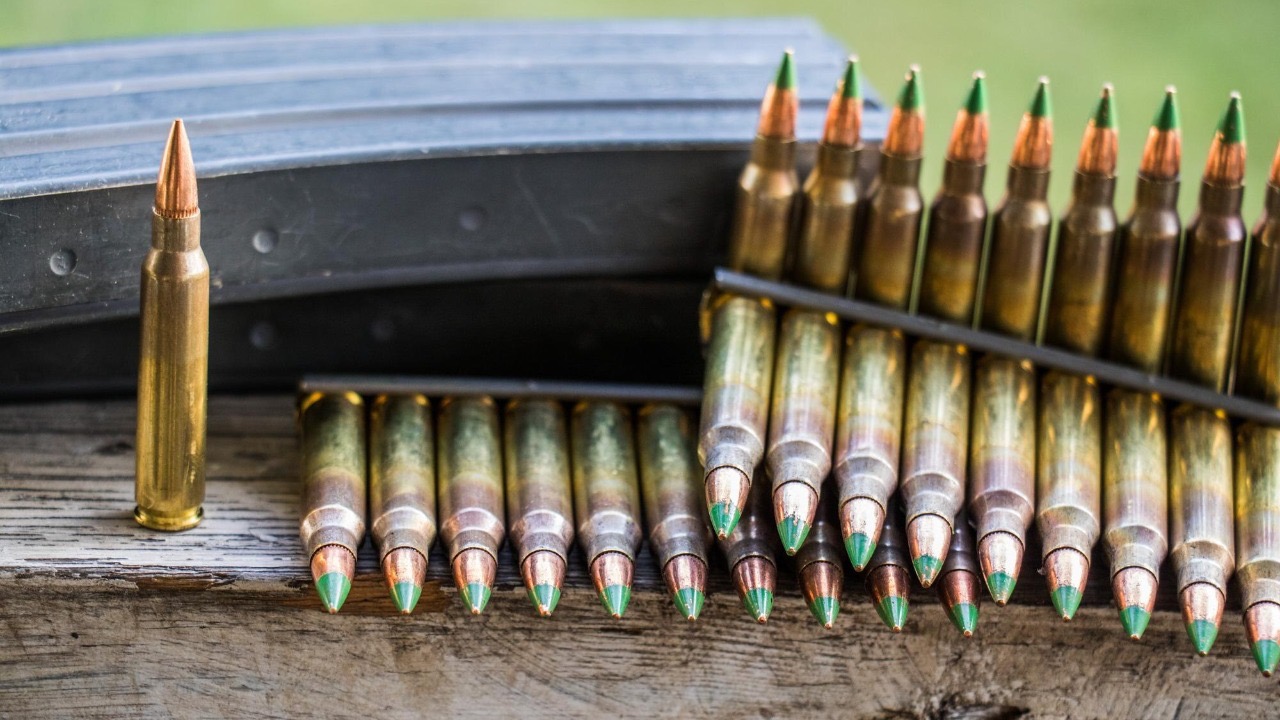
Green tip ammo labeled armor-piercing — why the reality is more complicated
Green tip 5.56 has picked up a reputation that far outweighs the little dab of paint on its nose. Talk to one group and they will call it “armor-piercing” like it is some kind of banned cop killer. Talk to another and they will tell you it is bulk training ammo that happens to punch a bit deeper in steel. The truth lives in the middle, in the fine print of federal law and the real-world performance of modern body armor.
I have carried, shot, and watched people argue about this cartridge for years, and the same confusion keeps coming back. To understand why green tip ammo sometimes gets labeled armor-piercing, you have to look at how the law defines that term, how M855 is actually built, and what it really does against soft vests and rifle plates. Once you line those pieces up, the “armor-piercing” label looks a lot more complicated than the politics around it.
What “armor-piercing” means in federal law
Most of the public debate treats “armor-piercing” as a loose description, but federal law treats it as a very specific category. The Bureau of Alcohol, Tobacco, Firearms and Explosives lays out the criteria in its guidance on armor piercing ammunition, tying the label to how a projectile is constructed and whether it can be used in a handgun. That definition focuses on the bullet or its core, not the entire cartridge, and it zeroes in on projectiles made entirely from hard metals like tungsten alloys, steel, iron, brass, bronze, beryllium copper, or depleted uranium.
Congress wrote that language into chapter 44 of the United States Code through The Act that amended the federal gun control statutes. The law describes armor piercing ammunition as “a projectile or projectile core which may be used in a handgun and which is constructed entirely” from those specified metals, or a full jacketed projectile larger than .22 caliber whose jacket makes up more than 25 percent of the total weight and is designed for use in a handgun. That is the legal yardstick the ATF uses when it decides whether a particular bullet crosses the line from ordinary rifle fodder into a restricted category.
How M855 green tip ammo is actually built
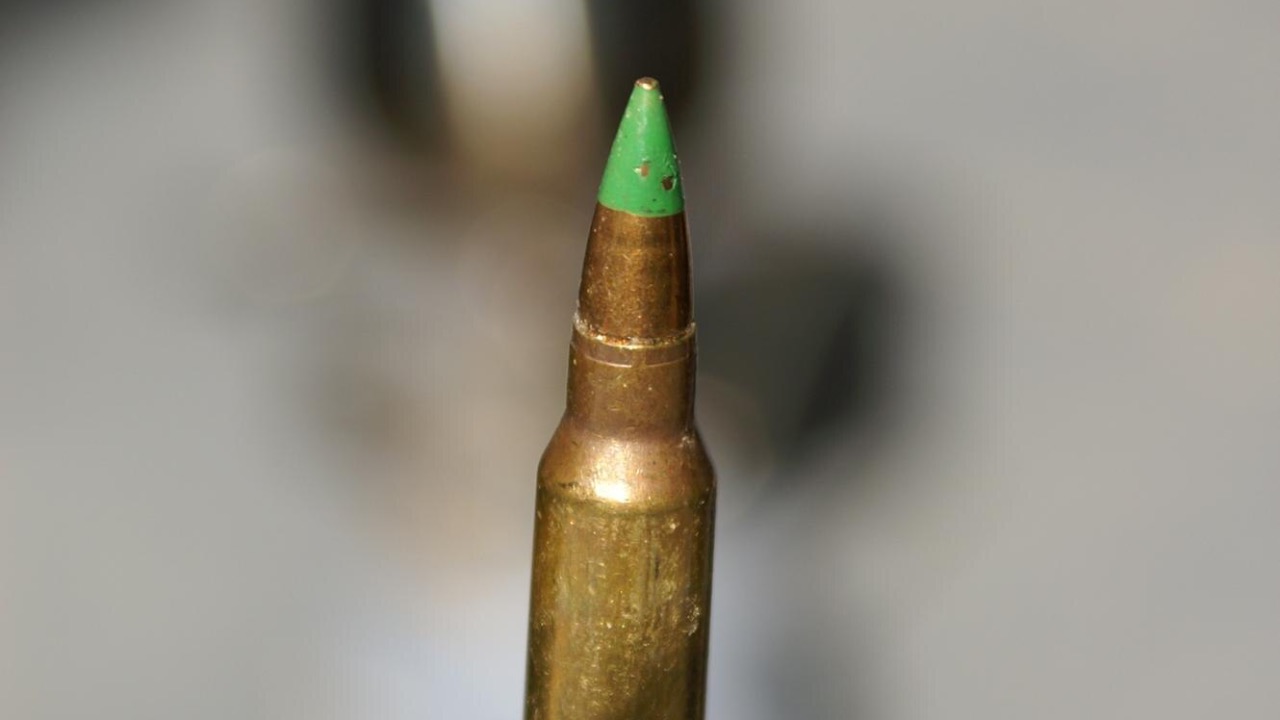
Green tip 5.56, usually marked as M855 or SS109, was designed to meet a NATO standard for a general purpose rifle round, not to be a dedicated armor buster. In the 1970s, NATO pushed for a STANAG (Standardization Agreement) on a 5.56 cartridge that could work across allied rifles, and the result was a 62 grain projectile with a steel penetrator in the nose and a lead slug behind it. That dual-core design is what separates M855 from the older 55 grain M193 ball, and it is also what fuels the confusion, because people see “steel” and jump straight to “armor-piercing.”
In reality, the M855 bullet is not a solid steel core at all, it is a small steel insert sitting in front of a primarily lead core, wrapped in a copper jacket. That mix of materials is exactly why federal guidance on projectile core construction points out that to qualify as armor piercing, the core has to be constructed entirely from the listed hard metals. Because the M855 core is primarily lead with only a partial steel penetrator, it does not meet that “constructed entirely” requirement, even though it will out-penetrate softer bullets on certain materials.
Why the ATF once moved against green tip
The legal story around green tip got messy when the ATF floated the idea of pulling its sporting exemption. In a notice that circulated widely among licensees, the agency cited the statutory Definition of armor piercing ammunition and argued that, because AR style pistols could fire M855, the projectile might fall under the handgun clause. That proposal triggered a wave of concern that common AR-15 ammo was about to be treated like contraband, even though the bullet’s construction had not changed.
Critics pointed back to the same legal language the ATF was quoting and noted that the M855 core is not constructed entirely of steel, which is why earlier guidance had treated it as exempted for sporting purposes. One detailed breakdown of the proposal highlighted how the agency was trying to reconcile the handgun-use clause with the long standing understanding that M855 was a rifle round used heavily for training and competition. Another analysis of the same notice pointed out that the ATF’s own document, which some collectors received through a Curio and Relic Federal Firearms License email, ran hundreds of pages as the agency tried to map out how the statutory language applied to real world cartridges.
Why M855 is not classified as armor-piercing under federal law
When you strip away the politics, the key point is straightforward: under federal law, M855 green tip is not treated as armor piercing ammunition. Legal analyses of federal NOT charges explain that this is why M855 “green tip” 5.56mm ammunition is not considered armor-piercing, despite the fact it has a steel component in the nose. The core is primarily lead, the steel insert is only part of the projectile, and the round has a long record of being used for sporting purposes like target shooting and competition.
Technical writers who have cut open these bullets for training aids make the same point in plainer language. One instructor marked a green Tip as “AP Tip” for a class and then walked students through why that label was misleading, showing the small steel penetrator sitting ahead of the lead slug. A follow up explanation dug into the statutory language and emphasized that the classification as What the law calls “armor piercing” is for bullets only, not the entire cartridge, and that certain rifle projectiles are exempted from AP status when they are primarily used for sporting purposes. That is the legal backdrop that keeps M855 on the shelf in most gun shops instead of behind the counter with restricted items.
What green tip actually does to armor and steel
On the range, green tip behaves like what it is: a mid weight 5.56 round with a harder nose that tends to bite deeper into steel and other hard barriers than plain lead core ball. Shooters who test it against AR500 plates and mild steel gongs see that difference quickly, which is why some armor makers spell out that M855 is not in the same league as dedicated armor-piercing rounds. One breakdown of body armor protection levels notes that Advanced Rifle Protection at Level III+ is designed to handle common rifle threats, and it is important to note that M855 rounds are NOT the same power as armor-piercing rounds, even though they can be more challenging for some plates than softer ball.
That nuance matters when you look at how plates are marketed. A separate explanation of rifle protection levels points out that Level III plates are tested against 7.62 NATO ball, not against every flavor of 5.56 on the market, and that is why some manufacturers created a Level III+ category to signal better performance against faster, lighter rounds like M855. In other words, green tip can be harder on certain armor than older ball ammo, but that does not magically turn it into the kind of hardened core AP that the law is aimed at.
Why many shooting ranges still say no to green tip
Even though the law does not treat M855 as armor piercing, many indoor and outdoor ranges ban it for a much more practical reason: it tears up their equipment. Range owners invest heavily in steel backstops, target hangers, and bullet traps, and a steady diet of steel penetrator ammo chews through that hardware faster than plain lead. One range-focused breakdown of Shooting Ranges explains that gun ranges are made for bullets that deform and splatter on impact, and that harder projectiles can cause excessive pitting, unpredictable ricochets, and expensive damage to backdrops.
Writers who talk to range operators hear the same story. One overview of why Green Tips are often banned notes that they are relatively inexpensive and work well against thick clothing, but that steel penetrator element can start to crater steel targets and even spark when it hits rocks or metal. Another explanation aimed at casual shooters points out that some facilities simply post “no green tip” on the wall because they are tired of explaining the difference between M855 and true AP, and they would rather protect their gear than referee arguments about bullet construction. From their perspective, the problem is not the legal label, it is what those rounds do to their steel.
How green tip compares to true AP and soft-point loads
To really understand where M855 sits, it helps to compare it to both ends of the spectrum. On one side you have true AP rounds built with cores made entirely of hardened steel or tungsten, designed from the ground up to punch through armor and often restricted under federal law. On the other side you have soft-point or hollow-point loads built to expand rapidly in tissue and dump energy quickly, which tend to perform poorly against hard barriers but very well in hunting or defensive roles. Green tip sits in the middle, a general purpose ball round with a modest penetrator that gives it better performance on helmets and light cover than plain lead, but without the construction that would qualify it as armor piercing under the statute.
Ammo guides aimed at newer AR-15 owners often spell this out in practical terms. One overview of Green Tip Ammo explains that if you own an AR-15 rifle, you have likely heard the term green tip ammo before, and that this type of 5.56x45mm round is cheap and easy to find, with a steel penetrator that helps it hold together through light barriers. A more detailed breakdown of M855 performance notes that it will often zip through thin steel or car doors where softer bullets might deform, but that does not mean it behaves like the hardened AP rounds that armor makers and lawmakers worry about most.
Why the “armor-piercing” label sticks in public debate
So if the law and the construction are clear, why does the “armor-piercing” tag keep clinging to green tip in headlines and arguments? Part of it is the way the ATF’s past proposals were framed. When the agency circulated its notice about potentially reclassifying M855, some readers saw only the phrase “armor piercing capability” and not the fine print about exemptions and handgun use. That early messaging, which some gun owners first encountered through ATF emails and long technical documents, helped cement the idea that green tip was on the verge of being treated like contraband AP, even though the final outcome did not go that far.
Another factor is the natural tendency to conflate performance on steel with legal status. When shooters see M855 punching cleaner holes in mild steel than M193, they reach for the word “armor-piercing” as shorthand, even if they know it is not a legal term in that context. Commentaries that walk through the ATF’s Ammunition guidance try to push back on that habit by reminding readers that the statute is aimed at handgun-usable projectiles with cores made entirely of hard metals, not every rifle round that happens to be tough on steel gongs. But once a label like that takes hold in public debate, it tends to stick, especially when it lines up with dramatic mental images of bullets punching through vests.
What all this means for everyday shooters
Where you will feel the difference most is at the range and in local rules. Many facilities will not let you shoot green tip at steel, and some ban it entirely, because of what those steel penetrators can do to backstops and the risk that a hot fragment or element could start a wildfire on dry ground. Other ranges allow it on paper with proper backstops but still draw a hard line at steel targets. If you understand the legal definition, the bullet construction, and the real-world performance, you can navigate those rules without getting caught up in the “armor-piercing” label that keeps getting thrown around.

Asher was raised in the woods and on the water, and it shows. He’s logged more hours behind a rifle and under a heavy pack than most men twice his age.