New satellite photos reveal Russian military activity near Finland
New commercial satellite photos are pulling back the curtain on a quiet but consequential shift along NATO’s newest frontier. High-resolution imagery shows Russia rebuilding Soviet-era facilities and expanding fresh infrastructure close to Finland, turning what was once a sparsely manned border into a more heavily militarized zone. The pattern of construction, deployments, and logistics hubs points to a long-term posture change that Helsinki and its allies can no longer treat as background noise.
The new visuals do more than confirm activity on the ground. They map out how Moscow is retooling its northern flank in response to Finland’s NATO membership, from revived garrisons in Karelia to upgraded airfields and fortified positions across the Arctic corridor. Taken together, the images suggest a deliberate effort to restore a layered military presence that can project power toward the Baltic Sea, the High North, and the alliance’s northeastern edge.
From quiet frontier to contested flank
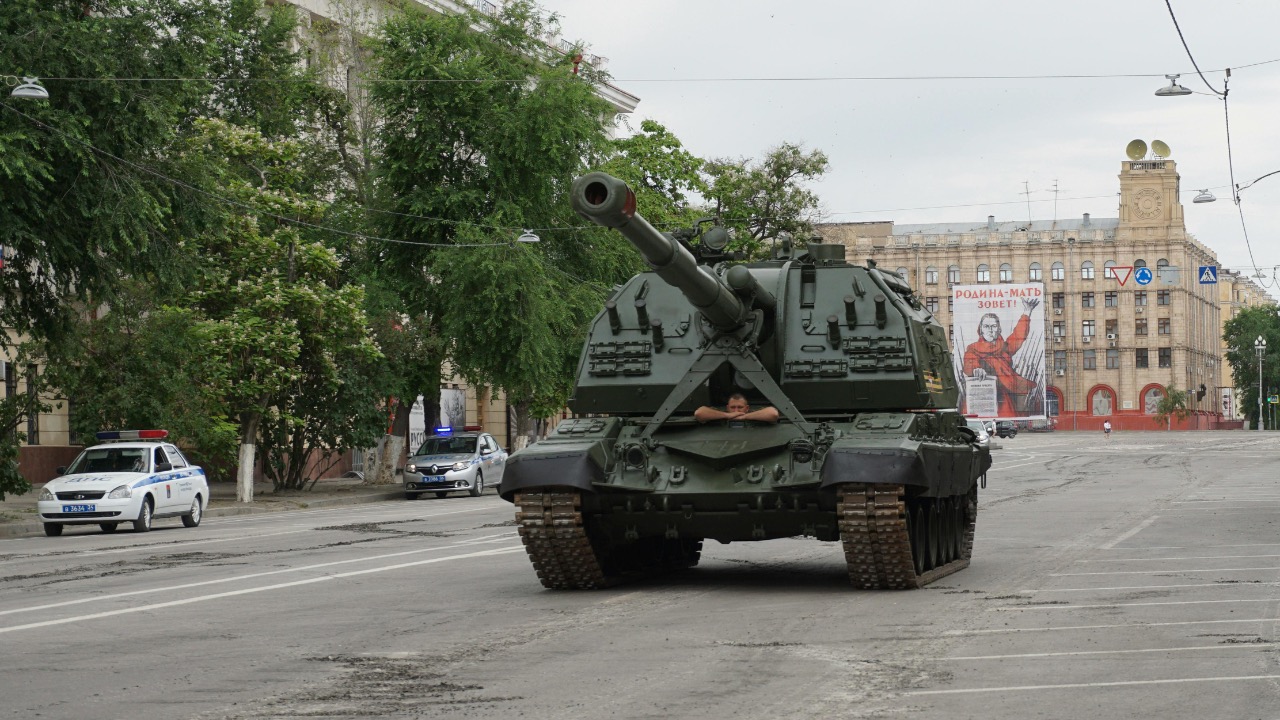
For decades after the Cold War, the long land boundary between Finland and Russia was treated as one of Europe’s more predictable borders, even as Moscow fought wars elsewhere. That assumption has eroded rapidly since Finland joined NATO in 2023, turning the region into a strategic hinge between the Baltic and Arctic theaters. The latest satellite imagery shows that Russia is no longer content with a light footprint here, instead building up infrastructure that can host larger formations, heavier equipment, and more persistent air activity.
Analysts who track open-source imagery describe a shift from scattered, underused posts to a more coherent network of bases and logistics nodes. Recent photos shared by defense-focused observers highlight renewed activity at a Russian military facility, with new accommodation blocks, vehicle parks, and support buildings visible where snow-covered emptiness dominated only a few seasons ago. One widely circulated update from a defense channel on social media notes that recent satellite imagery indicates renewed activity at a Russian military facility, underscoring how quickly the frontier is changing.
Petrozavodsk and the return of Soviet-era garrisons
The clearest example of this transformation is unfolding in Petrozavodsk, in Russia’s Republic of Karelia, where a Soviet-era garrison is being brought back to life. According to detailed reporting, The Russian military is actively restoring a former Soviet garrison in Petrozavodsk, in Russia’s Republic of Karelia, near the Finnish border. The site, long dormant after the collapse of the Soviet Union, is now being reconfigured to host the newly formed 44th corps, a formation that could eventually include mechanized units, artillery, and support elements tailored for operations in forested and lake-dotted terrain.
Separate satellite-based investigations reinforce that this is not a cosmetic refurbishment but a substantial build-out. Imagery reviewed by independent analysts shows new barracks, warehouses, and training grounds emerging on the footprint of the old base, along with upgraded roads that tie the garrison more tightly into the regional transport network. One assessment notes that the decision to reestablish the Petrozavodsk garrison follows Finland’s accession to NATO in 2023 and that the revived base is expected to include up to 15,000 personnel, a scale that would significantly alter the balance of forces along this stretch of the border.
A garrison 160 km from Finland and a new corps structure
Further south in Karelia, another Soviet-era complex is being overhauled into a modern outpost. New photographs obtained by Finnish media and analyzed by regional experts show that Russia begins renovating-era garrison 160 km from Finnish border, satellite images reveal. The facility, once a relic of Cold War planning, is being reshaped into what one analysis describes as a potential “outpost on the NATO border,” with cleared forest, new foundations, and perimeter works visible from orbit.
These renovations are closely tied to the emergence of the 44th corps as a dedicated structure for the northwestern theater. Reporting on the Petrozavodsk project notes that the restored garrison is intended to host this newly formed corps, while additional imagery suggests that nearby training areas and logistics hubs are being aligned to support it. A detailed breakdown of the project explains that Russia restores garrison near Finland to host newly formed 44th corps and that aircraft are also based there, indicating a combined-arms posture that blends ground forces with air support in a single regional command.
New construction across the border from Kandalaksha
The build-up is not confined to Karelia. On the shores of the White Sea, across from the Finnish town of Kandalaksha, satellite photos show a closed Russian military settlement being transformed into a dense “military town.” The location, identified in mapping tools as Kandalaksha, sits near a key rail and road junction that links Murmansk to the rest of Russia, giving any new garrison there outsized strategic value. Imagery obtained over the past winter shows extensive land clearing, new housing blocks, and support buildings rising in what was previously a low-density settlement.
Finnish journalists who reviewed the imagery report that new satellite images obtained by them show how Russiabegan extensive construction work last winter in a closed military town, across the border from Kandalaksha, and that similar activity has been observed at other sites over the past winter. A more granular look at the same area notes that new satellite images obtained by Finnish media show how Russia began extensive construction work last winter in a closed military town, across the border from Kandalaksha, and that new satellite images obtained by them show how Russia began extensive construction work last winter in a closed military town, across the border from Kandalaksha, and that similar activity has been observed at other sites over the past winter. The pattern suggests a coordinated effort to thicken Russia’s presence along key approach routes to the Arctic and the Barents Sea.
Airfields, bombers, and the Arctic dimension
Beyond ground garrisons, satellite imagery is also revealing a more muscular air posture in the region. Analysts who track Russian aviation note that several northern airfields have seen new construction, runway improvements, and the appearance of long-range aircraft. One investigation into the broader pattern of imagery points out that what started with a handful of satellite images of bases like Severomorsk-2 has grown into a map of expanded hangars, hardened shelters, and support facilities, showing that satellite images reveal Russian military activity that is not happening in a vacuum.
Separate reporting focused specifically on the Finnish border notes that Russia is expanding its military infrastructure near the border with Finland and that the buildup includes long-range Tu-22 bombers. This combination of upgraded airfields and strategic bombers gives Moscow more options to project power over the Baltic Sea and the North Atlantic, while also complicating air defense planning for Helsinki and its NATO partners. A broader assessment of fortifications in the region adds that satellite imagery confirms Russia’s capacity for expanded fortifications at the Finnish border while waging full-scale war in Ukraine, with one analysis describing this as Sky-high evidence of a sustained northern build-up.
Finland on alert and the view from Helsinki
For Finland, the new imagery is not an abstract data set but a daily operational concern. Officials in Helsinki have been explicit that they are watching the border closely, even as much of Russia’s combat power remains tied down in Ukraine. General Sami Nurmi, head of the strategic department of the Finnish Defense Forces, stated that the country monitors Russian movements and that Russia is ramping up military pressure on Finland’s border even while much of its army is engaged in the conflict. His comments underline a core Finnish assumption: that Moscow is rebuilding capacity in the north not just for show, but to preserve options for future crises.
Public messaging from Finland’s partners echoes that sense of vigilance. A widely shared social media post summarizing commercial imagery notes that Finland is on high alert as fresh satellite imagery reveals a dramatic Russian military buildup, with pictures from earth imaging company Planet Labs PBC showing increased accommodation, aircraft deployment, and infrastructure construction. Another post, amplifying similar imagery, stresses that Finland is on high alert as fresh satellite imagery reveals a dramatic Russian military buildup and again credits Planet Labs PBC for the underlying pictures, reinforcing how commercial satellites have become integral to public understanding of the security environment.
Commercial satellites and the new transparency
One striking feature of this story is how much of it is being pieced together from commercial imagery rather than classified government sources. Companies like Planet Labs PBC, Maxar, and others have put daily, high-resolution coverage of remote military sites into the hands of journalists, researchers, and even interested citizens. A defense-focused social media update, for example, notes that the pictures from earth imaging company Planet Labs PBC show increased accommodation, aircraft deployment, and infrastructure construction at a Russian military facility, giving outside observers a near real-time window into developments that would once have been hidden behind secrecy and distance.
Video explainers and open-source investigations are helping to translate those pixels into context. One widely viewed segment on a popular video platform walks through the new construction near Finland, overlaying before-and-after images and pointing out details like fresh vehicle tracks, new fuel storage, and expanded training grounds, with the analysis anchored in satellite imagery that anyone can pause and scrutinize. This democratization of overhead surveillance has two effects: it makes it harder for states to quietly reshape their military posture, and it allows smaller countries like Finland to back up their diplomatic messaging with visuals that allies and domestic audiences can see for themselves.
Patterns of fortification along the Finnish frontier
When I step back from the individual sites, what stands out is the pattern. Across Karelia, the Kola Peninsula, and the approaches to the Barents Sea, satellite imagery shows a mix of revived Soviet-era bases and entirely new construction, all oriented toward the Finnish border and the broader NATO frontier. One comprehensive assessment of the region notes that Russia is expanding military presence near Finnish border, satellite imagery reveals, and that the projects range from new barracks and depots to hardened positions that could support artillery and air defense systems. The cumulative effect is to turn what was once a relatively thin line of outposts into a more continuous belt of military infrastructure.
Another detailed investigation into fortifications in the north underscores that satellite imagery confirms Russia’s capacity for expanded fortifications at the Finnish border while waging full-scale war in Ukraine, describing this as Satellite imagery that documents trenches, revetments, and other defensive works. A separate analysis focused on the broader strategic picture notes that Russia is expanding its military infrastructure near the border with Finland and that the buildup includes long-range Tu-22 bombers, with Satellite Images Show as part of a wider effort to reinforce the northwestern flank. Together, these findings suggest that Moscow is investing in both offensive and defensive capabilities along this frontier, preparing for a range of contingencies rather than a single scenario.
Strategic messaging and the road ahead
Ultimately, the new satellite photos are as much about signaling as they are about steel and concrete. By reviving Soviet-era garrisons like Petrozavodsk, building a garrison 160 km from the Finnish border, and thickening its presence near Kandalaksha, Moscow is sending a message that it intends to contest NATO’s northern expansion and retain leverage over the Baltic and Arctic corridors. One detailed account of the Karelia projects notes that New photographs obtained by Finnish media show Russia beginning to renovate a Soviet-era garrison 160 km from the Finnish border, and that analysts see this as part of a broader effort to create an “outpost on the NATO border.” Another assessment of the Petrozavodsk revival emphasizes that the decision to reestablish the garrison follows Finland’s accession to NATOand that the base is expected to include up to 15,000 personnel, underscoring the political as well as military dimensions of the move.

Leo’s been tracking game and tuning gear since he could stand upright. He’s sharp, driven, and knows how to keep things running when conditions turn.