Trump plans to award the Medal of Honor to a pilot involved in a Cold War encounter
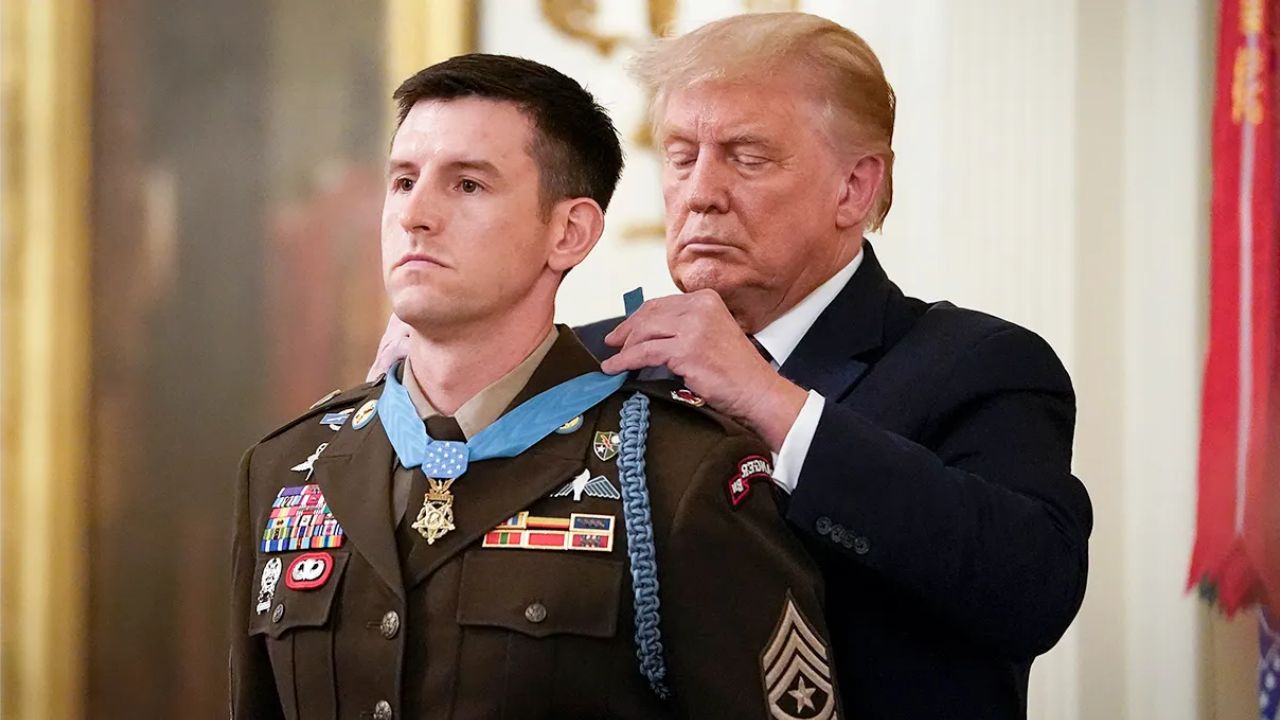
President Trump is preparing to bestow the nation’s highest military decoration on a retired Navy fighter pilot whose Cold War dogfight was buried in secrecy for decades. The planned Medal of Honor for Capt. E. Royce Williams, now approaching 101, will formally recognize a Korean War mission that pitted a lone American jet against a swarm of Soviet fighters at the height of nuclear tensions. For a veteran long instructed to stay silent, the call from the Oval Office marks a dramatic reversal of official memory.
The decision also highlights how the United States is still revisiting the shadowy edges of the Korean War and the early Cold War, where American and Soviet forces clashed directly even as both governments denied it. By elevating Williams’ story now, the White House is not only honoring one pilot’s skill and survival, it is also acknowledging a chapter of history that was once considered too explosive to admit.
The president’s call that changed a century-old pilot’s life
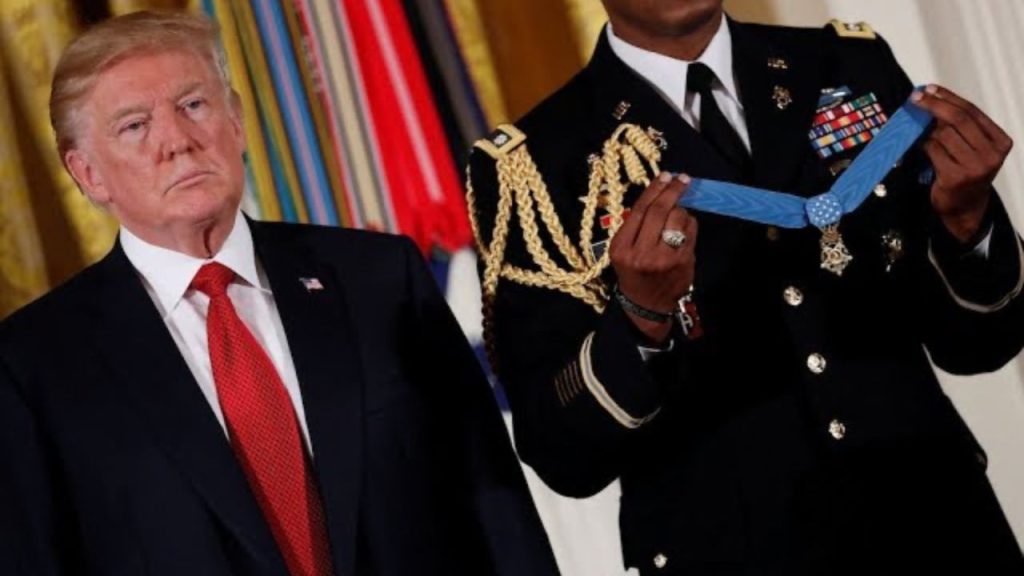
The turning point for Royce Williams came when Trump personally phoned the retired aviator to say he would receive the Medal of Honor. According to detailed accounts, Trump made the announcement on a Tuesday afternoon in a conversation with Williams, who will turn 101 this spring. For a man who spent much of his life unable to talk openly about his most famous mission, the call effectively lifted a burden that had lasted more than seventy years.
Trump’s outreach capped a long lobbying effort by supporters who argued that Williams’ actions in the Korean War met every standard for the Medal of Honor. The president’s decision, described in multiple accounts as a plan to award the decoration to a retired Navy captain whose heroism was long classified, reflects a broader push inside Washington to revisit overlooked acts of valor from earlier conflicts. For Williams, it means the story he once could not share will now be told from the East Room podium.
The secret dogfight over the Sea of Japan
At the heart of the award is a single mission in November 1952, when Williams launched from an aircraft carrier into foul weather and found himself alone against a formation of Soviet MiG-15s. In what later analyses have described as one of the longest dogfights in Navy history, he engaged seven enemy fighters, maneuvering his F9F Panther at the edge of its performance envelope. By the time he limped back to the carrier, his jet was riddled with holes and four Soviet aircraft had been shot down.
Officially, that encounter did not exist. The presence of Soviet pilots in the Korean War was a politically explosive secret, and Washington was determined to avoid a direct confrontation narrative with Moscow. As later reporting on the SovietMiGs has made clear, Williams’ victory came at a moment when any public admission of such a clash could have escalated into a broader crisis. The result was that his extraordinary aerial battle was buried in classified files, even as his damaged aircraft spoke volumes to those who saw it on deck.
“In the moment I was a fighter pilot doing my job”
Williams has consistently framed his actions that day in modest terms, describing himself as a professional aviator responding to a threat rather than a lone hero. In a past interview, he recalled thinking simply about survival and mission success, saying, “In the moment I was a fighter pilot doing my job,” a reflection later cited in coverage that linked his comments to an earlier conversation with Task and Purpose. That understated tone has only strengthened the case of those who see him as a quintessential quiet professional.
Supporters argue that the scale of the odds he faced goes far beyond “just doing a job.” Congressional advocates have pointed to the fact that he shot down four enemy jets and survived a hit from a 37-millimeter round that tore into his fuselage, where a shift of only inches could have killed him. For them, his reluctance to claim the spotlight is precisely what makes the Medal of Honor fitting, a formal acknowledgment that some of the most consequential acts of courage are carried out by people who never expected to be celebrated.
Decades of enforced silence about Soviet pilots
What sets Williams’ story apart from many other Korean War narratives is how aggressively it was suppressed. After the mission, he was ordered not to discuss the dogfight, a directive rooted in the political sensitivity of admitting that American and Soviet pilots had clashed directly. For years, even fellow veterans knew only fragments of what had happened, and official records were either classified or incomplete.
Only much later did fuller documentation emerge, allowing historians and advocates to reconstruct the engagement and press for recognition. Detailed reconstructions of the mission, including accounts of how the Navy pilot shot down four Soviet fighter jets during the Korean War, have since been used to argue that the original decision to keep quiet should not prevent overdue honors. The Medal of Honor announcement effectively reverses that Cold War calculus, signaling that the need for historical accuracy now outweighs the old fear of diplomatic fallout.
From Escondido to the East Room
Williams’ journey to this moment runs through Escondido, the Southern California community he has long called home. Local coverage has described him as an Escondido war hero and detailed how Trump told the Escondido veteran that he would receive the Medal of Honor for courage during the Korean War. For neighbors who have known him as a quiet retiree, the sudden national spotlight underscores how much of his story remained hidden in plain sight.
Local broadcasters have echoed that sense of belated recognition, noting that an Escondido Navy veteran and decorated fighter pilot will receive the Congressional Medal of his heroic actions. That hometown framing matters, because it roots a global Cold War story in a specific American community. When Williams eventually stands in the White House, he will carry with him not only the history of a classified dogfight but also the pride of a city that has waited decades to see his service fully acknowledged.
Congressional pressure and the “Secret Soldier of the Korean War”
The path to the Medal of Honor has also run through Capitol Hill, where Representative Darrell Issa has championed Williams’ case. In a statement celebrating new legislative language, Issa described the retired captain as the “Secret Soldier of best and bravest fighter pilot of all time,” language that underscores how strongly some lawmakers view the case. That kind of rhetoric is unusual even in a town accustomed to superlatives, and it reflects the sense that Williams’ story encapsulates both extraordinary skill and institutional neglect.
Issa’s office has also highlighted the tactical details that make the mission so remarkable, noting that Royce shot down four enemy aircraft and survived catastrophic damage that would have destroyed most jets. That advocacy helped secure congressional language paving the way for the award, and it framed the issue not just as a matter of individual recognition but as a test of whether the government would correct a Cold War era omission. In that sense, the Medal of Honor is as much a verdict on the historical record as it is on one man’s courage.
A 100-year-old pilot and a modern White House
The timing of the award is striking. Trump is set to honor a 100-year-old pilot whose defining combat mission took place before many current service members were born. That generational gap underscores how long it can take for the military bureaucracy and political leadership to revisit old files and correct past oversights. It also means that the ceremony will be as much about living memory as about archival research, with Williams himself able to speak to events that once existed only in classified reports.
The White House has signaled that this recognition fits within a broader pattern of honoring both older and more recent acts of valor. Coverage of the decision has noted that President Trump plans to award the Medal of Honor to Williams while also recognizing Army Staff Sgt. Michael Ollis, who died shielding a Polish soldier from a suicide bomber. That pairing links a Cold War dogfight with a post‑9/11 battlefield, suggesting a deliberate effort to show continuity in how the nation honors sacrifice across very different eras of conflict.
Why the Korean War and Soviet role still matter
Williams’ story is also a reminder that the Korean War remains, in many ways, unfinished business for American memory. Official narratives long downplayed or ignored the direct role of Soviet pilots, even as American aircrews privately understood who they were facing in the skies. By formally honoring a mission that involved shooting down four Soviet fighter jets during the Korean War, the administration is implicitly acknowledging that hidden dimension of the conflict.
For historians and veterans alike, that matters because it fills in a missing piece of how the early Cold War actually unfolded. Detailed reporting on how Williams was told to keep quiet “After the” mission and how the engagement was later reconstructed from After the action records shows how secrecy shaped public understanding. The Medal of Honor, in this context, is not just a decoration pinned to a uniform, it is a public statement that the United States is prepared to acknowledge the full complexity of its past confrontations with Moscow.
Medal of Honor traditions and a modern presidency
Trump’s decision to spotlight Williams fits into a long tradition of presidents using the Medal of Honor to send signals about what kinds of service the nation values. The award, introduced during the Civil War and reserved for the most conspicuous gallantry, has often been used to correct earlier oversights, including for minority service members whose heroism was ignored at the time. Recent coverage has emphasized that Trump plans to give the Medal of Honor to a 100-year-old pilot who secretly faced off with Soviet jets, a narrative that blends historical drama with contemporary politics.
The ceremony will unfold against the backdrop of a busy West Wing, where President Trump participates in events ranging from high‑profile bill signings to quiet meetings with veterans and families. A recent video of President Trump Participates in a Bill Signing in Feb illustrates how the administration uses ceremonial moments to project its priorities. In that context, placing Williams at the center of a Medal of Honor event will send a clear message about the value the president places on Cold War service and on correcting the historical record, even many decades after the fact.
From classified file to national story
The arc of Royce Williams’ life, from a classified dogfight over the Sea of Japan to a pending ceremony in Washington, captures how the United States is still digesting the legacy of the Cold War. For years, his mission existed mainly in the memories of a few shipmates and in restricted documents. Now, detailed narratives of how a Retired Navy Capt. Royce Williams will receive the Medal of Honor for shooting down four Soviet MiG-15 fighters have turned that once‑secret sortie into a widely discussed case study in aerial combat and political caution.
As the story has spread, it has drawn in not only military historians and lawmakers but also ordinary readers who encountered it through national coverage and local reports. Articles explaining how Trump tells Escondido war hero he will receive the Medal of Honor courage during the Korean War, or how an Escondido Navy veteran and decorated fighter pilot will receive the Congressional Medal of Honor for his heroic actions during the Korean War, have helped transform a once‑hidden file into a national story. In that sense, the medal Trump plans to place around Williams’ neck will not only honor a single pilot, it will also mark the moment when a long‑suppressed Cold War encounter finally entered the public record.

Leo’s been tracking game and tuning gear since he could stand upright. He’s sharp, driven, and knows how to keep things running when conditions turn.