Why century-old military designs refuse to disappear
From parade grounds to battlefields, some military designs look stubbornly familiar. Uniform cuts, shield shapes and even heavy machine guns echo choices made generations ago, surviving waves of technological change that transformed almost everything else about warfare. I want to unpack why these century‑old patterns endure, and how function, identity and culture keep pulling modern forces back to old blueprints.
At first glance it seems irrational that institutions obsessed with advantage would cling to antique gear and aesthetics. Yet when I trace the history, the persistence of these designs is less about nostalgia and more about systems that reward what already works, from proven weapons to uniforms that signal belonging. The result is a military landscape where innovation and tradition constantly negotiate, rather than one simply replacing the other.
The deep logic behind “old” uniforms
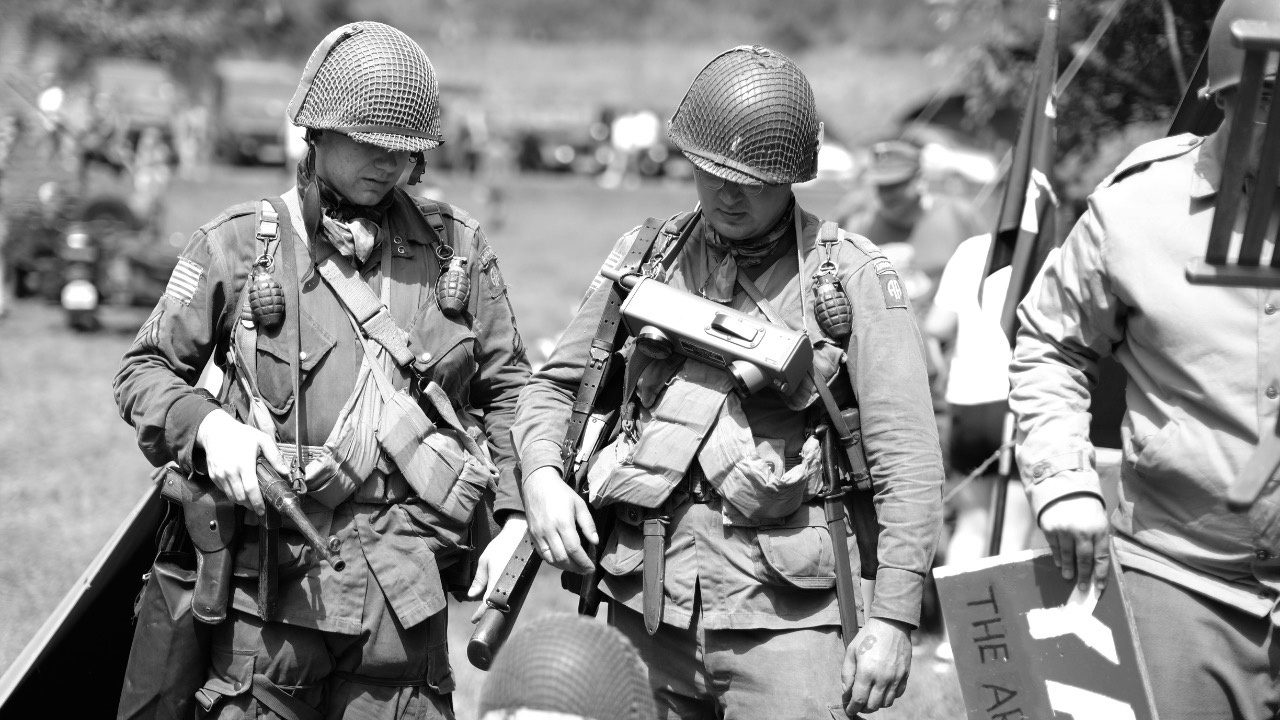
Uniforms began as a brutally practical solution: commanders needed a fast way to distinguish friend from foe in the chaos of smoke and dust. The logic behind Why Did Armies has not changed much, even if fabrics and patterns have. At their most basic level, Uniforms still identify who belongs on which side, and they still compress complex hierarchies into instantly legible symbols of rank, branch and role. That visual shorthand is so effective that even as camouflage and body armor evolve, the underlying grammar of epaulettes, badges and color blocks remains recognizably old.
There is also a social logic that keeps uniform designs anchored in the past. Modern forces describe their clothing as a fusion of identity, history and function, with Military uniforms explicitly framed as carriers of memory. Some designs date back centuries, and that continuity is treated as a virtue rather than a problem, a way to reassure troops and civilians that the institution itself is stable even as missions and technologies shift around it.
Why 19th‑century dress uniforms still dominate parades
On ceremonial days, many armies still dress like it is the age of muskets. The reason lies in how warfare looked when these outfits were codified. Through most of history, military technology favored large formations of massed troops, so bright colors and tall headgear helped commanders see their own lines and helped soldiers maintain formation. There was little point in designing subtle uniforms when the tactical goal was to be seen and to intimidate.
Once industrial warfare made such flamboyance suicidal on real battlefields, many states froze their dress uniforms at that 19th‑century moment. The result is that modern parades showcase tunics, braids and shakos that no longer serve battlefield needs but still serve political and cultural ones. They project continuity with the era when national armies were first professionalized, and they give citizens a familiar visual script for patriotism that would be harder to summon with drab camouflage and plate carriers.
From armor to cloth: why some gear vanished instead of fossilizing
Not every old design survives as ceremony. Full suits of medieval plate armor, for example, almost vanished from military ritual, even though they are visually striking. Historians point out that the rise of the professional national army made the uniform itself one of the key attributes of the new order, replacing the individualized armor of feudal elites. As centralized states asserted control, standardized coats and insignia became the preferred symbols of authority, pushing plate harnesses into museums rather than onto palace courtyards.
Yet even here, the underlying solutions did not disappear. Padded jackets and quilted coats that once sat under armor plates evolved into standalone protective garments. Accounts of Medieval combat fashion describe gambesons that combined versatility, functionality and aesthetics, and their basic idea, layered textile protection, still shapes modern body armor carriers and cold‑weather gear. The visual language changed, but the structural logic of distributing impact and balancing mobility with protection persisted.
Industrial warfare and the pivot to simplicity
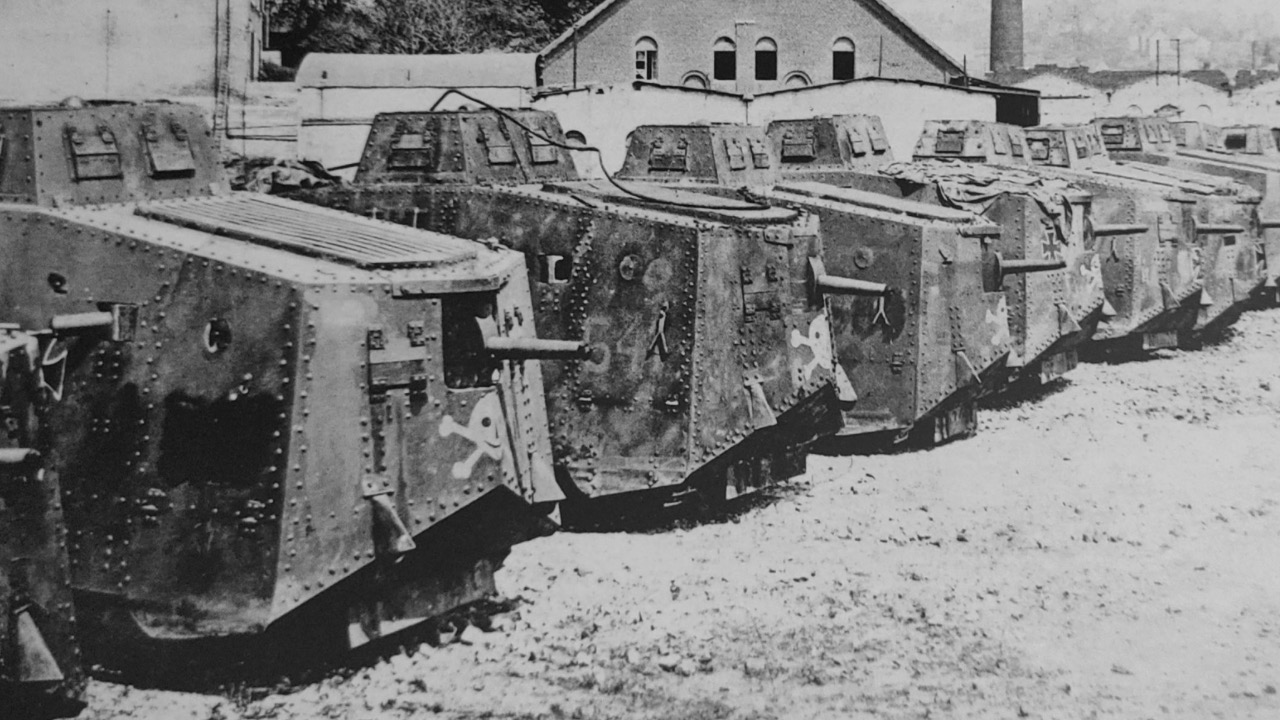
The First World War and its successors forced militaries to strip their field uniforms down to essentials. Analysts of ceremonial dress note that Armies facing machine guns and artillery could no longer afford ornate tailoring in the trenches. One historian summarizing this shift argues that Industrial warfare and mass mobilization meant uniforms got simpler and simpler, because states had to equip millions quickly and cheaply.
That logic still shapes modern combat dress. Commentators who compare past and present note that Cost, comfort, convenience and camouflage now dominate design choices, with efficiency prized over spectacle. Yet even as cuts become more utilitarian, the placement of pockets, the use of rank slides and the basic two‑piece structure echo earlier generations of field dress, showing how new constraints are layered onto old templates rather than replacing them outright.
Camouflage, visibility and the slow pace of change
One of the most striking examples of continuity is how long it took camouflage to become standard. Veterans like Bob Lidstone, who served 37 years in the Canadian Army as enlisted and commissioned Infantry, describe how earlier armies valued unit cohesion and command visibility more than concealment. The Author notes that with line‑of‑sight weapons and short engagement ranges, it was more important to keep formations intact than to hide individual soldiers, which helps explain why camouflage was not common before the modern era.
Even after camouflage patterns spread, they often sat atop older structural designs. Battle dress uniforms retained familiar pocket layouts and collar shapes, and many armies kept bright dress uniforms for peacetime display. The persistence of these older forms shows how tactical innovation, like new patterns, can be grafted onto a conservative base. It also underlines how institutional memory and training habits slow the adoption of radical changes, even when new science clearly improves survivability.
Ancient shields and modern riot lines
Weapons and protective gear follow similar patterns of persistence and adaptation. The Roman scutum, a broad, curved rectangle, became iconic for its role in legionary formations, yet by the late Empire it was gradually replaced. Analysts asking Why the Roman army abandoned their square shields point out that, By the later Empire, changing tactics and recruitment patterns made lighter, more flexible shields preferable. Technical discussions of why the scutum fell out of use note that There were several reasons for new shapes, including ease of vision and thrusting over the top.
Yet the basic rectangle survived in a different context. Modern riot police often carry shields that look uncannily like Hollywood versions of ancient gear. Commenters observing shield weights note that Except for materials, these weights are pretty standard for police units formed to put down riots, and that the stereotypical Hollywood rectangular shield is not far off. The persistence of that shape suggests that when humans stand in close‑order lines to control crowds, the physics of protection and leverage still favor solutions that Roman engineers would recognize.
Why “old” weapons keep firing
Some of the most enduring designs are not visible on parade at all, but sit on tripods and vehicle mounts. The What would become the classic heavy machine gun of the 20th century, the . 50 Browning Machine Gun, was ready to serve before mid‑century and remains in front‑line use. Observers asking why military technology seems stuck note that Why the American military is still using missiles and planes from the 70s and 80s, even with a massive budget, and the answer often comes back to reliability and sunk investment.
Once a weapon proves itself across conflicts, the incentive to replace it with something radically new shrinks. Logistics chains, training curricula and industrial tooling all grow around that design, making incremental upgrades more attractive than wholesale replacement. The porous boundary between military and civilian technology reinforces this conservatism. As one overview of Military technology notes, the line between sectors is porous, with inventions moving in both directions, so a robust gun or engine can live on in factories, farms and armies at the same time, further entrenching its design.
Tradition, morale and the politics of appearance
Uniforms and rituals also survive because they do psychological work inside the ranks. Studies of officer culture in Turkey describe how Mastering modern etiquette rules is treated as part of military discipline and as essential for maintaining a high level of morale. That expectation is literally worn on the body, in pressed uniforms and polished boots that signal self‑control. In France, senior figures describe the armed forces as a melting pot where everyone can find their place in uniform, and that shared dress is credited as a success that binds recruits from different backgrounds.
Specific regiments turn tradition into a living asset. In Britain, the Blues and Royals are singled out as the only soldiers allowed to salute without a headdress, a privilege framed as A living link to the past. That exception, like their distinctive uniforms, is said to reinforce values and build esprit de corps. When such customs are woven into identity and morale, altering the cut of a tunic or the rules of a salute becomes a political act, not a mere design tweak, which helps explain why change is so slow.
From battlefield to runway and back again
Military design does not only persist inside barracks. It spills into civilian life, then returns with new meanings. Histories of 1940s style note that Tailored silhouettes and utilitarian elements from military uniforms were incorporated into civilian fashion, from trench coats to structured shoulders. Later, designers re‑imported those civilianized looks back into barracks, blurring the line between service dress and streetwear. Analyses of how art shapes uniforms argue that as we reflect on the evolution of military clothing, it becomes clear that visual culture is used to influence, inspire or intimidate, not just to protect.
That feedback loop is now explicit in the fashion industry. One study of style trends notes that Its (Military) main objective is to protect the Country and its civilians, yet Due to its prestige, people adopt Military‑style dresses in their daily lives. When civilians normalize epaulettes, cargo pockets and olive drab, it becomes even harder for armed forces to abandon those aesthetics, because they now function as a shared cultural shorthand for toughness and order.

Asher was raised in the woods and on the water, and it shows. He’s logged more hours behind a rifle and under a heavy pack than most men twice his age.