The Cold War military project buried beneath Arctic ice
Buried deep in the Greenland ice sheet, a Cold War experiment once tried to turn the Arctic into a hidden launchpad for nuclear missiles. The project left behind a frozen city, a cache of radioactive and chemical waste, and a scientific archive that is now reshaping what I understand about climate risk. As the ice melts, that buried military project has become both a historical curiosity and a live environmental question for Greenland and the wider world.
At the center of this story is Camp Century, an Arctic United States military base carved into the ice about 205 k from the coast of Greenland, where soldiers and scientists lived in tunnels beneath the snow. Built during the Cold War as a showcase of engineering and as cover for a secret missile scheme, it has now reemerged in satellite images and radar scans as a ghostly grid beneath the surface, and as a test case for how long toxic legacies can really stay frozen in place.
The Cold War race that reached Greenland’s ice
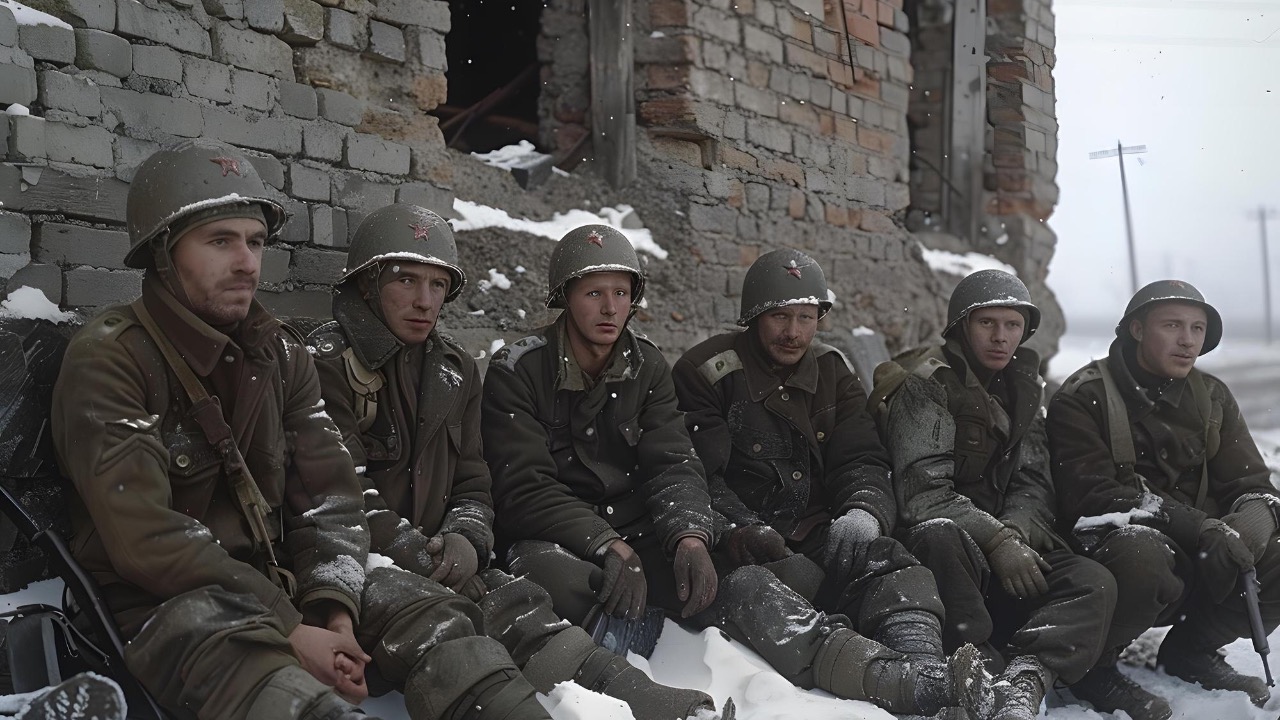
I see Camp Century as a product of a specific moment when superpower rivalry stretched into every corner of the globe, including the Arctic. During the Cold War, the United States looked at Greenland not just as a remote island but as a strategic bridge between North America and the Soviet Union, with flight paths and missile trajectories crossing directly over the ice. That logic drove the construction of a U.S. military base under Greenland ice, about 150 miles inland, which later became a key site for both nuclear planning and climate research, as described in accounts of a base built under Greenland ice.
In that context, the Pentagon’s interest in Greenland was not just about radar or early warning systems but about exploiting the ice itself as a shield. The idea that nuclear weapons could be hidden in tunnels beneath the snow fit the era’s appetite for ambitious engineering and secret infrastructure. When I trace the origins of the project, I see how strategic calculations, technological optimism, and a willingness to treat the Arctic as an empty stage all converged in this frozen experiment.
Project Iceworm: the hidden missile grid
Behind the public story of scientific exploration, the United States Army pursued a classified plan known as Project Iceworm. In this concept, engineers would use the ice sheet as a vast, shifting roof over a lattice of tunnels that could conceal and move nuclear missiles. Official records describe how the United States Army proposed to build a network of launch sites under the ice in Greenland, with the cover provided by Camp Century and other locations such as Thule and Camp Fistclench, all grouped under the secret program called Project Iceworm.
When I look at the historical reconstructions, I see that Iceworm was as much a political gamble as a technical one. The plan depended on Greenland’s ice remaining stable enough to host a permanent grid of tunnels, and it also relied on Denmark, which governs Greenland, remaining unaware of the true nuclear intent. Later reporting on a Cold War plan to hide nukes under ice in Greenland has explained how secrecy around Project Iceworm fueled distrust once the documents emerged, particularly because the project aimed to hide nuclear weapons in Greenland without fully informing Danish authorities, as highlighted in accounts of Project Iceworm.
Building a “city under the ice” at Camp Century
To test whether Iceworm could work, the Army built Camp Century as a full-scale prototype of life and logistics beneath the ice. Camp Century was laid out as a grid of trenches covered by snow, with prefabricated buildings lowered into the excavated spaces, creating a subterranean town that earned the nickname City Under the Ice. According to descriptions of the Arctic United States base, Camp Century sat 205 k inland in Greenland and functioned as an experimental hub where engineers and soldiers learned how the ice moved around their structures, as detailed in background on Camp Century.
Life inside that buried grid was surprisingly complete. Historical accounts describe how the base included dormitories, a kitchen and cafeteria, a hospital, a laundry, a communications center, a recreation hall, a chapel, and even a barbershop, which paints a picture of a self-contained community designed to function through the long Arctic winter, as summarized in descriptions of the camp layout. One scientist, Robert Weiss, later recalled spending just short of a year there in total, living in what he described as a nuclear-powered city in the ice for months at a time, which underscores how fully the base functioned as an underground town, as recounted in interviews with Robert Weiss.
Nuclear power and the Arctic engineering gamble
What set Camp Century apart from other remote bases was its reliance on nuclear power in one of the harshest environments on Earth. The facility was powered by a compact reactor that allowed the Army to run lights, heaters, workshops, and scientific equipment without constant fuel convoys across the ice. Analyses of America’s secret Cold War base beneath Greenland’s ice describe how the facility was powered by a small nuclear reactor and buried under a blanket of snow and ice, a combination that made the base both a technical showcase and a potential source of long term contamination, as outlined in reporting on America’s secret base.
From an engineering perspective, I see Camp Century as a stress test of how ice behaves when humans carve into it at scale. The tunnels deformed under the weight of accumulating snow, walls buckled, and the constant movement of the glacier made it increasingly difficult to keep the grid aligned. Accounts of When the Pentagon Dug Ice Tunnels in Greenland to Hide Nukes describe how Army engineers quickly learned that the ice was not a static foundation but a slow, relentless river that warped their carefully built tunnels, undermining the long term feasibility of hiding missiles in such a shifting medium, as detailed in narratives of When the Pentagon.
A scientific cover story that changed climate research
To mask the true purpose of Project Iceworm, the United States framed Camp Century as a grand scientific effort to understand the Greenland ice sheet. Hiding the ulterior motive of Project Iceworm, the United States announced a large scientific endeavor to drill into the ice, extracting a core that eventually reached 1.39 kilometers deep for the first time, as explained in accounts titled Hiding the ulterior motive of Project Iceworm. That core, and the ancient soil at its base, later became a crucial archive for reconstructing Earth’s climatic past.
Ironically, the scientific cover story ended up outlasting the military plan in terms of global impact. Reporting on ancient soil from the Camp Century core explains how Project Iceworm’s drilling program helped launch a new field of research on Earth’s climatic past, as scientists used the material to show that part of Greenland was once ice free and could melt again, as detailed in studies linked to Project Iceworm. Later coverage of a U.S. military base built under Greenland ice has emphasized how the camp’s climate records and ice cores played a pivotal role in climate science, showing how a covert Cold War base ended up informing modern debates about global warming, as described in accounts of a base built Cold War.
Abandonment, buried waste, and a toxic legacy
As the engineering problems mounted and the political risks grew, the United States quietly abandoned Camp Century and with it the operational ambitions of Project Iceworm. The nuclear reactor was removed, but much of the camp’s infrastructure, along with diesel fuel, sewage, and other contaminants, was simply left behind to be entombed in the snow. Analyses of the mysterious ice buried Cold War military base warn that within a century of continued warming, melting could begin to release waste stored at the camp, including sewage, diesel fuel, and persistent organic pollutants, raising questions about who is responsible for cleaning up that legacy, as outlined in assessments of the ice buried base.
From my perspective, the decision to leave so much material under the ice reflected a belief that the Arctic environment would remain frozen indefinitely. That assumption now looks fragile. Later reporting on Camp Century has stressed that the camp’s waste was never designed to be recovered, and that the infrastructure was abandoned under the expectation that snow accumulation would keep it locked away forever, a premise that modern climate projections have started to challenge, as summarized in historical analyses of Its secrets.
NASA’s rediscovery of the “City Under the Ice”
For decades, Camp Century remained mostly a Cold War footnote, until new radar technology brought its buried structures back into view. NASA scientist Chad Greene used UAVSAR radar imaging to detect the grid of tunnels and buildings beneath Greenland’s ice, identifying the remnants of Camp Century as a distinct pattern roughly 100 feet below the surface, as described in accounts of how Chad Greene mapped the site. NASA’s Earth Observatory later released a detailed radar image that showed structural elements of Camp Century, also known as the City Under the Ice, preserved under about 30 meters of snow and ice, as explained in technical notes on the New View of City Under the Ice.
Other coverage has described how NASA scientists found the remains of a U.S. military base buried 100 feet below the surface of the ice in Greenland, confirming that the camp’s tunnels and debris field are still intact under the ice sheet, as reported in accounts that note that NASA scientists have found the remains of Camp Century buried 100 feet down. Parallel reporting has echoed that NASA Found a Secret Military Base Buried 100 Feet Deep in Greenland’s Ice Shelf, stressing that the remains now sit frozen in place but may not stay down there if warming continues, as summarized in coverage that repeats the figure of 100 feet. NASA itself has framed the site as a Hidden Cold War City Buried Beneath Greenland Ice, highlighting how modern sensors can reveal a grid of human construction that had been invisible from the surface, as described in reports on how NASA Uncovers a Hidden Cold War City Buried Beneath Greenland Ice.
Greenland, Denmark, and the politics of buried nukes
The rediscovery of Camp Century has revived political debates as well as scientific ones, especially in Greenland and Denmark. Historical reporting on the Cold War plan to hide nukes in Greenland has explained how the revelation of Project Iceworm documents decades later fueled Greenland’s distrust of Trump and of U.S. security guarantees more broadly, because the project aimed to hide nuclear weapons in Greenland without fully informing Denmark, as highlighted in accounts of Cold War mistrust. That history shapes current discussions about who bears responsibility for any contamination that might emerge from the melting site.
From what I see in recent analyses, Greenland’s leaders are increasingly assertive about sovereignty and environmental protection, and Camp Century has become a symbol of how outside powers once treated the island as a convenient testing ground. Broader reflections on America’s Cold War presence in Greenland have pointed out that the combination of nuclear ambitions, secret treaties, and lingering waste has left a legacy that still influences how Greenland negotiates with larger states, as discussed in assessments of America and the Cold War in Greenland. For Denmark, the site is a reminder that decisions taken in the mid twentieth century can carry legal and diplomatic consequences far into the future, especially as climate change threatens to expose what was meant to stay hidden.

Leo’s been tracking game and tuning gear since he could stand upright. He’s sharp, driven, and knows how to keep things running when conditions turn.