Major Naval Disasters That Reshaped U.S. Maritime Safety Rules
Major American naval and merchant ship disasters have rarely remained isolated tragedies. Each catastrophe has exposed specific weaknesses in ship design, crew training, communications or oversight, and the public pressure that followed has repeatedly forced regulators and the Navy to rewrite the rules of life at sea. From overloaded river steamers to nuclear powered carriers, the deadliest incidents have become case studies that reshaped how the United States thinks about maritime risk and safety.
These events did more than claim lives. They triggered congressional inquiries, international conventions and internal Navy reforms that still govern ship construction, lifesaving equipment and emergency response. In large part, the story of U.S. maritime safety is the story of how disaster after disaster pushed officials to accept stronger rules they had previously resisted.
From Sultana to Steamboat Inspectors: The First U.S. Maritime Safety Regime
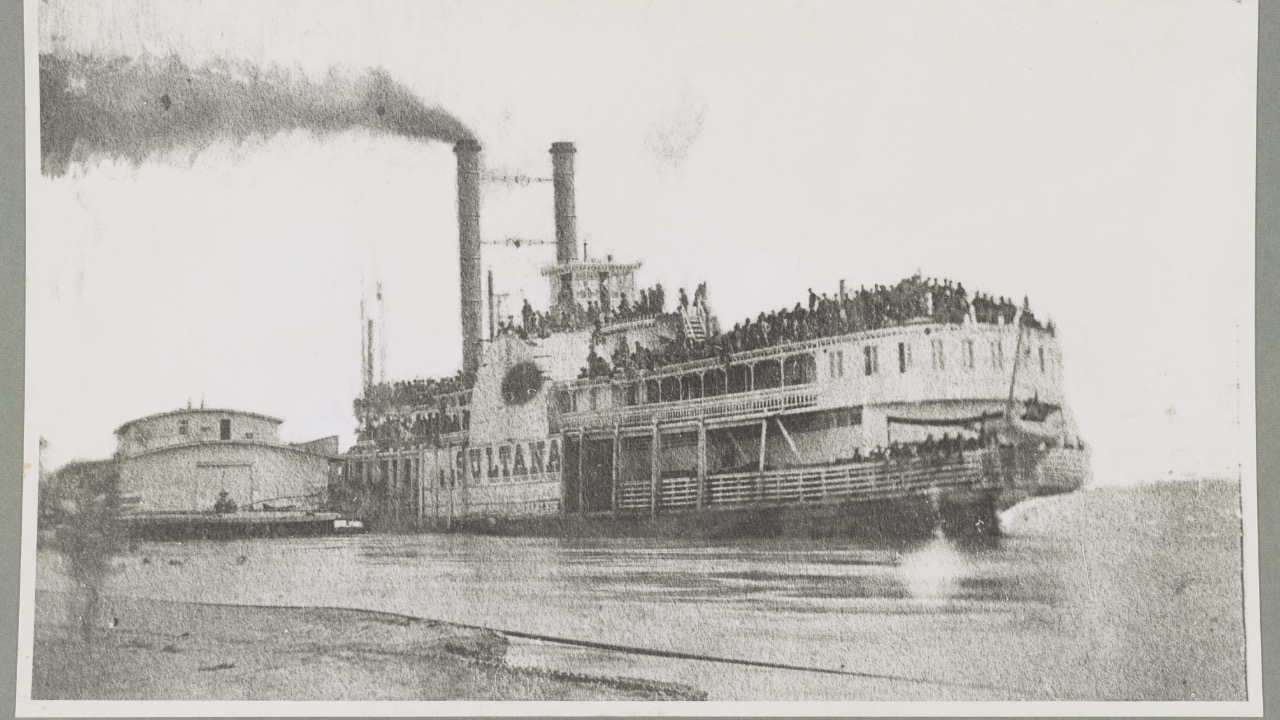
Long before steel warships crossed the Pacific, the United States learned hard lessons on its rivers. The side wheel Mississippi River Steamboat Sultana exploded on the Mississippi River and became, as one technical account puts it, Greatest Maritime Disaster in U.S. History. The boiler explosion of the Mississippi River Steamboat Sultana on April 27, 1865 killed more people than the Atlantic loss of the Titanic would decades later, and the sinking of the SS Sultana in 1865 still stands, as another account stresses, as the greatest maritime disaster in the history of the United States. Those deaths came on top of a long pattern of steamboat explosions that had already alarmed lawmakers.
Federal authorities had started to respond even before Sultana. As one naval history analysis notes, as early as 1839 the U. S. Steamboat Inspection Service was founded to inspect boilers and hulls, and that same source records the tragic loss of more than 1,500 lives in another shipwreck as a benchmark for how deadly unregulated travel could be. The Sultana disaster and similar incidents pushed inspectors to tighten enforcement, limit overloading and standardize safety valves, although enforcement remained uneven. Later writers have argued that the impact of the Sultana (steamboat Sultana) disaster cannot be understated, since it pushed officials toward new regulations in the maritime industry and highlighted how the U.S. government had paid steamboat companies to move soldiers home to the North at fixed rates, which encouraged operators to cram vessels far beyond safe capacity.
Titanic’s Lessons Come Home: SOLAS and U.S. Participation
When the British liner RMS Titanic struck ice and sank in the North Atlantic, the shockwaves were global, but they carried direct consequences for U.S. law. One detailed safety review points out that the sinking of the Titanic resulted in a number of changes in both U.S. and British practice, including more lifeboats, continuous radio watches and double bottoms for increased safety, all cataloged in an article on Changes after the disaster. Congressional oversight in Washington mirrored a British inquiry, and a portrait of those hearings notes that the Titanic inquiry led to new rules on lifeboat capacity, mandatory lifeboat drills and inspections, and eventually to international standards.
Out of that process came the International Convention for the Safety of Life at Sea, better known as SOLAS, which one maritime safety briefing links directly to RMS Titanic and describes as the birth of a treaty regime that still governs passenger ship design. That source explains that RMS Titanic (1912) and the birth of SOLAS are inseparable, and that the International Co agreement was first adopted in 1914 before later revisions. A separate account of the disaster recalls that by 7:30 p.m. the Titanic had received five warnings from nearby ships and that another vessel, the Californian, radioed at 10:55 p.m. to say it had stopped amid dense field ice, yet the failure to act became one of the most haunting missed opportunities in maritime history and led to 24 hour radio watches and stricter lifeboat regulations, reforms that shaped how U.S. flagged ships operated on the Atlantic routes.
“Throughout History”: How Catastrophe Drives Maritime Law
Modern safety experts often describe a pattern that stretches from Sultana through Titanic and into the jet age. A rescue operations study notes that, historically, maritime disasters that include a significant loss of life have been the incentive for changing both national and international maritime regulations, a pattern that aligns with the way Congress and foreign ministries reacted to each high casualty event. A separate industry focused explainer opens with the observation that, Throughout history, major accidents have been the catalyst for significant regulatory changes, and that the same applies to the maritime industry, where each high profile sinking has triggered new rules aimed at preventing similar tragedies in the future.
One summary of major accidents that led to new rules lists several emblematic cases, beginning with RMS Titanic (1912) and the birth of SOLAS and then moving through oil spills that reshaped tanker design and passenger ship fires that transformed evacuation standards, all grouped in a feature on know which maritime. Another analysis framed as Maritime Incidents That Changed International Laws Forever argues that the world’s oceans have been the stage for disasters that forced regulators to rethink everything from how passenger capacity is calculated to how tonnage is measured, and credits author Zahra Ahmed July with connecting those historical dots under a Know More banner. Together these sources show that U.S. maritime rules have rarely evolved in a vacuum; they have been shaped by a global conversation that often began with a single ship in distress.
USS Indianapolis: The Worst U.S. Navy Disaster at Sea
Few U.S. Navy stories illustrate the cost of delayed rescue and inadequate communication as starkly as USS Indianapolis. An official commemorative site records that 1,195 m sailed on the heavy cruiser and only 316 returned alive after a Japanese submarine torpedoed the ship On July 30, 1945, figures that are repeated in the line, 1,195 m sailed, 316 survived. The ship sank in just 12 minutes, leaving almost 900 m stranded in the water, according to a podcast retelling that describes how, for 4 days, those men endured horrific shark attacks, dehydration and exposure before help arrived.
Multiple accounts stress that the Navy did not immediately register the ship as missing. One remembrance, which asks readers to Remember the movie Jaws where the sinking of the USS Indianapolis is told and over 800 m left in the water too long as Navy channels failed them, captures how the disaster entered popular culture as a symbol of bureaucratic failure. A feature that looks back on the event under the line How the USS Indianapolis, the worst Navy disaster at sea, led to safety changes explains that, Eighty years ago on July 30, 1945, the heavy cruiser went down in what it calls the Navy’s worst disaster at sea, and that the scale of the loss forced the service to tighten movement reporting, improve distress signaling and refine search patterns, reforms that still influence how the Navy tracks ships today.
From Investigation to Reform: How Indianapolis Reshaped Navy Procedures
The Indianapolis story did not end with the rescue of 316 survivors. A later opinion piece recalls how The Aug edition of Parade Magazine labeled the sinking the greatest naval disaster in U.S. history and helped revive public interest in the case, while also revisiting the debate over command accountability for the loss of the USS Indianapolis. Another report on the crew notes that the rest of the crew drifted in the open ocean for four days, suffering from injuries, dehydration and shark attacks, until a patrol plane finally spotted them, and that only 316 crew members survived the ordeal, a stark reminder of how much time was lost before search operations began.
In the decades after the sinking, the Navy quietly rewrote its procedures. An internal history described in a feature on the Worst Navy Disaster at Sea Led to Safety Changes notes that Indianapolis at Sea had sailed without a dedicated escort and that its movement reports were not cross checked in real time, conditions that would not be repeated after the reforms. Those changes included more rigorous tracking of ship positions, automated alerts when vessels failed to arrive on schedule and new expectations that commanders would investigate any unexplained silence. Together with the cultural impact of books like Abandon Ship and the Jaws monologue that referenced the USS Indianapolis, these institutional changes helped ensure that no large U.S. warship could vanish in similar fashion without triggering an immediate response.
USS Forrestal: Fire at Sea and the Reinvention of Damage Control
If Indianapolis forced the Navy to rethink how it finds missing ships, the USS Forrestal fire forced it to rethink how it fights for survival on board. On a July day in 1967, a rocket accidentally fired from an F 4 Phantom on the flight deck of the carrier, struck the fuel tank of an A 4 Skyhawk and triggered a chain reaction of explosions, as one discussion of the incident recounts. That same discussion notes that 21 aircraft were lost, 40 damaged and 167 sailors killed, and adds that this accident and the one on the Enterprise CVN 65 in 69 led to basically an entire overhaul of the way the navy operated their carriers, to the point that every sailor is now required to have done at least basic Damage Control training.
A remembrance shared by a museum that once served as a first responder notes that The Forrestal fire remains one of the deadliest naval disasters in U.S. history and that it led to sweeping changes in naval safety procedures, firefighting training and the handling of live ordnance on aircraft carriers, a legacy summarized in a post about The Forrestal. A separate narrative on naval history explains that the disaster prompted an immediate and comprehensive review of Navy safety protocols, damage control procedures and emergency response, and that it led to a complete overhaul of firefighting and damage control training. Another commemoration adds that the impact of the fire continues to this day, with the Navy training all Sailors to be firefighters as a result of the Forrestal experience and honoring the 134 men who died. Together, these reforms reshaped not only carrier operations but also the expectations placed on every sailor who steps aboard a U.S. warship.
El Faro and Modern Merchant Shipping: NTSB, Lifeboats and Weather Calls
While Forrestal and Indianapolis reshaped Navy practice, more recent tragedies have driven change in the U.S. merchant fleet. The 2015 sinking of the cargo ship El Faro in a hurricane has become a defining case for modern regulators, and a law firm’s review of the Biggest Maritime Disasters in History highlights the El Faro Tragedy as a turning point. That review notes that the National Transportation Safety Board, identified in the text as The National Transportation Safety Board and abbreviated NTSB, concluded that the primary cause of the sinking was the captain’s decision to sail too close to a powerful storm, and that the case raised fresh questions about company oversight and weather routing, all within a discussion of Biggest Maritime Disasters in History.

Asher was raised in the woods and on the water, and it shows. He’s logged more hours behind a rifle and under a heavy pack than most men twice his age.