Iran Reportedly Nearing Deployment of Missiles Difficult to Intercept
Iran is reportedly moving closer to fielding a new class of supersonic anti ship missiles that military planners say would be far harder for existing defenses to intercept. The emerging deal with China, focused on the CM 302 cruise missile and related systems, signals a potential leap in Tehran’s ability to threaten warships across vital sea lanes.
The prospective acquisition comes as tensions remain high between Iran and the United States, and as regional navies prepare for faster, more agile weapons that compress reaction times to seconds. If completed and deployed, these missiles could significantly complicate any future confrontation at sea.
What Iran Is Trying To Buy
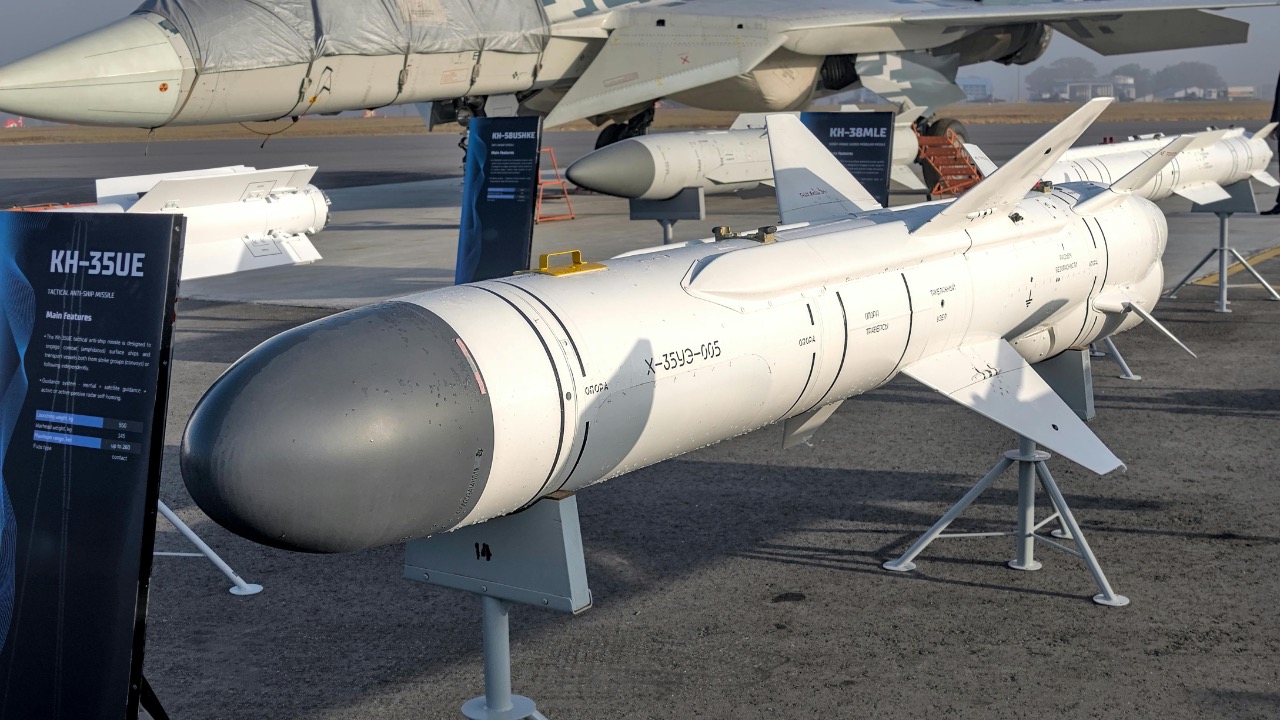
Iran is in advanced talks with China to acquire supersonic anti ship cruise missiles designed to strike naval targets at very high speed and at long range. Multiple reports describe negotiations for the CM 302 system, a missile whose terminal phase speed and sea skimming flight profile are intended to reduce the time a target has to detect and respond to an incoming strike. Analysts note that such weapons are explicitly built to exploit the limits of current ship based radar and interceptor missiles, and to saturate layered defenses with minimal warning.
The CM 302, referenced in several accounts as part of a larger package of Chinese hardware, is described as a significant upgrade over Iran’s current mix of subsonic anti ship weapons. One detailed assessment explains that the missile’s high speed in the final approach sharply cuts the reaction window for a vessel’s crew and onboard systems, making interception far more difficult and increasing the probability of a successful hit. That same assessment also highlights efforts by Chinese authorities to keep the underlying technology secret, a reminder that Iran is seeking access to capabilities that Beijing has guarded closely. The specific metric “302” appears repeatedly in descriptions of the missile, underlining that this particular model is at the center of the anticipated transfer.
How Supersonic Missiles Strain Defenses
Supersonic anti ship missiles challenge defenders in two main ways: speed and trajectory. A missile that travels several times the speed of sound, especially in its final seconds of flight, drastically compresses the decision making cycle on a ship. One technical review notes that the missile’s high speed in the terminal phase reduces the amount of time that the target vessel has to react and defend itself, which means radar operators, automated combat systems, and interceptor missiles must all work within a much shorter engagement window. If the incoming missile also flies low over the sea, radar detection range shrinks and the effective warning time shrinks with it.
Existing naval defenses are not helpless, but they are optimized against slower or more predictable threats. Long range interceptors, close in weapon systems, and electronic warfare tools can all contribute to a layered response, yet those layers are stressed when a missile arrives quickly and on a complex path. A separate analysis of Man Portable Air Defence Systems, often abbreviated as MANPADS, highlights how even relatively small, fast moving threats can generate exaggerated concern because they exploit similar detection and reaction limits. Supersonic sea skimming missiles scale that challenge up to the level of major warships, where a single successful hit can disable or sink a vessel that carries thousands of crew and aircraft worth billions of dollars.
Why Iran Wants These Missiles Now
Iran’s leadership appears to view this prospective purchase as part of a broader strategy to offset U.S. and allied naval power in the Gulf and beyond. A general overview of Iran shows a state that has long invested in asymmetric tools, from fast attack boats to coastal missiles, in order to threaten larger adversaries without matching them ship for ship. The addition of supersonic anti ship missiles would fit neatly into that pattern, giving Tehran a way to raise the cost of any attempt to project power near its shores or in key chokepoints such as the Strait of Hormuz.
Reporting on the negotiations indicates that Iranian officials see the current moment as an opportunity to activate existing military and security agreements with Beijing and other partners. One account quotes an Iranian source saying that “Iran has military and security agreements with its allies, and now is an appropriate time to make use of these agreements,” in reference to the talks with China. The same reporting notes that Iran is also in discussions to acquire Chinese surface to air missile systems, so called MANPADS, anti ballistic weapons, and anti satellite weapons, signaling that the CM 302 deal forms only one part of a wider effort to modernize air and missile defenses as well as offensive strike options.
China’s Role And The Deepening Defense Ties
The reported CM 302 transfer highlights how Iran and China are moving closer in the defense sphere after years of incremental cooperation. One detailed account explains that Iran and China, along with Russia, have strengthened defence ties in recent years, conducting joint naval exercises and issuing statements that criticize Western sanctions on Iran’s missile and nuclear programmes. The same report frames the missile talks as a logical extension of that trajectory, where Beijing provides advanced hardware and Tehran offers strategic access and political alignment.
Another analysis of the emerging deal describes it as a major arms agreement that would see Iran close to finalizing a purchase of CM 302 supersonic anti ship cruise missiles from China, with social media commentary amplifying the significance of the move. A widely shared post that referenced “BOOM” and flagged that Iran is close to finalizing a major arms agreement with China to acquire CM 302 missiles cited the negotiations as an example of how sanctions pressure has pushed Tehran to double down on partnerships with non Western suppliers. Together, these accounts suggest that the missile package is not an isolated transaction but part of a deeper strategic alignment that also includes technology sharing, training, and potentially joint development in the future.
Regional Tension And U.S. Calculations
The timing of the prospective missile deployment intersects with a tense regional environment in which U.S. carrier strike groups and Iranian forces operate in close proximity. One report notes that the USS Abraham Lincoln strike group is moving toward waters near Iran and that the U.S. military is expected to move air defenses, including Patriot Missile batteries and Terminal High Altitude Aerial Defense systems, into the region. These deployments are meant to protect U.S. personnel and infrastructure from existing Iranian missiles and drones, but the arrival of supersonic anti ship weapons would further complicate the risk calculus for any U.S. commander planning operations within range of Iran’s coast.
Domestic U.S. politics also intersect with the military picture. Another account explains that Trump said on Feb. 19 he was giving Iran 10 days to reach an agreement over its nuclear program or face potential military action, a statement that raised the specter of open conflict if diplomacy stalls. That same report describes how U.S. carriers are massing in the region at the same time that Iran nears a China anti ship supersonic missile deal, which heightens concern that any miscalculation at sea could escalate quickly. In such a scenario, even a small number of CM 302 missiles, combined with Iran’s existing arsenal, could force U.S. planners to keep high value ships farther from the coast or to invest heavily in additional defensive layers.

Leo’s been tracking game and tuning gear since he could stand upright. He’s sharp, driven, and knows how to keep things running when conditions turn.