Rare Animals People Don’t Realize Live in the U.S.
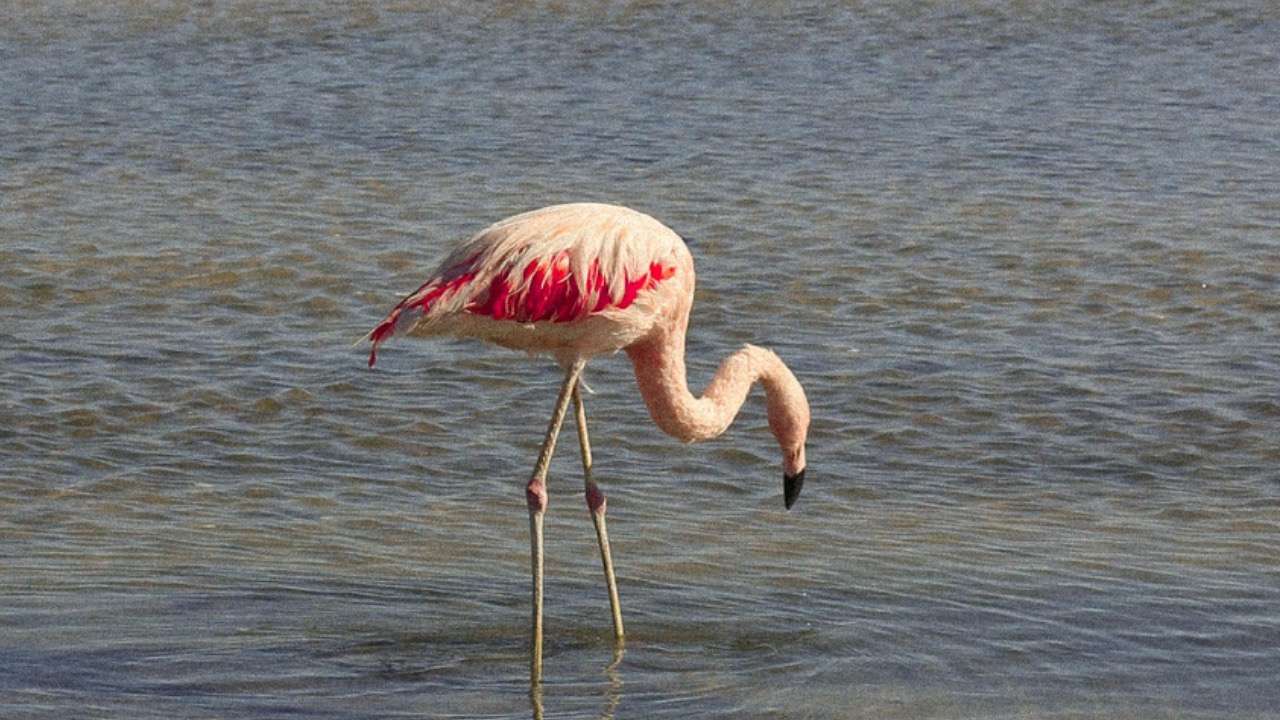
From desert canyons to remote islands, the United States shelters animals that sound like they belong in another hemisphere. Many travelers expect bison and bald eagles, yet have no idea that ocelots, coatimundis, and even flamingos also live within U.S. borders. These little known residents are not just curiosities; they are bellwethers for the health of some of the country’s most fragile ecosystems.
Looking closely at a handful of these species reveals how varied American wildlife really is and how much of it is hanging by a thread. Some are down to only a few dozen individuals in the wild, others cling to isolated pockets of habitat, and several are slowly rebounding after intensive conservation work. Together they challenge the idea that U.S. fauna is limited to backyard songbirds and familiar big game.
Iconic yet surprising: bald eagles, bison and flamingos
For many people, the bald eagle is a symbol on currency or a team logo rather than a real bird they might see over a local river. In reality, bald eagles are the largest raptors in North America, instantly recognizable by their bright white head and tail and their massive wingspan. Conservation groups describe how this species was chosen as a national emblem in 1782, standing for strength, courage, and freedom, yet its real life story has been more precarious than its patriotic image suggests. After pesticides and habitat loss drove numbers down, coordinated protections and a ban on DDT allowed populations to climb again, turning the eagle into a rare example of a high profile recovery.
The American bison has followed a similar arc from ubiquity to near extinction and partial comeback. Historical accounts describe enormous herds roaming the Great Plains, and modern reporting highlights how a New National Mammal Herd of American Bison now browses in safety in places like Yellowstone National Park. That federal recognition as the national mammal helped cement public awareness of bison as wild animals rather than just livestock, yet many people still do not realize that genuinely free ranging herds persist in parts of the West. Their survival depends on large, connected grasslands and on policies that balance ranching, tribal rights, and wildlife corridors.
Tropical ghosts in the Southwest: coatimundis, ocelots and ringtails
Along the canyons and scrublands of the Southwest, some of the most unexpected U.S. residents look like they walked out of a rainforest documentary. The white nosed coati, often called a Coatimundi, is a long snouted relative of raccoons and kinkajous that forages in bands on the ground and in trees. Wildlife writers describe several species of Coatimundis across the Americas, with the white nosed coati reaching into the southern United States where it picks through leaf litter and probes crevices with its flexible nose. A conservation blog on strange animals in the Americas notes that Coatimundis are among the more unusual carnivores to encounter in the wild, partly because their tropical appearance clashes with the stereotype of U.S. desert fauna.
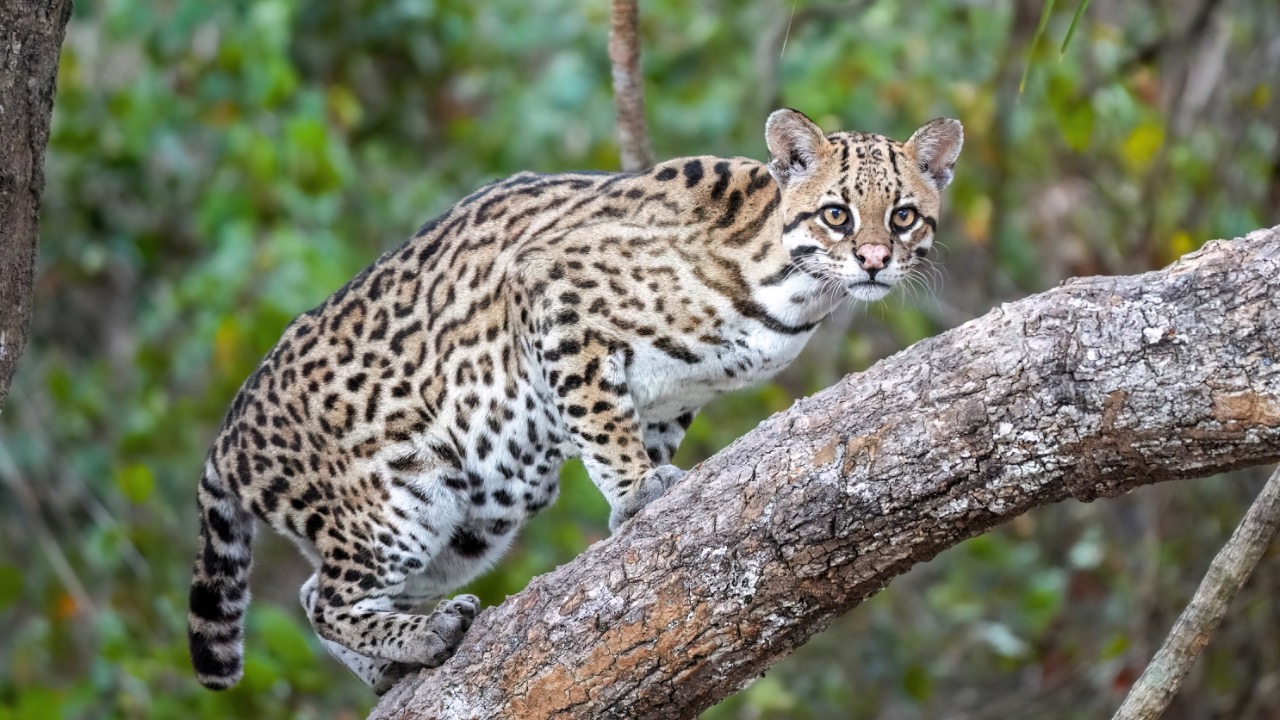
Sharing some of that border country is the ocelot, a spotted wild cat that looks more at home in a South American jungle than in Texas brush. Conservation groups describe ocelots as largely solitary, with individuals patrolling dense thornscrub and avoiding open spaces where they are vulnerable to vehicles and hunters. One national wildlife organization points out that these cats once ranged more widely but are now rarely seen in the wild, a pattern echoed by travel features that describe the ocelot as one of America’s rarest wildlife. The same borderlands also harbor ringtails, small nocturnal carnivores with oversized eyes and a dramatically banded tail. Profiles of Ringtails describe them as agile climbers that den in rock crevices and abandoned buildings, earning them nicknames as miner’s cats in historic mining districts.
Conservation groups stress that Ringtails should not be confused with unrelated ring tailed lemurs, which are now only found in Madagascar and, as one summary notes, are now only found in Mexico in the wild outside that island. A separate profile of Ringtail behavior in North America emphasizes their secretive habits, which help explain why so few residents of states like Arizona or Utah realize such an exotic looking animal lives nearby. Travel features on States Home to Unique Animal Populations From exotic seabirds off the coast to piglike creatures roaming the desert add that these border states are home to some pretty unique animal populations, reinforcing the idea that U.S. biodiversity stretches far beyond common backyard species.
Island oddities and ocean neighbors: foxes, monk seals and seabirds
Off the coast of California and deep in the Pacific, isolation has produced some of the rarest American mammals. On the Channel Islands, the island fox evolved from a mainland gray fox ancestor into a much smaller predator that now exists only on a handful of islands. Profiles of the Island Fox describe how each island population has its own subspecies, with conservation programs racing to protect them from disease, golden eagles, and habitat loss. A second overview of the Island Fox recovery effort notes that intensive captive breeding and vaccination campaigns have helped bring some populations back from the brink, turning them into a case study in how quickly island species can rebound when threats are removed.
Farther out in the Pacific, the Hawaiian monk seal hauls out on remote beaches that most Americans will never visit. Wildlife summaries describe the Hawaiian Monk Seal as one of the few tropical seal species, with a range centered on the Northwestern Hawaiian Islands. A separate overview of the Hawaiian Monk Seal emphasizes how this animal faces threats from entanglement, reduced prey, and human disturbance on beaches. A documentary project on these islands describes how, Under the surface, the NWHI is surrounded by pristine coral reefs that support sharks, turtles, and a staggering number of fish, while on land albatross, sooty terns and more than 18 species of seabirds inhabit the islands by the millions. That same account notes that Under the water, the NWHI is surrounded by some of the most intact marine ecosystems on Earth, which makes the survival of the monk seal a barometer for the health of an entire ocean region.
Desert venom and giant salamanders: Gila monsters and hellbenders
In the deserts of the Southwest, one of the strangest American reptiles moves with deliberate, almost sluggish steps. The Gila monster, Heloderma suspectum, is a thick bodied lizard covered in beadlike scales that stores fat in its tail and spends much of its life underground. Conservation profiles explain that The Gila monster is the largest living lizard in the US and the country’s only venomous lizard, a fact that often surprises even long time residents of Arizona and New Mexico. One detailed account of The Gila notes that it faces the illegal wildlife trade, habitat loss, and road traffic, as it is often struck by vehicles, which means that slow movement and a tendency to bask on warm pavement have become serious liabilities.
On the opposite end of the moisture spectrum, the eastern hellbender occupies cold, fast flowing rivers in the Appalachian region and parts of the Midwest. Herpetologists describe this amphibian as a giant among salamanders, with some individuals reaching 29 inches in length, a figure highlighted in a video that invites viewers to Discover 10 rare US animals, like the critically endangered red wolf (under 30 left) and the 29 inch hellbender salamander. Scientific summaries of the Eastern Hellbender describe how it hides under large rocks, feeding on crayfish and other invertebrates, and how it breathes largely through its wrinkled skin, which requires exceptionally clean, oxygen rich water. A second overview of the hellbender emphasizes that sedimentation, dams, and pollution have reduced its habitat, turning this strange amphibian into a living indicator of river health.

Leo’s been tracking game and tuning gear since he could stand upright. He’s sharp, driven, and knows how to keep things running when conditions turn.