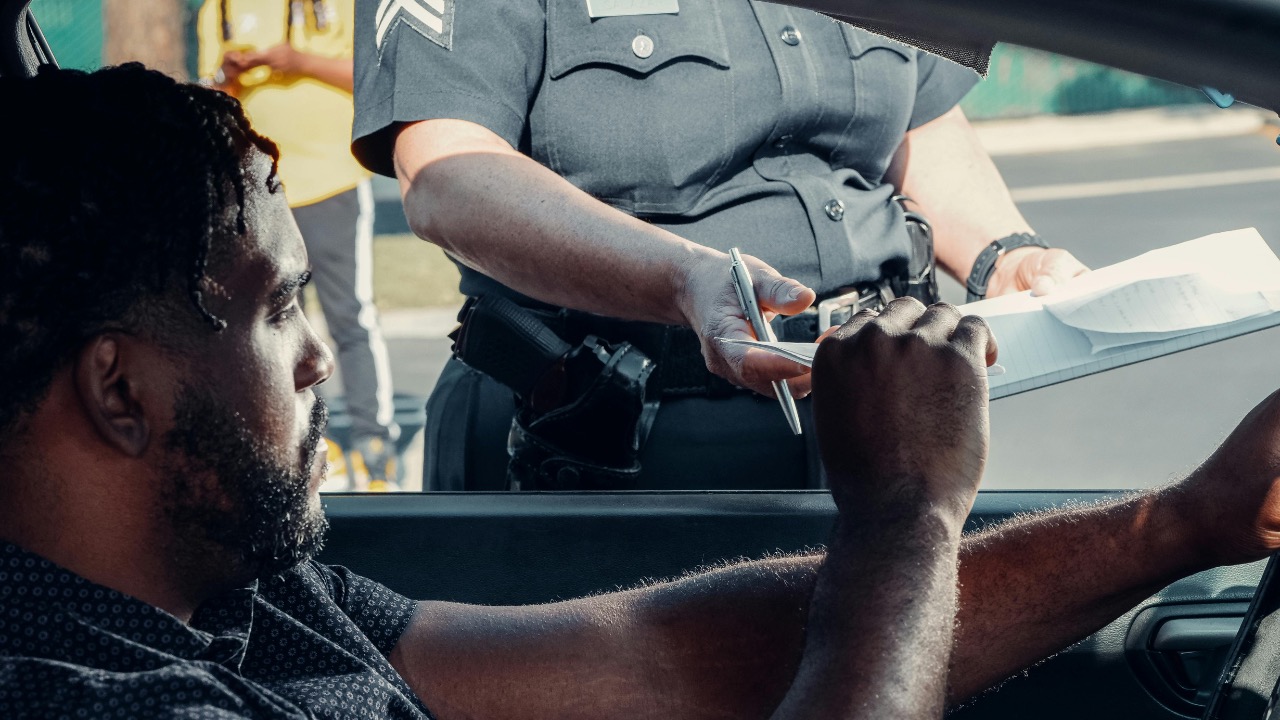
Officer told driver he was free to go — then returned with more questions moments later
When an officer hands back a driver’s license and says the stop is over, most motorists assume the encounter has ended. Many drivers then discover that the officer leans back into the window with “just a few more questions,” blurring the line between a lawful traffic stop and a new, supposedly voluntary conversation.
That moment, when a driver is told they are free to go but the officer keeps talking, can decide whether a search is legal, whether evidence is thrown out, and whether a person walks away or ends up in handcuffs. The law gives clear rights in that gap, but exercising them requires understanding what “free to go” really means on the roadside.
When a traffic stop actually ends

Courts have long treated a traffic stop as a limited seizure that must stay tied to the reason the car was pulled over. Legal analysis of Traffic stops must on the traffic violation, and the United States Supreme Court in a case cited as 575 U.S. 348 in Discovered materials held that officers cannot prolong a stop just to fish for other crimes. Once the mission of writing a ticket or issuing a warning is complete, the legal justification for detaining the driver usually ends, unless the officer has developed new reasonable suspicion.
Returning documents is a major signal that the stop is over, but it is not always the final word. Some courts have found that even after an officer hands back a driver’s license and registration, the encounter can remain a detention if the officer continues to question the driver in a way that makes a reasonable person feel they are not free to leave. Guidance that urges people to know your rights emphasizes that the key test is not what the officer privately thinks, but whether the driver is objectively free to go in that moment.
The power of asking “Am I free to go?”
Because the legal line between detention and voluntary conversation is so murky, civil rights groups and defense lawyers urge drivers to use clear words to draw it. One widely recommended approach is to calmly ask, “Am I free to go?” which forces the officer to clarify whether the stop has legally ended. Advocacy materials explain that asking this question out loud helps separate a required detention from a consensual interaction and can protect a driver’s position if a court later reviews the stop.
Legal commentary on Why Asking that question describes how a simple phrase can reset the dynamic of a police stop that feels overwhelming. National rights guides echo the same advice, telling people that if they are unsure, they should just ask if they are free to leave and listen carefully to the answer. If the officer says yes, the law generally treats anything that follows as voluntary, unless other coercive factors are present.
“Free to go” followed by more questions
The scenario in the headline, where an officer says a driver is free to go and then immediately returns with more questions, sits at the center of this legal tension. Once an officer has clearly told a motorist they are free to leave, any further questioning is supposed to be purely consensual, not backed by the threat of detention. Yet the same officer may still be standing at the window, armed, in uniform, and using an authoritative tone that makes walking away feel risky or even impossible.
Courts evaluating this pattern often look at subtle details: whether the officer stepped back from the car, whether the driver’s documents had been fully returned, and whether the officer used language that sounded like a request or a command. Training materials that explain how When Returning a Driver License and Registration Doesn can still leave a motorist feeling seized show how officers sometimes try to keep control of the encounter without technically extending the stop. The law expects drivers to recognize that once they are told they are free to go, they can decline to answer further questions, but in practice that choice often feels theoretical.
Silence, consent and the right to walk away
Even when an officer keeps talking, drivers do not lose their constitutional protections. Civil liberties guidance is explicit that a person has the right to remain silent and cannot be punished simply for refusing to answer questions, whether those questions come from a patrol officer, a detective or a federal agent. One national resource states plainly that a person confronted by law enforcement can say they choose to remain silent, and that they still retain that right even if they are asked to identify themselves in certain situations.
That same guidance, which explains that right to remain silent, stresses that silence alone does not authorize a search of a car or a phone. Separate know your rights materials for California drivers, including statements from Officer Cody Tapley, explain that the Fourth Amendment applies to everyone regardless of their citizenship status. If an officer asks for consent to search after saying a driver is free to go, the driver can simply say no, and that refusal cannot be used as evidence of wrongdoing.
Practical scripts for drivers on the roadside
Rights groups in California and across the country have tried to turn these legal principles into simple phrases that ordinary drivers can remember under stress. One widely circulated guide tells people to start by asking if they are being detained and then to follow up with “Am I free to go?” If the officer answers yes, the advice is to leave calmly and avoid arguing, since staying on the scene can invite more questions or a shift back into detention.
Regional organizations in Northern California go further, listing specific steps for people who are stopped on the street or pulled over. Their guidance urges drivers to ask, “Am I free to go?” and, if the answer is yes, to walk or drive away without escalating the encounter. If the officer says no, the same guide recommends asking, “Can you tell me why you are stopping me?” and then deciding whether to remain silent. The instruction to DO ask that key question is framed as a basic step that anyone can use, regardless of their background or familiarity with the law.

Leo’s been tracking game and tuning gear since he could stand upright. He’s sharp, driven, and knows how to keep things running when conditions turn.