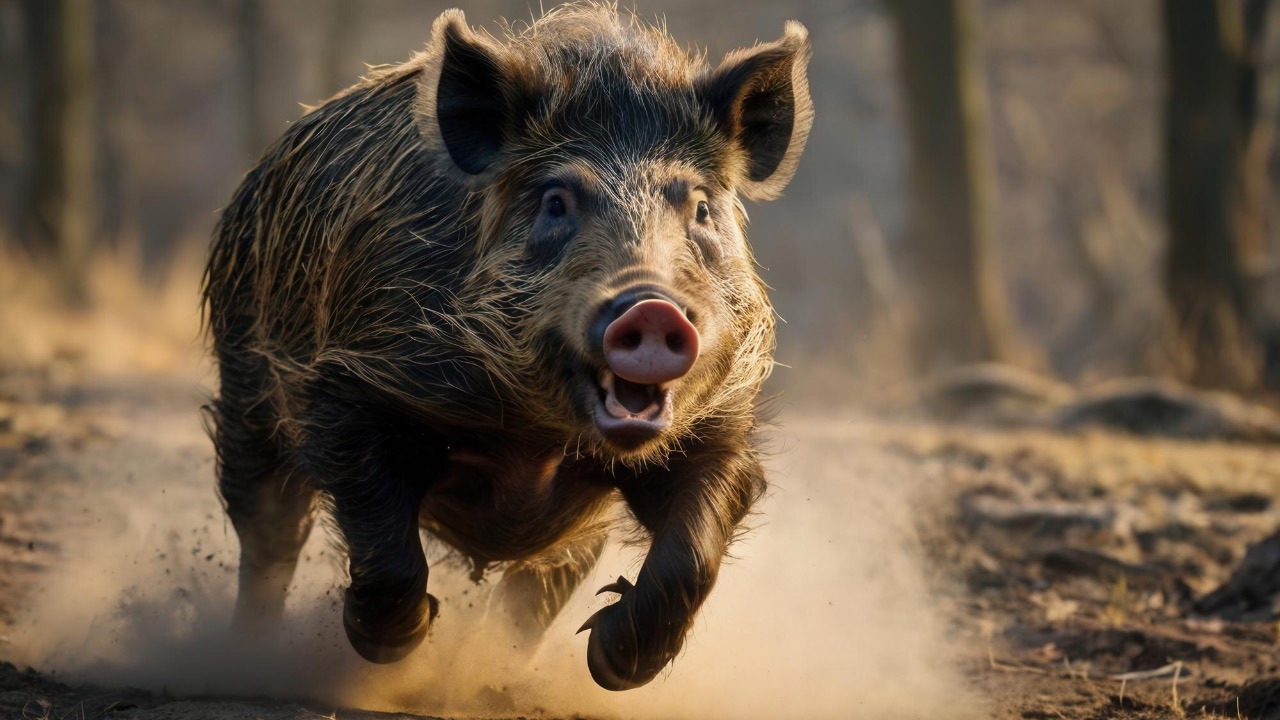
America’s feral hog problem keeps growing — and experts say it’s getting worse
Across much of the United States, feral hogs have shifted from a rural nuisance to a national liability. Their numbers are climbing, their range is expanding, and the damage they inflict on farms, ecosystems, and even suburban neighborhoods is outpacing the tools meant to contain them. Experts warn that without more aggressive, coordinated action, America’s wild pig problem is on track to become far more destructive in the years ahead.
What began as scattered pockets of escaped domestic pigs and imported wild boar has evolved into a fast-breeding, highly adaptable invasive population now entrenched in dozens of states. From Texas suburbs to Southern forests and Midwestern cornfields, the animals are chewing through crops, spreading disease, and reshaping landscapes faster than agencies and landowners can respond.
From a few escapees to a nationwide invasion
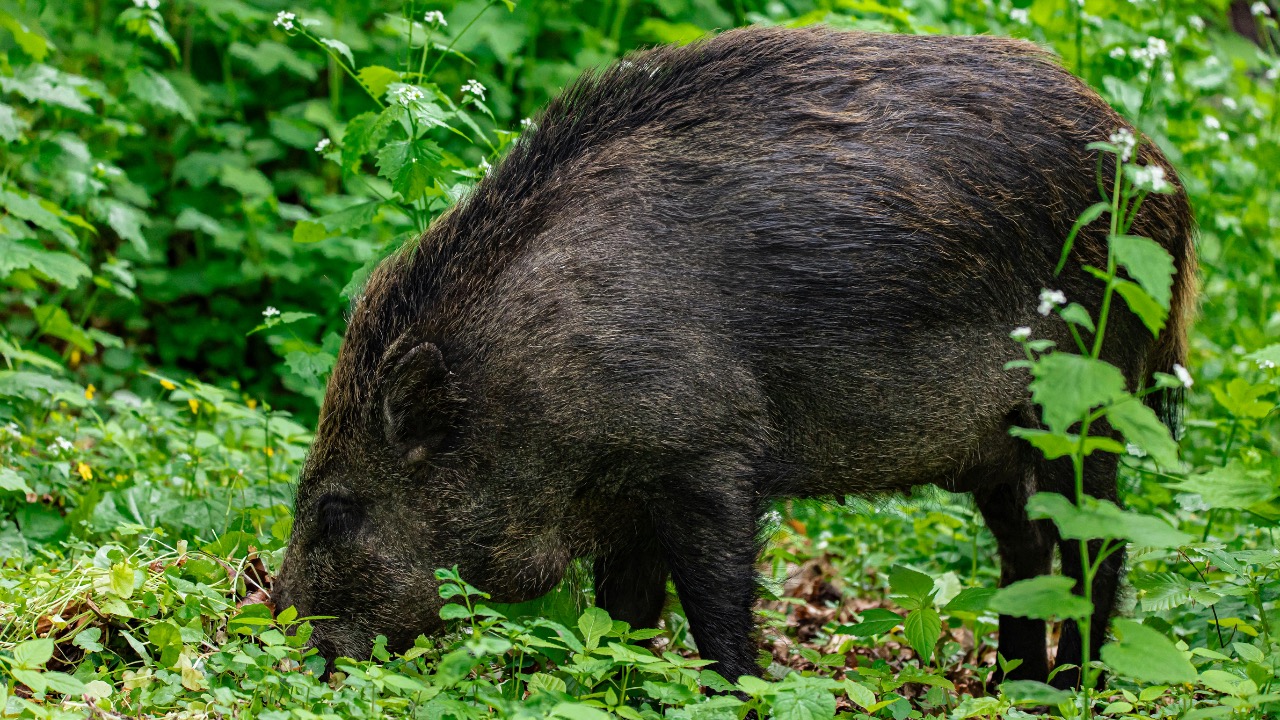
Feral hogs in the United States are not a single uniform animal but a mix of domestic swine, Eurasian wild boar, and hybrids that combine traits of both. A basic search on feral hog quickly reveals how widespread they have become, with confirmed populations stretching across the South, parts of the Midwest, the West Coast, and creeping northward.
Federal wildlife officials describe these animals as free-roaming swine that are not under domestic confinement and often exist in family groups known as sounders. They root deep into soil with powerful snouts, eat almost anything they can find, and readily adapt to new habitats, from pine forests to golf courses. According to federal wildlife programs, feral swine are now present across large portions of the country and are formally treated as an invasive species because of the scale of damage they cause.
Biologists stress that the current crisis is not simply the result of natural spread. Hybridization has produced hardier, more fecund animals, and human actions have repeatedly accelerated their expansion. Reporting on Hybridization notes that people have illegally trapped, transported, and released pigs to create new hunting opportunities, a practice that seeds new populations far from existing core ranges.
Why the population keeps exploding
The biology of feral hogs heavily favors rapid expansion. A detailed fact sheet explains that Feral swine can carry at least 30 diseases, but the same document also underscores their reproductive edge: they can multiply faster than any other large mammal, with females beginning to breed at about 8 months and producing 2 litters of 4 to 12 piglets every 12 to 15 months. A separate federal summary reiterates that Feral swine can multiply faster than any other large mammal on the continent.
Conservation researchers describe feral pigs as reproducing faster than any other large mammal in North America, with females breeding at 6 to 8 months and producing 4 to 6 piglets per litter, often more than once a year. An analysis of North America’s Feral concludes that this reproductive rate is a central force driving today’s invasion pressure, particularly when combined with abundant food on farms and in suburban landscapes.
Population modeling has produced a stark benchmark. A widely cited assessment reported that in order to hold the feral hog population at its current level, the annual harvest rate would need to be at least 66% for several years in a row. The same report noted that the actual harvest rate at the time was only 29 percent, far below what is needed to prevent growth.
Other estimates have suggested that hunters would have to remove about 70 percent of the feral pig population every year just to keep numbers from rising. That figure highlights a fundamental mismatch: recreational hunting pressure, even when intense, rarely approaches that threshold on a sustained, nationwide basis.
Texas as ground zero
No state illustrates the scale of the problem more clearly than Texas. The Lone Star State is home to the largest feral hog population in the country, with scientists estimating roughly 2.6 to 3 million animals. Current estimates put the feral hog population in Texas at around 3 million as of early 2026, according to Texas A&M Natural Resou, a figure echoed in reporting on why Why Texas Suburbs are struggling with feral hogs.
Texas and Oklahoma have tried to push back with aggressive tools. In 2024, Texas and Oklahoma approved the use of a warfarin-based toxicant, Kaput, in an effort to control wild pig populations through bait stations. The move signaled just how desperate some land managers have become, willing to test controversial poisons that raise their own concerns about non-target wildlife and carcass disposal.
At the same time, Texas A&M and state wildlife agencies are racing to adapt management strategies to urban and suburban settings. A new Texas A&M Agrilife publication, highlighted in a report on urban and suburban feral hog management, focuses on how to control pigs where firearms and large traps are harder to use near homes, schools, and shopping centers. That work, linked through Discovered coverage, reflects a shift from treating feral hogs as a rural ranch problem to a broader public safety issue.
Local news from Spring, a community north of Houston, has documented residents watching pigs tear up manicured lawns and dodge capture in cul-de-sacs, illustrating how the animals have followed greenbelts and drainage corridors into high-density neighborhoods. That story, surfaced through Discovered reporting, captures the frustration of homeowners who wake up to find their yards plowed overnight.
A mounting economic bill for farmers and landowners
The economic consequences of wild pig invasions are no longer guesswork. A detailed scientific analysis estimates that wild pigs cost the U.S. agricultural sector at least $3.2 billion annually. That figure reflects crop losses, fence and equipment damage, and the cost of control efforts across affected regions.
Other estimates focus specifically on agricultural damage. Across the United States, an estimated 6 to 9 million feral hogs now roam farmland and rangeland. According to USDA estimates, they cause more than $1.5 billion in agricultural damage each year, a number that aligns with the broader $3.2 billion cost when indirect impacts are considered.
Farm groups have tried to quantify the toll on livestock as well. One market assessment found that Feral hogs inflicted roughly $85 m in livestock losses, or $85 million, through predation, disease, veterinary costs, and medical treatments. That tally covers everything from piglets and calves attacked in pastures to vet bills for treating injuries and infections in domestic animals that encounter feral swine.
State-level snapshots suggest the national figures are not inflated. In Louisiana, wildlife officials have estimated that the state has over 900,000 pigs. They cost $91.1 m, or $91.1 million, in damage to agricultural and timber lands each year as the hogs trample crops, seedlings, and food plots and tear up levees and forest roads.
Smaller operators feel the impact acutely. A trapping and wildlife control company in Texas has described how feral hogs damage fences, irrigation systems, and pastures, and also prey on young livestock like lambs and goats, leading to further financial strain on ranchers. That account, detailed in an Aug report, emphasizes that the costs go beyond headline crop losses to a steady drip of repairs and lost productivity.
Ecological damage that rivals any invasive species
Economics tell only part of the story. Ecologists warn that feral hogs are among the most destructive invasive species on the continent in terms of habitat damage and biodiversity loss. A conservation analysis on Dec 23, 2025, notes that wild pigs are now one of the most widespread large mammals in North America and a major force driving today’s invasion pressure on native ecosystems.
Feral pigs root deeply into soils in search of tubers, invertebrates, and seeds, a behavior that can strip vegetation, accelerate erosion, and damage wetlands. A teaching resource on the economic impact of feral swine explains that They also compete with native species for food, habitat, and water, and their extensive rooting erodes soils and harms unique and sensitive habitats.
In forested areas and grasslands, that disturbance can open the door to invasive plants, alter water flows, and reduce the survival of ground-nesting birds, reptiles, and amphibians. One analysis of biodiversity impacts points out that in some regions, pigs do not cause as much ecological damage, and some studies indicate that they may modify habitat in ways that benefit certain species. Yet the same Aug 27, 2019 overview stresses that as feral hogs spread rapidly into new areas, their overall economic and ecological impact has likely increased.
Federal climate scientists have described the recent surge in feral swine numbers as a kind of population bomb. Over the last 40 years, wild pig populations have expanded dramatically, and there has been more recent growth that is likely the result of illegal trapping, translocation, and release. A federal climate hub summary notes that There has also been a more recent growth in populations which is likely the result of illegal trapping, translocation, and release, with wild pigs now close to entering Montana.
Public health and disease risks
Feral hogs threaten not only crops and ecosystems but also human and animal health. Federal animal health experts warn that Feral swine can carry at least 30 diseases. The same fact sheet notes that feral swine can also transmit foodborne illnesses, such as E. coli, toxoplasmosis, and trichinosis, to humans, either through contaminated water, direct contact, or improperly handled meat.
The concern extends to livestock. Feral pigs can serve as reservoirs for swine brucellosis and pseudorabies, infections that can spread to domestic herds and trigger costly testing, culling, and trade restrictions. Educational materials on the economic impact of feral swine emphasize that diseases carried by wild pigs can be transmitted to livestock and humans, compounding the financial and health stakes for rural communities.
In suburban settings, the health risks intersect with safety concerns. Reporting on Dangerous feral hogs describes how pigs that destroy lawns and eat plastic are growing across the United States. The pigs also carry disease, breed quickly, are difficult to trap, and can be aggressive toward humans, particularly when cornered or defending piglets.
Why hunting alone is not solving the problem
For years, many states have leaned on hunting as a primary control method, often with few restrictions and year-round seasons. Yet the numbers tell a different story. As noted earlier, experts have calculated that holding the population steady would require removing around 66 percent to 70 percent of pigs annually across affected regions. Recreational hunters, even in heavily hunted states like Texas, rarely reach that level.
Some management agencies now warn that uncoordinated hunting can actually make the problem worse. A federal recreation area in Kentucky reports that hunting pressure causes hogs to go nocturnal and promotes their spread as they seek areas with less human disturbance. The agency notes that Specifically, hunting feral hogs in Land Between the Lakes makes them more wary and disperses sounders, which makes it harder to effectively control the hog population.
In a broader management review, invasive species specialists caution that opportunistic hunting can disperse sounders, increase wariness, and in some cases create incentives to maintain populations. The report on Opportunistic hunting notes that there is no single solution and that effective programs rely on coordinated efforts that remove entire family groups at once, often using large corral traps rather than individual shooting.
Even in popular media, some experts have argued that hunting alone has not worked as a control strategy. One widely circulated explanation points out that dozens of states are being overrun and that hunting them to control their population has failed, since you would have to shoot 70 percent of the feral pig population every year just to keep their numbers from increasing. That Hunting-based insight underscores how far current efforts fall short of the necessary threshold.
Some experts now warn that hunting for sport can create a perverse incentive to keep pigs on the landscape. Reporting on Some expert views notes that hunting pressure can cause pigs to become more secretive and harder to trap, while the appeal of year-round hog hunting can lead some landowners to tolerate or even encourage their presence.
New control tools and coordinated campaigns
Recognizing that scattered efforts are not enough, federal and state agencies have launched more coordinated campaigns. The National Feral Swine Damage Management Program, run through federal feral swine operations, focuses on large-scale trapping, aerial gunning in remote areas, and partnerships with landowners to systematically remove entire sounders.
In some regions, managers are experimenting with toxicants like Kaput and exploring sodium nitrite-based baits that are designed to be more species-specific. The approval of Kaput by Texas and Oklahoma, detailed in a Jul 1, 2024 policy update, illustrates the push to incorporate chemical tools into integrated control programs, although concerns remain about non-target impacts and public acceptance.
Nonprofit and academic groups are also stepping in. Conservation Frontlines, which maintains a presence on Discovered social media and Discovered professional networks, has published detailed guides on wild pig ecology and control. Those materials stress that successful efforts combine corral trapping, aerial removal, and public education, rather than relying on any single tactic.
State agencies like the Texas Parks and Wildlife Department, accessed through tpwd.texas.gov, and research institutions such as the Natural Resources Institute at Texas A&M, linked via Discovered resources, are working to refine best practices for both rural and urban settings. Their guidance emphasizes that landowners should avoid feeding or relocating pigs, promptly report sightings in new areas, and coordinate trapping across property lines to prevent simply shifting sounders from one ranch to another.
Suburbs and cities are the new front line
Perhaps the most visible shift in recent years is the move from remote rangeland into suburbs and exurbs. Reporting on Why Feral Hog are spiking in suburban areas points to a combination of factors: abundant food from lawns, gardens, golf courses, and trash; fewer predators; and restrictions on shooting and large-scale trapping near homes.
One account from Spring, Texas, surfaced through Why Texas Suburbs coverage, described residents watching sounders of pigs tear up yards in a single night, leaving ankle-deep ruts and broken irrigation lines. In some neighborhoods, homeowners have resorted to installing heavy-duty fencing and motion-activated lights, only to find that the pigs simply shift to the next block.
Urban wildlife managers face a difficult balancing act. They must protect property and public safety without creating new risks from stray bullets or poorly placed traps. The Texas A&M Agrilife publication on urban and suburban feral hog management, highlighted via Why Texas Suburbs related reporting, recommends a mix of professional trapping, public education on not feeding wildlife, and careful use of fencing and deterrents around high-value areas like parks and school grounds.

Asher was raised in the woods and on the water, and it shows. He’s logged more hours behind a rifle and under a heavy pack than most men twice his age.