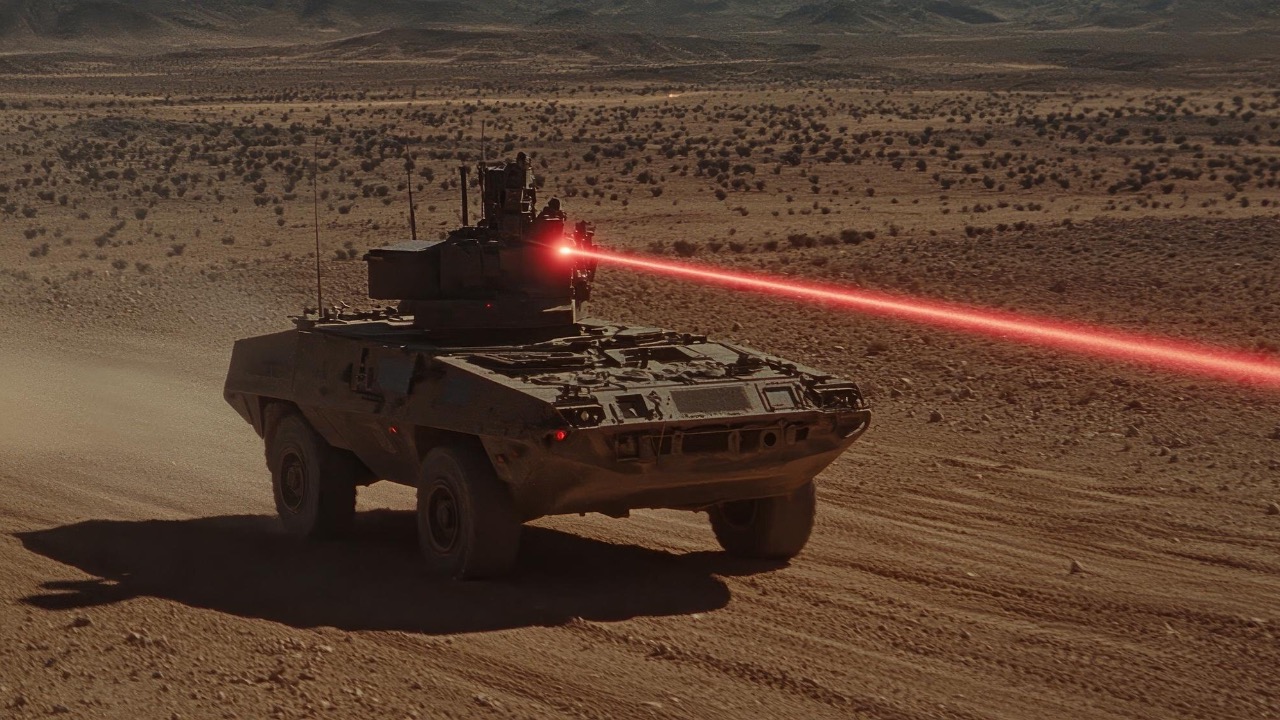
U.S. Navy laser weapon downs four drones, revealing the power needed for future warfare
Laser weapons have been a research topic for decades, but a recent demonstration at sea shows they’re moving from theory to battlefield reality. A U.S. Navy destroyer successfully used a ship‑mounted laser to shoot down four separate drones during a counter‑UAS exercise in 2025. This wasn’t a one‑off single target — it was the first time a naval laser weapon has neutralized multiple airborne threats in a single test, and it highlights how much power is required to tackle swarming drones and other fast moving threats.
What makes this event meaningful is that it brings directed energy weapons closer to everyday use aboard warships. The Navy and defense contractors have been working on laser systems for years, scaling up power levels and refining tracking systems. That kind of real‑world performance — engaging four drones while underway — gives a practical look at where laser weapon technology stands and what challenges remain before it becomes a routine part of fleet defense.
The U.S. Navy’s HELIOS Laser System

The laser used in the test is called HELIOS — High Energy Laser with Integrated Optical Dazzler and Surveillance — a system developed by Lockheed Martin for naval defense. Installed aboard an Arleigh Burke‑class destroyer, this directed energy weapon represents the most powerful laser deployed on a frontline U.S. Navy ship to date.
HELIOS integrates with the ship’s sensors and combat systems, allowing it to detect, track, and engage small aerial targets like drones. In the exercise, four unmanned aerial vehicles were neutralized using the laser beam rather than missiles or gunfire. Its performance marks a shift toward energy weapons that can handle multiple threat vectors without expending traditional interceptors, which are costly and limited in number.
Why Drones Are Such a Strategic Threat
Unmanned aerial systems have proliferated on battlefields and in contested airspace. Drones are relatively cheap to produce, hard to detect at low altitude, and can be deployed in swarms that overwhelm traditional air defenses. That makes them an attractive threat for adversaries, but a difficult problem for defenders.
Missiles and gun systems can counter individual targets, but against numerous small drones, the cost and logistics of repeatedly firing interceptors add up quickly. Lasers offer the promise of defeating that threat with concentrated energy, as long as the system has enough power and beam control. The four‑target test shows that laser systems can engage multiple drones without running out of ammunition — because the “ammo” is electrical power generated aboard the ship.
Laser Weapons and Modern Naval Defense
Modern naval warfare is evolving rapidly, and the U.S. Navy is pushing directed energy weapons into its layered defense architecture. Instead of relying solely on missiles and traditional guns, integrating high‑energy lasers provides an alternate method to counter threats like drones, fast attack craft, and potentially incoming missiles or hypersonic vehicles as the technology matures.
Shipboard lasers like HELIOS draw from the ship’s power systems, which must be robust enough to support sustained energy output. That’s one reason these systems have been slow to develop — naval platforms must generate and manage enormous electrical loads to fire lasers at high power without overheating or diverting energy from other shipboard functions. The recent success shows that power generation and cooling solutions are reaching practical levels.
Advantages of Directed Energy in Combat
One of the biggest appeals of laser weapons is their cost per engagement. Traditional interceptors carry high unit costs — tens or even hundreds of thousands of dollars per shot. A laser, by contrast, costs far less to fire once the system is in place, because it uses electrical power with no moving parts in the “projectile” itself.
Lasers also operate at the speed of light, offering instantaneous engagement with minimal flight time. That makes them especially useful against fast or maneuverable targets like drones. Provided the platform can keep the beam on target long enough, the energy can heat, disable, or destroy incoming systems without needing a kinetic round. In multi‑target episodes like the recent exercise, that responsiveness matters.
Challenges That Still Remain
Despite its promise, laser technology isn’t a magic bullet. Weather and atmospheric conditions — rain, fog, humidity, smoke — can scatter or weaken a laser beam. Heat management is another issue: high‑energy lasers generate significant thermal loads that must be dissipated quickly to avoid damage to equipment.
There’s also the question of how these weapons integrate across a fleet. Power requirements, logistics, and maintenance are all hurdles as the Navy scales up deployment of directed energy systems. Tests like this one, however, show that engineers and sailors are making progress against those challenges, and that future conflicts may rely more on energy weapons than most people would have imagined a decade ago.
Policy and Safety in Laser Use
These systems have made headlines not only for combat applications at sea, but also for domestic testing. Recent anti‑drone laser use over Texas led to temporary airspace closures and calls for better safety coordination among federal agencies. That incident highlighted the need to balance emerging defensive technologies with aviation safety and regulatory frameworks.
Lawmakers are pressing for clearer guidance on laser operations, especially as such systems move beyond research into real deployments. Ensuring the public isn’t at risk from unintended engagements — and that air traffic isn’t disrupted — will be critical if directed energy weapons are to be used more widely, both at home and abroad.
What This Means for Future Warfare
The ability to reliably take down multiple drones with a shipboard laser signals a shift in how militaries may fight future conflicts. High energy weapons reduce reliance on conventional ammunition, cut costs per engagement, and offer rapid reaction times against modern threats.
While missiles and guns will remain essential, lasers like HELIOS could become frontline defenses against increasing unmanned aerial threats. Successful tests like this one suggest that future combat — at sea, in the air, and potentially on land — will be defined by new forms of energy projection that move beyond traditional ballistics.

Asher was raised in the woods and on the water, and it shows. He’s logged more hours behind a rifle and under a heavy pack than most men twice his age.