Wildlife officials warn of changing migration patterns across the U.S.
Wildlife officials across the United States are sounding a steady alarm as familiar migrations arrive earlier, push farther north, or fail to appear at all. From songbirds and monarchs to deer and armadillos, the seasonal movements that once ran like clockwork are increasingly out of sync with weather, food, and breeding cycles. The emerging picture is not just one of shifting animals, but of ecosystems being quietly redrawn.
Bird “highways” are bending and thinning

For generations, billions of birds have funneled along four primary flyways that cross the United States. The Atlantic Flyway on the eastern seaboard supports some of the highest diversity of migrating species, and tools such as the 2025 bird migration map now show how tightly packed those routes can be in peak season along the Gulf Coast and up through New England. At the same time, radar and ground counts indicate that some stretches of these aerial “highways” are thinning while others are seeing unusual surges.
Researchers tracking the Atlantic Flyway Migration Patterns report that storms, heat waves, and changing wind regimes are pushing flocks off traditional paths. Along the central corridor, scientists have documented nights when millions of warblers and swallows suddenly divert around intense weather systems, sometimes arriving in unfamiliar stopover sites with limited habitat. Wildlife agencies describe these diversions as warning signs that the old maps no longer match the new climate reality.
Federal biologists also stress how energetically costly these journeys already are. In guidance on Why Birds Migrate, the U.S. Fish and Wildlife Service notes that long flights over mountains and oceans demand enormous fat reserves. When birds are forced to reroute around drought-stricken wetlands or cross larger stretches of unsuitable habitat, marginal species can quickly tip into decline.
Climate change is scrambling timing and routes
Climate signals sit at the center of the disruption. A detailed analysis of Migration Interrupted describes how rising temperatures are altering the routes birds have followed for millennia. Warmer springs are prompting some species to depart wintering grounds earlier, yet the plants and prey they depend on at northern breeding sites may not be ready when they arrive. Other species are delaying departure because food remains available farther into winter, which can push nesting later and reduce reproductive success.
Along coasts, warming oceans and acidification are reshaping the base of the food web. Reporting on how climate change is altering bird migration highlights that Small crustaceans, a key food source for shorebirds, struggle to build shells in more acidic water. When these tiny animals decline, sandpipers and other migrants find fewer calories during critical stopovers, which can ripple through entire flyways.
A similar pattern appears in broader assessments of migratory wildlife. A landmark review of how human activities disrupt animal movements notes that Migratory species now face overlapping pressures from climate, habitat loss, and infrastructure. The report frames climate change as a force that not only shifts where animals can go, but also magnifies every existing barrier along the way.
From monarchs to insects, smaller migrants are in trouble
Some of the most visible shifts are unfolding in the skies and fields of the Midwest and South. The monarch butterflyremains a flagship example, with its multigeneration journey between Mexico, Texas, the Great Plains, and Canada. Conservation scientists have tied steep monarch declines to the loss of milkweed along migration routes, hotter and drier summers, and more frequent storms that can wipe out clusters during key rest periods.
Entomologists warn that the problem extends to a vast array of insects that migrate more quietly. Dragonflies, moths, and pollinating flies all move seasonally, sometimes across hundreds of miles. When warmer nights or altered wind patterns shift their flights, the plants and predators that depend on them can be left waiting. Farmers and wildlife managers alike are tracking how these changes might affect crop pollination and pest outbreaks.
Federal agencies have begun to frame insect migrations as a key climate indicator. In a strategy for protecting migrationsamid climate change, the U.S. Fish and Wildlife Service points to butterflies and other invertebrates as early warning systems for broader ecosystem stress. Their short life cycles mean they respond quickly to shifting temperatures and rainfall, which can reveal emerging problems long before they show up in larger animals.
Mammals are marching north and upslope
While birds and insects draw much of the attention, terrestrial mammals are also on the move. Wildlife biologists have documented that the Virginia opossum, once largely confined to the Southeast and lower Midwest, is steadily expanding into northern states as winters warm. Sightings and roadkill records now place the species in areas where deep snow and prolonged cold previously limited survival.
A similar pattern is emerging for the nine-banded armadillo. This animal, long associated with Texas and the Gulf Coast, has been reported farther north in the central United States as milder winters reduce cold-related mortality. Biologists describe these expansions as climate-driven range shifts that effectively turn once resident species into new migrants, with cascading effects on ground-nesting birds, soil communities, and even vehicle collision patterns.
Large mammals are not exempt. International research on species such as Caspian red deer and wild goats, highlighted in a report on Caspian populations, shows that warming trends can compress migration routes into smaller, more fragmented corridors. Although those examples come from Eurasia, American wildlife officials see parallels for elk, pronghorn, and mule deer that already navigate a maze of fences, roads, and energy development.
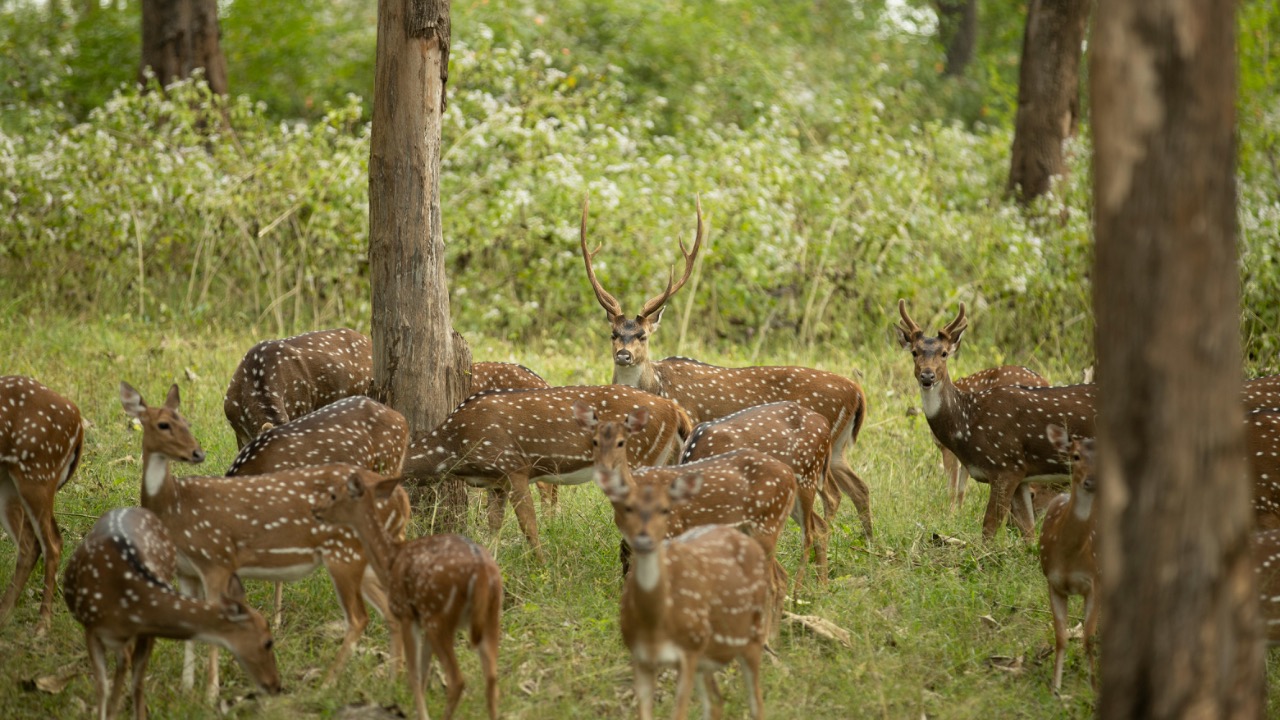
Closer to home, experts tracking white-tailed deer have described recent shifts as “kind of a weird anomaly right now” and warned that altered movements could reshape forests and predator dynamics. In one analysis, biologists stressed that Deer are keystone whose grazing and browsing influence everything from wildflowers to songbird habitat. If snowpack, hunting pressure, or food availability push herds into new wintering areas, entire plant communities can change.
Data tools reveal a new “golden age” of tracking
Wildlife agencies are not flying blind as these patterns shift. Advances in radar, satellite tags, and community science have created what some researchers describe as a new golden age of migration observation. Weather surveillance radar, originally designed to track storms, now helps map nightly bird movements across the continent. Conservation groups have paired that technology with Lights Out campaigns that urge cities to dim skyscrapers when the greatest numbers of migrants pass overhead.
Online tools such as BirdCast allow the public to see forecast maps that predict how many birds will fly over a given county on a given night. A report on a record breaking night of migration notes that these forecasts help building managers and homeowners take simple steps, such as turning off decorative lighting, to prevent window collisions when traffic peaks.
On the ground, networks like the USA National Phenology Network, accessed through fws.usanpn.org, collect data on flowering times, leaf-out, and animal activity. These observations help federal and state biologists see where spring is arriving earlier or later than historical norms, which in turn flags where migrants may be arriving out of sync with food. Agencies also use social media, including updates from USFWS channels, to share real-time migration alerts with the public.
Policy responses and what officials are asking from the public
As evidence of shifting migration patterns mounts, policymakers are beginning to respond. Earlier this year, conservation advocates welcomed a federal RFP to conserve migration corridors. In that announcement, CSF extended thanks to all involved in issuing the RFP, which is intended to better position federal, state, and tribal wildlife managers to coordinate on corridor protection. The move reflects a growing recognition that animals need connected pathways that stretch across property lines and jurisdictional boundaries.
Bird-focused assessments have sharpened the sense of urgency. The 2025 State of the report, summarized by conservation organizations, was described by Jeff Walters, the Conservation Committee Co chair, as cause for alarm. A companion review in the WMI Outdoor News Bulletin reported that the State of the Birds Report Shows Continued Widespread Declines, with steep losses in grassland and shorebird populations that depend heavily on intact migration routes.

Leo’s been tracking game and tuning gear since he could stand upright. He’s sharp, driven, and knows how to keep things running when conditions turn.