

Cartridges your grandpa trusted but you definitely shouldn’t
There are cartridges that have been around for decades, cartridges your grandfather swore by for deer, elk, or hogs. They earned a reputation when hunting was slower and ranges were shorter, but times and tools have changed. Modern bullets, powders, and rifles have pushed the envelope of performance, making some of those old favorites less practical today. Some of them are underpowered, inconsistent, or simply don’t perform well at realistic hunting distances.
That doesn’t mean these cartridges are dangerous—they worked in the hands of skilled hunters—but relying on them today means compromising on accuracy, energy, or versatility. Understanding which cartridges belong in the history books helps you make better choices in the field and keeps your hunts efficient and ethical.
.30-30 Winchester

The .30-30 Winchester has a long history and earned its stripes as a woods rifle for deer. It’s comfortable to shoot, works in lightweight rifles, and is easy to manage for long days of walking. Your grandpa probably called it the perfect deer cartridge because it works well inside 150 yards and kicks softly.
Out past its comfort zone, the .30-30 struggles. Modern medium and large game hunting often requires more range and energy than this cartridge can deliver. Light bullets at higher velocities can be inconsistent in penetration, and it’s no longer ideal for anything beyond close woods work. For many hunters today, it’s more of a nostalgic choice than a practical one.
.25-06 Remington
The .25-06 Remington was marketed as a flat-shooting deer and varmint cartridge decades ago. With the right rifle, it’s quick and pleasant to shoot, and older hunters appreciated the low recoil and reasonable velocity. Many grizzled veterans swear it handled whitetail perfectly.
The downside today is that it underperforms on heavier-bodied game. The bullet diameter and sectional density make ethical shots at longer ranges tricky, and lighter bullets are prone to fragmentation. There are more versatile options now that deliver flatter trajectories and better energy retention. For modern hunters pursuing elk, moose, or even bigger whitetail, the .25-06 often leaves you wishing for more punch.
.32-20 Winchester
The .32-20 is a cartridge with nostalgia baked in. It worked in old rifles and revolvers alike, and your grandfather may have used it for small deer or varmint. It’s easy to shoot and has a mild recoil that feels forgiving to new shooters.
Today, it’s largely obsolete for serious hunting. Limited bullet weight and velocity reduce terminal performance, and shot placement has to be near-perfect to take down medium-sized game humanely. You can still use it for plinking or tiny varmints, but the cartridge isn’t capable of reliable performance at modern hunting ranges.
.218 Bee
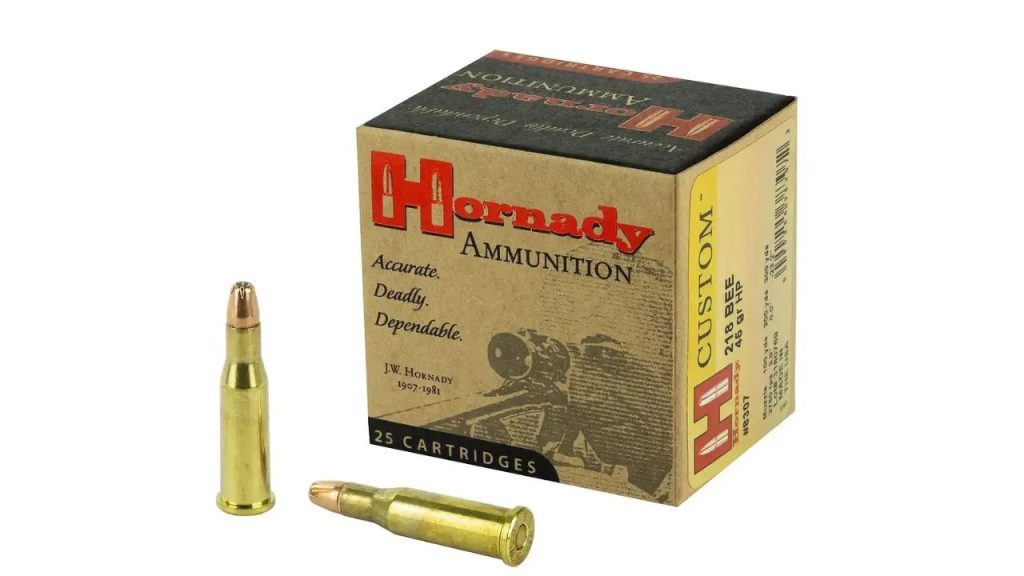
The .218 Bee earned a reputation in the early 20th century as a fast, light varmint round. Grandpas liked it for groundhogs, coyotes, and other small pests because it produced minimal recoil and was inexpensive to reload.
The problem is it’s extremely limited for anything larger than small varmints. Light bullets struggle to retain velocity at distance, and the cartridge is sensitive to barrel wear and load inconsistencies. In modern hunting, you’d be better served with a .223 Remington or similar round that gives more consistent performance and versatility.
.35 Remington
The .35 Remington was a go-to for big whitetail decades ago. It had moderate recoil, good bullet diameter, and worked well in lever-actions. Many hunters appreciated its straightforward handling and stopping power in thick timber.
The cartridge’s shortcoming is range. Beyond 150 yards, the trajectory drops sharply, and the bullet energy falls off fast. Hunting today often involves shots at longer distances where modern .30 calibers outperform it. It’s fine for brush hunting, but if you’re pursuing mature deer across open country, the .35 Remington won’t give you the flexibility you need.
.300 Savage
The .300 Savage was considered a high-performance deer cartridge in its day, delivering energy similar to the .308 Winchester before the latter became widespread. It has a smooth feel and moderate recoil. Hunters appreciated the efficiency for mid-range shots.
What makes it less practical today is ammunition availability and range limitations. Modern .308 Win loads are more widely produced, consistent, and capable of longer distances. Bullet technology has also improved, leaving the .300 Savage behind in energy retention and terminal performance. It’s a solid cartridge for legacy rifles but not a first choice for a modern hunting trip.
.35 Whelen

The .35 Whelen was designed to give .30-06 rifles a heavier punch with minimal changes. Your grandfather may have trusted it for elk or moose within moderate distances, and it produced respectable stopping power in a big bore lever or bolt rifle.
The problem lies in bullet options and range. Modern cartridges surpass its trajectory and energy retention, particularly at extended distances. While it’s capable in close timber, longer shots or precision work can be unpredictable. The .35 Whelen remains nostalgic but doesn’t compete with contemporary big-game rounds in efficiency or versatility.
.444 Marlin
The .444 Marlin is a lever-action powerhouse that looks intimidating on the shelf. Hunters of the past relied on it for deer and black bear, and the cartridge delivers impressive recoil and a heavy bullet.
Its limitation comes from trajectory and range. Beyond 150 yards, the heavy bullet arcs noticeably, requiring constant adjustment for elevation. Ammunition is less common than more modern big-bore cartridges, and follow-up shots are more challenging due to recoil. It’s effective in the woods but inefficient compared to modern magnum rounds at a distance.
.219 Zipper
The .219 Zipper was a favorite for small game and varmints, prized for velocity and flat trajectory. Older shooters liked it in bolt actions for groundhogs and coyotes, appreciating the light recoil.
In today’s world, it’s highly specialized. Bullet selection is limited, and the cartridge is overly sensitive to barrel wear. Modern .223 and .22-250 cartridges outperform it in velocity, consistency, and availability. For hunters seeking reliable, versatile options, the .219 Zipper belongs in history rather than fieldwork.
.30-40 Krag

The .30-40 Krag saw action in turn-of-the-century rifles and was used for deer and even early military applications. Its mild recoil and heavy bullet made it attractive to hunters transitioning from black powder.
Modern hunters quickly notice its shortcomings. Velocity is modest, trajectory is steep, and energy retention at distance is low. Ammunition is rare and expensive, making it impractical for today’s hunting scenarios. It remains a collectible or historical cartridge rather than a practical hunting tool.
.250-3000 Savage
The .250-3000 Savage was once hailed as a fast, flat-shooting deer round. It was favored by grandpas who liked a low-recoil rifle that could reach 200 yards with minimal drop. Its early design made it a standout in the 1920s.
Despite its history, it’s limited today. Bullet weights are light, penetration is inconsistent on larger deer, and factory ammo is harder to find. Modern .243 Win or 6.5 Creedmoor cartridges outclass it in velocity, trajectory, and terminal performance. It’s more of a historical curiosity than a practical choice for ethical hunting.
.32 Winchester Special
The .32 Winchester Special was marketed as a “higher performance” .30-30 option for whitetail hunters. Many grandpas loved the round for light-recoiling, accurate shots inside 150 yards. The rifles chambered in it are easy to handle, making it comfortable for long treks.
Accuracy at extended ranges, however, is limited. Light bullets lose energy fast, and heavier loads can be inconsistent. Ammunition availability is shrinking, and modern alternatives like the .308 Win or .30-06 outperform it in trajectory and terminal ballistics. What your grandfather trusted is now largely a nostalgic choice for collectors rather than field hunters.

Asher was raised in the woods and on the water, and it shows. He’s logged more hours behind a rifle and under a heavy pack than most men twice his age.


