US forces sink six Iranian boats in Gulf as Trump warns regime could be ‘blown off the face of the Earth’
The Strait of Hormuz has carried a fifth of the world’s oil for decades, and that narrow stretch of water between Iran and Oman turned tense again this week. You watch as American forces step in to protect commercial ships trying to move through it under a new push called Project Freedom. Reports confirm that US helicopters took out six small Iranian boats after they moved in to harass vessels. President Trump followed up with a blunt warning that any further interference could leave the Iranian regime blown off the face of the Earth. The episode fits a longer pattern of friction in the Gulf, where shipping lanes matter to economies everywhere. Two merchant ships made it through safely on Monday, but hundreds more remain stuck, waiting for clear passage. What happened reflects the high stakes whenever naval patrols meet fast boats in confined waters.
The Strait of Hormuz Becomes a Flashpoint Once More
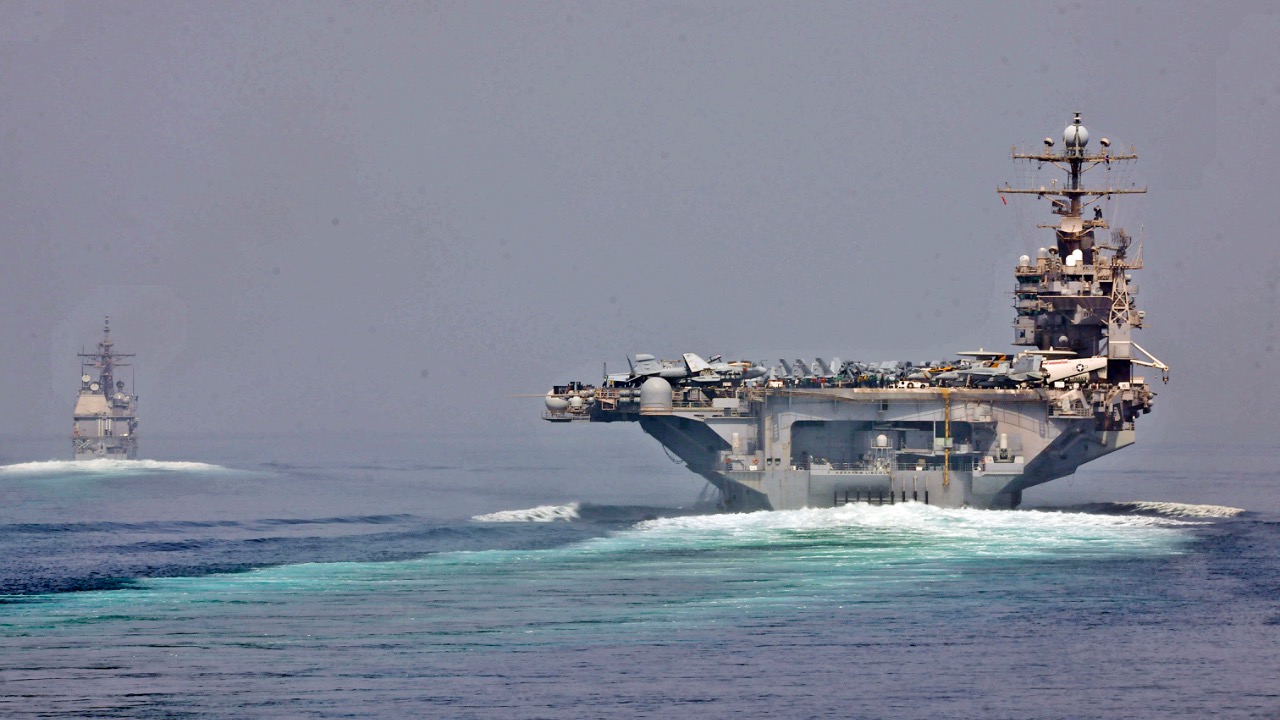
Tensions in the Gulf had eased after an April ceasefire, yet the waterway never stayed quiet for long. Iranian forces sent small boats, drones, and cruise missiles toward US Navy assets and the commercial traffic they were shielding. American commanders described the response as measured and quick. Helicopters from the Navy and Army destroyed the six vessels that posed the immediate threat. You see how this kind of engagement can flare up fast when one side tries to block passage and the other refuses to back down. The Strait remains the shortest route for tankers heading from the Persian Gulf to markets in Asia and Europe. Any disruption ripples through fuel prices and supply chains that you rely on daily.
Regional shipping had already slowed because of earlier attacks, leaving crews and cargo idle. US Central Command stressed that its ships were there to keep the lanes open rather than start a broader fight. Still, the exchange marked the first direct clash since the ceasefire took hold. You notice the careful language from both militaries, each framing the other as the aggressor. The boats involved were the fast, lightly armed craft Iran has used for years in these waters. Their loss does not cripple Tehran’s overall capacity, but it signals that attempts to interfere will meet resistance.
Details of the Naval Encounter
Admiral Brad Cooper, head of US Central Command, laid out the sequence in a briefing. Iranian craft approached protected vessels and were neutralized within minutes by helicopter fire. At the same time, American defenses knocked down incoming missiles and drones. You follow the timeline and see how the operation stayed limited to the immediate threat instead of expanding into Iranian territory. No US ships took damage, and the two tankers that completed their transit reported no issues. The Pentagon described the action as defensive, aimed at safeguarding commercial traffic rather than hunting Iranian assets.
Iran offered a different account almost immediately. State media said the boats were civilian cargo vessels and that five people died in the strikes. Tehran denied launching an organized attack on the US escort mission. You weigh those competing versions against the fact that small boats have long blurred the line between military patrol and harassment in the Gulf. Video or sensor data has not been released publicly yet, so independent verification remains limited. The encounter lasted hours rather than days, but it carried the risk of escalation if either side miscalculated.
President Trump’s Stark Message
Trump spoke plainly in a Fox News interview and on his Truth Social account. He said Iran would face total destruction if it kept targeting American or protected ships. The phrasing matched his past style on Iran policy, leaving little room for nuance. You hear the warning as both a deterrent and a signal that Washington will not tolerate interference with Project Freedom. He also mentioned the possibility of allies like South Korea joining the escort effort, broadening the coalition beyond traditional partners. The statement came hours after the boat incident, tying the military action directly to his broader approach.
The president downplayed the clash in some comments, calling it a limited exchange. At the same time, he highlighted the success of getting even two ships through as proof the operation could work. You sense the dual track: tough rhetoric paired with a focus on practical results like reopened shipping lanes. Trump has long argued that pressure brings concessions, and this episode tests whether that holds in a narrow strait where missteps happen quickly.
Inside Operation Project Freedom
The mission launched to break the bottleneck that trapped more than 800 vessels and 20,000 crew members in the Gulf. US warships now escort merchant traffic through the Strait under American protection. You see the name change from earlier labels to something that sounds more like a humanitarian or economic effort than combat. The goal stays straightforward: restore normal flow of oil and goods that the global economy depends on. Helicopters and surface ships provide the layered defense that handled Monday’s threats.
Planners concentrated firepower around the narrowest parts of the waterway, where Iranian speedboats could operate most effectively. Early results show two American-flagged tankers reached open water without incident. You recognize the logistical challenge of protecting slow-moving commercial hulls while scanning for fast attackers. The operation continues, with more transits planned in the coming days. Success here would ease pressure on energy markets and shipping companies that have rerouted around the risk for weeks.
Iran’s Side of the Story
Tehran pushed back hard against the US account. Officials called the sunk vessels civilian and accused Washington of striking non-combatant traffic. Iranian state television reported casualties and framed the incident as unprovoked aggression during a legitimate patrol. You notice how both governments shape the narrative to fit their version of events. Iran has used similar small-boat tactics for decades to project power without risking larger warships.
The leadership in Tehran also warned that further US moves would meet resistance across the region. This fits a pattern where Iran responds to pressure by raising the cost of passage through waters it considers its backyard. You see the stakes for the regime: losing control of the Strait narrative could weaken its influence over global energy routes. Diplomatic channels remain open behind the scenes, but public statements from both capitals show no sign of compromise yet.
Effects on International Shipping Routes
Global oil traders watched the clash closely because roughly a fifth of seaborne crude passes through the Strait every day. Insurance rates for Gulf voyages had already climbed after earlier incidents. You track how even a short disruption can add costs that eventually reach consumers at the pump. Two successful transits on Monday offered a small proof of concept, yet hundreds of ships still sit idle. Rerouting around Africa adds distance, time, and fuel expenses that shipping lines pass along.
Energy analysts note that sustained safe passage would ease those pressures. For now, the market reaction stayed measured because the fighting stayed contained. You consider the wider picture: companies that move goods through the region must decide whether to trust the new escort system or keep avoiding it. Longer term, repeated incidents could push investors toward alternative pipelines or suppliers outside the Gulf.
Regional Allies Weigh In
Gulf states with close US ties followed the developments with concern. The United Arab Emirates reported its own territory came under Iranian attack around the same time, the first such strike since the April ceasefire. You see how the clash spreads worry beyond the waterway itself. Allies in the region want stable shipping but also fear being drawn into direct confrontation. Saudi Arabia and others have stayed relatively quiet in public statements, focusing instead on keeping oil production steady.
European and Asian buyers of Gulf crude also monitor the situation because their economies feel the impact first. You recognize that diplomacy in the background involves these partners urging restraint on all sides. The US has floated the idea of wider international participation in the escort mission. Whether more nations join depends on how quickly the immediate threats subside and whether the waterway returns to predictable operations.
Looking Ahead to Potential Outcomes
The coming days will test whether Monday’s exchange stays isolated or sparks further rounds of retaliation. US forces remain positioned to protect additional convoys, while Iranian commanders have signaled they will not accept permanent interference. You watch for signs that back-channel talks might produce a temporary understanding to keep the Strait open. Both sides have shown they can calibrate their responses to avoid all-out war, yet the margin for error stays thin in such confined waters.
Longer term, the episode highlights how quickly naval incidents can affect energy security worldwide. Project Freedom aims to restore normal traffic, but its endurance depends on sustained political will and military presence. You weigh the possibility that repeated small clashes could become the new normal or that one misstep might widen the conflict. For now, the focus stays on safe passage for the ships still waiting to move.

Asher was raised in the woods and on the water, and it shows. He’s logged more hours behind a rifle and under a heavy pack than most men twice his age.