Judge blocks ICE arrests in immigration courts after agency admitted false claims about agents’ authority
A federal judge has temporarily barred Immigration and Customs Enforcement from making certain arrests in immigration courts after the agency and the Department of Justice acknowledged that earlier filings relied on false descriptions of officers’ authority. The ruling freezes a controversial practice that had allowed ICE agents to seize people inside or just outside courtrooms based on what the court now knows were misstatements about internal policy.
The decision not only halts those arrests for now but also forces the government to confront how inaccurate claims about ICE powers ended up in official court papers and shaped earlier rulings on immigrant rights and courthouse access.
What happened
The dispute centers on how ICE officers have conducted arrests in and around immigration courts, and what internal rules actually govern that conduct. In earlier litigation, government lawyers told the court that agents were operating under an ICE memorandum that supposedly limited who could be taken into custody at courthouses and under what conditions. That description turned out to be wrong, and the Department of Justice has now admitted that it relied on an ICE memo it misunderstood when it defended the arrests.
According to filings described in one set of false statements, DOJ attorneys cited the memo to argue that ICE had clear, lawful guidance for courthouse arrests and that officers were not targeting people indiscriminately. The court later learned that key parts of that portrayal did not match what the memo actually said and that DOJ had repeated those errors in multiple briefs.
In response, the judge concluded that prior decisions on the legality of courthouse arrests had been built on a flawed record. A separate report on the ruling explains that the court has now blocked ICE from carrying out arrests in immigration court facilities while it reassesses the government’s authority in light of the corrected information about the memo and the officers’ powers. That temporary bar covers both interior court spaces and adjacent areas where ICE had previously detained people waiting for hearings.
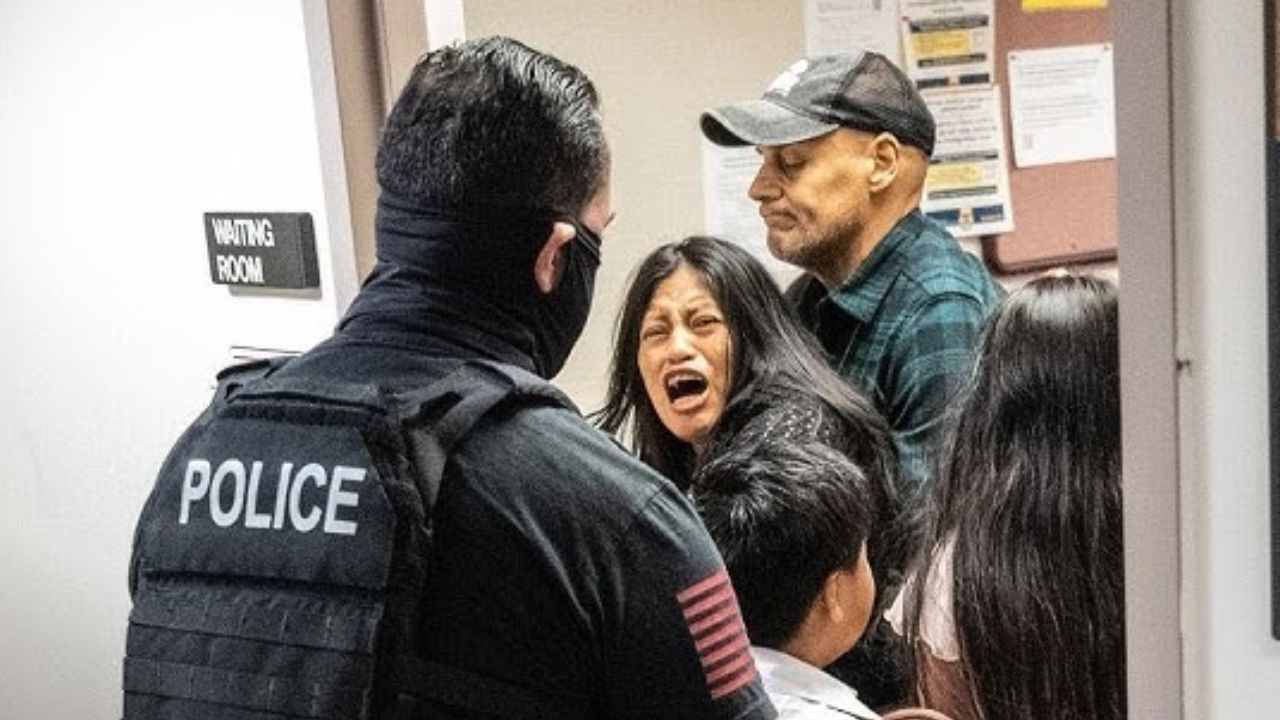
Earlier accounts of ICE activity described agents waiting in hallways, near courtroom doors, or just outside building exits to arrest noncitizens who appeared for proceedings. Advocates argued that this practice turned courthouses into traps and discouraged people from attending hearings or serving as witnesses. Government lawyers had defended the approach by pointing to what they described as internal limits on who could be targeted, but the new disclosures show that those assurances overstated the protections actually in place.
The judge’s latest order follows an earlier decision to revisit the issue after learning that ICE and DOJ had supplied faulty information. According to court filings, the judge signaled concern that the misstatements might have affected not only this case but also broader understanding of how ICE conducts courthouse operations. That concern laid the groundwork for the current block on arrests while the court scrutinizes the government’s revised account.
Advocates for immigrants have framed the ruling as a necessary corrective after years in which ICE agents operated with limited transparency in court settings. The judge did not order a permanent ban, but by tying the temporary halt directly to the government’s own admission of error, the court placed the credibility of ICE and DOJ squarely at issue for the next phase of the litigation.
Why it matters
The immediate impact falls on noncitizens who must appear in immigration court. With arrests paused, people facing removal proceedings can enter court buildings with less fear that simply showing up will lead to detention. For lawyers and judges, the order may help stabilize dockets that had been disrupted when clients failed to appear because they feared being seized by ICE officers waiting in the hall.
The case also exposes how internal ICE policy can shape constitutional arguments about access to the courts. DOJ previously leaned on a courthouse-arrest memo to argue that limited, targeted enforcement did not interfere with the functioning of the justice system. Reporting on the memo’s contents, including a detailed account of an earlier ICE memothat addressed courthouse operations, shows that internal guidance has shifted over time and has not always matched what government lawyers told judges.
That gap now has legal consequences. When a federal court learns that the government relied on inaccurate descriptions of its own rules, judges grow more skeptical of agency representations in other areas. The current order signals that the court is willing to revisit earlier assumptions about ICE’s claimed authority to arrest people in civil spaces that are supposed to be open to the public.
The ruling also speaks to a larger debate over courthouse safety and the separation between civil immigration enforcement and the judicial system. Public defenders and local officials have argued that aggressive ICE presence in courthouses deters victims of crime from coming forward and undermines trust in the courts. Some states responded with their own limits on courthouse arrests, while ICE insisted that it needed access to court buildings to apprehend people who might otherwise evade detention.
By temporarily halting ICE arrests in immigration courts, the judge has effectively sided, at least for now, with those who see courthouse enforcement as a threat to due process. The decision suggests that when the government wants to use court appearances as opportunities for arrest, it must present a clear, accurate account of its policies and legal basis. Any hint of misrepresentation can tip the balance toward tighter judicial control.
The episode also raises internal accountability questions for both ICE and DOJ. According to one account, DOJ has acknowledged that it erroneously relied on ICE’s own description of the memo rather than reading and conveying the text with precision. That admission will likely feed calls for better training and internal review before government lawyers present policy descriptions to federal judges.
For immigrants already in the system, the ruling may change case strategy. Attorneys who previously advised clients to avoid unnecessary in-person appearances may now encourage fuller participation while the arrest block remains in place. The decision could also influence how advocates challenge other forms of civil immigration enforcement that occur in sensitive locations such as schools, hospitals, and places of worship.
What to watch next
The current order is temporary. The judge has indicated that the court will reexamine the legality of courthouse arrests once it has a complete and accurate record of ICE policy. According to accounts of the, the government will have an opportunity to submit corrected filings that explain which officers have authority to make arrests in immigration courts, what standards apply, and how those standards have been communicated to the field.
Several key questions will shape the next stage. One is whether the court ultimately concludes that ICE lacks statutory authority to conduct civil immigration arrests in or around courtrooms without explicit congressional authorization. Another is whether the judge finds that the prior misstatements were isolated errors or evidence of a broader pattern of carelessness in how DOJ presents agency policy.
Future hearings are also likely to focus on the real-world effects of courthouse arrests. Advocates may present testimony from immigrants, public defenders, and court staff who describe how ICE presence has affected attendance and case outcomes. The government, in turn, may offer data on arrests made in court settings and argue that such operations are necessary to apprehend people with outstanding removal orders or criminal records.
Policy shifts inside the executive branch could intersect with the litigation. If ICE issues new guidance that narrows or clarifies when officers may enter court buildings, the government may argue that those changes address the judge’s concerns and justify lifting or narrowing the arrest block. Any new memo would likely be scrutinized line by line, given the history of misdescribed guidance in this case.

Leo’s been tracking game and tuning gear since he could stand upright. He’s sharp, driven, and knows how to keep things running when conditions turn.