Defensive strategies for rural homes
Rural homeowners live with a paradox: isolation brings peace and privacy, but it also means that when trouble arrives, help may be many minutes away. In that gap, the structure of the property, the choice of firearms and the way they are staged can decide whether a family has options or is simply reacting. Gun-based defensive strategies for rural homes work best when they are treated as one layer in a broader plan, not a shortcut around basic security and clear thinking.
I approach the topic as a question of time and distance. The more you can slow an intruder’s approach, control how they move through the property and access the right firearm without endangering loved ones, the more likely you are to resolve a crisis without tragic mistakes.
Layered rural defense before the first shot
Any responsible gun plan for the countryside starts outside the house. Long driveways, tree lines and open fields can either expose you or give you warning, depending on how you shape them. Practical rural guidance stresses simple steps such as Jan level advice to Install dead bolt locks on all doors and, If the property is of significant size, consider signs on property boundaries so strangers know they are being watched, which can deter casual trespassers before they ever test a door or window, as detailed in rural home defense strategies. Legal specialists who work with landowners go further, urging people to Install physical barriers such as gates, fences, hedges and trees along the roadside frontage to keep vehicles from driving directly onto a farm property, a step that buys precious seconds and clarifies where a confrontation might occur, as explained in guidance on trespassers.
Beyond hardware, I see the most effective rural plans as layered defense strategies that treat the homestead like a series of concentric circles. One detailed homesteading guide explicitly frames security as Layered Defense Strategies, starting with perimeter sensors and lighting, then moving inward to doors, safe rooms and finally personal defense tools, a structure that keeps the gun as a last resort rather than a first impulse, as outlined in the Feb piece that begins, Let us take an in-depth, chapter-by-chapter journey to a secure homestead under the heading Layered Defense Strategies in a comprehensive homestead defense approach. Rural preppers echo this mindset with practical ideas like a Treeline Around the Home with Obstacles and Fencing that forces vehicles to slow and channel foot traffic into predictable paths, turning the landscape itself into an early warning system, as one May discussion of “Here is what I have got so far” and Treeline Around the Home with Obstacles and Fencing makes clear in a thread on creative rural home defense ideas.
Choosing the right firearm for a rural property
Once the outer layers are in place, the next decision is which firearm fits the realities of a rural home. Shotguns remain a staple because they are forgiving under stress and can be tailored with ammunition that balances stopping power and overpenetration risk. Classic pump designs like the Mossberg 590, with its reputation for rugged reliability and simple manual of arms, are built for defensive roles and can be configured with shorter barrels and extended magazines that suit close-quarters work inside a farmhouse, as the specifications for the Mossberg 590 make clear. Modern semi-automatic shotguns, such as the Benelli M1, M2, M4 and others like the Mossberg 940, have proven themselves to be reliable and robust when paired with suitable ammunition, giving rural defenders faster follow-up shots with less manual input, a point underscored in a comprehensive overview of Modern semi-automatic shotguns that highlights Benelli and Mossberg and cites the 940 as a benchmark in a guide to home defense shotguns.
Rifles, particularly lightweight carbines, come into their own on large rural lots where threats may appear at the edge of a field or along a fence line. One detailed firearms guide describes The AR, Advantage in home defense, noting that the rifle’s longer sight radius, stock-to-shoulder stability and minimal recoil make it easier for many people to shoot accurately under pressure, especially when barrel length is chosen to balance maneuverability and ballistic performance, as explained in a Nov analysis of complete home defense firearms. Another experienced trainer argues that Fewer points of contact make handguns harder to shoot well and that, as a factual matter, it is easier to shoot a long gun well than a handgun, which is why he states, When I choose my defensive tool, I choose an AR-15 for home defense, even while acknowledging that he would still take the handgun over nothing, a perspective laid out in an Apr essay on why he chooses an AR-15 for home defense.
Handguns, staging and safe access
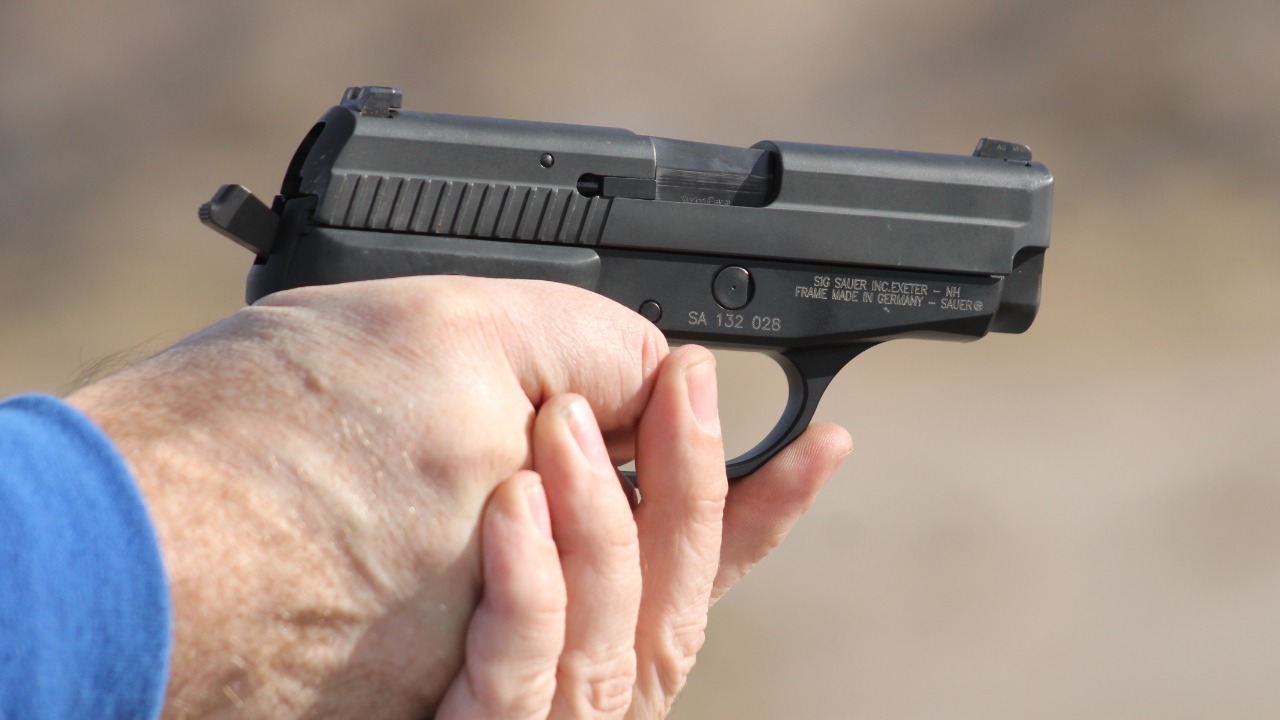
Even if a rifle or shotgun is the primary tool, I see a handgun as the most realistic first grab in many emergencies. Handgun Home Defense Strategies emphasize Why Handguns Excel in Home Defense, pointing out that Handguns stand out for their compact size and quick accessibility, which matters when someone is startled awake or moving through tight hallways, as laid out in the Aug discussion of handgun home defense strategies. At the same time, a broader look at Best Guns For Home Defense notes that while a simple handgun might be the most common choice, long guns often offer more force multiplication in terms of stability and terminal performance, which is why many trainers recommend pairing a pistol with a shotgun or carbine rather than relying on it alone, as argued in a Dec feature on best guns for home defense.
How and where those guns are stored is just as critical as which model you buy. One detailed look at Gun Storage for Personal Defense and Foil Thieves argues that Single-location gun storage no longer makes sense and that Decentralized storage, with firearms staged in several secure points, lets a homeowner reach a defensive tool within seconds from multiple rooms, provided each location is locked and access is controlled, a concept laid out in a guide to places to store guns for home defense. Modern quick-access safes make that balance easier: compact biometric boxes from companies like Vaultek allow a pistol to be secured yet opened in seconds with a fingerprint or code, a design philosophy showcased across the Vaultek safe lineup, while modular lockboxes and cabinets from Hornady Security are built to integrate into furniture or closets so that long guns remain locked until needed, as seen in the Hornady Security range.
Building a defensible interior and family plan
Inside the home, the goal is to deny intruders access to loved ones and to control angles so you are not trading shots down long hallways. Practical training advice stresses that Denying an assailant access to vulnerable loved ones or potential hostages is an important aspect of planning, which means pre-designating a safe room where family members retreat and lock in while the armed defender takes a position of cover, rather than roaming the house, as explained in a Feb breakdown of 3 vital home defense tactics. Another detailed guide on home invasion preparedness frames this as Embracing the Role of Firearms in Home Safety, arguing that Optimal Placement and Position of safes in locations that are easily accessible to authorized users, but not obvious to intruders, is essential so that a homeowner is not forced to cross open spaces under stress to reach a gun, a point made in a Dec discussion of fortifying your home.
Training doctrine from experienced instructors reinforces that hardware is only half the equation. One widely watched lesson on how to develop a safe home defense plan, recorded in Aug, presses viewers with the blunt question of why would you not have every single upper hand that you can possibly have in your own home, then walks through rehearsing movement, communication and use of cover so that the first time you clear a hallway is not during a real break-in, as demonstrated in the video on home defense planning. For rural homeowners who may be their own first responders, rifle-focused instruction notes that Settings matter and that a rifle is often the best defensive weapon choice in a rural setting, provided the owner spends time Knowing how to equip it to fight effectively with appropriate optics, lights and slings, a point driven home in a detailed look at setting up a rural home defense rifle.
Safety, law and responsible culture
No rural defense plan is complete without a sober look at safety and the law. California’s Castle Doctrine Explained The castle doctrine in California allows residents to use deadly force within their homes when they reasonably believe an intruder intends to commit a violent act, and it does so without the duty to retreat, but legal analysts warn that misjudging a situation can still lead to legal consequences, which is why they urge homeowners to understand their state statutes before a crisis, as detailed in an Apr analysis of whether you can shoot someone who breaks in. Inside the home, safe handling habits must be non-negotiable: one practical guide stresses that Under proper supervision, their curiosity should be sated by allowing them to explore it, arguing that children who are taught to respect firearms, see them unloaded and learn the rules under adult eyes are less likely to sneak a look later, and that in any emergency, the priority is to call law enforcement there in a hurry, as outlined in an Aug discussion of how to handle a firearm in the home.
Finally, I see gear as a force multiplier only when it is integrated into regular practice. Tactical Gear Essentials for the Range remind shooters that a well-rounded setup includes more than just the firearm, and that Tactical accessories improve organization, safety and efficiency, from quality holsters and slings to lights and medical kits, all of which translate directly from the range to a real defensive encounter, as laid out in a guide to tactical gear essentials for the range. On the shotgun side, manufacturers like Mossberg have responded to this reality with purpose-built defensive lines such as the 590 and the 940 Pro, the latter a semi-automatic platform tuned for reliability and fast cycling that can be adapted from sporting use to security roles with the right barrel and accessories, as the specifications for the Mossberg 940 Pro highlight, while broader defensive shotgun overviews continue to emphasize that Pump action or semi-auto, both are great for defending the home with when matched to the shooter and the environment, a point reinforced in a Dec review of pump and semi-auto shotguns.

Leo’s been tracking game and tuning gear since he could stand upright. He’s sharp, driven, and knows how to keep things running when conditions turn.