Twelve dog breeds that exist due to unintended breeding outcomes
Modern dog breeds often look like the result of meticulous planning, yet a surprising number emerged from accidents, side effects and genetic quirks that no one fully intended. From giant guardians to dwarf-legged scent hounds, many familiar companions exist because early breeders chased one trait and stumbled into something else entirely. I trace twelve such breeds and types whose very existence is tied to unintended outcomes, and what their stories reveal about how far selective breeding has reshaped the descendants of wolves.
From wolves to accidents: how unintended breeds began
Long before kennel clubs and pedigrees, early humans were simply living alongside opportunistic wolves that learned to scavenge from camps. Genetic work suggests that around 23,000 years ago, nomadic groups in what is now Siberia began feeding scraps to bold wolves, setting off a slow process of domestication that no one at the time could have recognized as the birth of dogs. Later, as people moved into new climates and ways of life, they began informally favoring animals that could hunt, guard or pull, but the genetic consequences of pairing particular dogs were largely invisible.
Modern research on the Dog genome shows how quickly such choices can lock in extreme traits. Purposeful selection for size, coat or temperament often dragged along hidden mutations, and in many cases entire breeds crystallized around those side effects rather than the original goal. That pattern, visible in both ancient and recent lineages, sets the stage for understanding why so many beloved dogs are, in effect, beautiful accidents.
Great Dane: the “Apollo of Dogs” born from disputed crosses
The towering Great Dane is often marketed as a triumph of deliberate design, yet its origins are murkier and more accidental than the sleek silhouette suggests. Historical accounts describe the Great Dane as the “Apollo of Dogs,” a nod to its statuesque build, but accounts of how that build emerged vary. Some breeders argue that early boarhounds were intentionally crossed with sighthounds to add speed, while others, including owners surveyed in at least one informal poll, say the defining mix of size and elegance was never fully planned.
What is clear is that once the giant frame appeared, breeders doubled down on it, even as health problems like joint disease and bloat followed. The Great Dane’s story illustrates how quickly an unplanned combination can be frozen into a standard when people fall in love with a look. In genetic terms, that means a narrow slice of ancestry now defines the “correct” appearance of a dog that began as a fluid, working cross, a pattern that recurs across other unintended breeds.
Basset Hound: dwarf legs from a hunting experiment
The Basset Hound is a textbook case of a functional idea spiraling into an exaggerated body plan. Originally, French hunters wanted a slow, ground-level scent hound that could track game on foot, so they drew on low-slung dogs that likely descended from the St. Hubert hound. Over time, the Basset line, Originating in rural France, was refined for its nose and manageable pace, not for cartoonishly short legs or drooping skin.
As conformation shows grew in influence, breeders began emphasizing the dwarfism that made the dogs distinctive, and that is where unintended consequences multiplied. Veterinary analyses of Selective breeding note that exaggerating the disproportionately short legs of the Basset Hound has produced bowed limbs and joint strain. The same skeletal mutation that once helped hunters keep up on foot now predisposes many modern Bassets to back pain and mobility issues, a reminder that chasing a visual trademark can distort the original working purpose.
Dachshund: a tunneling specialist pushed into spinal risk
The Dachshund began as a practical solution to a specific problem: how to send a fearless dog into badger dens. Early foresters selected for courage and a long, low body that could fit underground, but they did not set out to create a breed with a high rate of spinal injury. As with the Basset, the same dwarfing mutation that produced the Dachshund’s short legs and elongated back was gradually intensified as people prized the distinctive outline.
Modern assessments of Basset Hound and warn that selecting for ever more extreme proportions has led to bowed legs, spinal deformities and a higher risk of paralysis from ruptured vertebral disks. The Dachshund’s unintended evolution from rugged earthdog to fragile back patient encapsulates a broader pattern in purebred dogs, where a functional trait is pushed past the point of health because it reads as “typical” in the show ring.
Pug and other toy breeds: tiny bodies from a single mutation
Many toy breeds look like deliberate miniaturizations of larger dogs, but genetic work suggests that their small size often traces back to a single mutation that no one planned. One analysis notes that “One of the main genetic changes responsible for small size in certain dog breeds, such as Pomeranians and Chihuahuas, evolved in wolves long before domestication.” That mutation appears to have been floating in wild populations, only to be captured and amplified when humans began favoring compact companions.
The Pug, often cited alongside the Dachshund and spotted breeds in discussions of extreme traits, exemplifies how far that amplification can go. A genetic survey of modern dogs notes that breeds are often recognized for distinctive features like the wrinkled face of a pug, but also warns that such hallmarks are frequently the result of intense inbreeding within closed registries. In that analysis, the Dog breeds with the most iconic looks also carry some of the heaviest genetic loads, suggesting that the original size mutation was only the starting point for a cascade of unintended respiratory and eye problems.
Shiba Inu: a primitive landrace shaped by hidden disease
Not every unintended outcome is visible on the outside. The Shiba Inu, often grouped with other “primitive” spitz breeds, descends from regional dogs that predate modern kennel standards, yet even this relatively natural lineage has been reshaped by chance mutations. A veterinary report on a lysosomal storage disorder in Shibas describes how a single harmful change spread quietly through a breeding population before anyone recognized the pattern of neurological decline.
According to that analysis, Starting from a kennel where a mutation is common, affected dogs can be reproduced sporadically and unintentionally. Therefore, if breeders do not test for the defect, they may suddenly face a serious health crisis in what they assumed was a robust, traditional breed. The Shiba’s case shows that even when humans are not trying to sculpt a new body type, the simple act of maintaining a closed line can unintentionally create a “new” disease profile that becomes part of the breed’s identity.
Village dogs, landraces and the line between natural and man-made
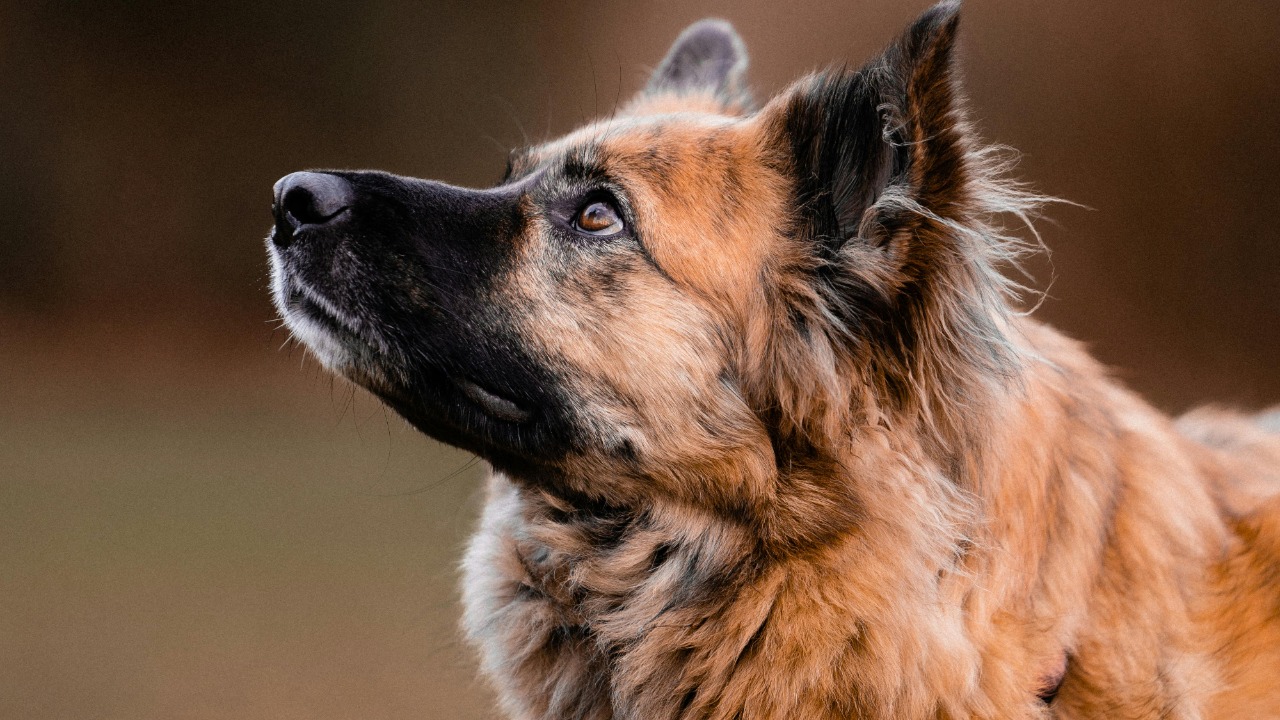
Alongside formal breeds, there are populations of “village dogs” that evolved with minimal human direction, and they highlight how much of modern breed identity is accidental. Discussions among zoologists about Did Primitive dog Breeds and Feral dogs often ask whether these free-breeding populations Dogs Reveal the, precisely because they show what dogs look like when people are not micromanaging matings. Their medium size, pricked ears and short coats recur across continents, suggesting that natural selection, rather than human fashion, is doing most of the work.
Canine specialists describe these populations as landrace dogs, meaning they evolved naturally in specific regions without deliberate selective breeding. In contrast to tightly defined show breeds, landraces are shaped by climate, work and survival, and their traits blur gradually across geography. The existence of these semi-feral dogs underscores how artificial the modern concept of a “breed” really is, and how many of the dogs we label as distinct types are simply frozen snapshots of what was once a fluid, village-style population.
Extinct Hawaiian Poi Dog: when unchecked mixing erases a type
If some breeds arise accidentally, others disappear the same way. Historical accounts of island dogs describe how the Hawaiian Poi Dog once lived alongside Indigenous communities as a semi-sacred companion and occasional food source, with a distinctive look shaped by isolation. That identity began to unravel when foreign dogs arrived and bred freely with the local population, not through any coordinated program but through everyday, unmanaged matings.
Accounts of why some dog types vanish note that One of the most recent examples of a breed going extinct involved exactly this kind of unchecked breeding, with the Poi Dog’s traits diluted by mixing with the island’s feral dogs. No one set out to eliminate the type, but without active efforts to preserve it, the genetic signature that defined the Poi Dog simply dissolved into the broader canine gene pool. It is a cautionary mirror image of accidental breed creation, showing that identity can be lost just as unintentionally as it is forged.
Inbreeding, hybridization and the rise of “mixed” dogs
Behind many unintended breeds lies a simple mechanism: who is allowed to mate with whom. Analyses of modern pedigrees show that purebred populations are often highly inbred, which concentrates both desired traits and hidden defects. One large survey found that Dec pedigreed dogs carry levels of relatedness comparable to offspring of close relatives in humans, a byproduct of closing studbooks and recycling popular sires. That genetic bottleneck can turn what began as a minor quirk into a defining, and sometimes harmful, feature of a breed.
On the other side of the spectrum are the countless unregistered crosses that appear when dogs mate outside those constraints. Geneticists studying canine ancestry note that Mixed dogs, often called mongrels, are usually the result of accidental, unplanned matings between purebreds or other mixes. Some of today’s fashionable “designer” crosses, from doodles to puggles, began as such accidents before being rebranded as intentional. The contrast between tightly inbred lines and free-breeding mixes shows how both extremes, isolation and openness, can generate new canine types without anyone sitting down to design them from scratch.
Ancient lineages and the long arc of unintended selection
Even the oldest recognizable dog lines carry the fingerprints of unintended outcomes layered over centuries. Genetic mapping of early dogs identifies at least two major ancestral streams, including Genetic evidence for The Eastern Eurasian lineage that gave rise to sled dogs and other cold-adapted types. Those dogs were shaped by climate and work, but also by which individuals happened to survive and reproduce, a process that inevitably folded in random mutations and chance matings.
Modern behavioral histories point out that Older theories once imagined humans marching into caves to seize wolf pups, but more recent interpretations suggest a slower, mutual adaptation. Whil people later refined specific roles, from guardians to snow dogs from Northern Russia, much of the early shaping of breeds was an emergent property of settlement patterns, trade routes and survival pressures. The twelve dogs and types threaded through this story, from the Great Dane to the Hawaiian Poi Dog, are snapshots along that long arc, each one a reminder that the canine world we know is as much the product of unintended consequences as it is of human intent.

Leo’s been tracking game and tuning gear since he could stand upright. He’s sharp, driven, and knows how to keep things running when conditions turn.