15 revolvers that are climbing in value
If you pay attention to auction catalogs and online classifieds, you can see certain wheelguns heating up fast. Prices are being driven by what one expert calls the “Holy Trinity” of Craftsmanship, Rarity, and Story, and the right revolver can quietly outpace more glamorous semi‑autos. Here are 15 specific models that I see climbing in value, and why they are getting harder to buy without stretching your budget.
1. Colt Python (pre‑2005)
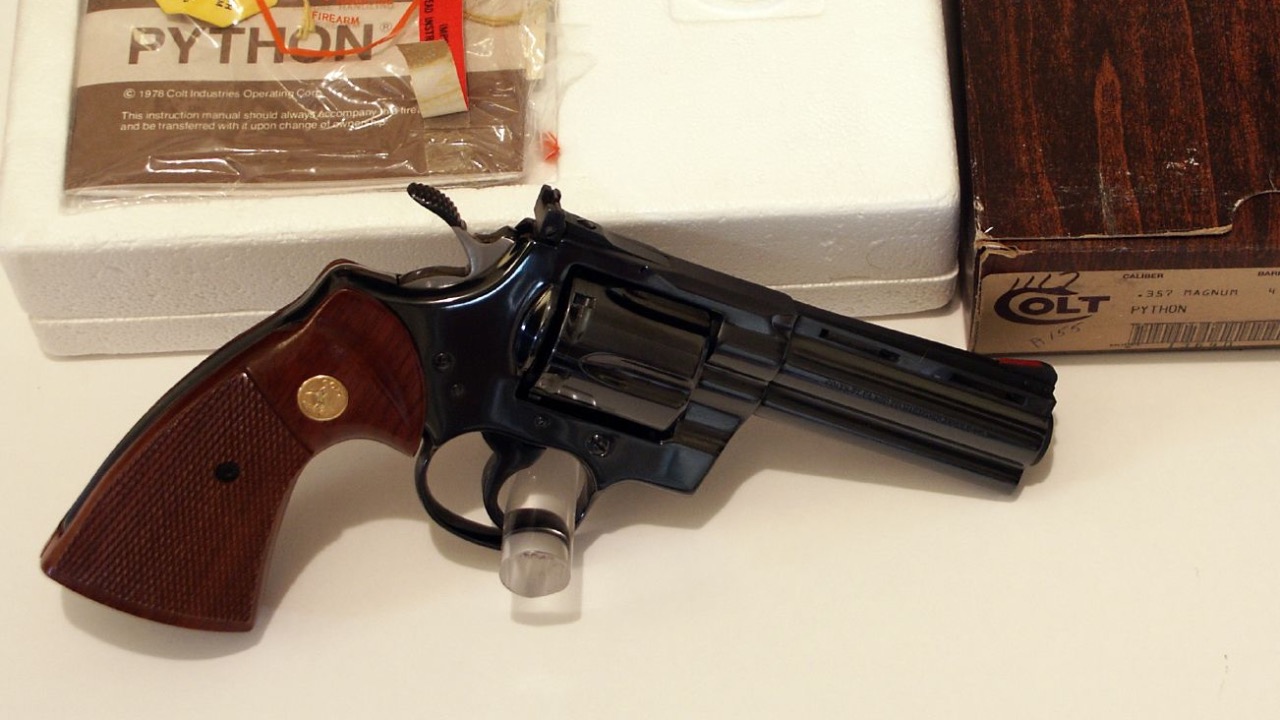
The Colt Python, especially pre‑2005 production, is the poster child for a revolver that has broken out of the shooter category and into the investment lane. One detailed look at which guns hold value notes that older Pythons can bring between $1,500 and $5,000 or more, depending on condition and configuration, putting them squarely in the “money gun” bracket. That kind of spread shows how much collectors will pay for sharp edges, original finish, and the right barrel length.
Values are climbing because the Python nails that Holy Trinity of Craftsmanship, Rarity, and Story. Hand‑fitted lockwork, deep polish, and the “snake gun” legend all feed demand, while supply is capped by the end of the original production run. For anyone trying to park cash in a revolver that still shoots beautifully, a clean, early Python is hard to beat, and every new auction record drags the rest of the market upward.
2. Colt Single Action Army Revolver “Peacemaker”
The Colt Single Action Army Revolver, often called The Iconic Peacemaker, sits near the top of any list of Most Valuable Collector Firearms. One survey of high‑end collections singles it out as a flagship revolver, right alongside classic Winchester Model rifles, which tells you where serious money is flowing. Original black‑powder frame guns, early smokeless variants, and documented frontier pieces are all seeing steady appreciation as untouched examples dry up.
What keeps the Peacemaker climbing is that it is more than a six‑gun, it is a piece of American mythology. When a revolver is instantly recognizable to people who have never fired a gun, demand is going to stay strong. As new collectors age into the income bracket where they can chase childhood Western heroes, they bid up the nicest examples, and that pressure filters down to even shooter‑grade first‑generation guns.
3. The Colt Paterson
The Colt Paterson is not just another early percussion piece, it is described as the world’s first practical revolver, designed by Samuel Colt in 1836 and named after the town of Paterso. A detailed rundown of rare wheelguns points out that surviving examples are incredibly rare and valuable, because production numbers were low and many were used hard on the frontier. When a model sits at the root of the entire revolver family tree, collectors treat it like a blue‑chip stock.
Prices on The Colt Paterson have been climbing because advanced buyers are chasing the earliest, most historically loaded designs. There is no modern substitute for that kind of provenance. Even heavily worn examples with honest repairs are bringing strong money, and high‑condition guns with original accessories are in a different financial universe. For most of us, the Paterson is a museum piece, but its rising value sets the tone for the rest of the Colt market.
4. Smith & Wesson Triple Lock
The Smith & Wesson Triple Lock, sometimes called the New Century, is singled out by one investment guide as “the engineering marvel” of early double‑action revolvers. That source highlights how the third locking point at the crane gave the big frame outstanding strength and tight lockup, which modern shooters still appreciate. Because production was relatively short and many were reworked or refinished, original Triple Locks are getting harder to find in collector‑grade shape.
Values are climbing as more people realize this is the revolver that set the pattern for later large‑frame .44s. It has Craftsmanship in its fit and finish, Rarity in its limited run, and Story in its role bridging black‑powder and smokeless eras. When those three boxes are checked, prices tend to move in one direction. If you see a sharp Triple Lock with matching numbers and period grips, you are looking at a piece that is unlikely to get cheaper.
5. Early Smith & Wesson K‑frames
Early Smith & Wesson K‑frame revolvers, especially pre‑war target models and early post‑war .38s, are gaining ground as shooters discover how refined they feel compared with many modern guns. The company’s own history of precision revolver production, reflected in the long catalog of classic models on the Smith & Wesson site, underlines how important these mid‑size frames have been. Collectors are starting to separate original blue, pinned‑barrel guns from later cost‑cut versions.
As the top‑tier models like the Python and Triple Lock move out of reach, buyers turn to K‑frames as an affordable way to get into old‑school quality. That second‑tier attention is already nudging prices up on clean Model 10s, Model 14s, and similar variants. For anyone who wants a revolver that can still ride in a holster while quietly gaining value, early K‑frames are worth a hard look.
6. Ruger Blackhawk (three‑screw)
The Ruger Blackhawk, especially the early three‑screw versions, is benefiting from a reassessment of Ruger as more than a “working gun” brand. A detailed valuation guide on Determining Ruger Revolver Values calls Ruger’s wheelguns benchmarks of strength, accuracy, and performance, and notes how iconic models are aging into collectible status. Those early Blackhawks, with their flat‑top frames and unconverted lockwork, are now old enough to attract serious attention.
Because Ruger built its reputation on durability, many Blackhawks were carried, hunted with, and modified, which makes original examples more desirable. As hunters and handloaders who grew up with these revolvers start to downsize collections, the nicest guns are being cherry‑picked, and auction prices reflect that. If you want one that will both shoot heavy loads and likely climb in value, a clean three‑screw Blackhawk is a smart place to park money.
7. Ruger Redhawk .44 Magnum
The Ruger Redhawk in .44 Magnum is another model where shooter demand is quietly turning into collector pressure. The same research on Determining Ruger Revolver notes that Ruger revolvers are known for durability and solid performance in both form and function, which is exactly what heavy‑recoiling .44 shooters want. Early stainless Redhawks with long barrels and original grips are starting to separate from the pack.
Most of the “money” guns are the ones people actually want to own and shoot, and the Redhawk fits that description. As .44 Magnum hunting and backcountry carry stay popular, demand for strong, serviceable revolvers keeps rising. When new buyers cannot find affordable Pythons or Triple Locks, they often pivot to high‑condition Redhawks, which nudges values higher year after year.
8. Colt Detective Special
The Colt Detective Special has long been a favorite among snub‑nose fans, but only recently has it started to see real collector‑grade appreciation. Compact, six‑shot, and tied to mid‑century law enforcement, it checks the Story box that modern investors look for. As larger service revolvers get priced out of reach, these small‑frame Colts are being recognized as historically important in their own right.
Short‑barreled revolvers were often carried daily and shot with duty ammo, so high‑condition Detective Specials are scarce. That scarcity, combined with the Colt name and the gun’s role in classic crime fiction and film, is pushing prices up. For someone who wants a carryable revolver that is climbing in value, a boxed Detective Special with sharp rollmarks is a smart target.
9. Korth Combat revolvers
Korth Combat revolvers sit at the extreme high end of the modern market, and their prices reflect that. One detailed breakdown of investment‑grade wheelguns notes that You can customize almost everything on a Korth, and asks, “Want a specific barrel length? Custom grips? Special engraving? Korth will” build it to order. That level of Custom and Special work, combined with low production, gives these guns built‑in scarcity.
Because Korth revolvers start expensive, they attract buyers who treat them more like mechanical art than range tools. When those owners eventually sell, they expect to recover their money, and recent sales suggest the market agrees. As more shooters learn about Korth through social media and high‑end dealers, demand for older Combat models with unique options is likely to keep nudging prices higher.
10. Freedom Arms Model 83
The Freedom Arms Model 83, especially in heavy calibers like .454 Casull, has become a benchmark for single‑action strength and precision. Built in small batches with tight tolerances, these revolvers appeal to handgun hunters who want rifle‑like accuracy in a holsterable package. That combination of performance and scarcity is exactly what pushes a working gun into the investment category.
As more big‑game hunters share long‑range revolver kills and field reports, the Model 83’s reputation keeps growing. Replacement cost on a new gun is already high, so used prices have a solid floor. When you add in limited‑run chamberings and special finishes, you get a revolver that not only holds value but has clear upside as more people discover what it can do.
11. Colt New Service
The Colt New Service is a large‑frame double‑action that served in both military and police roles, and it is finally getting the respect it deserves. Chambered in cartridges like .45 Colt and .455, it bridged the gap between black‑powder service guns and modern smokeless designs. Collectors who once focused only on Single Action Army models are now chasing New Service variants with unit markings and original finish.
Because these revolvers were true working guns, many show heavy holster wear or arsenal refinishing. That makes untouched examples with sharp inspector stamps much more desirable. As advanced Colt collections fill out, the New Service is moving from “nice to have” to “must have,” and prices at auction are starting to reflect that shift.
12. Nagant M1895
The Nagant M1895 revolver is a good example of a surplus gun that has moved from bargain bin to collector shelf. One discussion of future collectibles points out that Already, firearms such as the CZ (actually VZ) 82 and the Nagant are being recognized as sleepers that will not stay cheap forever, and it even highlights the specific metric 82 when talking about that pattern. As import supplies dry up, the days of sub‑$200 Nagants are fading.
What makes the Nagant interesting is its unique gas‑seal system and long service history in Eastern Europe. Those quirks give it both Craftsmanship and Story, even if the trigger pull is heavy. As more shooters realize they passed on crates of these revolvers a decade ago, they are willing to pay more for matching‑number examples with original holsters and accessories.
13. Colt Officer’s Model Target
The Colt Officer’s Model Target was once a serious competition revolver, and its build quality shows it. Adjustable sights, tuned actions, and long barrels made it a favorite on bullseye ranges, and those same traits appeal to today’s collectors. As high‑end Pythons and Diamondbacks climb out of reach, the Officer’s Model is being rediscovered as a more affordable way to get into classic Colt target iron.
Because these guns were often used heavily in competition, pristine examples are not common. That scarcity, combined with the Colt rollmark and the revolver’s role in pre‑war and mid‑century target shooting, is driving prices up. For shooters who still enjoy punching paper with iron sights, an Officer’s Model Target offers both performance and a rising value curve.
14. High‑grade engraved Colts
High‑grade engraved Colts, especially factory‑documented pieces, are seeing some of the steepest price climbs in the revolver world. A detailed look at Gun Prices and Trends notes that an engraved, cased Colt Model brought a standout hammer price and is likely to keep climbing in price in 2023 and beyond, which shows how much weight collectors put on factory artistry. When you combine engraving, casing, and accessories, you get a package that is far rarer than a standard production gun.
These revolvers sit at the intersection of fine art and firearms, which attracts a different pool of buyers. Wealthy collectors who might not care about a plain service revolver will compete hard for a documented engraved Colt with original case and tools. That cross‑market demand is why values on these pieces often move faster than the broader revolver market.
15. Documented “shooter‑grade” classics
Not every climber is rare on paper. A recent rundown of 15 revolvers gaining serious value points out that a revolver does not have to be rare to climb in value and that Most of the “money” guns are the ones people actually want to own, with strong design and real‑world utility. That insight lines up with Key Takeaways from another analysis that say it is All About the Holy Trinity of Craftsmanship, Rarity, and Story when picking a Collectible Gun.
In practice, that means documented “shooter‑grade” classics, from police‑trade K‑frames to honest Single Action Army revolvers with holster wear, are getting bid up if they have the right background. When a revolver comes with a clear Story, even if it is not mint, it can still check enough boxes to climb. I look for guns that balance condition with history, because those are the ones regular shooters can still afford while the market moves.

Asher was raised in the woods and on the water, and it shows. He’s logged more hours behind a rifle and under a heavy pack than most men twice his age.