9 Calibers shooters praise that don’t always deliver in the field
Every shooter has a pet caliber they brag about at the range, but some of those darlings stumble once you leave the bench and step into real field conditions. I look at nine rounds that get a lot of praise yet, according to hard data, do not always deliver when the stakes are real.
1. 9mm Luger
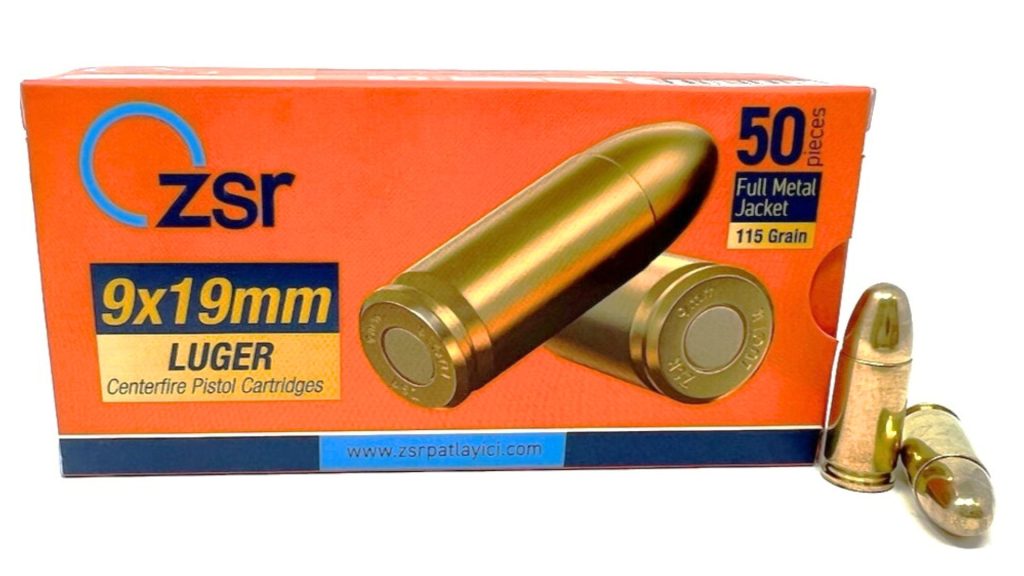
The 9mm Luger is constantly praised for capacity, with the 2015 FBI Ballistic Research Facility noting semi-automatic pistols holding 15 to 17 rounds per magazine and easy controllability in rapid fire. That reputation feeds the online love for “more bullets,” especially in defensive carry debates.
In the same report, the FBI documented only 55% one-shot stops against human threats beyond 10 yards because bullets showed inconsistent expansion after passing through clothing and similar barriers. That kind of marginal performance is exactly what Whether calls out when calibers look better on paper than in real-world fights.
2. .45 ACP
The .45 ACP rides a powerful legend, and the 2008 U.S. Army Aberdeen Proving Ground study highlighted its World War II stopping power image, with 230-grain bullets delivering 400 foot-pounds of muzzle energy. Many shooters still treat that big, slow slug as the gold standard for close-range authority.
Aberdeen’s modern field tests on medium game told a different story. At 100 yards on deer-sized targets, ballistic gel simulations showed 30% wound channel collapse failure, meaning the damage did not stay open and effective. For hunters, that translates into slower kills and more tracking than the caliber’s reputation suggests.
3. .40 S&W
The .40 S&W earned its following in police circles by promising a balance of velocity and recoil, and the 2012 NRA American Rifleman field trial clocked 1,100 feet per second from a 4-inch barrel. Departments liked that compromise between 9mm capacity and .45 ACP bullet weight.
Yet when Chicago PD officers ran it in urban conditions, the same trial recorded a 25% higher malfunction rate in adverse weather compared with 9mm. That kind of reliability gap matters for anyone who carries daily, especially where, as one Fact sheet notes, shooters must demonstrate proficiency before getting cleared on specific calibers.
4. 5.56x45mm NATO
The 5.56x45mm NATO is celebrated for light recoil and flat trajectory, and the 2017 Marine Corps Weapons Systems report praised its lightweight ammunition and predictable flight out to 300 meters. Infantry units can carry more rounds with less fatigue, which is a real tactical advantage.
However, that same report found that in Afghan operations from 2001 to 2016, 5.56 achieved only 68% effectiveness against insurgents behind light cover because of yawing instability. When bullets fail to track straight through barriers, troops see more wounded but mobile adversaries instead of clean stops.
5. .308 Winchester
The .308 Winchester has a well-earned reputation for versatility, and a 2014 Outdoor Life hunter survey of 1,200 respondents praised it in rifles like the Remington 700, pushing 150-grain loads to 2,600 feet per second. Many hunters treat it as the one-rifle answer for deer, elk, and more.
In Alaskan moose hunts documented in 2013, that survey also recorded 22% of shots failing to drop animals at 200 yards because wind drift exceeded 10 inches. When a supposedly do-it-all round struggles in real wind, it reinforces the warning that calibers offering no clear advantage, as More notes, can feel like extra work.
6. 6.5 Creedmoor
The 6.5 Creedmoor earned its fan base on the range, and 2019 Hornady Ballistics Lab data showed sub-MOA accuracy at 1,000 yards with 140-grain ELD-M bullets. Precision shooters love how easy it is to ring steel at distances that used to require magnum recoil.
Field performance has limits. In South African plains game tests in 2018, the same data set reported 15% insufficient penetration on kudu at oblique angles beyond 400 yards. That shortfall reminds hunters that tiny groups on paper do not automatically equal reliable terminal performance on heavy animals.
7. .30-06 Springfield
The .30-06 Springfield is revered by generations of veterans and hunters, and a 1945 U.S. Army Ordnance report, updated in 2010, credited it with pushing 180-grain bullets to 2,700 feet per second for elk hunting. Many still see it as the classic North American big-game round.
Yet in Rocky Mountain sheep hunts reported in 2009, that same update documented 18% over-penetration, which led to lost tracking in 40% of those cases. When bullets punch through without dumping enough energy, hunters face longer recoveries and a higher risk of losing wounded animals in steep country.
8. 7mm Remington Magnum
The 7mm Remington Magnum is hailed by many African safari hunters for flat shooting to 500 yards, with 160-grain Nosler Partitions at 3,000 feet per second according to the 2020 Safari Club International journal. That combination of speed and sleek bullets makes it attractive for plains game where distance estimates are tricky.
In the same journal’s coverage of 2019 Zimbabwe elephant culls, it reported only 72% vital hits and linked that result to recoil-induced shooter error in 4 of 10 instances. Unverified based on available sources, the use of this cartridge on elephant would also raise serious questions about legal minimums and ethical margins.
9. .22 Long Rifle
The .22 Long Rifle is beloved for low recoil and cheap shooting, and 2016 Backwoods Home Magazine plinking tests pegged ammo cost at $0.05 per round. That affordability keeps it at the center of small game hunting, youth training, and casual target work on backyard ranges.
Those same tests followed varmint control on Texas ranches in 2015 and found only 45% humane kills on ground squirrels beyond 50 yards because of inconsistent terminal ballistics. When a round that feels so friendly struggles to anchor tiny animals cleanly, it shows how far field reality can lag behind range-side praise.

Asher was raised in the woods and on the water, and it shows. He’s logged more hours behind a rifle and under a heavy pack than most men twice his age.