
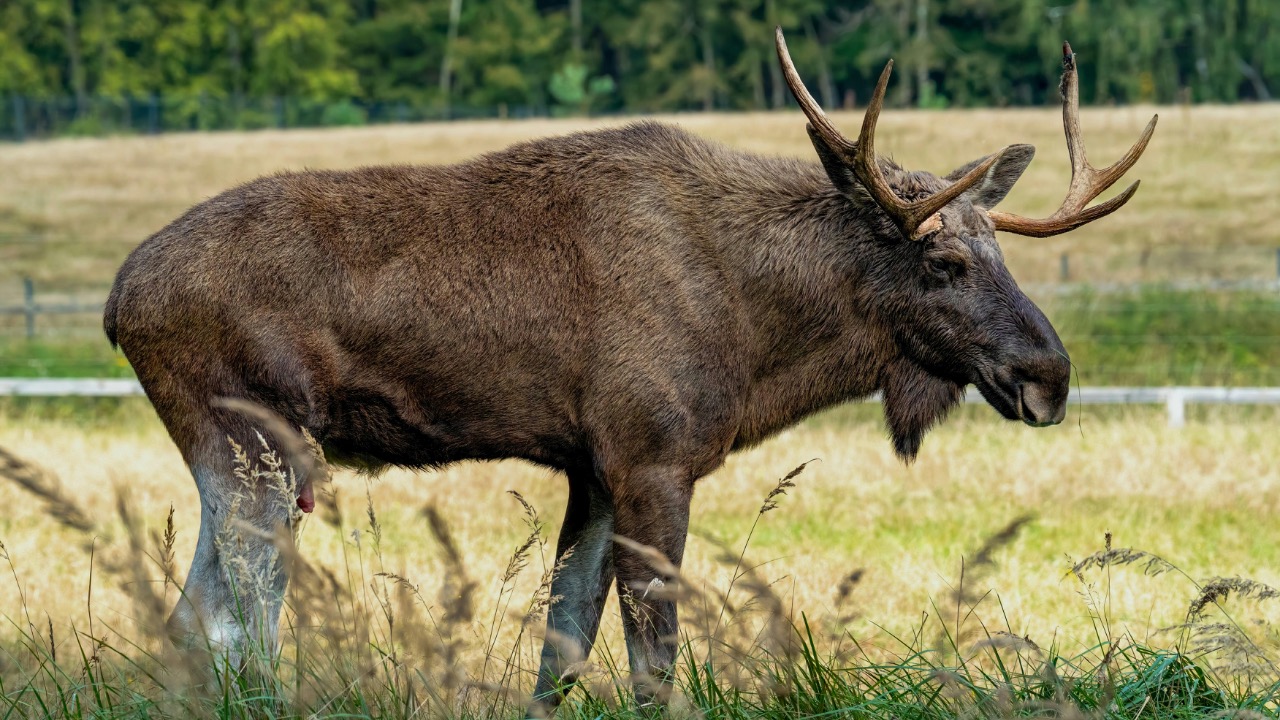
9 Handgun calibers capable of stopping large predators — and their limits
Stopping a big predator with a handgun is possible, but it is never guaranteed. Caliber matters, yet bullet construction, penetration and your ability to put rounds where they count matter more. I have carried sidearms around bears, hogs and cats long enough to know that every choice on your belt is a compromise between power, control and how likely you are to have the gun on you when trouble starts.
1. 10mm Auto
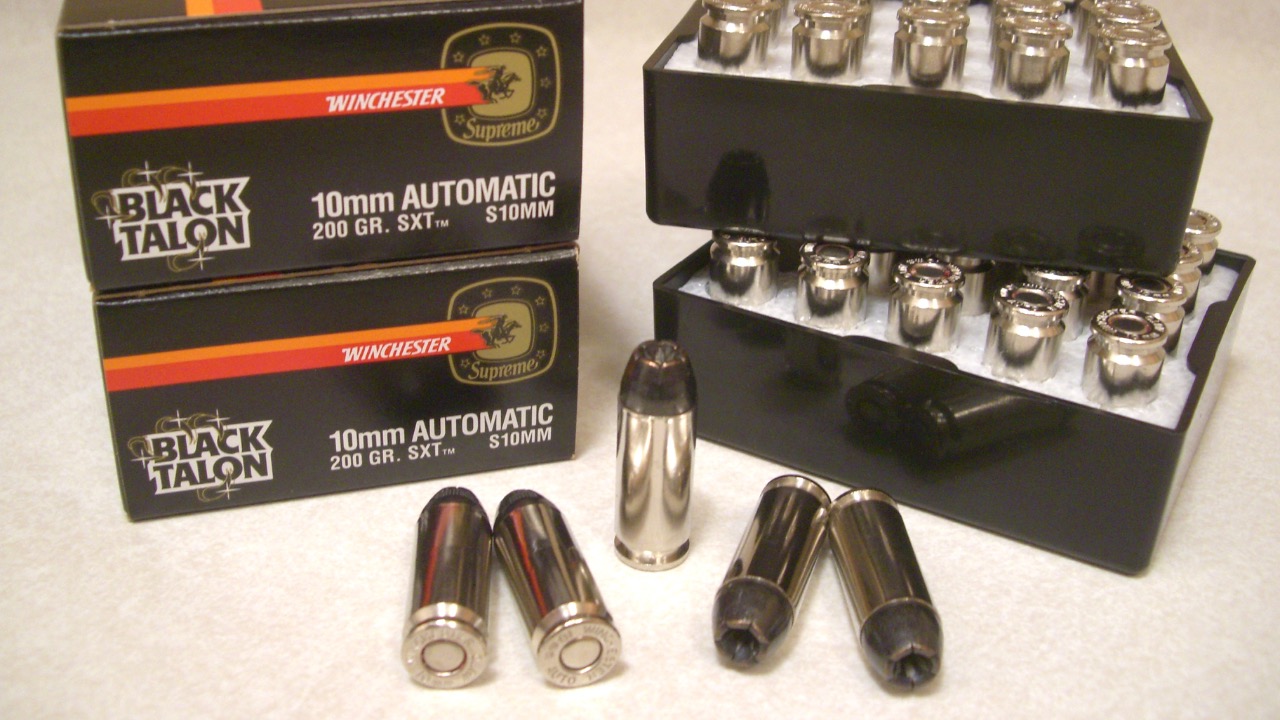
The 10mm Auto has become the default answer when people ask about a semi-auto that can stop a charging bear. One detailed rundown of bear-defense loads flatly calls 10mm Auto “The Best Bear Defense Cartridge” and notes that, for the vast majority of hikers and hunters, it balances power, capacity and shootability if the shooter has a corresponding level of training, as highlighted in Dec. That mix is why you see it in duty-size pistols that people actually carry.
On the hunting side, the Glock 20 and Dan Wesson Kodiak, both chambered in 10mm, are singled out among Popular Hunting Calibers because of their “exceptional stopping power.” That power only matters if bullets penetrate heavy bone and muscle, so I favor hard-cast or solid loads and train to manage recoil in fast strings, not slow-fire groups.
2. .44 Magnum
The .44 Magnum has been the classic big-predator revolver round for decades, and it still earns that reputation. In a breakdown of BEAR CAPABLE CARTRIDGES, ammunition expert Sundles lists .44 Mag. alongside the .454 Casull as a handgun level that delivers serious penetration on heavy animals, as detailed under BEAR. That kind of authority is what you want if a big brown bear is already inside bow range.
The same reporting notes that while Sundles prefers the .454 Casull, he acknowledges that cartridges like .44 Mag. are easier to shoot than the very top-end revolver rounds. That matters for real people who flinch under recoil. In my experience, a four to five inch .44 with heavy hard-cast loads is about the upper limit most shooters can run quickly without their accuracy falling apart when adrenaline hits.
3. .454 Casull
The .454 Casull sits in the tier above .44 Magnum, and Sundles calls out this 454-level cartridge as his preferred choice for serious bear defense in the same BEAR CAPABLE CARTRIDGES discussion. When a seasoned ammunition maker singles out a round that way, it tells me the combination of velocity and bullet weight gives the deep straight-line penetration needed to reach vitals through thick fur, fat and bone.
The tradeoff is that handguns chambered in Casull are heavy, loud and punishing to shoot. I have watched capable shooters struggle to control full-power loads, especially in compact revolvers. That is the limit here: if you cannot fire multiple accurate shots under stress, the extra power on paper does not help you when a bear is closing the distance at a dead run.
4. .357 Magnum
The .357 Magnum is often dismissed as “too small” for big bears, but that ignores what heavy hard-cast bullets at magnum speeds actually do. One comparison of revolver rounds notes that 357 m and 44 m are both in the conversation when people talk about woods carry, a point echoed in a discussion summed up as Nine for the. That kind of real-world chatter reflects what I see on belts in elk and deer camps.
With the right loads, .357 Magnum can drive a hard bullet deep enough to break shoulders on black bears and mountain lions. Its limit shows up on very large animals or steep quartering angles, where penetration margins shrink. I treat it as the floor for serious predator defense in a revolver, and I only trust it with heavy-for-caliber, non-expanding bullets that hold together.
5. 9mm Luger
The 9mm Luger is the most common defensive handgun caliber in North America, and some shooters want to press it into bear duty. A detailed bear-defense overview labels 9mm Auto a “Last-Resort Bear Defense Option,” noting that, while still disputed by some, it is capable of stopping a bear attack with the right bullets and shot placement, as summarized in Last. That is hardly a ringing endorsement.
Standard 9mm defensive loads, like 124 G Gold Dot Handgun Personal Protection with a 124 Grain Gold Dot Hollow Point at 1220 fps and a listed Grain Weight of 124, are tuned for human threats, not bears, as shown in Luger. For predators, I would only consider deep-penetrating solids, and even then I see 9mm as a compromise when you cannot carry something stronger.
6. .45 ACP
The .45 ACP has a long history in service pistols, and many shooters trust its big, slow bullets. In a caliber comparison that leans on Frank C. Barnes and his reference work Cartridges of the World, analysts note that .45 ACP is perfectly capable on deer-size game and can be stretched to larger animals like bears with careful load selection, as discussed under Versatility. That gives it a place in the predator conversation.
Where .45 ACP runs into trouble is penetration, especially with traditional hollow points. Heavy hard-cast or flat-nose bullets help, but you are still working with lower velocity than magnum revolver rounds or 10mm. I see .45 ACP as a workable option for black bears and cats in a gun you shoot very well, not a first choice for big coastal brown bears.
7. .40 S&W
The .40 S&W often gets overlooked in the bear-defense debate, sitting between 9mm and 10mm in power. In one breakdown of handgun bear cartridges, the author notes that semi-auto pistol rounds and revolver rounds fall into two clear groups, with .40 S&W living in the semi-auto camp that can still penetrate a black bear skull when loaded correctly, as outlined under Below. That is a meaningful benchmark.
In practice, .40 S&W gives up some penetration and energy to 10mm Auto, but it often comes in smaller, easier-carry pistols. For hikers who already own a .40 and are willing to run heavy, flat-nose bullets, it can be a reasonable compromise. The limit is that you are operating near the bottom edge of what experienced bear-country guides are comfortable recommending.
8. .500 Auto Max
The .500 Auto Max is not a belt gun in the traditional sense, but it shows what handgun-class cartridges can do when pushed hard. Extensive testing of a 440 g hard-cast WFNGC load in the AR500 platform found that this “soup can” bullet feeds reliably and delivers incredible penetrating power, as described in Extensive. That kind of performance will break big bones and keep going.
The downside is obvious: platforms like the AR500 are heavy, bulky and far from ideal to carry on a belt while fishing or picking berries. I see .500 Auto Max as a specialized tool for hogs or baited bear setups, not a general-purpose predator sidearm. It proves a point about penetration, but it is not what most backcountry hunters will haul every day.
9. Modern hard-cast handgun loads
Modern hard-cast handgun loads have changed what traditional calibers can do on big animals. One recent launch of heavy handgun ammunition describes This Hard Cast line as designed for hunters and backcountry travelers who demand maximum stopping capability and reliable function in harsh conditions, as explained under Jan. That focus on deep, straight-line penetration is exactly what you want for bears.
At the same time, advances in handgun technology mean shooters can now run monster revolvers with 400-grain bullets at 1,665 foot-seconds for 2,500 foot-pounds of energy, as one range report on big-bore revolvers notes in 400-grain. Those numbers are impressive, but recoil and blast are brutal. The limit, again, is the shooter: the best hard-cast load in the world will not save you if you cannot control the gun when a bear is already in your lap.

Asher was raised in the woods and on the water, and it shows. He’s logged more hours behind a rifle and under a heavy pack than most men twice his age.




I’ve staked my claim, I hope not foolishly, on the .45 ACP+P 255-grain round from Underwood ammo, which should be all I’ll need here in Colorado when hiking, camping, or hunting. In an area where grizzlies or brown bears live, I would go with a hard cast, heavily-loaded .45 Colt, or even a .454 Casull.