Calibers that stop game effectively without excessive meat damage
Hunters who care about the table as much as the trophy face a constant tradeoff: enough power to anchor animals quickly, but not so much destruction that shoulders and loins turn into bloodshot waste. Caliber choice is part of that equation, but bullet design, impact velocity and shot placement often matter just as much. I want to walk through the combinations that reliably kill cleanly while preserving as much usable meat as possible, from air rifles and rimfires up through classic big game rounds.
Across game sizes, the pattern is consistent. Lighter, slower or more controlled‑expansion bullets tend to spare meat, while high‑velocity, rapidly fragmenting designs can turn a rib cage into a wound channel that looks like it met a grenade. The goal is not simply “less damage,” it is targeted damage in the vital zone, followed by fast recovery and careful meat handling so the animal’s sacrifice ends up as high quality food rather than trim in the scrap bucket.
Why “enough gun” matters more than maximum power
Ethical hunting starts with cartridges that kill decisively, not with the smallest possible hole in the hide. Terminal performance research stresses that a certain level of impact energy, bullet construction and penetration is required to reach the vitals, and that some combinations are “simply hopeless on game” when they fail to do so, regardless of how gentle they might be on meat. Detailed work on effective game killing underlines how body size, bone structure and shot angle all change what “enough gun” looks like in practice.
At the same time, guidance on matching ammunition to species notes that to avoid excessive meat and hide loss, hunters should favor bullets that deliver adequate striking energy at moderate cost in recoil and blast, rather than chasing extreme velocities. Advice on which ammunition for frames terminal ballistic criteria as broad averages that must be adapted to real‑world conditions. In other words, the right caliber is one that balances penetration, expansion and controllability so the bullet does its work in the chest cavity instead of shredding edible quarters.
Shot placement: the first defense against wasted meat
Even the most carefully chosen caliber cannot compensate for a poor hit. Experienced instructors describe the classic, standard killing shots as the lung shot and the heart shot, both of which anchor animals quickly while keeping the highest value cuts largely intact. As one detailed guide on shot placement puts it, these are the shots “Most of” us seek, because they work in short order on all animals without turning shoulders into jelly.
That logic shows up in everyday hunter conversations too. In one discussion about the best round for whitetail with minimal meat loss, a commenter identified as Oct relayed how Jokr Thomas Jr argued that it “Doesn” really matter which cartridge you pick if you put “One” into the head, while Steve Berson countered that “Any” copper bullet in the ribs can be just as efficient. The exchange, captured in a whitetail thread, underlines a simple truth: precise hits in the vital zone, whether heart, lungs or brain, do more to protect meat than obsessing over a few thousandths of an inch in bore diameter.
Small game: airguns, rimfires and the risk of overkill
On small animals, the margin between clean kill and ruined carcass is razor thin. Guidance framed as “Why Does the Caliber Matter When Hunting Small Game” notes that when hunters scale up too far, they risk destroying “all of the meat” on animals like rabbits and squirrels, because the projectile’s energy overwhelms the tiny body. That same resource explains that caliber choice for is incredibly important precisely because there is so little edible tissue to spare.
For that reason, many hunters stick with air rifles and .22 rimfires. A broad hunting caliber chart points out that Air pellets are praised because they destroy less meat and are nearly silent, though the same source cautions that they are more affected by wind and have limited range. Another technical overview of air rifles notes that “Larger Game When” you step up to animals beyond typical small game, calibers such as .30 or larger are recommended to provide the kinetic energy needed for ethical kills, but that is a different use case than backyard squirrels. That guidance on air rifle calibers reinforces the idea that for edible small game, lower power and precise hits are usually the best recipe for full frying pans.
Rimfire and light centerfire choices for edible critters
When I look at practical recommendations, a pattern emerges around classic rimfire and light centerfire rounds. A field guide that answers “What is the best caliber for hunting squirrels and rabbits?” states plainly that a .22 LR is the classic go‑to for small game, describing it as quiet, affordable and effective without excessive damage. That same small game guide emphasizes that shot placement to the head or just behind the shoulder is what keeps meat loss minimal, not chasing exotic cartridges.
Gear lists for new hunters echo this approach. One beginner’s overview explains that for “Small Game” such as rabbits and squirrels, a .22 rimfire round is a good base option, fitting neatly into a kit that might also include a shotgun and basic field dressing tools. That advice on essential hunting gear dovetails with species lists that group “Small Game” like “Squirrels”, “Rabbits” and “Beaver” together, each of which can be cleanly taken with modest calibers. A dedicated section on Small Game hunting reinforces that the goal is to hit a vital area that is often just under an inch in diameter, as one airgun article notes, rather than to rely on raw power. That airgun piece explains that “Since” airguns are best suited for small game, the vital zone on these animals is tiny, and a pellet that lands outside it can wound without killing. The airgun guidance is a reminder that precision, not caliber inflation, is what keeps meat intact.
Medium game: proven deer calibers that spare the freezer
Once we move into medium‑sized game, roughly the 50 to 300 lbs class, the calculus shifts toward cartridges that can break bone and reach deep vitals without explosive overexpansion. A detailed breakdown of Medium “Sized Game Animals If” you are hunting animals in that 50 to 300 lbs range, such as deer, recommends pairing a .300 Win Mag with a 150 grain to 165 grain bullet, in part because that weight range balances penetration and controlled expansion. The same logic applies to more moderate cartridges: you want enough sectional density and construction to drive through the chest, but not such violent fragmentation that shoulders and backstraps are ruined.
Real‑world deer hunters often gravitate to mid‑bore, moderate velocity rounds for exactly this reason. One seasoned hunter described how “Over the” past decade, most of his whitetails were taken with .280 Rem., 7mm Rem. Mag. or 6.5 Creedmoor, all of which he credits with dropping deer in their tracks. That experience, shared in a piece on deer in its, highlights how cartridges like 280 and 6.5, when paired with appropriate bullets, can deliver decisive kills without the excessive bloodshot tissue sometimes seen with ultra‑fast magnums at close range.
Classic all‑rounders: .270, .30‑06 and their mild cousins
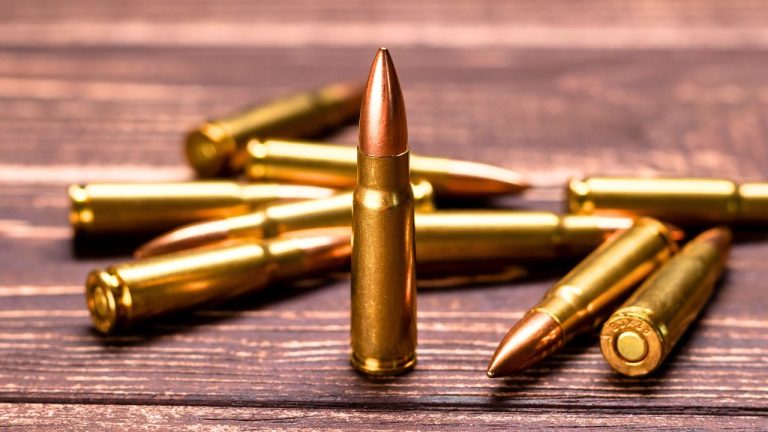
For hunters who want one rifle to do almost everything, it is hard to ignore the long track record of cartridges like .270 Winchester, .30‑06 Springfield and their lighter kin. A practical guide to minimizing meat loss lists “Common Hunting Calibers” that include 30‑30 Winchester, 30‑06 Springfield, 270 Winchester, 243 Winchester, 223 Remington and 300 Winche, and then walks through how bullet choice and shot placement with each can affect meat damage. That meat loss guide stresses that even a 270 or 243 can be gentle on venison if you avoid high‑velocity shoulder impacts at very close range and instead aim for the ribs.
Individual hunters echo this in their own rifles. In one discussion about smaller caliber deer rifles, a contributor wrote, “I shoot a Ruger1 280 rem., itseems to kill better than any other caliber I have shot (139 gr. SST).” He went on to say that while he likes that combination, others should shoot what they are confident with, and another commenter, Loren Wools, chimed in that 25‑06 is a great deer round. That exchange, preserved in a Ruger1 280 rem. thread, shows how a 280 with a 139 g SST bullet can be both lethal and relatively kind to meat when shots are placed through the lungs. Another shooter noted that his son now uses an old 6mm Remington and that it has a long history of “zapping game very dead, very quickly,” a testament to how mid‑caliber, moderate recoil rounds can be tuned for efficient kills. That comment on Remington performance reinforces the idea that you do not need extreme power to get clean results.
Bullet design: monolithic, bonded and lead‑free options
Caliber is only half the story. The other half is what the bullet does after impact. Modern monolithic designs, often made from copper, are engineered to expand in a controlled way while retaining most of their mass, which can reduce bloodshot meat compared with highly fragmenting lead soft points. A detailed explanation of Monolithic Bullets notes that the term describes a projectile constructed from a single piece of hard metal, usually copper, and that these bullets are designed to hold together, penetrate deeply and minimize the spread of lead fragments in meat.
European testing of lead‑free hunting bullets reaches similar conclusions. A comparison of two copper‑based designs reports that the mass stability of the bullet generally results in less game meat damage, while cautioning that no general statement can cover every scenario because results depend heavily on impact speed and the type of game being shot. That analysis of mass stability supports what many hunters see in the field: a well‑constructed copper or bonded bullet in a moderate caliber often punches a neat, lethal hole through the vitals, leaving shoulders and loins far more salvageable than a thin‑jacketed varmint bullet would.
Varmint and crossover rounds: .204 Ruger, 6.5s and low recoil options
Some cartridges sit at the intersection of varmint and medium game roles, and they can be excellent choices when meat preservation is a priority. A detailed caliber overview notes that the .204 Ruger is favored for varmint hunting and is particularly effective on small predators, with “Bullet Weight” “Commonly” kept light to maintain high velocity and flat trajectory. That same resource points out that the 204 Ruger can be tuned to take appropriate game without excessive meat damage when paired with the right bullet construction and impact distance.
Hunters who are recoil sensitive, or who simply want a lighter rifle, have more options than ever. One review of low‑recoil hunting cartridges highlights a “Rifle Option” built around Ruger’s Scout Rifle in 350 Legend, describing it as a handy, well‑built hunting rifle that pays homage to the original concept by Colonel Jeff Cooper. That discussion of the Scout Rifle in 350 Legend underscores how straight‑wall cartridges with modest recoil can still deliver clean kills on deer‑sized game while limiting meat loss, especially when combined with controlled‑expansion bullets. Similarly, a social media post from a well‑known hunter mentions carrying a ruger mark11 stainless 30‑06 with some 165’s ready to go when the game is not yet known, a nod to the versatility of a .30‑06 with 165 grain bullets. That recommendation, captured in a Not knowing the game scenario, shows how a balanced bullet weight like 165 can be both effective and relatively gentle on meat compared with ultra‑light, high‑speed projectiles.
From field to freezer: preserving meat after the shot
Even the perfect caliber and bullet cannot save meat that is mishandled after the animal hits the ground. Food science research defines “Meat” preservation as the application of methods to prevent or delay microbial spoilage and chemical changes in meat, preserving its nutritional value, flavor and texture. That technical definition of Meat preservation translates directly to the field: rapid evisceration, cooling and protection from dirt and insects are just as important as avoiding bloodshot shoulders.

Leo’s been tracking game and tuning gear since he could stand upright. He’s sharp, driven, and knows how to keep things running when conditions turn.