Kevin Costner’s 2003 western still stands out for its iconic shootout
Kevin Costner’s Open Range arrived in 2003 at a moment when the Western was treated as a relic, yet its climactic gunfight instantly felt like it belonged in the genre’s canon. The film’s final showdown is not just a technical showcase, it is the payoff to a slow‑burn story about loyalty, justice, and the cost of picking up a gun again. More than two decades later, that shootout still anchors conversations about modern Westerns and continues to draw new viewers to a movie that refuses to age.
What makes this particular burst of violence endure is how carefully everything around it has been built. Costner spends most of the film watching the horizon, tending cattle, and letting silences stretch, so that when the first shot finally cracks, it feels like a moral decision as much as a physical one. The result is a sequence that critics, fans, and fellow filmmakers still single out as one of the most gripping gunfights of the twenty‑first century.
The Western that refused to stay buried
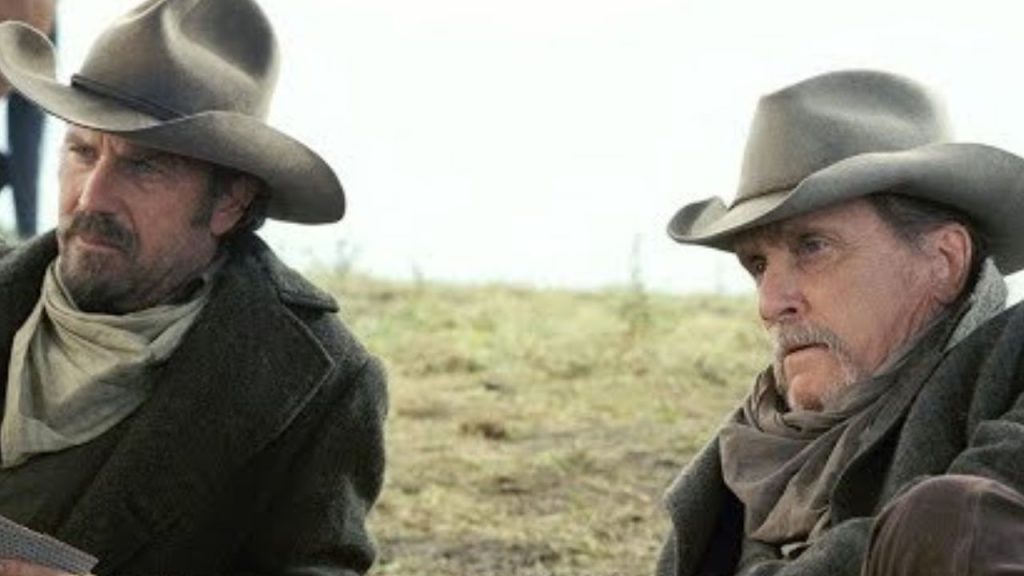
Open Range is a 2003 Western feature that follows free‑grazing cattlemen trying to mind their business on the frontier until violence finds them. The film, directed by and starring Kevin Costner, pairs him with Robert Duvall as partners who drive cattle across the open plains and live by a personal code rather than the law of any town. At a time when the genre was widely considered dormant, the movie’s commitment to classic themes and its patient pacing helped it stand out as a serious, character‑driven Western rather than a nostalgic novelty, which is why it still appears prominently when people search for Open Range today.
The story centers on a former gunslinger who has tried to leave violence behind but is forced to take up arms again when his cattle crew is threatened, a premise that the official IMDb listing distills into a single line. That simple hook, a man dragged back into a life he no longer wants, gives the film a melancholy undercurrent that separates it from more straightforward shoot‑’em‑ups. It also sets the stage for a final confrontation that feels tragic rather than triumphant, even as the heroes fight for what is right.
Costner’s return to the saddle
Kevin Costner came to Open Range with a long history in frontier storytelling, and he used that experience to shape the film as both star and director. The production credits list him as the director and one of the producers, alongside Jake Eberts and David Valdes, underscoring how personally invested he was in the project’s tone and scale, a detail confirmed in the Disney Wiki entry for the film. His dual role allowed him to calibrate the performance of a weary gunman with the visual language of a director who understands how to frame a rider against a vast horizon.
That sensibility has not faded with time. Recent coverage of his career notes that, despite his exit from Yellowstone, Costner has not slowed down when it comes to making feature film Westerns, and that his appearance in Open Range remains a key part of that legacy, as highlighted in a feature on his Western work. Another recent analysis puts it bluntly, arguing that if Costner had not devoted himself to what it calls “horse operas,” he might never have directed and starred in Open Range at all, a point made in a retrospective that frames the film as a great story about vengeance.
The story that makes the bullets matter
The plot of Open Range is deceptively straightforward, which is part of why the final gunfight lands so hard. According to the official plot summary, a former gunslinger travels with his cattle crew, only to be pushed into conflict when a ruthless cattle baron and his allies threaten their way of life. The film spends much of its runtime on the rhythms of that crew’s work, the camaraderie around campfires, and the quiet dread as they realize the town is controlled by a man who will not hesitate to use violence.
That antagonist is Denton Baxter, a cattle baron who dominates the town and its law, a character identified in the detailed character listing for the film. The tension between free‑grazers and a powerful landowner taps into classic Western conflicts over open range rights and local corruption, but the script keeps the focus on how those pressures weigh on the men who have to decide whether to walk away or stand up. By the time the first shot is fired in the street, the audience understands exactly what is at stake for every person holding a gun.
Building a modern Western classic
Open Range did not just revive familiar tropes, it convinced many viewers that the Western still had something urgent to say. The film is described in multiple fan discussions as a modern Western classic that arrived at a time when many thought the genre was gone, with one widely shared post arguing that it rode in to prove the Western could still deliver powerful stories about loyalty, justice, and the fight for freedom, a sentiment captured in a detailed Facebook appreciation. That kind of language, from viewers revisiting the movie years later, speaks to how fully it has settled into the genre’s modern canon.
Official records back up that sense of stature. The main Wikipedia entry for Open Range notes that it is a 2003 American Western film directed and co‑produced by Kevin Costner, with Robert Duvall, Annette Bening, and Michael Gambon among the principal cast. Another section of that same reference describes it as a theatrical release that runs for 2 hours and 19 minutes, information echoed in the IMDb overview, which emphasizes that the film has all the ingredients of a classic Western and an atmosphere of fateful suspense. That combination of fan enthusiasm and formal recognition is part of why the movie keeps being rediscovered.
Inside the legendary street fight
The climactic shootout in Open Range has taken on a life of its own, often discussed separately from the rest of the film as one of the greatest modern Western gunfights. A detailed breakdown of the sequence notes that the confrontation in the town’s main street is filmed largely in what viewers experience as real time, with Costner’s character stepping into the open and firing the first shocking shot at close range, a moment that instantly shatters the standoff, as described in a widely shared scene analysis. The lack of quick cutting and the grounded sound design make every shot feel heavy and unpredictable, closer to a desperate brawl than a choreographed ballet.
Costner himself has spoken about what he wanted to achieve with that sequence, explaining in an interview cited in a recent retrospective that he wanted the violence to feel sudden and frightening rather than glamorous. A social media thread that resurfaced the scene earlier this year described Open Range as a Kevin Costner‑directed Western that features one of the most tremendous shootouts in movie history and teased that it would explain what Costner wanted to achieve with it, a promise made explicit in a viral post. That ongoing fascination with the director’s intent shows how deeply the scene has lodged in the minds of genre fans.
How the shootout is staged on screen
What separates the Open Range gunfight from many of its peers is the way it is staged and edited. Rather than relying on stylized slow motion or sweeping crane shots, the sequence keeps the camera close to the ground, often at eye level, so that the viewer feels trapped in the same narrow streets as the characters. A popular clip shared among Western fans, titled “OPEN RANGE Clip, Killed Our Friend?,” highlights how the confrontation erupts after a tense exchange and notes that the final shootout, filmed in real time, is widely thought to be one of the best of its kind, as described in a detailed thread. The emphasis on real‑time action means the audience has no relief from the chaos, mirroring the characters’ own disorientation.
Sound plays an equally important role. Gunshots are loud, irregular, and often off‑screen, which reinforces the sense that danger can come from anywhere. The official user reviews on IMDb repeatedly single out the final showdown between the protagonists and Baxter’s men as spectacular, with one calling Open Range an excellent Western film magnificently performed and directed by Kevin Costner. That kind of praise focuses not just on the choreography but on how the sequence feels, which is where the film’s grounded sound design and unflashy camera work quietly do their best work.
Characters who carry the weight of violence
The shootout would not resonate as strongly if the characters stepping into that street felt like stock figures. Open Range benefits from a cast that gives the film emotional heft long before the guns come out. The main ensemble, as listed in the comprehensive cast breakdown, includes Kevin Costner, Robert Duvall, Annette Bening, Michael Gambon, and Michael Jeter in key roles. Each brings a distinct energy, from Duvall’s calm authority to Bening’s grounded warmth, which makes the town feel lived‑in rather than symbolic.
Commentary from fans underscores how central those performances are to the film’s impact. One widely shared post praises the work of Costner and Duvall, noting that the performances by Costner and Duvall are standout, with Duvall’s portrayal of the seasoned, wise Boss providing a strong counterpoint to Costner’s more haunted character, as described in a detailed Facebook review. Another fan discussion calls Open Range a compelling entry in the Western genre and emphasizes how every actor feels perfectly cast, a sentiment echoed in a separate cast listing that highlights Michael Gambon and Michael Jeter among the supporting players.
Why the ending keeps finding new fans
Two decades on, Open Range is not just surviving on nostalgia, it is actively gaining admirers who discover it on disc and streaming. The DVD release, which lists Kevin Costner as both actor and director, remains available through retailers that describe the product as OPEN RANGE (2003) with Robert Duvall and Kevin Costner, a detail visible on the product page. That continued physical presence keeps the movie in circulation for viewers who still build home libraries, while digital platforms ensure the climactic gunfight is only a search away.
Fan communities play an equally important role in keeping the film alive. One movie discussion group recently featured a post titled “Open Range 2003 movie review” in which the writer said they watched it again and that it gets better every time, praising Kevin Costner not only for his acting but also for his great direction, as captured in a popular group post. Another fan calls the film a classic for a new generation and says it is a movie that makes you want to rewatch it, a sentiment repeated in a separate discussion that underlines how word of mouth keeps steering new viewers toward the film’s unforgettable finale.
Open Range in the wider Western conversation
Open Range now sits in a broader conversation about how the Western has evolved in the twenty‑first century. When people talk about modern Westerns that still feel rooted in tradition, the film is often mentioned alongside more revisionist entries, in part because it balances old‑fashioned honor codes with a clear‑eyed view of violence. A recent analysis of Costner’s career in Westerns points out that there is one Western that is not always the first title people name when they list his work, but that deserves a closer look for its epic final scene, a case made in a detailed career piece. That argument reflects how the film has quietly become a touchstone for anyone interested in how to stage a grounded, morally charged gunfight.

Leo’s been tracking game and tuning gear since he could stand upright. He’s sharp, driven, and knows how to keep things running when conditions turn.