States consider banning DUI offenders from purchasing alcohol
States are testing a new way to confront drunk driving: cutting convicted offenders off at the cash register. Instead of relying only on license suspensions, fines, and jail time, lawmakers are exploring whether blocking alcohol sales to people with the most serious DUI records can prevent them from getting behind the wheel impaired again.
The idea has moved from theory to reality in Utah and is now on the table in West Virginia, with other legislatures watching closely. I see a broader shift taking shape, as policymakers weigh how far the state should go in policing not just driving, but drinking itself, in the name of public safety.
From roadside stop to retail ban
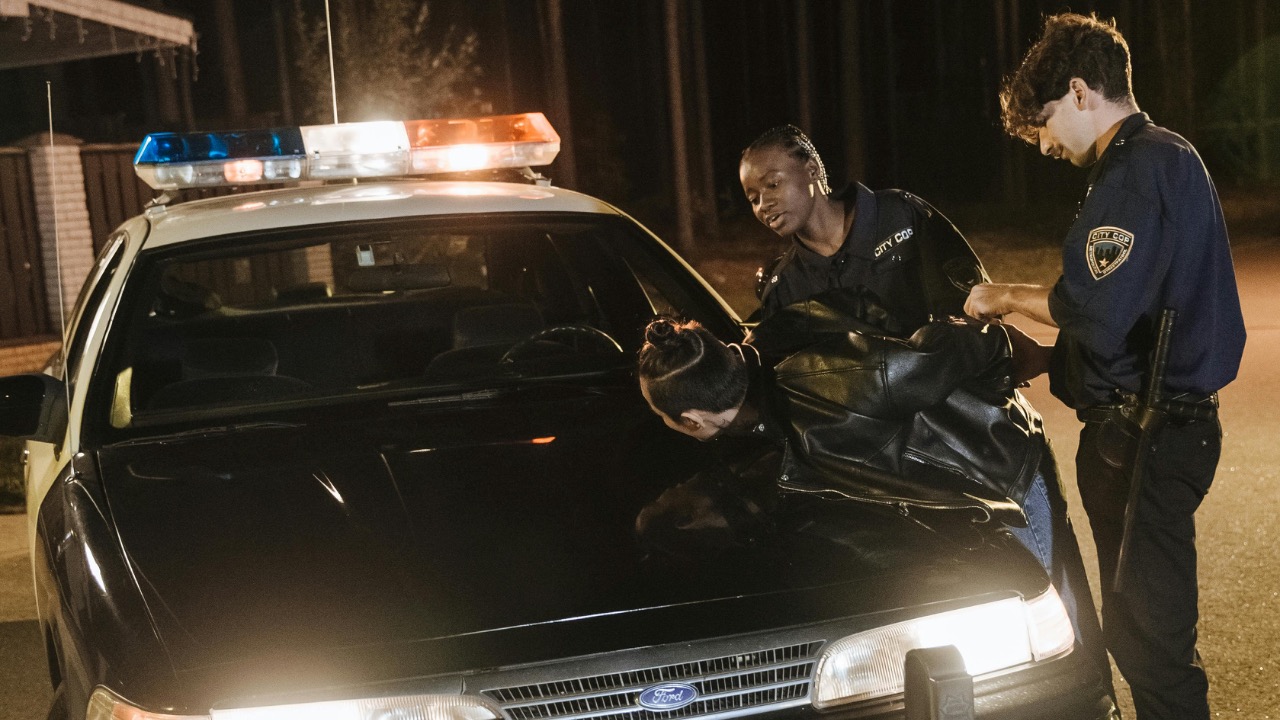
For decades, DUI penalties have focused on what happens after someone is caught driving drunk, not on how they obtain alcohol in the first place. License suspensions, ignition interlock devices, mandatory classes, and jail time have been the standard toolkit, even for repeat offenders. The new approach emerging in several states tries to move the intervention point upstream, by treating alcohol access for certain drivers as a privilege that can be temporarily revoked, much like a driver’s license.
That shift is clearest in Utah, where lawmakers have targeted people convicted of what the state defines as an extreme DUI, a category that covers drivers with very high blood alcohol levels. Instead of only tightening penalties on the road, Utah has begun restricting alcohol purchases for those offenders, effectively putting them in an interdicted category that retailers are expected to recognize at the point of sale, according to reporting on Utah.
Utah’s extreme DUI experiment
Utah is the first state to fully implement a system that blocks some convicted drivers from buying alcohol at all. A law that took effect at the start of 2026 bars people with an extreme DUI conviction from purchasing beer, wine, or liquor, and it does so by tying their status directly to ID checks at the register. The measure is aimed at a narrow slice of offenders, but it represents a sweeping change in how the state treats the link between drinking and driving.
State officials have framed the policy as a targeted response to drivers who have shown they will get behind the wheel with a very high blood alcohol level, not as a broad crackdown on casual drinkers. Coverage of the rollout notes that extreme DUI offenders are singled out because they had far more than a trace of alcohol in their system, and lawmakers argue that cutting off retail access is a logical extension of existing sanctions.
How the Utah system works in practice
The mechanics of Utah’s new regime are as important as the headline. The law requires that IDs be checked for all alcohol purchases statewide, not just for customers who appear underage, so that clerks can see whether a buyer is flagged as prohibited. Once someone is convicted of an extreme DUI, their status is entered into a system that is supposed to alert retailers when that person tries to buy alcohol, effectively turning every checkout counter into an enforcement point.
Reports on the rollout describe how the requirement for universal ID checks is meant to close loopholes that might otherwise let an interdicted buyer slip through. One account notes that the law applies across Utah’s network of state-regulated outlets and private licensees, and that the goal is to ensure that someone in an interdicted category cannot simply move from one store to another to find a more lenient clerk, a concern highlighted in coverage of ID checks.
Human stories and public safety stakes
Behind the policy debate are families who have lost loved ones to drunk drivers and who see cutting off alcohol sales to the worst offenders as a necessary step. In Utah, residents who have lived through fatal crashes have questioned whether existing DUI laws are strong enough, especially given high arrest rates that suggest many impaired drivers are still on the road. One grieving family member, identified as Brown, described how They were going home from a play when a drunk driver changed their lives, a story that has been cited in coverage of Utah residents who are pressing for tougher action.
Those accounts help explain why lawmakers are willing to test unorthodox tools. Supporters argue that if someone has already shown a willingness to drive at extreme intoxication levels, the state has a duty to intervene before the next drink is poured. They see the new restrictions as a way to send a clear message that an extreme DUI conviction is not just a traffic offense but a marker of dangerous behavior that justifies temporary limits on access to Alcohol, a rationale that appears in discussions of DUI enforcement.
Retailers and bars shoulder new burdens
The new rules do not only affect offenders, they also reshape daily operations for Businesses that sell alcohol. In Utah, bar owners and store managers have raised concerns about the cost and complexity of checking every customer’s ID, even those who are clearly over 21, and about the risk of mistakenly denying service to someone who is not actually restricted. Some have warned that the law could slow down service, frustrate regulars, and create new liability if a clerk fails to spot an interdicted buyer.
Business groups have also questioned whether shifting enforcement to the point of sale is fair to small operators who already navigate a dense web of liquor regulations. Reporting from Utah notes that some Liquor license holders worry about penalties if they inadvertently serve an extreme DUI offender, and that they are asking for clearer guidance and better technology to handle the checks, concerns that have surfaced in coverage of Businesses reacting to the law.
West Virginia’s Senate Bill 602 follows Utah’s lead
Utah’s experiment has not gone unnoticed in other statehouses. In West Virginia, lawmakers have introduced Senate Bill 602, a proposal that would allow courts to restrict alcohol purchases for certain DUI offenders as part of their sentence. The bill would give judges explicit authority to order that someone convicted of driving under the influence be prohibited from buying alcoholic products, extending the logic of license suspensions into the realm of retail access.
The measure has been introduced in CHARLESTON as part of the 2026 legislative session, and it reflects a growing belief among some policymakers that traditional penalties are not enough to change entrenched DUI behavior. Coverage of the proposal explains that Senate Bill 602 would create a process for courts to flag offenders so that retailers know they are not allowed to sell them alcohol, echoing the Utah model.
What Senate Bill 602 would change on the ground
If West Virginia enacts Senate Bill 602, the practical impact would be felt by both offenders and retailers. Judges could order that a person convicted of DUI be placed on a list of individuals barred from buying alcoholic products, and that status would then need to be recognized at stores and bars across the state. The bill envisions a system where the court’s order does not end at the courthouse door but follows the offender into every transaction involving alcohol.
Local reporting from WVVA describes how lawmakers in West Virginia are looking at Utah’s experience as a template, while tailoring the details to fit their own legal framework. The proposal would formalize the court’s power to impose purchase restrictions as part of sentencing, and it would require coordination with agencies that oversee alcohol sales so that the prohibition is actually enforced at the counter, a structure outlined in coverage of West Virginia.
Other states test adjacent DUI reforms
Not every state is ready to block alcohol purchases outright, but several are rethinking how they respond to impaired driving. In Pennsylvania, for example, policymakers have focused on revamping DUI treatment and related public health measures rather than cutting off retail access. The Democratic majority in the state House has advanced legislation that would change how the system handles impaired drivers, even as those bills face long odds in the GOP controlled Senate, according to reporting on debates in Harrisburg.
Those efforts show that the political appetite for tougher DUI policy is not limited to states that are willing to police alcohol purchases directly. In Pennsylvania, the focus has been on treatment and on related issues such as restricting some vaping products, with supporters arguing that a broader public health strategy can reduce impaired driving without creating new enforcement burdens for retailers. Coverage of the debate notes that The Democratic controlled House has pushed these changes despite skepticism in the GOP led Senate, a dynamic described in reporting on the House.
Civil liberties, effectiveness, and what comes next
The push to bar some DUI offenders from buying alcohol raises hard questions about civil liberties and effectiveness. Critics worry that once the state starts flagging people at the cash register for one offense, it could expand the list of behaviors that trigger similar restrictions. Supporters counter that extreme DUI convictions already justify significant intrusions, including jail time and ignition interlocks, and that a temporary limit on alcohol purchases is a proportionate response to a demonstrated risk, a view reflected in analysis of DUI behavior.
There is also the practical question of whether determined offenders will simply find ways around the bans, for example by asking friends to buy alcohol for them, and whether the new systems will be accurate enough to avoid mislabeling people. Utah’s experience will be closely watched, both for its impact on crash statistics and for how smoothly retailers adapt to universal ID checks, which have been described in coverage of New Utah rules and in reports on how Utah retailers are coping.

Asher was raised in the woods and on the water, and it shows. He’s logged more hours behind a rifle and under a heavy pack than most men twice his age.