When legal gun ownership collides with public policy debates
Legal gun ownership in America sits at the crossroads of history, culture, and some very current public safety worries. Millions of people keep firearms for hunting, sport, and protection, while lawmakers and courts wrestle with how far those rights reach once a gun leaves the gun safe and enters the public square. When those everyday choices collide with policy debates, the result is a fight not only over laws, but over identity and trust.
I have spent enough time around gun owners, from deer camps to public ranges, to know that most see themselves as careful and law abiding. Yet the data on violence, suicide, and political tension is hard to ignore, and it is reshaping how courts, researchers, and voters think about firearms. The real question is how to respect responsible ownership while responding honestly to the risks that come with a heavily armed society.
The constitutional ground under every gun debate
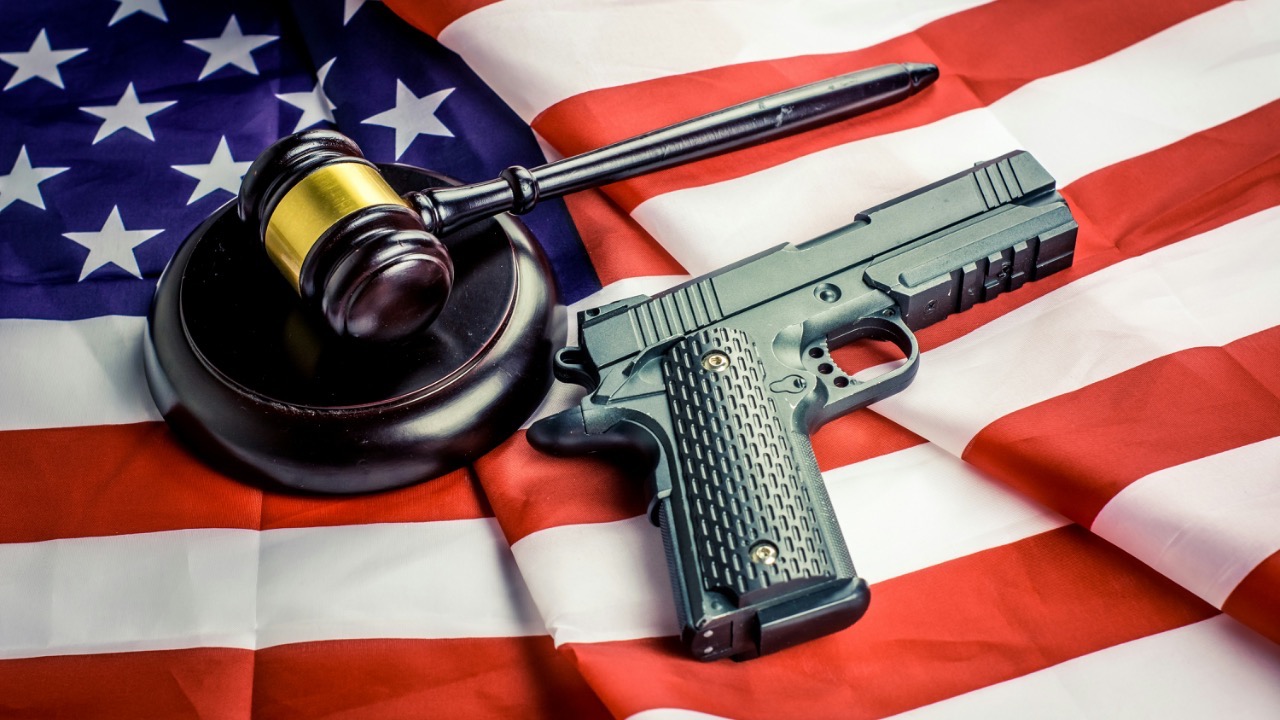
Any serious talk about legal gun ownership starts with the Constitution and the way courts have read it. Federal analysis notes that Constitutional rights guaranteed to individuals include a recognized ability to acquire and possess firearms, and The Supreme Court has treated the Second Amendment as protecting an individual right, not only a collective one. That modern reading traces back through cases like District of Columbia v. Heller, which pulled the right to keep and bear arms out of the abstract and into the lives of ordinary citizens who want a handgun at home.
That legal shift sits on older foundations. In the founding era, the right to arms was described as a Fundamental safeguard in the United States Bill of Rights, and the primary author of that document, James Madison, treated those protections as a package meant to restrain government power. Modern gun politics in the United States still lean heavily on that heritage, even as newer rulings try to sort out where individual rights end and the government’s duty to protect public safety begins.
From home defense to the public square
Most gun owners I know picture a worst case scenario that happens at home, a father in his living room defending his family from a criminal invader. Legal scholarship points out that this image has driven a lot of the push to expand carry rights, but it also warns that moving guns from the nightstand into crowded streets raises different questions. One analysis notes that a man at home defending his family is a very different case than a stranger carrying in a tense crowd, and that expanding rights into the public sphere complicates evenhanded enforcement of gun laws.
Courts are now being asked to draw those lines in real time. Earlier this year the Supreme Court heard arguments about whether private property owners can restrict guns even when state law broadly allows carrying in public. That case, centered on how far the constitutional right to carry a gun in America extends onto posted land, shows how quickly a lawful permit can collide with someone else’s sense of safety once you step off your own porch.
Culture, identity, and the weight of the gun lobby
Out in the real world, the law is only half the story. The other half is cultural, and it has been shaped for decades by groups that treat gun ownership as a marker of status and belonging. One study describes how these rights are grounded in a cultural and Political supremacy of gun ownership, pushed by the National Rifle Association and other lobby groups as part of a gun centric worldview that resists compromise. That kind of messaging turns a tool into a symbol, and it makes any policy change feel like an attack on a way of life rather than a tweak to regulations.
That symbolism helps explain why the gun debate feels so dug in even when the number of owners shifts. Public health researchers note that Higher levels of firearm ownership and permissive firearm laws are associated with higher rates of suicide, homicide, violent crime, and shootings by police, yet those findings run headlong into a culture that treats more guns as the answer to nearly every threat. When rights are framed as a zero sum contest between gun owners and everyone else, it becomes harder to talk about practical steps that might reduce harm without stripping away legitimate uses.
What the numbers say about Americans and guns
For all the noise, the hard numbers on who owns guns and why are more complicated than the slogans. Survey work shows that They ( Pew Research Center ) used data from recent Center surveys to map how Americans think about guns and their reasons for owning them, and those results show a mix of self defense, hunting, and sport shooting that will look familiar to anyone who has spent time at a rural range. At the same time, As of June, fewer background checks have been conducted than at the same point in 2023 according to FBI statistics, and About four in ten adults report living in a household with a firearm, which means a vocal minority is shaping a debate that affects nearly everyone.
Other research digs into who is driving policy. One analysis notes that But the proportion of Americans who own guns has declined, while a relatively small group of heavy owners now holds a large share of the total country’s gun stock, and Villarreal points to a Violence Policy Center report that highlights how that concentration gives a small slice of Americans an outsized stake in blocking new rules. When a shrinking but intensely engaged group turns out for every hearing and primary, it is no surprise that lawmakers tread carefully around anything that might be labeled anti gun.
Risk, responsibility, and what science actually shows
When you strip away the politics, the question I hear from a lot of hunters and concealed carriers is simple: do these laws work. The RAND Corporation’s Gun Policy in America initiative set out to answer that by reviewing the evidence on how different rules affect crime, suicide, and accidents, and its work is meant to give policymakers clearer data to build more effective policies. A related review stresses that Good public policies are based on facts and data, and that the most effective gun laws are written when lawmakers understand which measures are both fair and effective rather than guessing in the dark.
Some of that evidence is already fairly strong. A broad look at gun control research finds that the three laws most strongly associated with reduced firearm mortality are universal background checks, background checks for ammunition sales, and identification requirements for guns, and that pattern shows up again in separate summaries of gun control laws. Another study focused on children reports that The RAND Corporation’s Gun Policy in America initiative has also examined child access prevention laws and found associations between stronger state rules and lower pediatric firearm related deaths, which suggests that safe storage and legal accountability can matter as much as what kind of gun someone owns.
Rights colliding: guns, speech, and public order
Once firearms leave private property, they start bumping into other rights that Americans care about, especially free speech and assembly. Legal scholars have warned that the emergence of a judicially cognizable Second Amendment right of individuals to keep and bear arms in District of Columbia v. Heller has raised new questions about how far that right reaches into sensitive places like protests and government buildings, and one paper on Aug conflicts argues that armed presence can chill speech even when every carrier is technically lawful. In other words, a holstered pistol at a rally might be legal, but it can still change who feels safe enough to speak.
That tension shows up in debates over whether states can limit guns at demonstrations without trampling the Constitution. One of the most difficult questions in constitutional law, as one discussion puts it, walks the terrain between the First and Second Amendments, and asks how far officials can go to limit guns at protests while still respecting both sets of rights. A related talk notes that Share and other metrics, including a 15:37 discussion of how the First and Second interact, highlight how judges are being forced to weigh the risk of intimidation against the core promise that peaceful citizens can both speak and carry without government picking winners.
Public opinion, polarization, and the quiet middle
For all the shouting on cable news, most Americans are not camped out on the extremes. Polling on hot button issues shows that Each of these issues have two extreme points of view, but there are also many variations between the two, and Polling finds that most people cluster somewhere in the middle on questions like background checks and red flag laws. Earlier survey work on views of gun policy found that Gun owners, non gun owners differ on most policies, yet Large majorities in both groups favor banning gun sales to people with certain mental health histories and keeping guns out of the hands of criminals.
Newer research digs into why that middle ground is so hard to turn into law. One study labeled 1.4. Political identity and attitudes towards firearms reports that Attitudes regarding gun control and gun policy have become increasingly connected to party labels, which means that even modest proposals can feel like tribal markers instead of technical fixes. At the same time, Americans in dialogue projects have shown that the right kind of conversation can surface areas of agreement, and one effort argues that the right dialogue can also pave the way for places where Americans already agree, turning our differences into something more constructive than a permanent stalemate.
How advocacy reshaped the language of the fight
Anyone who has followed this issue for a few decades has heard the language change. Since 2010, one key phrase in the gun debate has been used 0.33 times per 1,000 news articles, far more often than during the 1980s, when it was invoked 0.02 times per 1,000, a shift that reflects a deliberate messaging strategy by gun rights advocates. That kind of repetition matters, because it trains people to hear any new regulation as a step toward confiscation, even when the proposal is something as narrow as safe storage around kids.
On the other side, gun control advocates have leaned on stories of mass shootings and domestic violence to frame firearms as a public health crisis. Some of the most vocal opponents of new laws argue that Criminals, by definition, do not obey the law, and that Gun control laws only affect law abiding citizens who are already following state and federal rules, a claim that shows up in arguments that Some of the key reasons to oppose new restrictions are rooted in distrust of government. When both camps talk past each other, with one side focused on bad actors and the other on population level risk, it is no wonder that compromise feels rare.
An “unsolvable” crisis, or a problem we have not decided to solve
From the outside, America can look like a country that has simply chosen to live with gun violence. One analysis of U.S. politics describes gun control as part of a long running impasse shaped by political polarisation, entrenched interests and cultural identity, and it notes that Solving that dilemma would require changes in how parties campaign as much as in how they legislate. Another commentary on U.S. politics argues that gun policy sits alongside abortion and immigration as issues where parties benefit from keeping the fight alive, because it helps them energize their base and keep the other side on defense.

Asher was raised in the woods and on the water, and it shows. He’s logged more hours behind a rifle and under a heavy pack than most men twice his age.