Firearm accessories facing closer legal review across several states
State lawmakers and courts are moving deeper into the technical weeds of gun policy, focusing not just on firearms themselves but on the accessories that can change how they function. From conversion devices that mimic machine guns to online parts kits and stabilizing braces, components once treated as niche gear are now central to legal fights over public safety and the limits of regulation.
As these disputes unfold, they are reshaping the balance of power between statehouses, city councils, and federal regulators. I see a patchwork emerging in which some states aggressively test new theories of liability and control, while others clamp down on local authority, leaving gun owners and manufacturers to navigate a maze of overlapping rules that increasingly hinge on small pieces of metal and plastic.
States pivot from guns to the gear that modifies them
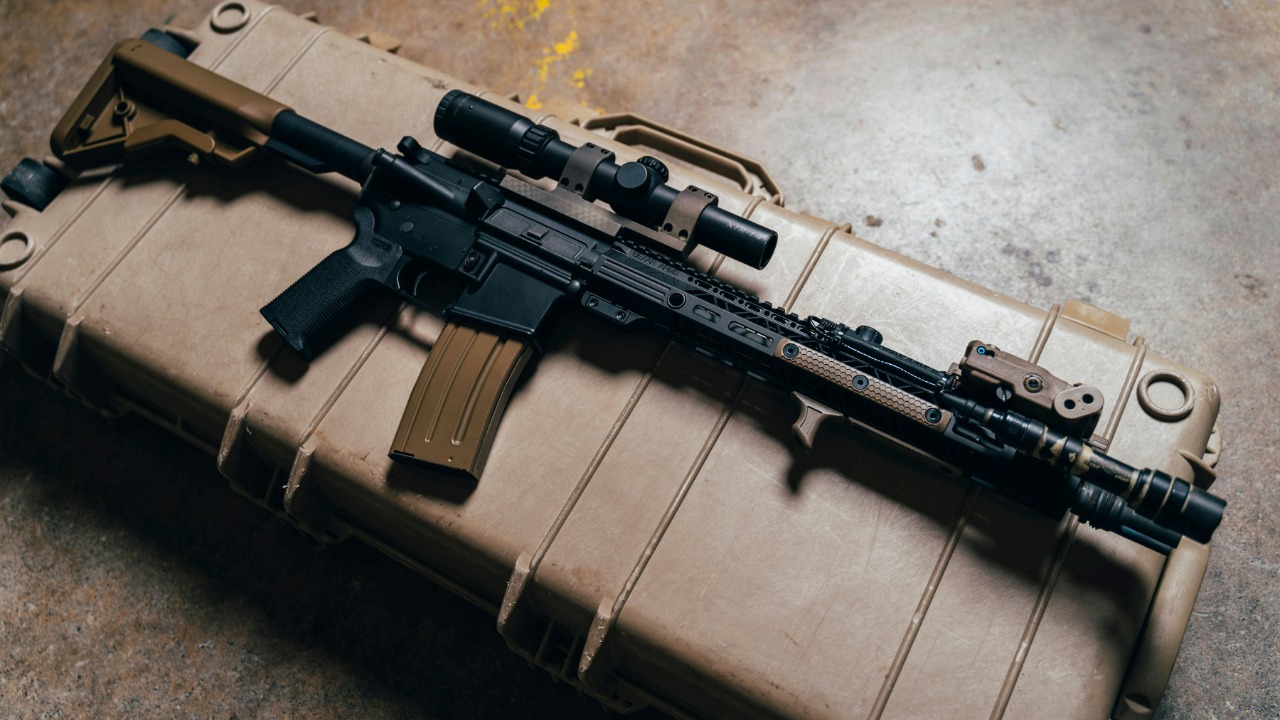
For years, the political fight over firearms centered on who could buy a gun and what types were allowed. Now the spotlight is shifting to the accessories that can alter a weapon’s rate of fire, concealability, or traceability, a shift that reflects how relatively cheap parts can transform a basic pistol or rifle into something far more lethal. Lawmakers and litigants are treating these add-ons as a distinct regulatory frontier, arguing that controlling the gear that changes how a gun behaves can be as consequential as restricting the gun itself.
This focus on components is not happening in a vacuum. It is unfolding alongside broader efforts to expand liability for the gun industry and to test the reach of federal protections like the Protection of Lawful Commerce in Arms Act, often called the PLCAA. As states experiment with new rules for accessories, they are also probing whether manufacturers and sellers can be sued when add-ons are marketed or distributed in ways that allegedly violate state consumer protection law, a strategy that directly challenges the industry’s long standing legal shield.
California’s AB1127 and the push against convertible pistols
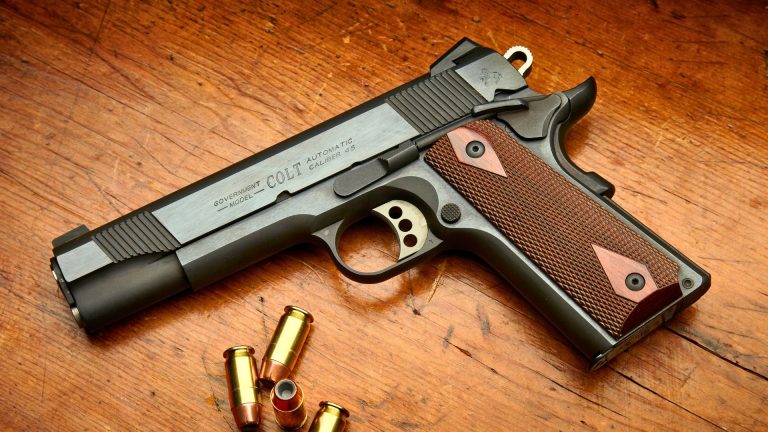
California has become an early test case for how far a state can go in targeting accessories that make pistols easier to convert into more dangerous configurations. Advocates have highlighted that the California Senate, in a move described as BREAKING, passed AB1127 to stop the future sale of pistols that can easily be converted into more advanced or restricted forms. The bill’s backers frame it as a response to designs that are marketed as compliant handguns but are engineered to accept conversion kits or parts that change their core characteristics.
By singling out pistols that can be readily modified, AB1127 treats convertibility itself as a public safety risk, not just the end configuration of the firearm. That approach aligns with a broader California trend of tightening controls on parts and kits, including efforts that critics summarize as making online gun parts harder to purchase, a theme that has surfaced in debates over measures like the policy described in the video labeled California Just Made to Buy. I see AB1127 as part of a continuum in which the state is trying to close perceived loopholes before they fully mature into mass market products.
“Glock switches,” auto sears, and the machine gun line
Few accessories illustrate the stakes of this shift more starkly than the small conversion devices often called “Glock switches” or auto sears. These parts can be attached to a semiautomatic handgun to make it fire continuously with a single trigger pull, effectively turning it into a machine gun. Reporting on these devices notes that Everyday Americans can still legally own machine guns, but only after receiving approval from the Bureau of Alcohol, Tobacco, Firearms and Explosives, often shortened to the Bureau of Alcohol, Tobacco, Firearms, and Explosives (ATF), a process that is tightly controlled and expensive.
Auto sears and similar switches short circuit that system by bypassing the formal machine gun registry, which is why federal authorities treat them as contraband even when they are sold as tiny standalone parts. The legal line here is clear on paper, but in practice, state and local agencies are grappling with how to police a market where a device the size of a coin can carry the same legal weight as a fully automatic rifle. I see that tension driving some states to consider accessory specific penalties and enforcement strategies that go beyond traditional firearm statutes.
Pistol braces and the evolving federal baseline
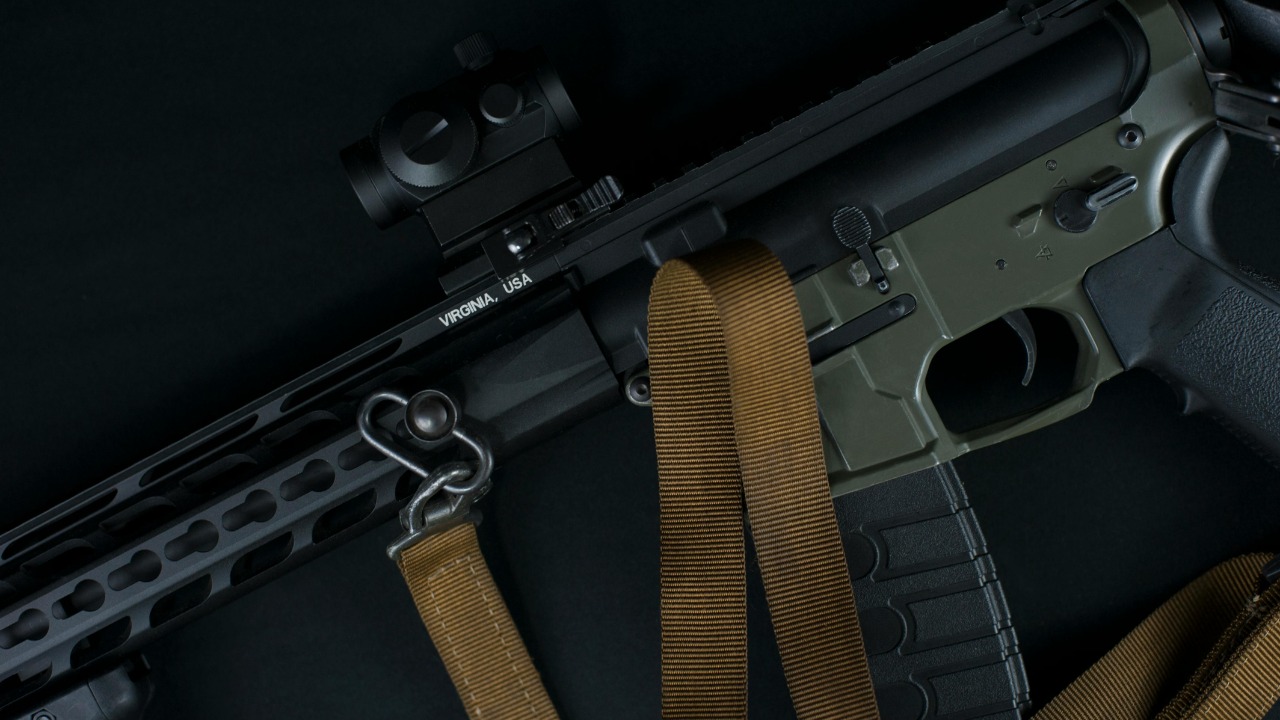
Stabilizing braces for pistols, originally pitched as aids for disabled shooters, have become another flashpoint in the debate over accessories that blur the line between categories of firearms. The federal government has repeatedly revised its view of when a braced pistol should be treated as a short barreled rifle, a classification that triggers stricter registration and tax requirements. According to a detailed explanation of the Current Federal Status, The Department of Justice formally dropped its appeal in Mock v. Bondi, a case that had challenged the ATF’s pistol brace rule.
That decision left the rule’s future uncertain and signaled that federal regulators might be recalibrating how aggressively they want to police braces. For gun owners and Federal Firearms Licensees, the Mock and Bondi litigation underscored how quickly an accessory can move from common use to legal limbo. I see states watching this federal back and forth closely, both to decide whether to mirror Washington’s approach and to identify gaps where state level rules on braces or similar add-ons might be able to go further without immediately colliding with federal law.
Supreme Court signals on ATF authority and homemade parts
While states experiment, the Supreme Court has started to sketch the outer limits of federal power over privately made firearms and components. In a notable decision, The Court, in a 7 to 2 ruling, stated that the Bureau of Alcohol, Tobacco, Firearms, Explosives, and the ATF had not exceeded its authority when it moved to regulate the private manufacturing of firearms. That holding, described in an analysis of the 7 to 2, effectively endorsed a broader reading of the agency’s power to treat unfinished frames, receivers, and kits as regulated items.
At the same time, lower court judges have scrutinized how far agencies can stretch statutory language when they write rules about parts. One opinion, summarized in a firearms news digest, quoted Justice Neil Gorsuch emphasizing that, instead, the plaintiffs’ burden is to show that the Rule itself is inconsistent with the statute on its face. I read that as a reminder that while courts may tolerate some regulatory creativity around accessories, agencies still have to tie their definitions of parts and frames back to the text Congress actually passed.
State lawsuits, PLCAA workarounds, and accessory marketing
As federal doctrine evolves, several states are testing a different route, using civil liability to pressure the industry over how firearms and accessories are designed and sold. New statutes have sought to expand potential liability for gun companies by creating new rules for the industry, often framed as consumer protection or public nuisance laws. One account notes that New York passed a measure allowing lawsuits when manufacturers or sellers are alleged to have violated state consumer protection law, a model that other states are now studying.
These efforts are designed to fit within, or around, the federal PLCAA, which generally shields gun makers and dealers from suits over criminal misuse of their products. A trade focused summary stresses that, while the PLCAA has been incredibly successful in protecting the firearm industry from frivolous lawsuits, the PLCAA is constantly under attack from ongoing threats, language that underscores how central this statute has become to the industry’s legal strategy. By targeting accessories and marketing practices, states hope to argue that certain conduct falls outside the PLCAA’s core protections, especially when it involves parts that make weapons easier to conceal, convert, or fire rapidly, as highlighted in the While the PLCAA analysis.
Preemption fights: Texas, local rules, and accessory bans
Not every state is eager to empower cities to write their own rules for gun parts. In Texas, lawmakers have moved in the opposite direction, limiting what local governments can do in areas that include firearms. A detailed review of the so called Texas Death Star law explains that the state now preempts local regulations that go beyond the same state law to correct a perceived problem, and that the law annexes such authority across a wide range of topics, including labor and local government ordinances or codes. That broad preemption, described in the consequences analysis, effectively blocks cities from experimenting with their own accessory specific restrictions.
For local officials who want to respond to devices like auto sears or to crack down on unmarked parts kits, that kind of state preemption can be a brick wall. I see this dynamic creating a sharp contrast with states like California and New York, where legislatures are either writing detailed accessory rules themselves or inviting municipalities to push the envelope. In Texas and similar states, any move to regulate firearm components will likely have to originate at the state level, which raises the political bar for action and leaves cities with fewer tools to address locally visible problems tied to gun gear.
Pennsylvania’s courts and the next wave of accessory litigation
Some of the most consequential fights over firearm accessories are now landing in state courts, where judges are being asked to interpret both local ordinances and statewide statutes. In Pennsylvania, a slate of high profile cases is expected to test how far cities can go in regulating weapons and related equipment. A litigation preview notes that, as winter’s chill rings in the new year, several high profile cases are set to heat up Pennsylvania’s dockets in 2026, including disputes over semiautomatic rifles and Philadelphia’s quest to hold industry actors accountable, as described in the Pennsylvania cases to watch.
While those matters focus heavily on firearms themselves, they are likely to shape how Pennsylvania courts view related efforts to control accessories, especially if plaintiffs argue that certain parts make weapons unreasonably dangerous or are marketed in ways that encourage unlawful use. I expect litigants to borrow arguments from other states’ PLCAA workaround laws and from federal disputes over ATF rules, blending them into state constitutional and statutory claims. The outcome could either embolden cities like Philadelphia to pursue more aggressive accessory regulations or reinforce statewide limits on local authority.
Compliance confusion for gun owners, dealers, and regulators
For people who sell or own firearms, this evolving landscape of accessory regulation is creating a thicket of compliance questions. Federal rules on items like pistol braces and homemade receivers are in flux, while state laws on convertible pistols, online parts sales, and liability exposure are diverging sharply. Industry facing guidance on the ATF’s brace policy, for example, has had to walk licensees through shifting definitions and the impact of cases like Mock and Bondi, as seen in the brace rule explainer that details how The Department of Justice’s litigation choices ripple through day to day operations.
State specific developments add another layer. In California, for instance, gun owners and retailers are still parsing how measures like AB1127 interact with other statutes and administrative bulletins, including updates tied to AB 1263 that have been discussed in forums such as the AB 1263 update video posted in Jan. I find that the cumulative effect is a regulatory environment where a small accessory can trigger a cascade of legal consequences, and where even well intentioned owners can struggle to keep pace with rules that change faster than the hardware on store shelves.

Leo’s been tracking game and tuning gear since he could stand upright. He’s sharp, driven, and knows how to keep things running when conditions turn.