The overlooked U.S. wetland becoming a conservation success
Across the United States, wetlands have quietly absorbed floods, filtered pollution, and sheltered wildlife for generations, even as half of these landscapes have disappeared since the 1780s. Yet in a corner of the Mid‑Atlantic, a once‑overlooked marsh system is starting to show how restoration can reverse that trajectory and revive a community at the same time. I set out to understand why this particular wetland is working, and what its success reveals about the future of conservation in a country that is still losing ground.
The story begins in a small town that decided its soggy backwater was an asset, not a liability, and then tapped a web of federal programs, local volunteers, and national nonprofits to prove it. Their progress is fragile, unfolding against a national backdrop of continued loss, but it offers a rare, concrete example of how policy, science, and neighborhood pride can turn a neglected wetland into a model for resilience.
The national backdrop: a country still draining its wetlands
Any celebration of a single restored marsh has to start with the scale of what has been lost. Federal scientists have documented that the United States has already erased about half of its original wetlands, a figure that stretches back to the 1780s and reflects centuries of drainage for farms, cities, and industry. A recent federal report to Congressunderscored that this 50 percent loss is not just a historical footnote, it is a living constraint on flood protection, water quality, and habitat across America.
That warning is not abstract. The latest national Wetlands Status and assessment, which tracks change from 2009 to 2019, found that the country is still experiencing a net decline in these ecosystems. The companion summary to this sixth edition of the report notes that the trend has persisted for 70 years, highlighting how difficult it has been to bend the curve even as awareness of climate risk grows.
A quiet turnaround along Broad Creek
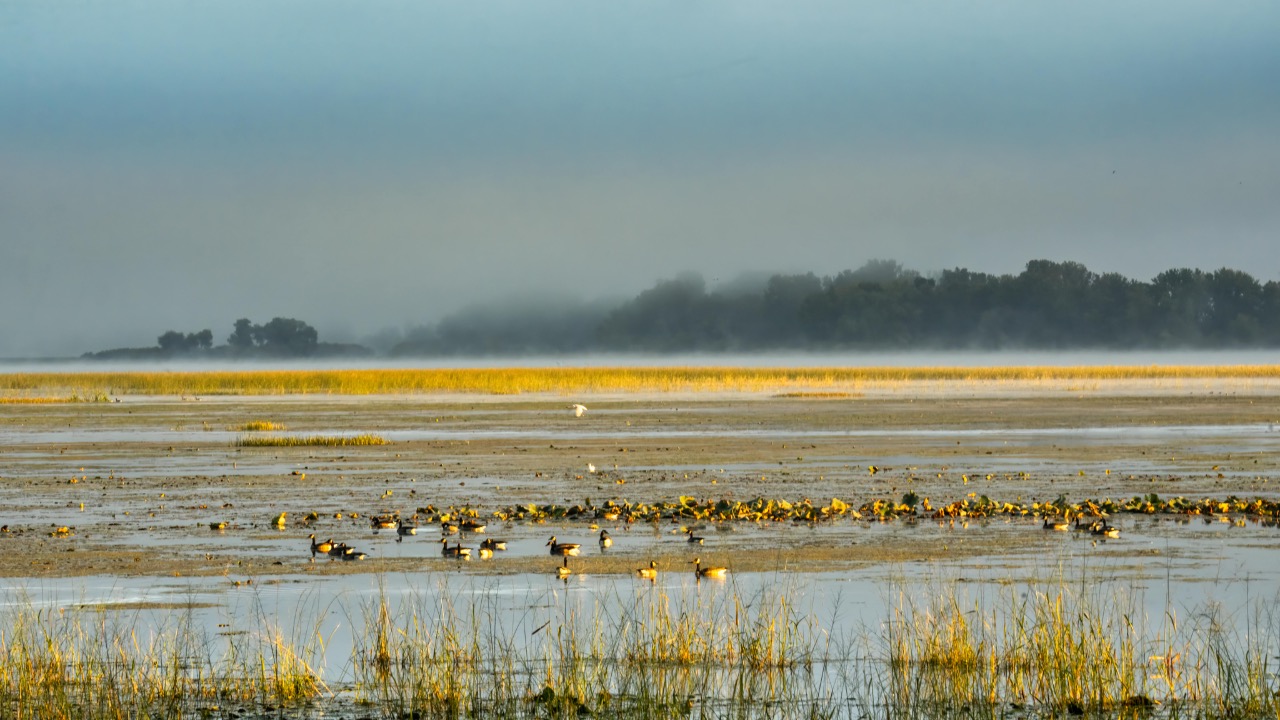
Against that sobering backdrop, the transformation unfolding along Broad Creek in Laurel, Delaware, feels almost improbable. The town is reshaping its waterfront into a revitalized public space known as The Ramble, threading boardwalks and gathering spots through a restored wetland instead of walling the creek off behind concrete. What was once treated as marginal land is now the centerpiece of a plan to reconnect residents with the water that runs through their town.
The ecological payoff is already visible. As the wetland has been re‑graded and replanted, the creek’s edge has begun to host more birds, frogs, and even juvenile fish, a sign that the habitat is knitting back together. The project is one of several regional efforts showing that when communities design around wetlands rather than over them, they can reduce flooding, improve water quality, and create new public spaces without sacrificing economic goals.
Why this wetland matters for wildlife far beyond Delaware
What happens in a single marsh in Delaware does not stay there, because wetlands sit on the flyways and migration routes that connect entire continents. Conservation groups have long argued that protecting one wetland can benefit multiple species at once, from waterfowl to songbirds to fish, and they have backed that up with projects that span the United States and Canada. The continental scope of one organization’s work has helped sustain populations of yellow‑headed blackbirds and other migratory birds, illustrating the multi‑species benefits that flow from targeted wetland restoration.
Those benefits extend well beyond birds. Wetlands provide nursery habitat for fish and invertebrates that support both commercial and recreational fisheries, and they shelter amphibians and mammals that depend on shallow water and dense vegetation. Federal scientists have warned that Threatened and endangered species are no exception, with approximately half of all Endangered Species Act species in the United St relying on wetlands at some point in their life cycle, including species of commercial and recreational importance.
The policy engine behind a local success
Laurel’s turnaround did not materialize out of thin air. It is part of a broader web of grants and technical support that has grown up around wetland conservation over the past three decades, anchored by federal programs that quietly shape what local governments can attempt. At the center of that web is the North American Wetlands program, which channels public and private money into projects that restore and protect habitat for migratory birds and other wildlife.
The legal backbone for that work is The North American Wetlands Conservation Act, often shortened to NAWCA, which provides matching grants for projects cataloged under Projects and Initiatives. By requiring local and nonprofit partners to put up their own funds, NAWCA has leveraged federal dollars into far larger conservation budgets, making it possible for small towns like Laurel to pursue ambitious designs that would otherwise be out of reach.
What was lost: decades of drainage under federal watch
To understand why programs like NAWCA matter, it helps to look at how quickly wetlands can vanish when policy tilts the other way. For years, critics have warned that federal farm policy has allowed, and at times even encouraged, the drainage of wetlands for row crops, particularly in the Prairie Pothole Region and other fertile basins. One analysis described an alarming number of wetlands being drained under the U.S. Department of Agriculture’s watch, highlighting how subsidies and crop insurance can unintentionally reward conversion.
The scale of environmental damage from that mindset is stark. In the wake of the Deepwater Horizon disaster, Gulf Coast restoration was funded in part by nearly 8 billion dollars in fines, money that advocates argued should be used to rebuild marshes that buffer communities from storm surge. As one account put it, Thanks mostly to the nearly 8 billion dollars the state has received, or will receive, in fines from BP and others responsible for the 2010 spill, Louisiana has been able to plan large‑scale sediment diversions that can move up to 35,000 cubic feet per second of Mississippi River water into eroding wetlands.
Inside the marsh: how restoration actually works
On the ground, the work of bringing a wetland back to life is far more granular than any policy debate. It involves re‑shaping land, re‑connecting water, and sometimes undoing decades of misguided engineering. In Maine, for example, staff and volunteers have used hand tools to dig shallow interconnected waterways, called runnels, through degraded salt marsh so that tidal water can once again spread across the surface. These In Maine runnels help drain standing water that had drowned vegetation, while also raising the elevation of the marsh as sediment settles out.
Similar techniques are at play along Broad Creek, where engineers and ecologists have worked to restore natural hydrology rather than simply planting a few trees and walking away. The goal is to recreate the slow, shallow flows that allow wetland plants to trap sediment, filter nutrients, and provide habitat for fish and amphibians. Conservation groups that specialize in waterfowl have applied this kind of practical hydrology across the continent, using their experience with ducks and wildlife to design projects that also benefit songbirds, shorebirds, and other species that share the same marshes.
The people behind the progress
Every successful wetland project is also a story about careers, training, and local leadership. The field of conservation has grown more competitive and more specialized, with biologists, engineers, planners, and community organizers all playing a role. In one recent conversation about jobs in this space, a practitioner described how they now think in terms of “adjacent careers” to wildlife, noting that a colleague named Patrick is actually trained in another discipline but has found a niche in habitat work. That perspective, shared in a discussion from Nov, reflects a broader shift toward interdisciplinary teams that can navigate both ecology and local politics.
On the ground in places like Laurel, that mix of skills shows up in how projects are planned and maintained. Town officials have to coordinate with state agencies, federal grant managers, and nonprofit partners, while volunteers handle everything from planting native grasses to monitoring bird use. Large conservation organizations have also invested in training landowners, much as Ranchers also receive training, which has benefited 121 privately‑owned farms and added 45,000 acres of prairie land across Montana, South Dakota, Nebraska, and Wyoming in a separate grassland initiative. The same model of pairing technical support with local stewardship is increasingly common in wetland work.
Why success stories matter for public support
In an era of climate anxiety, stories like The Ramble can do more than beautify a waterfront, they can shift how people feel about conservation itself. Psychologists who study environmental behavior have found that constant exposure to bad news can leave people numb, while concrete examples of recovery can motivate action. One analysis of this dynamic noted that Restoration projects are now providing a repertoire of success stories that are lifting the tone of conservation and helping to build positive affiliations that lead people to act.
That insight is echoed in broader environmental reporting, which has highlighted how, When nature is eroding and ecosystems are coming under increasing stress, it can seem like the only reaction is despair. However, a growing set of conservation success stories is showing that targeted interventions can restore species and habitats, from wetlands to forests to marine reserves. By putting a name and a place to recovery, projects like Broad Creek help residents see environmental policy not as an abstract fight in Washington, but as something that shapes the creek they walk past every day.
From one wetland to a wider movement
The overlooked marsh in Laurel is not an isolated case, it is part of a broader movement to pair habitat restoration with community benefits. Around the world, conservation groups have documented how engaging local residents can improve outcomes for endangered species and ecosystems. One initiative focused on wildlife protection has emphasized that Documented success stories and case studies highlighting the positive outcomes of community‑led conservation can be shared with wider audiences to inspire similar initiatives elsewhere.
Wetlands fit neatly into that template because they touch so many aspects of daily life, from flood insurance rates to fishing access. Federal scientists have stressed that continued decline in these habitats threatens not only wildlife but also communities that depend on clean water and storm protection. By showing that a town can reclaim its creek, attract wildlife, and still pursue economic development, The Ramble offers a tangible counterpoint to the narrative of inevitable loss and a blueprint that other communities can adapt to their own shorelines.

Leo’s been tracking game and tuning gear since he could stand upright. He’s sharp, driven, and knows how to keep things running when conditions turn.