NORAD tensions grow as U.S.–Canada fighter jet dispute deepens
The quiet partnership that has guarded North American skies for generations is suddenly looking a lot less settled. As Washington leans hard on Ottawa over a massive fighter jet deal, long standing assumptions about how the continent is defended are being dragged into a very public argument. The dispute is no longer just about hardware, it is about who calls the shots when threats appear over the Arctic and whether the binational command that manages that mission can survive a serious political rift.
At the center of the storm is Canada’s plan to buy a fleet of American made stealth fighters and its decision to slow down and review that commitment. The United States sees that purchase as the backbone of future air defense, while Canadian leaders are weighing cost, industrial benefits, and political pressure at home. The result is a rare moment when the usually smooth U.S. Canada defense relationship is showing real strain.
NORAD’s cold war roots and why they matter now
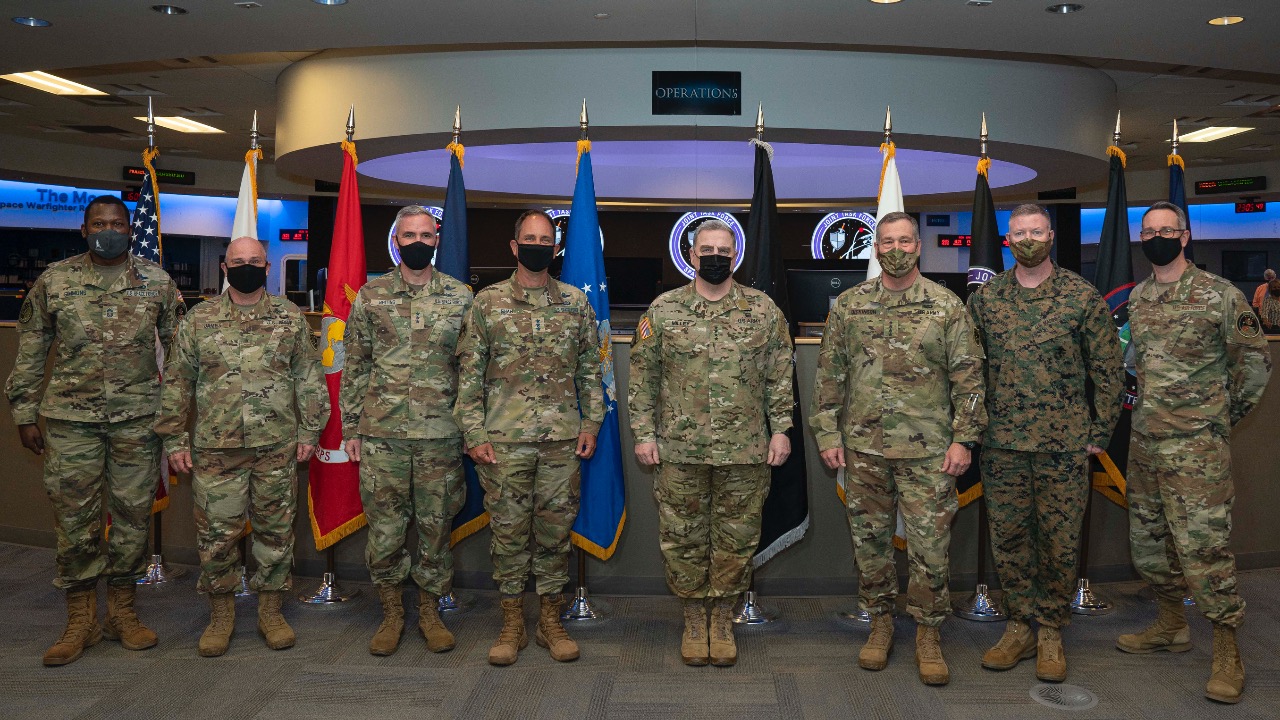
To understand why tempers are flaring, I start with what NORAD actually is. The North American Aerospace Defence Command, better known as NORAD, was built in the cold war to spot Soviet bombers coming over the pole and to coordinate a joint response. It is a binational command, not a typical alliance structure, which means officers from both countries share a single chain of command for monitoring and defending the continent’s airspace. That arrangement has always depended on a basic assumption, that the two governments would field compatible aircraft and sensors and would trust each other with the most sensitive warning data.
Those cold war habits still shape how the U.S. and its northern neighbor operate today. NORAD’s radar lines, satellite feeds, and fighter alert bases are designed around shared procedures and shared risk, not two separate national systems that occasionally cooperate. When American officials now warn that the pact itself might have to be rewritten if Canada changes course on its fighter plans, they are really saying that the technical and political glue that holds this binational command together is starting to loosen.
The F-35 deal at the heart of the dispute
The immediate trigger for the current fight is Canada’s planned purchase of a new fighter fleet. Ottawa committed to buying 88 F 35A jets from the United States, a package Washington views as essential for keeping Canadian forces interoperable with American squadrons. The United States is growing uneasy as Canada reviews its planned purchase of those 88 aircraft, seeing any delay or downsizing as a direct hit on shared air defense plans. For Washington, the F 35 is not just another airplane, it is the standard platform around which it is building future tactics and communications.
On the Canadian side, Prime Minister Mark Carney’s government has ordered a formal review of the fighter jet purchase in the middle of broader trade and budget tensions. The deal with Lockheed Martin and U.S. government is for 88 planes at a cost of about US$85 million each, figures that have become political lightning rods in Ottawa. When a government starts putting numbers like 88, $85 m, and $85 million under the microscope, it is signaling that even long planned defense buys are no longer insulated from domestic pressure.
Washington’s warnings and talk of rewriting NORAD
American officials have not been subtle about their frustration. In public and private, they have warned that if Canada pulls back from its F 35 order, the NORAD pact itself would have to change. The U.S. Ambassador to Canada Pete Hoekstra has been particularly blunt, arguing that the current agreement assumed Canada would field a fleet of 88 F 35 fighter jets and that anything less would force a rethink of roles and responsibilities inside NORAD. That is diplomatic code for a serious downgrade in Canada’s say over how the continent is defended.
The pressure has gone even further in some accounts. One detailed report describes how The United States has intensified pressure on Canada and Mark Carney, even floating the idea of scrapping NORAD outright if Ottawa walks away from the Lightning II program. When a partner starts talking about dismantling a command that has existed for decades, it is less a negotiating tactic and more a sign of how central the F 35 has become to American thinking about air defense.
Threats to send U.S. jets into Canadian skies
The rhetoric has not stopped at institutional threats. American officials have also raised the prospect of sending their own fighters into Canadian airspace if they judge that Canada’s fleet is no longer up to the job. Under the terms of NORAD, the U.S. and Canada can already fly in one another’s airspace to intercept threats, a practical arrangement that has worked quietly for years. What is new is the suggestion that Washington might lean on that authority more aggressively if it loses confidence in Canada’s ability to police its own skies.
That idea has been amplified in several analyses that describe how At the center of this developing story lies an unresolved question, what happens when one partner in a defense pact considers stepping back from a core capability. One account of the dispute notes that the U.S. threatens to send fighter jets into Canadian skies if Ottawa does not follow through on the F 35 purchase, tying that warning directly to concerns about cost escalations and delivery delays in the program. When American planners start talking openly about flying their own jets over a partner’s territory on a regular basis, it cuts against the grain of sovereignty that has long underpinned the relationship.
Canada’s review, domestic politics, and alternative jets
From Ottawa’s perspective, the review ordered by Mark Carney is about more than picking a favorite airframe. The Canadian government is wrestling with trade disputes, budget pressures, and a public that is not always eager to spend tens of billions on high end fighters. Carney has framed the review of the U.S. fighter jet purchase as a responsible check on value for money, even as Washington grows impatient. The fact that the deal with Lockheed Martin and the U.S. government is locked in at 88 aircraft has not stopped critics from asking whether Canada really needs that many jets or whether the money could be better spent elsewhere.
Those questions have opened the door for other suppliers. During a state visit to Ottawa by King Carl XVI Gustaf, Swedish officials and Saab executives pressed a structured proposal built around the Gripen E fighter, complete with sizable job creation and technology transfer promises. That pitch has given Canadian politicians a concrete alternative to point to when they argue that the country should not be locked into the Lightning II at any cost. It also feeds American worries that Canada might trade some interoperability for industrial benefits at home.
Ambassadors, envoys, and the Trump factor
Diplomats have been working overtime to manage the fallout. The U.S. Ambassador to Canada Pete Hoekstra has used public interviews to warn that the NORAD pact would change if Canada pulls back from the F 35 order, framing the issue as one of shared risk and fairness. Another analysis of the dispute notes that the ambassador has suggested that choosing a platform seen as inferior or less interoperable with U.S. systems would raise questions about sovereignty and shared security burdens, a pointed way of saying that Washington expects its closest partners to buy into its preferred kit. Those comments have landed in a Canadian political environment that is already sensitive to perceived American arm twisting.
At the same time, President Donald Trump’s envoy to Ottawa has been cited warning of consequences to the continental defense relationship if Canada drifts away from the F 35. That message has been echoed in coverage that highlights Relevant Locations and OCR notes from public discussions, underscoring how much political capital the Trump administration is investing in this issue. When both the ambassador and the president’s personal envoy are leaning on the same talking points, it signals that this is not a minor procurement spat but a test of how far Canada can push back without triggering real changes to NORAD.
Media narratives and public pressure on both sides of the border
Television segments and online videos have helped turn what might have been a niche defense story into a broader political argument. One widely shared clip lays out how for decades now the United States and Canada have shared one of the closest military partnerships in the world, together they protect North American airspace through NORAD, and now that partnership is under strain. That video, featuring Jan as a timestamp and focusing on the F 35 Lightning II, has been used by commentators to argue that the current dispute is unprecedented in the modern era. When ordinary viewers hear that the United States might send its own jets into Canadian skies, it naturally stirs strong reactions.
Other coverage has zeroed in on the idea that Washington Eyes NORAD Changes Amid F 35 Uncertainty, framing the issue as part of a broader US Canada Tension. One segment titled around Canada Tension and Washington Eyes NORAD Changes Amid Uncertainty explains how The United States has issued a stark warning to Canad about the future of the North American Aerospace Defense Command if the fighter deal unravels. As those narratives bounce around social media, they harden public expectations on both sides of the border, making it harder for leaders to quietly compromise without looking like they backed down.
How Canadian sovereignty and interoperability collide
Beneath the headlines, the core argument is about sovereignty versus interoperability. Canadian officials insist that as a sovereign country, Canada has the right to choose whatever fighter best fits its needs and budget, whether that is the F 35A, the Gripen E, or some mix of platforms. American planners counter that NORAD only works if both sides field aircraft that can plug seamlessly into shared networks and tactics, which in their view points squarely to the F 35. One detailed analysis notes that the ambassador also suggested that choosing a platform seen as inferior or less interoperable with U.S. systems would raise questions about sovereignty and shared security burdens, flipping the usual sovereignty argument on its head.
That tension is sharpened by the fact that NORAD is by far the most important US Canada military accord, not a side arrangement that can be easily patched over. The North American Aerospace Defence Command was established to detect and intercept bombers coming from the north, and its modern mission now includes cruise missiles and other advanced threats. If Canada opts for a mixed fleet or a non U.S. platform, American officials worry that they will end up carrying more of the load while still having to consult Ottawa on every major decision. From their perspective, that is a bad trade, and it explains why they are willing to talk openly about revisiting the command’s structure.
What happens next for NORAD and continental defense
Looking ahead, the choices made in Ottawa and Washington over the next year will shape North American air defense for decades. One detailed commentary framed it bluntly, At the center of this developing story lies an unresolved question, what happens when one partner in a defense pact considers stepping back from a core capability. If Canada sticks with the full 88 aircraft F 35 plan, the immediate crisis may cool, but the memory of this standoff will linger in how both sides think about future upgrades and cost sharing. If Ottawa trims the order or pivots to alternatives, then the talk of rewriting NORAD’s terms will move from rhetoric to negotiation.
For now, both governments are still talking, and NORAD’s radar screens and alert crews continue their daily work. Yet the fact that The United States has issued such stark warnings, that Canada is openly reconsidering its fighter mix, and that public debates are playing out on platforms ranging from Jan video segments to detailed policy analyses, shows how fragile even long standing defense arrangements can become under political and budget stress. Until the fighter jet question is settled, NORAD will sit in an uncomfortable place, caught between the hard realities of shared threats and the equally hard realities of national politics.

Asher was raised in the woods and on the water, and it shows. He’s logged more hours behind a rifle and under a heavy pack than most men twice his age.