9 Lesser-known hunting rounds hunters swear by
Every campfire debate eventually drifts to cartridges, and most of the oxygen goes to the usual suspects like .308, .270, and 6.5 Creedmoor. But plenty of hunters quietly fill their tags each fall with rounds that rarely make the glossy lists. I have seen these “off-menu” choices shine in the field, and when you look at the data, it is easy to understand why seasoned hunters swear by them.
1. .257 Roberts
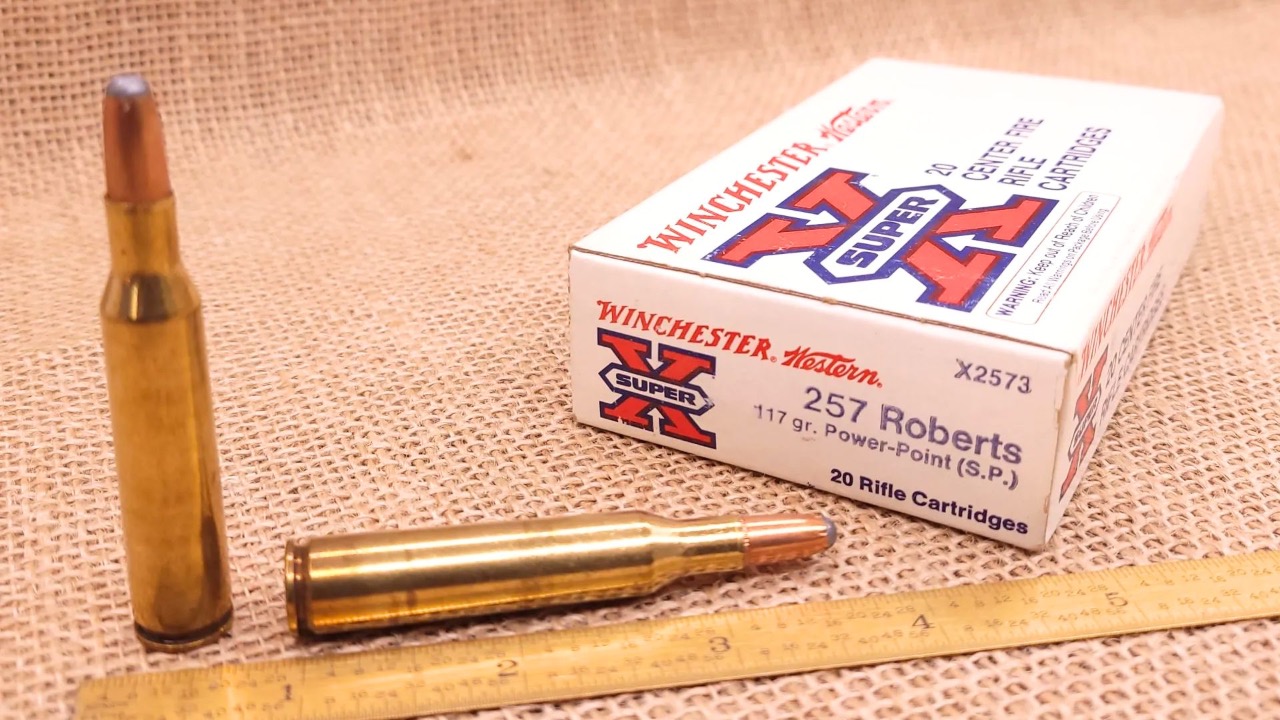
The .257 Roberts keeps showing up whenever experienced deer hunters talk about underrated rounds. Modern rifles from makers like Modern Ruger, Remington, others have kept it alive, and when it is paired with a controlled-expansion bullet it turns into a very forgiving deer cartridge. The mild recoil lets most shooters place shots precisely, which matters more than raw speed on whitetails.
In practical terms, the .257 Roberts gives you flat-enough trajectory for typical Eastern hardwood stands and Western sagebrush alike. I have watched it punch clean through ribcages at normal woods ranges while leaving manageable meat damage. For hunters who want something softer than a .308 but more authority than a .243, this round quietly checks every box without beating you up on the bench.
2. .22 Savage Hi-Power
The .22 Savage Hi-Power is one of those cartridges many modern hunters have never even handled, yet it once rode in the scabbards of serious deer hunters. Paired with the classic Savage Model 99, it offered fast follow-up shots and enough penetration for modest-size deer when bullets were placed carefully. While the Winchester Model 1894 dominated the era, this combination carved out a loyal following.
Today, the .22 Savage Hi-Power is more of a nostalgia piece than a mainstream choice, but it still works inside its lane. With modern bullets, it can handle small-bodied deer and predators where regulations allow .22 centerfires. The stakes here are ethical: anyone hunting with it needs to respect its limitations, keep shots close, and treat it as a precision tool rather than a do-everything hammer.
3. .25-06 Rem
The .25-06 Rem has been quietly stacking deer for decades, even if it rarely gets the spotlight. Reporting on popular deer calibers notes that the .25-06 Rem typically runs an average bullet weight around 100 g at about 3,350 feet per second, which gives it serious reach on open-country deer and pronghorn.
That speed translates into a flat trajectory that simplifies holdover out to the far edge of ethical hunting distances. Recoil stays manageable, especially in a standard-weight rifle, so most shooters can spot their own hits. For hunters who glass big basins or cutovers, the .25-06 Rem offers a smart middle ground between light varmint rounds and heavier .30-caliber thumpers, with enough punch for elk-sized game when bullets and shot angles are chosen carefully.
4. .300 AAC Blackout
The .300 AAC Blackout, also known as .300 BLK, is usually pigeonholed as a tactical or suppressor round, but it has earned a quiet following in the deer woods. Coverage of the Most Underrated Hunting points out that the 300 Blackout can be loaded with expanding bullets that perform well on deer inside moderate ranges.
Inside 150 yards, a supersonic .300 AAC Blackout with a tough bullet behaves a lot like a traditional .30-30, especially from a compact rifle. The low recoil and short barrels make it handy in thick timber or from ground blinds. For hunters managing small properties or shooting suppressed around livestock, the Blackout offers enough authority without the blast and over-penetration risk of larger .30-caliber magnums.
5. .338 Federal
The .338 Federal is another cartridge that punches far above its popularity. It was designed to push .338 bullets at moderate speeds from a .308-length case, and coverage of underrated rounds notes that it was built to work with modern controlled-expansion options, including specialty loads like Trophy Copper. In other words, it is tuned for real-world hunting rather than benchrest bragging rights.
In the field, the .338 Federal shines on elk, big-bodied whitetails, and black bear where shots are likely inside 300 yards. Recoil is stouter than a .308 but far from punishing in a sensible rifle. For hunters who want more frontal area and penetration than the standard .308, 270, or 243 crowd without stepping up to a magnum, this cartridge quietly fills that niche with authority.
6. 6.5 Creedmoor with heavy ELD-X
The 6.5 Creedmoor is hardly obscure, but specific hunting loads within it are still underrated. Big-game testing has highlighted bullets like the Hornady 128-grain, 257-Diameter ELD-X and similar designs, which show how high-BC bullets can carry energy deep into typical hunting distances. While that specific 128-grain, 257-Diameter bullet is not a Creedmoor load, it illustrates the same design philosophy.
When I run heavy-for-caliber ELD-X style bullets in a 6.5 Creedmoor, I see reliable expansion and penetration on deer and even elk-sized animals, provided impact velocity stays high enough. The cartridge’s mild recoil encourages careful shot placement, and the sleek bullets buck wind better than many traditional flatbase designs. For hunters who want one rifle to cover whitetails at home and mule deer out West, this combination quietly does the job.
7. .22 centerfires on deer
.22 centerfires for deer remain controversial, but they have a long track record in certain regions. Historical coverage of cartridges like the Savage Hi Power shows that careful hunters have long used small bores on small-bodied deer where legal. Modern .223 and similar rounds with bonded or monolithic bullets offer better terminal performance than early softpoints.
Still, the margin for error is thin. I view .22 centerfires as specialist tools for disciplined shooters who keep shots close and broadside. The upside is low recoil and inexpensive practice, which can translate into precise hits. The downside is that poor shot placement or steep angles can lead to wounded animals, so the ethical stakes are higher than with more forgiving mid-bore cartridges.
8. 6.5 Grendel
The 6.5 Grendel has become a favorite among hunters who want more reach from AR-pattern rifles without jumping to a full-size .308. In one discussion of oddball calibers, a hunter mentioned debating whether to pick up a Grendel specifically for hunting, which shows how it has moved from niche to serious consideration.
With bullets in the 120-grain class, the 6.5 Grendel carries solid energy and a respectable trajectory out to 300 yards from a compact rifle. Recoil is light, magazines stay small and handy, and the cartridge fits neatly into existing AR-15 platforms. For hunters who want to keep their rifle familiar but step up from 5.56 performance on deer and hogs, the Grendel is an underrated answer.
9. 6.5 Grendel with 123 SST Hornady
Within the 6.5 Grendel family, the 123 SST Hornady load has earned a particularly strong reputation. In a thread where one hunter asked, “Have an ammo you prefer? I’m debating picking up a Grendel,” another replied that they really liked the 123 SST Hornady for hunting.
That 123-grain bullet is built to expand reliably at Grendel velocities, which helps it perform on deer-sized game even as speed bleeds off downrange. In my experience, it offers a good balance of accuracy, penetration, and controlled expansion, especially from 16 to 20 inch barrels. For hunters who want a grab-and-go factory load that lets the Grendel punch above its weight, this specific pairing is hard to beat.

Asher was raised in the woods and on the water, and it shows. He’s logged more hours behind a rifle and under a heavy pack than most men twice his age.