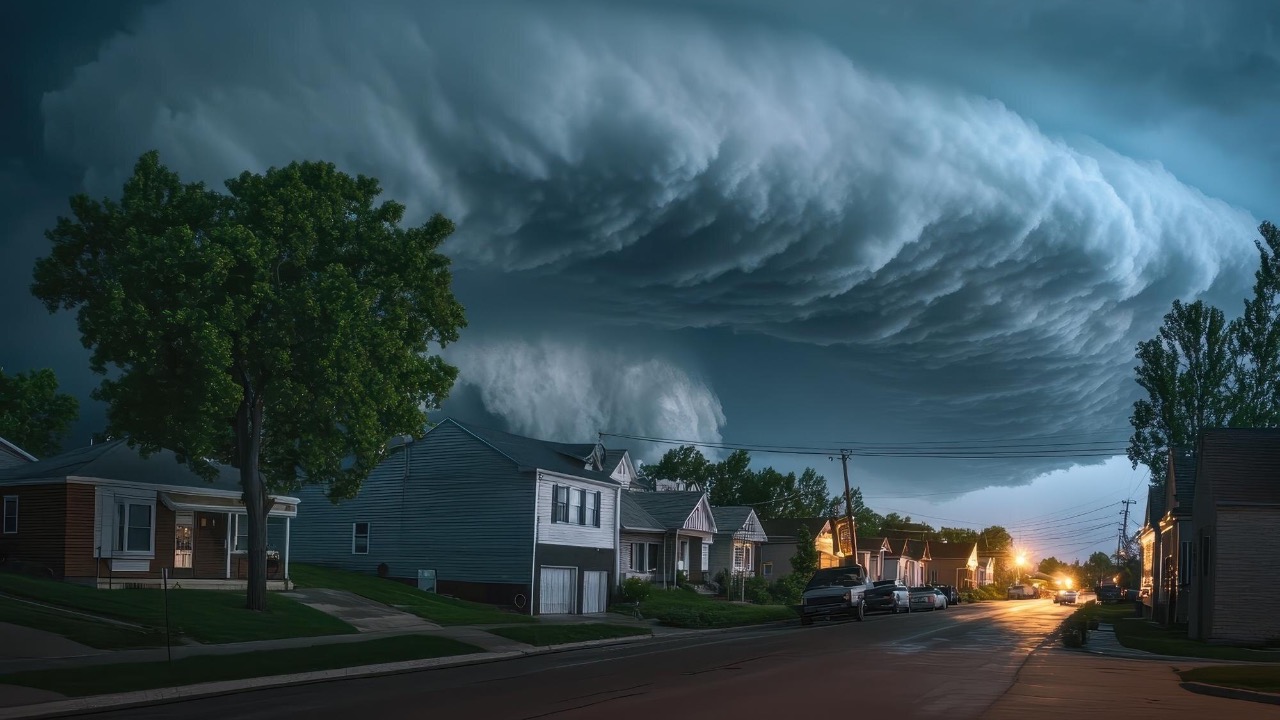
Severe weather alerts expand as multiple storm systems collide
Multiple storm systems are lining up across the United States, prompting a rapid expansion of severe weather alerts from the Pacific Coast to the eastern plains. Forecasters are tracking a volatile pattern in which overlapping winter storms, atmospheric rivers and severe thunderstorm outbreaks are interacting, raising the risk of flooding, mudslides, tornadoes and disruptive snow.
As these systems collide in the atmosphere, meteorologists are watching not just where each storm goes, but how they influence one another’s path and intensity. The result is a sprawling and unsettled stretch of days during which millions of people may move in and out of watches and warnings as the focus of the worst weather shifts region by region.
Alerts spread as storms stack up from California to the Midwest

Across the West, a California Winter Storm is already translating into real-world disruption, with heavy snow and high winds slamming Northern California and contributing to travel impacts, road closures, avalanche watches and power outages that officials have warned could lead to a significant power outage in some communities. Farther south, Southern California is dealing with a triple-storm system that is forecast to enter the region in waves, with LOS ANGELES and surrounding areas bracing for a significant shift in weather as three powerful storm systems combine to bring days of rain, cooler temperatures and unsettled surf along the coast. These overlapping events are part of a broader pattern in which moisture-laden Pacific systems are arriving in quick succession instead of as isolated storms.
The severity of the setup is already visible on the national map of watches and warnings, where the NWS has 15 States Across the country Under Weather Warnings, Watches and Advisories, including California, Colorado, Utah, Arizona, New Mexico, Michigan and Wisconsin, as well as others facing heavy rain and heavy mountain snow. In California specifically, forecasters have highlighted a severe winter storm that will make travel extremely dangerous or impossible in some mountain corridors, while an Atmospheric River has triggered life-threatening flooding and prompted a Rain advisory for all LA County Beaches as part of a broader Storm Update that also includes the continued closure of Topanga Canyon Boulevard. The Los Angeles County Department of Public Health has layered on safety guidance, warning that storm impacts have extended beyond roads and trails to coastal water, where runoff is creating elevated contamination levels that could affect swimmers and surfers.
Severe thunderstorm risk expands across the central and eastern U.S.
At the same time, a large cross-country storm is helping to ignite a severe weather outbreak east of the Rockies, with Noaa’s Storm Prediction Center issuing a Level 2 risk of severe thunderstorms that covers a broad swath from eastern Texas through parts of the Deep South and into the interior East. That risk area includes portions of Alabama, the Florida Panhandle and southwest Georgia, where damaging winds, large hail and a few tornadoes are possible as the system taps Gulf moisture and interacts with strong upper-level winds. The threat does not end in the Southeast, since the same storm and its trailing fronts are expected to keep the atmosphere unstable over a wide corridor as they move north and east.
Forecast guidance shows that the risk of severe weather will extend across 15 states spanning from eastern Texas to the Lower Peninsula of Michigan and into southwestern Ontario, then arcing through the Ohio Valley and western New York into Wednesday evening as the storm’s cold front sweeps east. Earlier in the week, a storm system that swept across the Southeast triggered tornado watches and damaging winds, a preview of the kind of fast-moving, high-impact line segments that can develop along these fronts as they cross warm, humid air. The national severe weather picture is being tracked in real time by the Storm Prediction Center, which uses convective outlooks, mesoscale discussions and watches to guide local offices as they refine short-term warnings.
California’s multi-day onslaught and the atmospheric river connection
For California, the current pattern is not just about a single storm but about multiple systems arriving in sequence, each tapping abundant Pacific moisture. Forecast discussions have emphasized that multiple storms this week threaten floods and mudslides for millions, with meteorologist Orrison noting that at least a couple of systems are expected to impact California in particular, bringing heavy rain to low elevations and pretty heavy snowfall in higher mountain locations. As those storms move inland, the National Weather Service has flagged burn scar areas and steep terrain as especially susceptible to flooding and mudslides, since saturated soils will struggle to absorb additional rainfall.
Along the Southern California coast, a series of storms has started slamming the shoreline, delivering high winds, strong waves, heavy rain and severe storms as an atmospheric river funnels moisture into the region and sets up several inches of rainfall with localized higher amounts expected in favored upslope zones. The FOX Forecast Center has stressed that the unsettled pattern does not end after Monday, since Additional storm systems are expected to move in behind the first wave, renewing the risk of coastal flooding, inland flash flooding and mountain snow while prolonging the flood threat in low-lying and urban areas. Local reports from Malibu describe how storm cleanup continues across Malibu as crews brace for more rain, with damage to roads and trails and a separate advisory from The Los Angeles County Department of Public Health about contamination in coastal water, all of which underscore how repeated hits compound impacts even when individual storms might be manageable on their own.
When storms interact: from Fujiwhara Effect to historic mergers
As these systems crowd the map, public curiosity often turns to whether storms can literally collide and merge into a single giant cyclone. Meteorologists point to examples in the tropics, where Two tropical waves in close proximity in the Central Atlantic can begin to interact through a process known as the Fujiwara effect, a term that has been widely discussed in ORLANDO, Fla and other hurricane-prone regions. During this phenomenon the storms do not simply pass by one another; instead their circulations can cause them to start orbiting around a common center, almost like a dance in the sky, and depending on their relative size and strength they may repel each other, merge or see one system dominate while the other weakens.
Social media explainers have highlighted that the Fujiwhara Effect happens when two tropical cyclones get close enough for their wind fields to interact, drawing on research from the American Meteorological Society and aviation safety analyses that describe how the mutual spin can alter each storm’s track and intensity. Technical breakdowns of this atmospheric dance note that instead of moving independently, their circulations cause them to orbit around a shared point, sometimes leading to one storm absorbing the other or both fading out over the ocean if environmental conditions become hostile. Historical case studies show that such mergers are rare but real, including a famous BOSTON event in which Three systems, including the remnants of a tropical cyclone, converged into what was described as the mother of all storms, combining their energy and pressure fields to produce a serious storm with an unusually wide footprint.
Modern forecasting tools and data streams help meteorologists monitor these interactions in real time, whether in the tropics or in midlatitude jet stream patterns. National centers rely on global models, satellite imagery and surface observations that feed into platforms such as the primary weather service site and the convective products issued by the Storm Prediction Center. In the hurricane-focused coverage from Sep out of ORLANDO, Fla, meteorologists answering the question of whether Two storms can combine into a mega-hurricane explain that while one of the storms could become stronger during a Fujiwara interaction, environmental shear, ocean temperatures and surrounding pressure patterns usually limit runaway growth, which is why forecasters focus on realistic intensity ranges rather than science fiction style mega-storms.

Leo’s been tracking game and tuning gear since he could stand upright. He’s sharp, driven, and knows how to keep things running when conditions turn.