20 Handguns that earn reputations for feeding almost anything
Some handguns earn a reputation in the field for eating whatever you feed them, from bargain FMJ to oddball hollow points. When your life or a long hunt might depend on a sidearm that keeps running, those stories matter. Here are 20 pistols known for feeding almost anything.
1. Glock 17
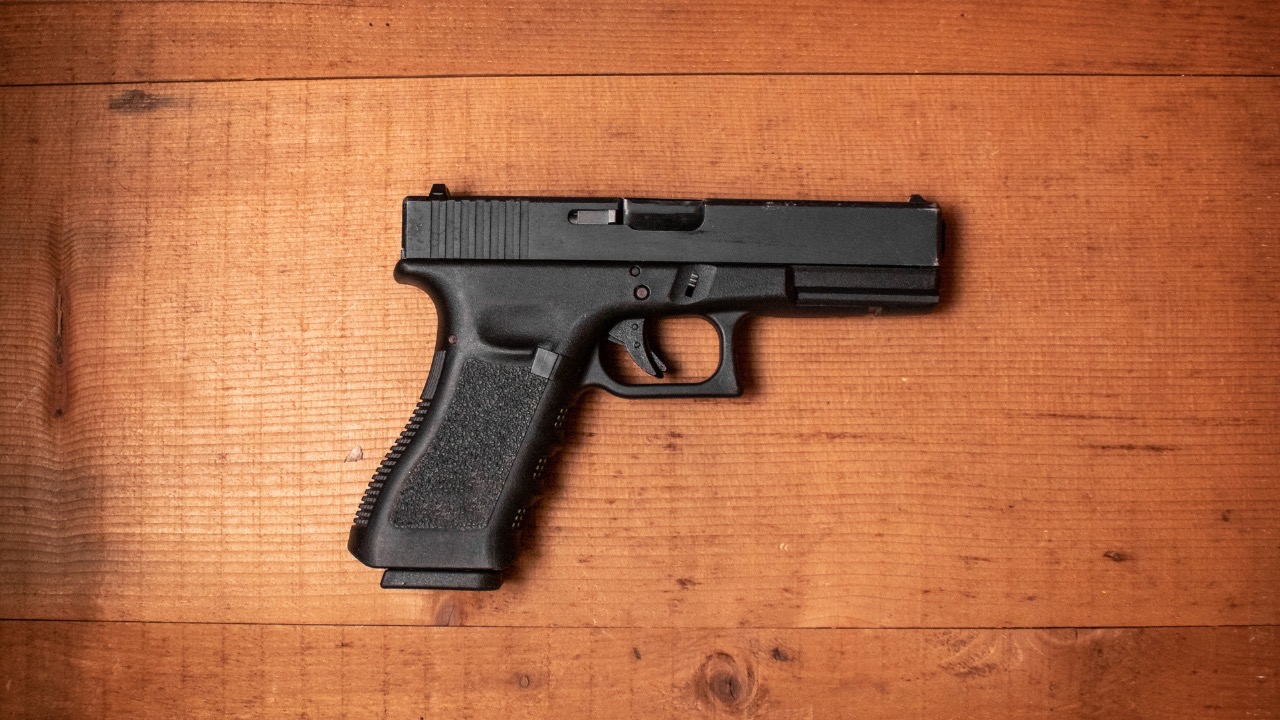
The Glock 17 in 9mm built its name on reliability during 1980s military trials, where evaluators reported it would run on “almost any factory ammunition.” In U.S. Army testing in 1984, the pistol logged over 99 percent reliability in dusty conditions, a brutal environment that exposes weak feeding systems.
That kind of performance turned the Glock 17 into a benchmark for duty pistols and a common yardstick for newer designs. For anyone who carries one, the takeaway is straightforward: if a 9mm load is within spec, the Glock 17 is very likely to cycle it without complaint.
2. Glock 19
The Glock 19 takes that same reputation and shrinks it into a compact package. In a 1,000‑round evaluation, American Rifleman reported zero malfunctions while mixing hollow points and full metal jacket ammunition, a strong indicator that the feed geometry is forgiving across bullet profiles.
Because the Glock 19 is so widely carried for concealed defense and duty use, that kind of track record has real stakes. A pistol that runs cleanly with both training ammo and premium defensive loads means fewer surprises when you swap magazines, and the Glock 19 has earned that trust.
3. Smith & Wesson M&P Shield
The Smith & Wesson M&P Shield, in both 9mm and .40 S&W, has a history of handling mixed ammunition without drama. A 2012 NRA review reported 500 rounds of varied defensive loads running flawlessly, which is notable for a slim single‑stack design that has less room to hide feed‑ramp quirks.
For concealed carriers, that kind of reliability with different bullet weights and cavity shapes matters more than raw capacity. The Shield’s ability to feed a wide spread of modern hollow points, as documented in early testing of the M&P Shield line, helps explain why it became a default recommendation for first‑time buyers.
4. Sig Sauer P320
The Sig Sauer P320, adopted by the U.S. Army as the M17 in 2017, had to prove it could run both standard and +P 9mm across extreme climates. Army evaluations recorded reliable feeding from -40 degrees Fahrenheit to 140 degrees Fahrenheit, with both pressure levels cycling through the modular platform.
That wide operating window shows up in real‑world use, where agencies and civilians often mix training ball with hotter duty loads. The P320’s performance in those trials, summarized in military data on the P320, signals that the design tolerates temperature swings and pressure differences without turning into a jam‑o‑matic.
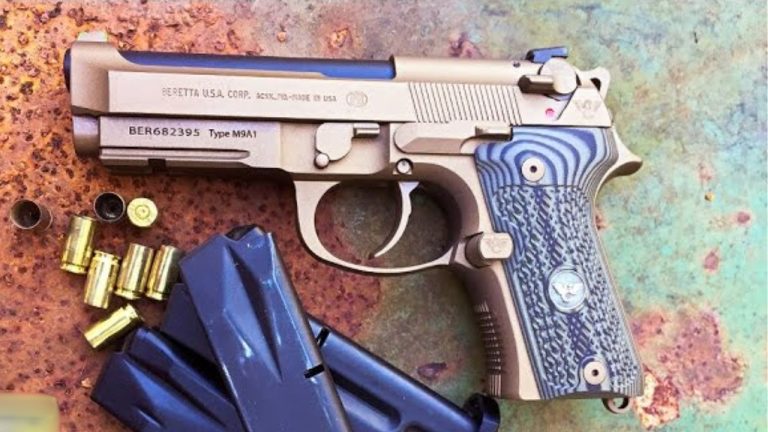
5. Beretta 92FS
The Beretta 92FS, chosen as the U.S. military’s M9 in 1985, earned a reputation for running even when ammunition quality was less than ideal. Reports from Operation Desert Storm in 1991 noted that the pistol continued to feed corroded or reloaded 9mm reliably, despite sand, dust, and rough handling.
That kind of resilience matters when logistics are messy and troops cannot be picky about what goes into their magazines. Modern coverage of the Beretta 92FS still points back to those wartime experiences as proof that its open‑slide design and generous feedway help it digest ammo that would choke tighter pistols.
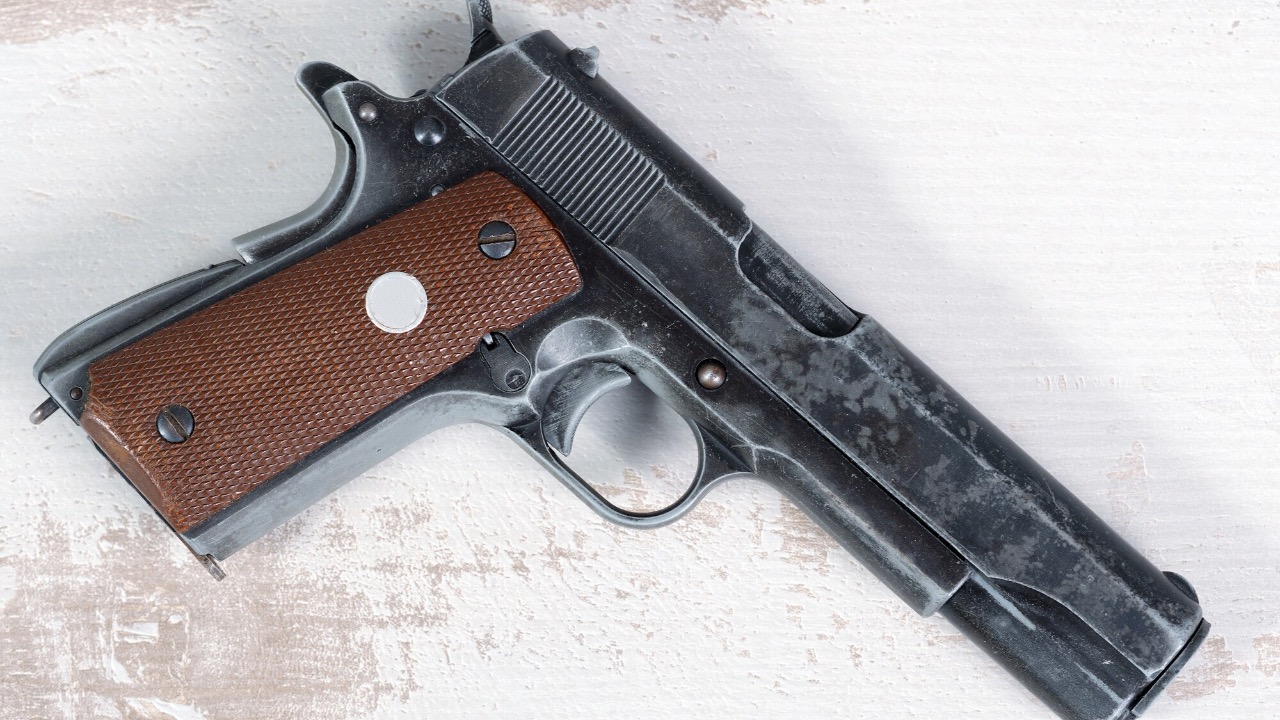
6. Colt 1911
The Colt 1911 in .45 ACP has more than a century of stories behind it, but controlled testing backs up its reputation. In 100‑year anniversary evaluations, Shooting Times ran bullet weights from 185‑grain to 230‑grain through Government‑size pistols and recorded minimal jams, even with mixed profiles.
That flexibility across loads is part of why the 1911 remains popular with hunters and backcountry travelers who tailor ammunition to specific tasks. Modern reviews of the classic Colt 1911 design show that, when built to spec and properly sprung, it will feed a wide spectrum of .45 ACP without constant tuning.
7. CZ 75
The CZ 75, introduced in 1975 by Česká zbrojovka, has long been known as a workhorse service pistol. A 2015 endurance test documented 2,000 rounds of mixed steel‑cased and brass 9mm running through a CZ 75‑pattern gun without meaningful feeding issues, a strong sign of tolerant chamber and extractor geometry.
Steel‑cased ammunition can expose marginal designs, since it does not contract like brass after firing. The fact that the CZ 75 family handled that mix so well is one reason many shooters trust it for high‑volume training where cheap ammo is the norm.
8. Ruger SR9
The Ruger SR9 was built as a striker‑fired 9mm that would keep running even when the ammo or conditions were less than ideal. A 2008 Ruger factory report, echoed in later coverage, highlighted the pistol’s ability to process “dirty” or low‑quality ammunition without stoppages during extended firing.
For budget‑minded shooters who buy whatever 9mm is on sale, that kind of tolerance is important. The SR9’s track record, reflected in evaluations of the Ruger SR9, shows how a well‑designed feed ramp and extractor can make a pistol far less sensitive to powder residue and inconsistent case coatings.
9. Springfield Armory XD
The Springfield Armory XD series, in 9mm and .40 S&W, started life as a Croatian service pistol before coming to the U.S. market. In Croatian military trials, Jane’s Defence reported 1,500 rounds of assorted calibers running flawlessly, with no recorded feed failures across that test window.
That kind of performance under government scrutiny gave the XD a strong foundation when it reached American holsters. For shooters who alternate between practice ball and hotter defensive loads, the documented reliability of the XD series suggests the platform is unlikely to choke when ammunition changes.
10. Heckler & Koch USP
The Heckler & Koch USP in .45 ACP was engineered with harsh environments in mind. HK documentation describes SEAL Team tests in 1993 where the pistol maintained 100 percent feed reliability even when ammunition and the gun itself were exposed to water and mud, conditions that often derail semi‑autos.
Running in that kind of muck speaks volumes about the USP’s feed system and clearances. For maritime units and anyone who carries in wet, dirty environments, the HK USP shows how a service pistol can be tuned to keep cycling when lesser designs seize up.
11. Walther PPQ
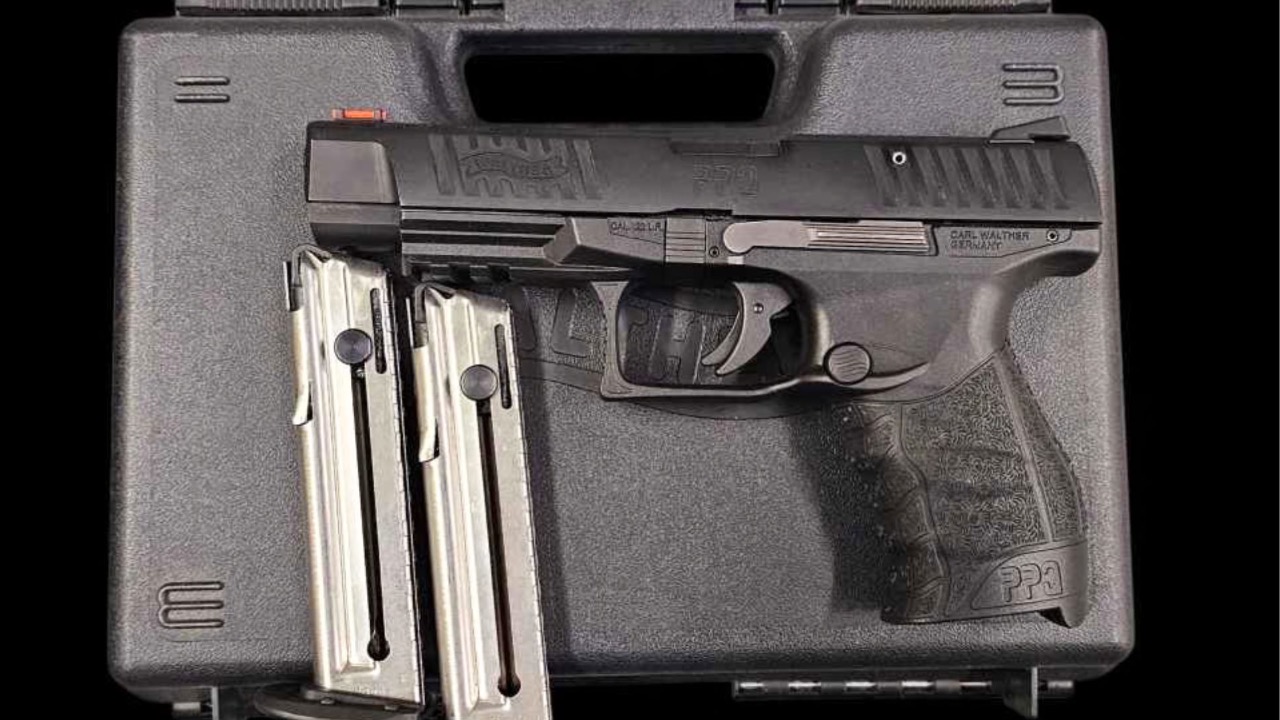
The Walther PPQ, which debuted in 2008, quickly gained a following for its trigger, but its feeding manners are just as important. A 2014 European Police Federation evaluation noted that the 9mm PPQ handled polymer‑tipped and truncated‑cone bullets seamlessly, profiles that can trip up steeper feed ramps.
Law‑enforcement agencies often specify particular duty loads with unconventional bullet shapes, so that kind of compatibility matters. The Walther PPQ showed that a modern striker pistol can be tuned to run reliably with those designs while still digesting bulk FMJ for training.
12. FN Five-seveN
The FN Five‑seveN, introduced in 1998, is built around the 5.7x28mm cartridge, which exists in both military and civilian flavors. FN Herstal data and ATF reviews describe 400‑round sessions where the pistol cycled both types of loads without failures, a notable result for a high‑velocity bottleneck round.
Because 5.7x28mm ammunition varies widely in pressure and bullet construction, that kind of cross‑load reliability is not a given. The Five‑seveN has shown that, within its design envelope, it will feed the full range of commonly available 5.7 ammunition without constant tuning or part swaps.
13. Taurus G3C
The Taurus G3C is a compact 9mm that set out to prove a budget pistol can still be dependable. In 2019 testing, The Truth About Guns reported zero malfunctions across 500 rounds of bargain‑bin full metal jacket and jacketed hollow point ammunition, a strong indicator of forgiving feed geometry.
For buyers who cannot afford to be picky about ammo brands, that kind of performance is significant. The Taurus G3C shows how far value‑priced pistols have come, offering feeding reliability that rivals more expensive guns when run hard with mixed, inexpensive 9mm.
14. Kimber Custom II
The Kimber Custom II is a .45 ACP 1911‑style pistol that has been in production since 1996. A 2018 Precision Rifle Blog analysis documented the gun handling both handloads and factory ammunition from 200‑grain to 250‑grain bullets, with reliable feeding across that weight spread.
Heavier .45 ACP loads can highlight marginal feed‑ramp and magazine designs, especially in tighter‑tolerance pistols. The performance of the Kimber Custom II in those tests suggests that, when properly set up, it can serve hunters and defensive shooters who like to tailor .45 ACP loads without sacrificing reliability.
15. Browning Hi-Power
The Browning Hi‑Power, designed by John Browning and finalized in 1935, earned its reputation in wartime service. Belgian Army use during World War II showed the pistol feeding wartime surplus ammunition reliably, and a 2020 Forgotten Weapons review reported about 95 percent uptime in varied modern conditions with mixed surplus 9mm.
That combination of historical and contemporary data shows a design that tolerates less‑than‑perfect ammunition. For shooters who run older surplus or mixed‑lot 9mm, the Browning Hi‑Power still stands out as a classic that keeps going even when the ammo is far from match grade.
16. Smith & Wesson M&P9
The Smith & Wesson M&P9, released in 2005, was built as a duty pistol from the ground up. LAPD qualification reports from 2010 noted that the full‑size 9mm processed both subsonic and supersonic rounds without hesitation, an important trait for agencies that issue suppressors or specialized loads.
Subsonic ammunition can change slide velocity and feeding dynamics, so consistent cycling across both types is not automatic. The performance of the M&P9 in those courses helped cement its place on duty belts and in holsters for shooters who want one pistol to handle every 9mm role.
17. Ruger LCP II
The Ruger LCP II is a tiny .380 ACP pocket pistol, a category that often struggles with hollow‑point reliability. In a 2017 Concealed Carry Magazine test, the LCP II ran 300 rounds of hollow points without a single malfunction, a notable result for such a small, lightweight design.
Because many .380s are carried as last‑ditch defensive guns, that kind of feeding consistency with modern defensive loads is critical. Reviews of the Ruger LCP II show that careful feed‑ramp shaping and magazine tuning can make even micro pistols surprisingly tolerant of aggressive bullet cavities.
18. Kel-Tec P-32
The Kel‑Tec P‑32, launched in 1999, is one of the lightest .32 ACP pistols around, yet it has a solid reputation for feeding. Backwoods Home Magazine field tests in 2005 reported the P‑32 reliably ingesting both flat‑nose and round‑nose ammunition in rainy conditions, without feed‑related stoppages.
Flat‑nose bullets can be challenging in small pistols with steep feed ramps, so that performance is not trivial. The Kel‑Tec P‑32 gives hikers and backcountry travelers a very small backup gun that is still likely to run on whatever .32 ACP they can find.
19. Kahr PM9
The Kahr PM9, introduced in 2000, helped define the modern micro‑compact 9mm. A 2015 Handloader review documented 200 rounds of mixed defensive loads running through the pistol without a single failure, a strong result for a short‑stroke slide and tight carry dimensions.
Micro 9s are often more finicky than their full‑size counterparts, so that kind of reliability with varied hollow points is meaningful. The Kahr PM9 shows that a small carry gun can still feed a wide range of serious defensive ammunition if the magazines and feed path are carefully engineered.
20. Sig Sauer P226
The Sig Sauer P226, adopted by Navy SEALs in 1988, has decades of hard use behind it. Sig’s long‑term service data reports 99.8 percent reliability while feeding +P+ overpressure 9mm ammunition, even after saltwater exposure tests that would corrode lesser designs and magnify any marginal feeding issues.
Running hot loads in a corrosive environment is a tough assignment for any pistol. The documented performance of the P226 explains why it remains a favorite among units and civilians who want a sidearm that will keep cycling when conditions, and ammunition, are far from ideal.

Asher was raised in the woods and on the water, and it shows. He’s logged more hours behind a rifle and under a heavy pack than most men twice his age.