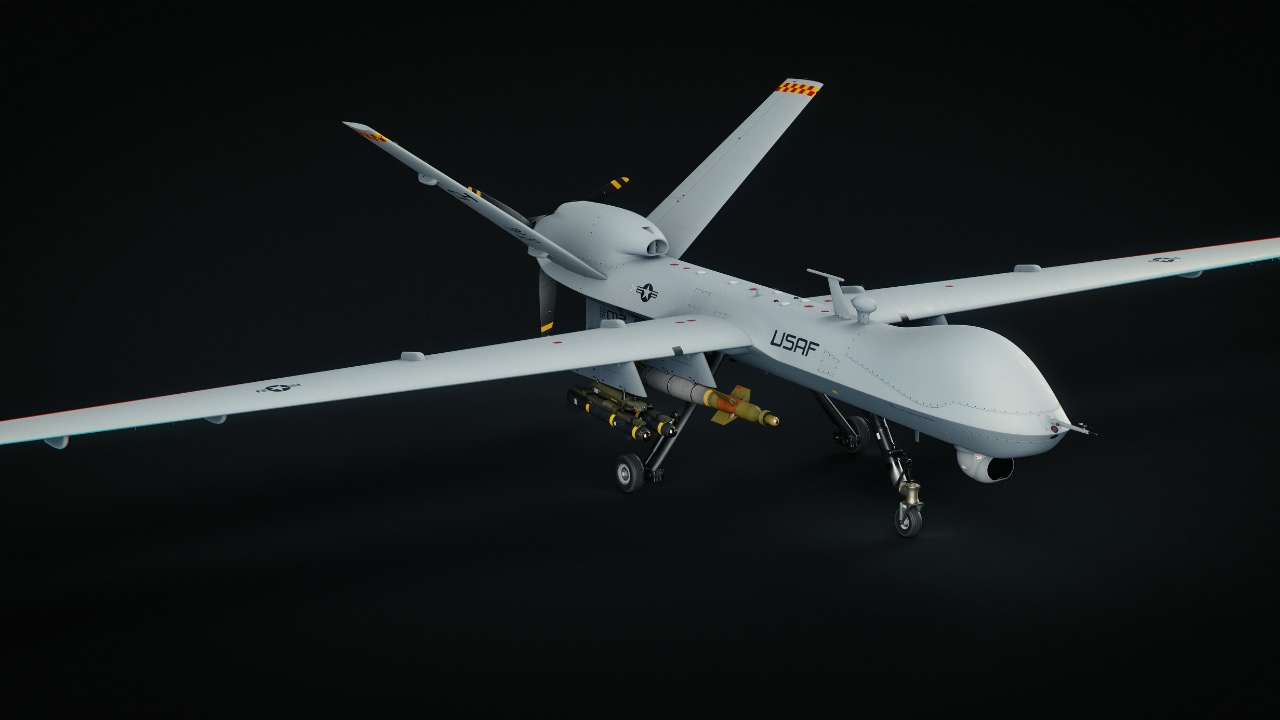
How Drone Warfare Is Forcing Armies to Rethink Air Superiority
Armed drones and cheap quadcopters have turned the air above the battlefield into a constant threat rather than a sanctuary controlled by a few expensive jets. Militaries that once equated air superiority with fighter sweeps and stealth bombers are now racing to survive in a sky crowded with expendable machines, persistent sensors, and precision explosives. The balance between cost, risk, and control of the air is shifting fast, and traditional air power theory is struggling to keep up.
Across recent conflicts and official studies, the same pattern keeps emerging: small unmanned aircraft are eroding long-held assumptions about who owns the sky and for how long. Air superiority is becoming a contested, time-limited condition, and armies are being forced to rethink everything from doctrine and procurement to how platoons move, hide, and fight under a swarm-filled sky.
From uncontested skies to contested minutes
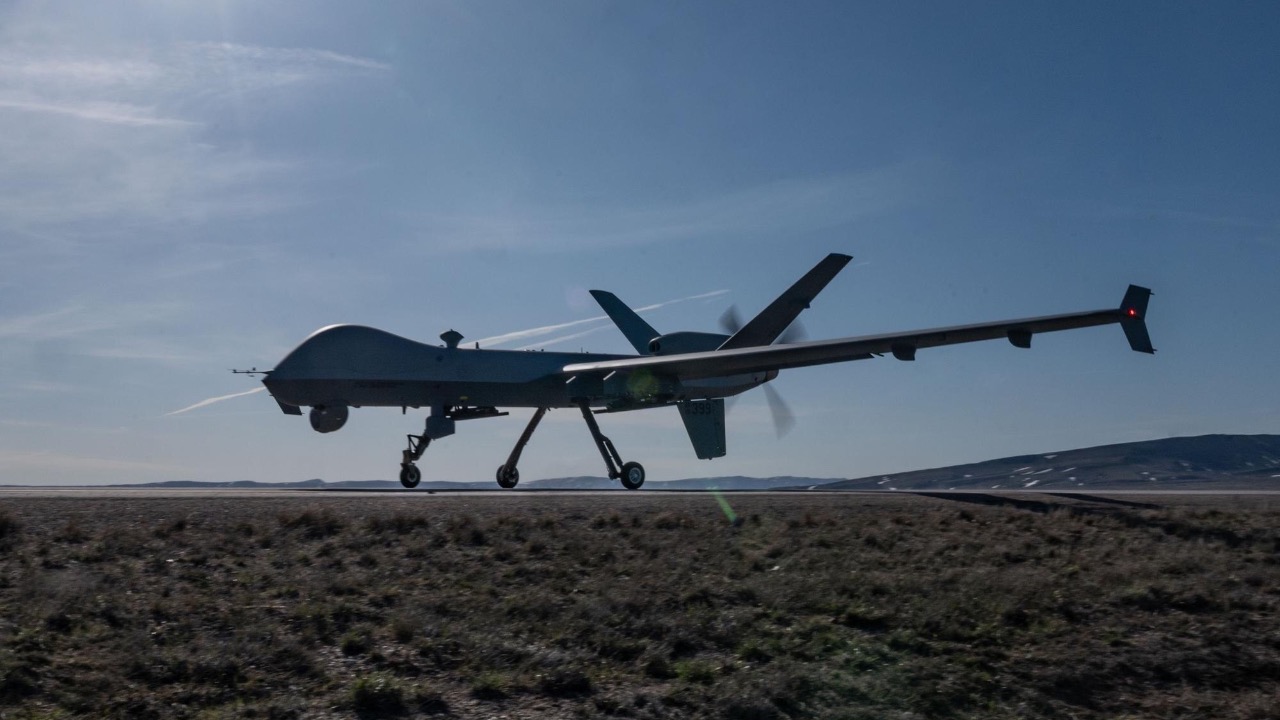
For decades, air strategists treated air superiority as a binary state that modern air forces could achieve early and then maintain almost at will. One detailed historical review notes that, Since April 15, 1953, the United States has preserved unmatched air superiority without a single death of United States ground troops from enemy aircraft. That record encouraged a belief that control of the air was something a rich, technologically advanced power could lock in for the duration of a campaign. Within that mindset, air planners focused on high-end fighters, large bombers, and complex suppression of enemy air defenses rather than on thousands of cheap intruders at low altitude.
Recent official thinking now concedes that this model no longer fits. One influential analysis argues that air superiority is not a permanent condition but a shifting status that must be created, exploited, and then recreated as threats adapt. Its Conclusion is blunt: air superiority is no longer a binary condition achieved early in conflict and sustained indefinitely, but instead must be managed across multiple domains and altitudes, including areas previously deemed off limits. That reads as an admission that cheap drones have fractured the old idea of a clean, uncontested sky and replaced it with a mosaic of temporary windows of advantage.
The rise of drone dominance
On the ground, the shift is even starker. Military reporting on current conflicts describes a battlespace in which small unmanned aircraft are present almost constantly, hunting artillery, logistics hubs, and individual soldiers. One official spotlight on Drone Dominance describes how affordability and mass allow forces to saturate the air with sensors and munitions in ways that legacy aircraft fleets cannot match. That pattern is visible in the Russia-Ukraine War, where both sides use quadcopters and loitering munitions to spot targets, adjust fire, and strike vehicles at ranges that used to require artillery batteries or attack helicopters.
Analysts looking at that war argue that extensive drone use during the conflict stems from specific conditions, including dense air defenses and the availability of commercial platforms. One assessment of Extensive drone use during the Russia-Ukraine War links it to a mix of cheap quadcopters, Iranian supplied systems, and more sophisticated Kalibr cruise missiles. That suggests drone dominance is not just about numbers, but about a layered ecosystem that stretches from hobby-grade machines to long-range precision weapons, all feeding a continuous kill chain.
The “air littoral” and the gap below traditional airpower
Traditional air forces have focused on fighters and bombers operating at medium and high altitude, but small drones live in what some experts now call the air littoral. This band of airspace, roughly from treetop level up to a few thousand feet, is where quadcopters, loitering munitions, and small fixed-wing UAVs loiter, surveil, and strike at minimal cost. A detailed brief on countering the drone threat notes that Experts describe this rise of small drones as creating a new operational domain where traditional air defense systems are often too expensive or too blunt to respond effectively.
One pointed critique argues that the U.S. Air Force has effectively run out of time in that air littoral and can no longer provide effective air superiority to protect American troops there. The analysis of drones, the air and the looming irrelevance of the service warns that enemies can now operate cheap drones in this band with relative impunity, threatening bases and patrols even when high-altitude skies are fully controlled. That is a direct challenge to legacy notions of air superiority, because it suggests that owning the upper air does not protect soldiers from a $2,000 quadcopter flying at 50 meters.
Small drones, big doctrinal headaches
Senior leaders are starting to say openly that the definition of air superiority itself has to change. In one widely discussed intervention, an Air Force general argued that small, low-cost drones with a minimal radar cross section are forcing a fundamental rethink of how to control the sky. A detailed report on how By Chris Gordon captured those remarks explains that the Air Force needs to rethink how small drones could change the definition of air superiority, precisely because they are hard to see, cheap to replace, and easy to proliferate.
Ground forces are feeling that pressure as well. Reporting on how Ukraine’s Drone War Is Forcing the Army to Rewrite Its Battle Doctrine describes how The Army is overhauling how it fights in combined arms formations, after learning that small UAVs can be more effective than traditional platforms in some roles. The account of How Ukraine Drone War Is Forcing the Army to Rewrite Its Battle Doctrine highlights changes in dispersion, camouflage, and electronic discipline. Those adjustments suggest that air superiority is no longer something ground units can assume, even when friendly jets are overhead. Instead, every movement now has to account for persistent overhead surveillance by cheap quadcopters.
Persistent threat, fleeting control
The constant buzz of small drones has created a situation in which control of the air is both more contested and more fragmented. One analysis of the drone dilemma facing the U.S. Air Force notes that There is certainly a consistent threat from drones, missiles, and rockets that results in U.S. servicemember casualties, despite the presence of advanced aircraft and sensors. The same piece on There being a consistent threat argues that the service still tends to measure success by traditional metrics such as sorties and air-to-air kills, even while small drones slip through gaps in defenses.
Outside analysts are even more blunt. One widely shared discussion on future airpower argues that The Air Force is being forced to admit that air superiority is no longer a permanent condition but a fleeting window, opened by a surge of capability and then closed again before the enemy can respond. That view, captured in a The Air Force debate, aligns with formal studies that describe air superiority as a series of temporary conditions rather than a lasting state. This shift in language is more than semantics, because it forces planners to think in terms of timing, local conditions, and specific threat bands instead of assuming blanket control.
Economics of attrition in the drone age
Cost is one of the main reasons drones are reshaping air superiority. A detailed economic analysis of military UAVs notes that the affordability and versatility of drones are transforming warfare, allowing forces to saturate the battlefield and preserve human life on the operator side. The piece on Drones in Defense, Reshaping Modern Warfare and its Economics explains that disposable systems can be used aggressively in roles that would be too risky for crewed aircraft. That poses a direct challenge to expensive air defense systems that were designed to defeat a small number of high-value targets, not swarms of $500 quadcopters.
Front-line commanders are already struggling with the arithmetic. A detailed look at NATO preparations for Ukraine-style swarm attacks highlights the concept of cost per kill, the average price to defeat a drone. The report explains that Using a £1 million missile in a pinch is acceptable, but unsustainable at scale when the target is a cheap quadcopter. That observation in the Cost per kill analysis captures the core dilemma: if every intercept costs more than the attacker paid for the drone, the defender will eventually lose the economic war, even if the tactical score looks positive.
New doctrines for surface forces and the “tactical sky”
As drones fill the air littoral, ground forces are being pushed to think of local air control as part of their own job rather than something outsourced to distant air commands. One detailed study argues that surface forces must be able to command the tactical skies directly, with organic sensors and shooters under the control of ground commanders. The analysis of Pakistan is revealing here, since it notes that Pakistan’s air command remains predominantly centralised, which limits ground commanders’ immediate control over airspace and reduces drone warfare effectiveness. That reads as a warning that centralized air control structures may be too slow for a drone-saturated fight.
Other analysts describe a broader transition period in warfare, driven by what they call a Robotic Rise in the number of robots and low-cost missiles fed by increased situational awareness. The discussion of Robotic Rise argues that armies need new organizational structures to integrate these systems and to defend against them. There is a convergence here: surface forces are being asked to manage their own slice of the sky, while also fielding more autonomous systems of their own, all within doctrines that were written for an era of scarce, expensive air assets.
Technology races and integrated air defense
Technology is racing to catch up with the threat. Market research on counter-drone systems notes a heavy trend toward directed energy weapons, including lasers and high-power microwaves, as cost-effective “infinite magazines” that can defeat large numbers of small targets. The assessment of Current Trends also points to a move toward Drone as a Service models for domestic security, which hints at a future in which both attack and defense in the air littoral are offered as scalable, subscription-like capabilities. That is a sign that states and private actors alike are trying to industrialize drone operations and countermeasures.
On the military side, advanced concepts for integrated air and missile defense are starting to incorporate automated battle management. One detailed vision describes a system called Sky Fortress that uses advanced computing to process sensor data, quickly identify and locate incoming attacks, and triangulate their origin for rapid response. The description of Using Sky Fortress to fuse information and cue weapons suggests that future air superiority will rely on software and networks as much as on individual platforms. In that model, control of the air becomes a function of how fast a force can sense, decide, and shoot across all altitudes, including the drone-filled air littoral.
Strategic warning from Ukraine and beyond
Ukraine has become the most visible laboratory for drone-intensive warfare, but analysts warn that the lessons extend far beyond that conflict. One detailed study of how drones are changing modern warfare notes that, Following the Russian invasion in Ukraine, larger drones proved unsurvivable in a modern, well equipped air defence environment, which pushed both sides toward smaller, cheaper systems that are harder to detect. The account of Following the Russianinvasion in Ukraine also highlights how drones have displaced some human roles and enabled round-the-clock surveillance and strike. That is a clear signal that future peer conflicts will likely feature thousands of small UAVs instead of a handful of large ones.
Strategists looking at the global picture argue that America is not ready for a full-scale drone war. One recent commentary warns that the drone threat in the Middle East, while serious and deadly, is negligible compared to the capabilities of China, whose People’s Liberation Army could field far more advanced and numerous systems. The analysis of the Middle East drone threat compared to China and the Peo highlights how much more demanding a high-end drone conflict would be for U.S. defenses. Combined with the institutional critiques of the air littoral gap, that warning points to a strategic risk: if doctrine and procurement do not adapt quickly, adversaries could exploit the drone layer of the sky faster than established air forces can respond.

Leo’s been tracking game and tuning gear since he could stand upright. He’s sharp, driven, and knows how to keep things running when conditions turn.