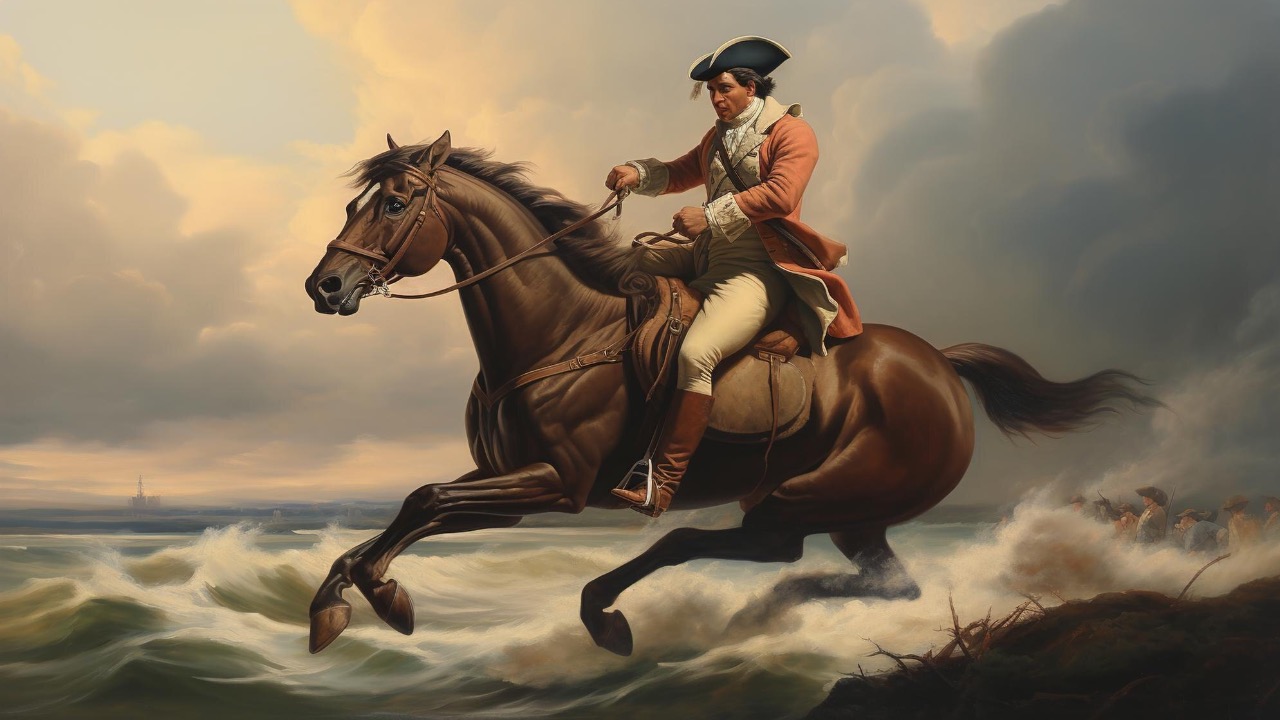
Historic Horses That Changed American History
From the Revolutionary War to the rise of modern Thoroughbred racing, individual horses have shaped American decisions, morale and even bloodlines. Their stories show how power, speed and stamina on four legs helped decide battles, build legends and define what Americans expect from a great horse.
These animals were not just background figures in paintings or old photographs. Horses like Blueskin, Traveller, Comanche, Sergeant Reckless and Lexington became central actors at turning points in American history, carrying commanders, surviving disasters or transforming entire industries through their offspring.
War Horses and the Making of a Nation
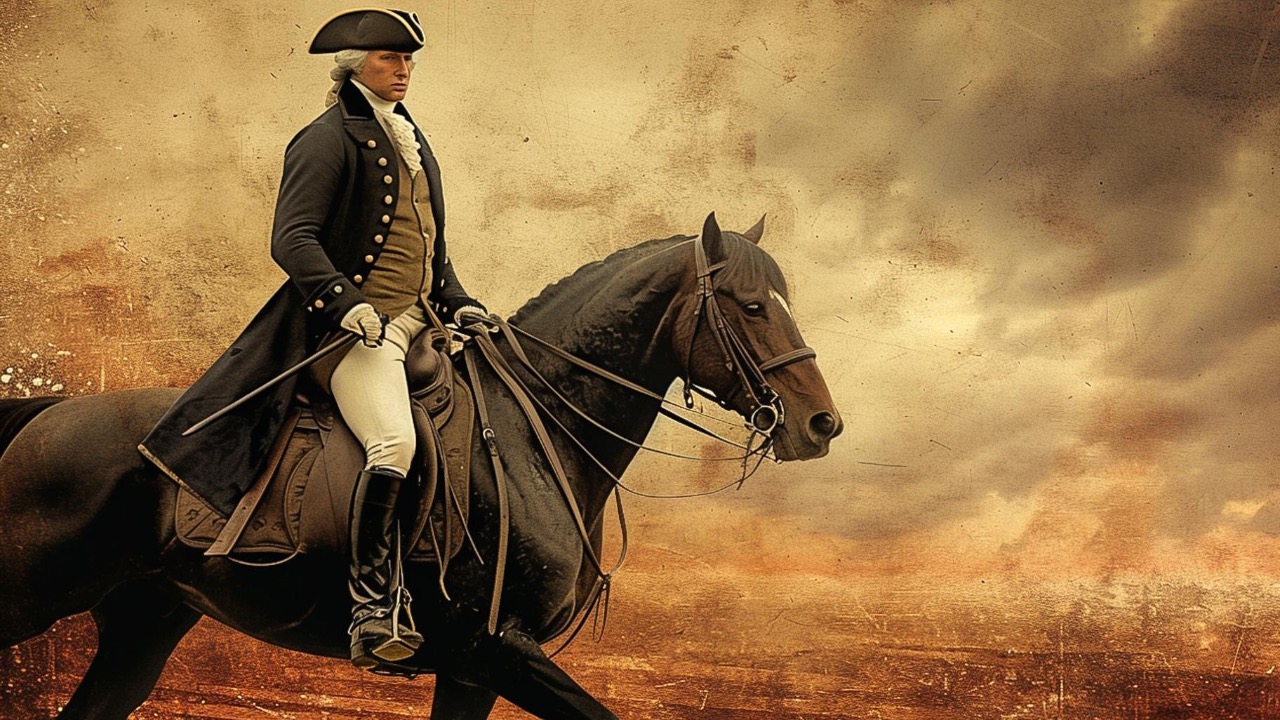
Long before tanks and trucks, the United States fought its wars on horseback. In conflicts from the colonial era through World War I, horses hauled artillery, carried couriers and gave cavalry units the speed to surprise or escape. Accounts of military campaigns describe how animal strength, or the lack of it, could decide whether an army advanced or stalled in the mud, and historians of warfare stress that horses were as essential to supply lines as they were to charges on the battlefield, a reality reflected in detailed studies of horses in war.
During the American Revolution, horses gave commanders the mobility to coordinate scattered militias and Continental units across rough terrain. Analyses of the conflict point out that mounted messengers and officers could move intelligence and orders at a pace that infantry alone could never match, and that this speed helped the Continental Army maintain cohesion despite shortages of food, clothing and pay, a theme explored in work on horses and the.
In the Civil War, the United States and the Confederacy fielded vast numbers of cavalry and artillery horses, and contemporary observers noted that some units lost more animals than men. Reports on military history emphasize that American Saddlebreds and Morgans were especially prized for their endurance and agility in the field, and that the horse a general chose could affect how quickly he moved his army or how long he could stay in the saddle under fire.
George Washington’s Blueskin and Nelson
George Washington understood horses as both tools of war and symbols of leadership. During the Revolutionary War he relied heavily on two mounts, a gray named Blueskin and a chestnut gelding named Nelson. A detailed account of Washington’s horses explains that Blueskin was a half-Arabian, sired by the stallion Ranger (also called Lindsay’s Arabian), and that he came to Washington as a gift from Colonel Benjamin Tasker Dulany, whose wife Elizabeth French had been Washington’s ward, a story preserved in descriptions of Washington and Blueskin.
Artists frequently painted Washington on a gray horse, and equine historians identify that dapple gray as Blueskin, noting that portraits often favored his striking coat over the more plain chestnut of Nelson. A guide to coat colors points out that if a painting shows George Washington on a gray horse, it is usually Blueskin, and describes how such horses were prized for their ability to carry riders long distances, a detail highlighted in discussions of Blueskin as a.
On the battlefield, however, Washington often preferred Nelson. Contemporary remarks describe Nelson as calmer under fire than Blueskin, steady when artillery roared and musket smoke thickened. Washington rode Nelson at key moments of the war, including during the Yorktown campaign, and later retired both horses to Mount Vernon. In a letter sent when Blueskin was returned to Mrs. Dulany, Washington apologized that “marks of antiquity” had replaced the beauties the horse once had, a small glimpse of how the first commander in chief regarded the aging animal that had carried him through rebellion.
Civil War Icons: Traveller and Rienzi
By the Civil War, the image of a general on horseback had become a familiar shorthand for authority and courage. Few horses captured that image more completely than Traveller, the gray warhorse of General Robert E. Lee. Traveller, often spelled with two Ls in the British style, appears repeatedly in wartime accounts and later reminiscences as the horse Lee rode from early 1862 until the end of the conflict, a relationship summarized in lists of famous horses such.
Breed histories identify Traveller as one of the most recognized American Saddlebreds to serve in battle. Writers on the breed note that American Saddlebreds were used more than any other breed in the military and describe Traveller as the best known example, a point made in analyses of the Saddlebred horse of. His presence beside Lee at reviews and surrenders helped fix the image of the Confederate commander in American memory, and the horse’s skeleton would later be displayed as a relic of the war.
On the Union side, another dark horse became a symbol of speed and surprise. Rienzi, later renamed Winchester, was a black Morgan gelding that carried Union General Philip Sheridan during a famous ride to rally troops. A catalog of wartime horses identifies “Horse Richmond Rienzi (later Winchester)” in a table of mounts and notes that this Morgan belonged to “Soldier or operative Robert E. Lee Philip Sheridan,” with an explanation that Rienzi was associated with Sheridan’s dramatic ride to the Battle of Winchester, as recorded in a list of Civil.
The Morgan breed’s compact strength and endurance made horses like Rienzi ideal for the hard riding demanded of Union cavalry. A separate summary of “Individual Morgan Horses Rienzi (a.k.a. Winchester)” describes him as the favored mount of Union General Philip Sheridan and identifies him as a black gelding of the stallion Black Hawk, a lineage highlighted in a museum note on. Sheridan’s ride on Rienzi to reach the front and reverse a potential defeat at Winchester became a celebrated poem and painting, and the horse’s very name, changed to Winchester, tied him permanently to that battlefield.
Comanche and the Memory of Little Bighorn
Not every famous war horse carried a victorious commander. Comanche, a buckskin gelding of the 7th Cavalry, became known because he survived a disaster. At the Battle of the Little Bighorn in the Montana Territory, federal troops under General George Custer attacked a large gathering of Lakota and Cheyenne along the Little Bighorn River. The engagement ended in a decisive defeat for the United States, with Custer and about 225 soldiers killed, a sequence described in detail in an overview of the Battle of the.
According to accounts preserved by the Smithsonian, Comanche was long described as the sole survivor of Custer’s command. A spotlight on famous horses states that “Defeat rather than victory brought fame to Comanche” and explains that he was known as the only survivor of General George Custer’s command at the Little Bighorn on June 25, 1876, a claim repeated in the Smithsonian’s section on Comanche at Little.
More recent discussions clarify that Native American fighters captured or rode away other horses and that Comanche was the only military horse recovered by the United States from Custer’s immediate detachment. A public history project notes that “Comanche is recognized as being the only military survivor from the detachment of the 7th Cavalry that was led by Gen. George Arms…” and recounts how he was ridden by Cavalry Captain Myles Keogh, then nursed back to health and turned into a celebrity, as described in a feature on Comanche.
Historians and enthusiasts have echoed that interpretation, with one discussion of horses and pack animals noting that “additionally, a horse named Comanche was the only survivor of the battle that the US cavalry got back,” and that he became a celebrity after being nursed back to health, a perspective shared in a discussion of pack. Comanche’s preserved body, now displayed in a museum, reminds visitors that the United States remembers its defeats as well as its victories, and that a single horse can become a symbol of both loss and endurance.
Sergeant Reckless and the Age of Mechanized War
Even after trucks and tanks entered the battlefield, some horses continued to serve in dangerous roles. During the Korean War, a small Mongolian mare named Sergeant Reckless carried ammunition for a United States Marine Corps unit and helped haul wounded men to safety. Her story, preserved in military histories, describes how she made multiple trips under fire, often without a handler, and learned the routes to and from the front lines.
An encyclopedic entry on Sergeant Reckless reports that she was purchased from a Korean boy to carry recoilless rifle ammunition for the 5th Marine Regiment, then made dozens of solo trips during the Battle for Outpost Vegas, hauling shells up steep terrain while enemy artillery targeted the paths, as detailed in the account of Sergeant. She was later promoted to staff sergeant and awarded multiple decorations, including two Purple Hearts.
Her service illustrates how animal labor persisted alongside mechanized logistics. Even with jeeps and half-tracks, there were still ridgelines and trenches that vehicles could not easily cross. Horses and mules filled those gaps, and Sergeant Reckless became the most famous example, embodying the same combination of courage and endurance that earlier generations had admired in war horses like Traveller and Rienzi.
Lexington and the Birth of the American Thoroughbred
Not every historic horse carried a soldier. Some changed the country from the racetrack and the breeding shed. Lexington, a mid nineteenth century Thoroughbred, became one of the most influential sires in American history. A Smithsonian spotlight on famous horses lists Lexington with an accession number, “Accession No. 121040. Catalogue No. 16020 (entry in cat., Nov. 7, 1878),” and describes him as a famous racehorse whose skeleton is preserved as part of a collection on famous horses in.
A modern biography of Lexington explains that horses from his bloodline won more money than the offspring of any other Thoroughbred for years, an influence that led Lexington to be named the leading sire in North America for sixteen seasons, as described in a video presentation on Lexington’s life and. The same research notes that The Blood Horse magazine called Lexington the foundation of the American Thoroughbred in the late nineteenth century and credited his daughters with being even more influential as broodmares, a judgment quoted in a summary of Lexington’s.
Racing historians point out that Confederate soldiers, retreating through Kentucky, targeted Lexington and his progeny because of their value. One study notes that “They (Confederate soldiers) soon focused on the prized Lexington and his valuable progeny” and connects his bloodline to the first seventeen winners of the Kentucky Derby, as recounted in an analysis of how Lexington shaped early. That influence helped define the American obsession with speed over classic distances and laid the genetic foundation for later champions.
From Lexington to Triple Crown Legends
The legacy of Lexington’s bloodline runs forward into the modern era of high profile racing. Thoroughbred historians connect his descendants to many of the sport’s greatest champions, and discussions of famous Thoroughbred horses often start with Lexington before moving to twentieth century icons, as seen in overviews of famous Thoroughbreds.
The Triple Crown, which requires a horse to win the Kentucky Derby, Preakness Stakes and Belmont Stakes, remains the ultimate test of that bloodline. A photo feature on the series notes that only 12 horses had swept the Kentucky Derby, Preakness Stakes and Belmont Stakes to claim the Triple Crown before a thirteenth winner, Justify, joined them in 2018, as recorded in a gallery on the Triple Crown winners.
Modern fans often rank Triple Crown champions alongside other legendary runners such as Seabiscuit and Man o’ War, and recent retrospectives on “the legends of the track” emphasize how these horses became cultural figures, attracting huge crowds and media coverage, as described in a feature on iconic racehorses. The economic impact of these champions, from stud fees to tourism, builds on the breeding patterns that Lexington helped establish more than a century earlier.
Cultural Memory: Museums, Myths and Media
Historic horses live on not only in bones and bloodlines but also in stories. The Smithsonian’s collection of famous horses includes Lexington and Comanche, along with other notable mounts, and frames them as part of a broader narrative about how horses shaped American history, a perspective gathered in its spotlight on famous horses in.
Popular histories and websites compile lists of notable American horses that mix war heroes, racehorses and even performers. One such list, titled “Ten Famous American Horses,” highlights Traveller as General Robert E. Lee’s mount and notes that his name is spelled in the British style, then goes on to include other figures such as Beautiful Jim Key, a performing horse promoted as having remarkable intelligence, as summarized in a feature on Ten Famous American.
Commercial and educational sites aimed at horse enthusiasts also recount these stories. A tack shop blog on famous horses in U.S. history revisits the careers of Lexington, Comanche and Sergeant Reckless, presenting them as part of a shared heritage for riders and fans, as seen in an overview of famous horses in. These narratives help keep the animals in public memory and link modern horse culture to earlier generations.
Even social media contributes to that remembrance. A post celebrating National Horse Day, for example, describes how “Two horses carried him through war and into history: Nelson and Blueskin. Nelson, his favorite, was a steady chestnut gelding who …” and uses the moment to remind followers of Washington’s reliance on his mounts, as shown in an Instagram tribute to. Such posts blend historical fact with modern commemoration, turning old war horses into recurring characters in digital storytelling.
Horses as Partners, Not Props
Across these stories, a common theme emerges. Horses were not simply equipment. They were partners whose decisions, stamina and temperaments affected human choices. A reflective essay on famous horses notes that “Throughout history, horses have walked alongside humans. They’ve helped us shape civilizations, cultures, fought wars, and bonded … around the globe, they’ve become partners and friends,” a sentiment expressed in a feature on famous horses worldwide.
Military commemorations sometimes acknowledge this partnership directly. A social media tribute to veterans states that “Horses have been instrumental in America’s military history. Their strength, speed, and stamina made them indispensable in transport, combat, and communication,” and singles out Comanche by noting that at the Battle of Little Bighorn hundreds of U.S. cavalrymen died but one horse lived, “His name was Comanche,” as recounted in a veterans day post.

Asher was raised in the woods and on the water, and it shows. He’s logged more hours behind a rifle and under a heavy pack than most men twice his age.