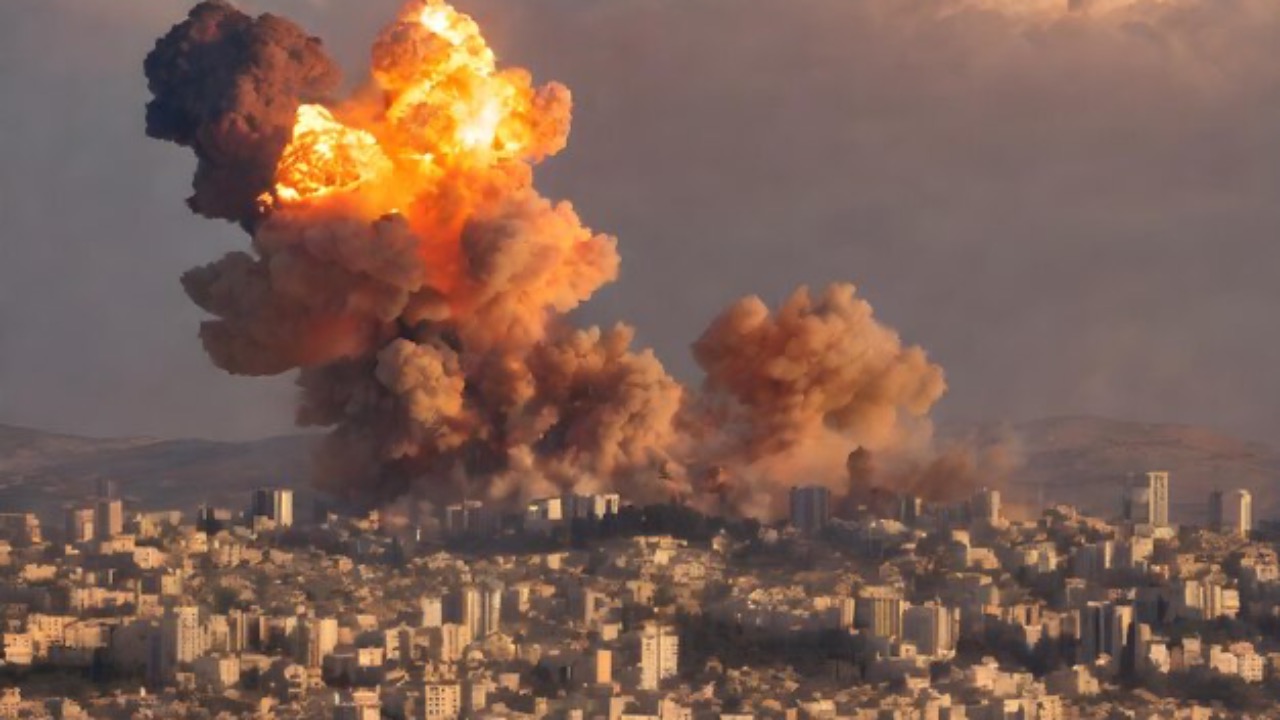
U.S. and Israel Launch Strikes on Iran as Tehran Vows Retaliation
The situation in the Middle East has escalated dramatically after coordinated military strikes by the United States and Israel against targets inside Iran. Early on February 28, 2026, both countries carried out airborne and missile attacks on sites across multiple Iranian cities, including Tehran and Tabriz. Officials in Washington and Tel Aviv framed the operation as pre-emptive and necessary to blunt what they described as imminent threats from Iran’s nuclear and missile programs. The scale and timing caught many by surprise, especially amid recent diplomatic efforts that had been underway to curb Tehran’s nuclear ambitions.
In the hours that followed, Iran’s leadership publicly condemned the strikes as a violation of its sovereignty and territorial integrity. Tehran reported explosions near military and government facilities and declared that it was preparing a “crushing response.” As state media replayed dramatic footage of the blasts and long lines formed at petrol stations, the gravity of the confrontation became clear. Regional capitals watched anxiously, aware that this wasn’t an isolated incident but a potential inflection point in a long-running conflict with deep roots.
What Triggered the Joint Strike

Washington and Jerusalem had been warning Tehran for months about its nuclear enrichment activities and long-range missile developments. These warnings culminated in a coordinated operation — which U.S. officials called Operation Epic Fury and Israeli leaders referred to under their own internal naming — that targeted Iranian military infrastructure, missile production facilities, and leadership compounds near Tehran. The build-up of U.S. Navy strike groups in the region signaled that a military option was being readied.
Despite ongoing talks aimed at establishing limits on Iran’s nuclear activities, negotiations had faltered over disagreements on missile development and verification mechanisms. The military action reflected a strategic choice by both governments to shift from diplomatic pressure to direct confrontation, and the strikes were reported as months in planning rather than a spontaneous response. Explosions and widespread telecommunications disruption in multiple cities underscored the seriousness of the assault.
Iran’s Official Response and Threats
Iran’s government condemned the strikes in strong terms, calling them aggression and a breach of international norms. Statements from the foreign ministry emphasized that Tehran had pursued diplomatic channels and entered negotiations with global powers in good faith before the attack. In its public messaging, Iran portrayed the response as defensive and framed upcoming military actions as necessary to defend its homeland.
Within hours of the bombings, Iranian officials and military spokespeople vowed a “crushing” response against adversaries. State media repeated these messages as a way to rally internal support and project resolve. The rhetoric highlighted a willingness to escalate militarily, and authorities warned that any location in the region supporting Israeli operations could become a target. Public panic in Tehran, fuel queues, and evacuations illustrated the palpable fear among civilians as the prospects of a protracted conflict became real.
Wider Regional Fallout
Beyond Tehran’s immediate threats, the strikes and subsequent Iranian counter-actions rippled across the region. Iran’s Revolutionary Guard reportedly targeted U.S. military facilities and allied bases in multiple Gulf states, including Bahrain, Qatar, and the UAE, as part of its retaliation. Coverage indicated that explosions were heard across several countries, reflecting how broad the conflict had grown.
Several Gulf governments condemned Iran’s strikes for violating their airspace and sovereign territory, hinting that the crisis could draw in even more actors. Airbases in Kuwait, Qatar, and other states were reportedly hit or threatened, raising concerns about regional security and civilian safety. The constellation of U.S. forces and defense systems in the region now find themselves directly engaged in a fast-moving, unpredictable escalation.
U.S. and Israeli Justifications
Leaders in Washington and Jerusalem defended the operation as a necessary step to protect their nations and allies. The White House released statements describing Iran’s ballistic missile capabilities and regional proxy actions as direct threats. In prerecorded remarks, the U.S. president said the campaign aimed to “defend the American people” by degrading offensive capacities and disrupting organized attacks against U.S. forces.
Israeli officials echoed these views, saying the offensive was planned in coordination with the United States and intended to neutralize perceived strategic threats. The strikes followed earlier warnings from both governments that diplomatic avenues had been exhausted, and that military action would follow if Tehran failed to halt specific programs. This framing sought to justify the severity of the assault to domestic audiences and allies abroad.
Impact on Civilians in Iran
Reports from inside Iran described significant disruption to daily life. Explosions were widely heard in major cities, prompting emergency measures such as airspace closures and school shutdowns. Residents queued for fuel and supplies amid growing anxiety. State media also highlighted casualties and damage, including tragic reports from educational facilities and civilian neighborhoods.
Despite the scale of the strikes, Iranian leadership highlighted that top officials, including the supreme leader and president, were safe. This messaging sought to reassure the public and minimize panic. Still, emergency medical services were reportedly on high alert, and public warnings urged civilians to seek shelter, signaling the gravity of the situation faced by ordinary citizens caught in the crossfire.
International Reactions and Diplomatic Strain
The strikes have elicited strong diplomatic responses around the world. Russia condemned the attacks, calling them an “unprovoked act of armed aggression” and warning of humanitarian and geopolitical consequences. Moscow reiterated its close ties with Tehran and expressed willingness to mediate peace, noting that the incident creates renewed tensions in international relations and complicates broader global diplomacy.
Other nations have urged restraint, with calls for emergency U.N. Security Council sessions and appeals to return to diplomatic channels. The conflict’s escalation has raised alarm over potential spillover into wider regional hostilities, particularly given overlapping crises involving proxy groups and allied interests across the Middle East.
What Comes Next
With both sides entrenched in rhetoric and retaliatory action, the immediate future looks tense. Iran’s vow of a “crushing” response signals that further military exchanges are likely, and the involvement of U.S. bases and allied states broadens the scope of confrontation. Whether international diplomatic efforts can reassert themselves or the situation spirals further remains to be seen.
Regional tensions that had simmered through earlier conflicts and negotiations have now burst into open hostilities, and the world watches to see if cooler heads prevail or if this marks the start of a prolonged period of conflict with far-reaching consequences.

Asher was raised in the woods and on the water, and it shows. He’s logged more hours behind a rifle and under a heavy pack than most men twice his age.