The Animal Comebacks Conservationists Thought Were Impossible
From the Sahara to the Great Plains and the cloud forests of Vietnam, a handful of animals have staged recoveries that once sounded like fantasy. These are not tidy fairy tales so much as hard-won victories, stitched together from decades of science, law and stubborn optimism. Together they show that even species written off as gone can, with enough effort, be brought back into the world humans nearly erased.
These comeback stories also reveal the limits of rescue. Every success rests on fragile systems of funding, habitat and political will, and each one raises a sharper question about whether society will choose to save the next species before it disappears.
From “Extinct in the Wild” to Running Free: The Scimitar-Horned Oryx
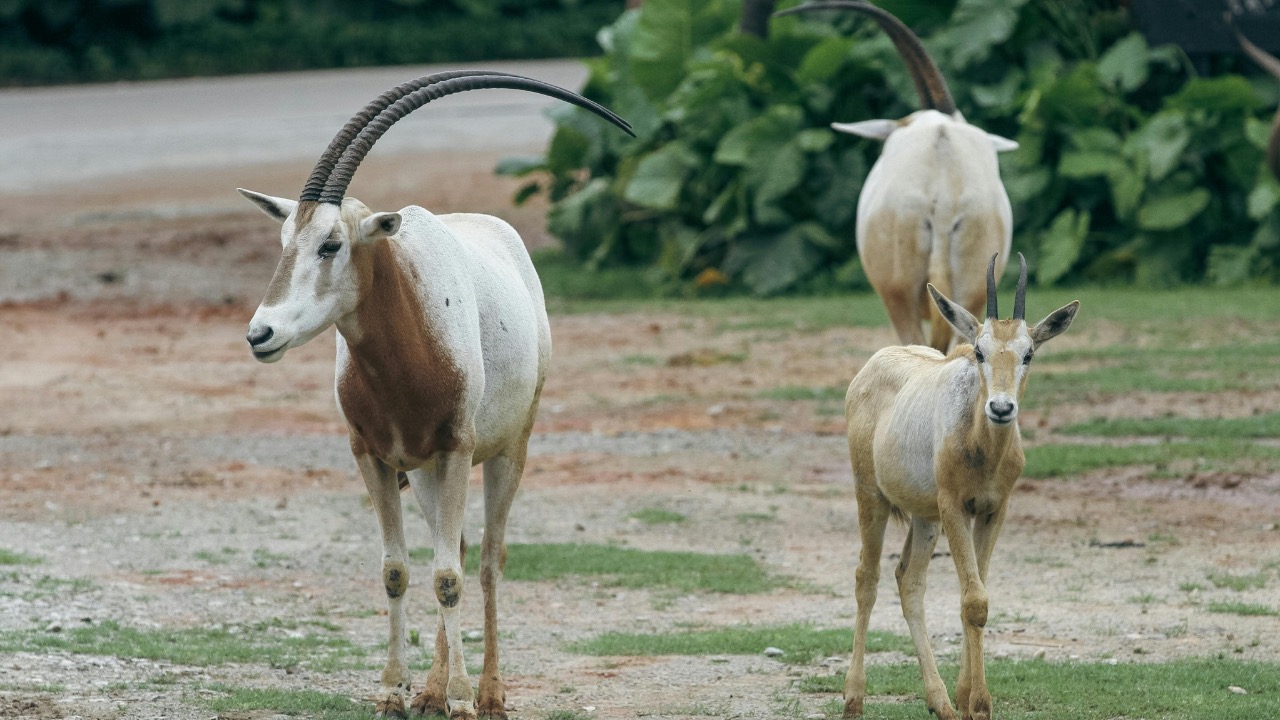
Few recoveries are as dramatic as that of the scimitar-horned oryx, a desert antelope with sweeping horns that once roamed across North Africa. Hunting and habitat loss pushed the species out of its range until the scimitar-horned oryx was listed as Extinct in the, a label that usually reads like a eulogy.
Captive herds in zoos and wildlife reserves kept the species alive in a kind of limbo. At one conservation center, staff shared the story of a scimitar-horned oryx calf as proof that careful breeding could one day restock the wild, describing the animal as part of a species that had vanished from its home but might still have a future. That message, highlighted in a post from a Midwestern reserve that celebrated the oryx as a comeback symbol, shows how places like The Wildsbecame genetic lifeboats.
Those lifeboats eventually launched. After years of planning, conservation groups and governments began returning oryx to protected areas in the Sahel, turning a global captive population into founding herds. A separate overview of the scimitar-horned oryx notes that the International Union for Conservation of Nature once classified the species as Extinct in the Wild, and more recent accounts describe reintroduced groups now roaming under armed protection.
The oryx recovery rests on three pillars that recur in other success stories: long-term captive breeding, coordinated releases and legal protection on the ground. It also shows how close calls can reshape conservation thinking. A species once treated as a lost cause is now cited as evidence that even the harshest verdict on an official list is not always the end.
The Black-Footed Ferret and the Power of Law
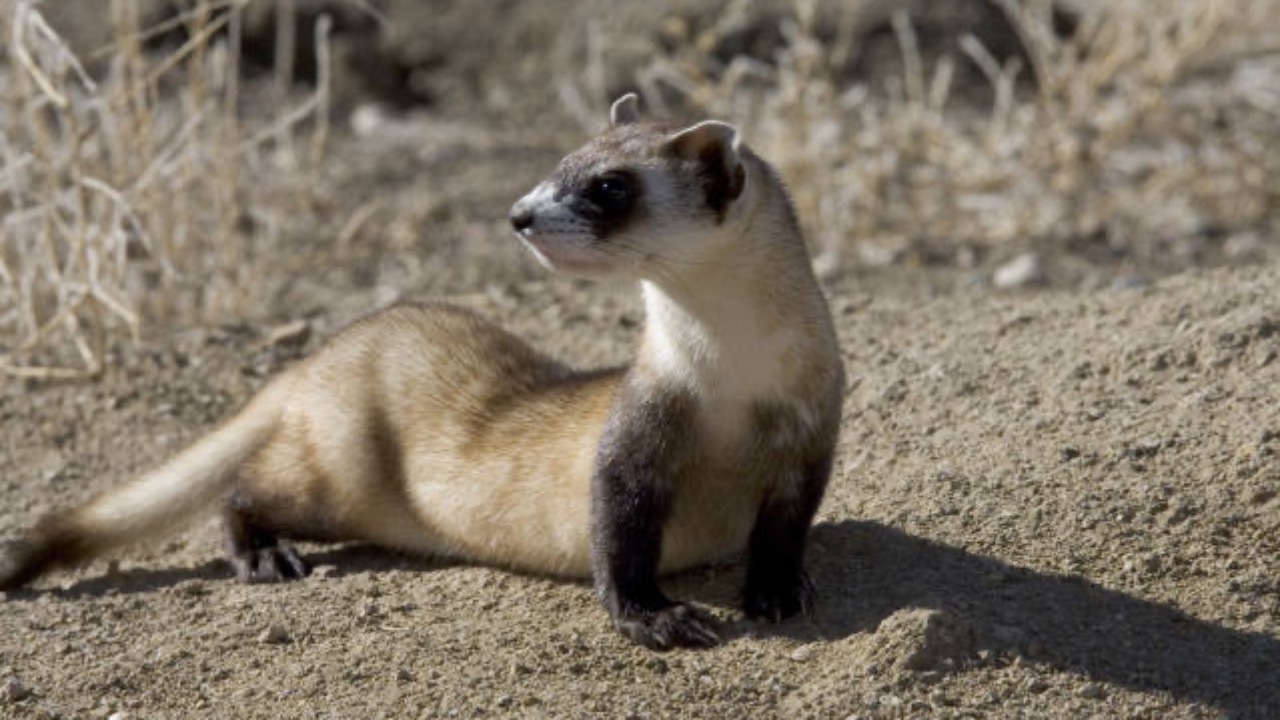
On the grasslands of North America, the black-footed ferret came even closer to disappearing. The animal depends on prairie dogs, both as prey and as landlords, since ferrets live in prairie dog burrows. When ranching, poisoning campaigns and disease wiped out prairie dog colonies, the ferret vanished with them. By the time biologists rediscovered a small group in Wyoming, the species was widely believed to be gone.
The rescue effort that followed has become one of conservation’s classic comeback narratives. A search overview of the black-footed ferret traces that arc from presumed extinction to tightly managed recovery. Federal agencies and zoos bred the last surviving ferrets, then began releasing them across the Great Plains.
Law made that possible. When President Nixon signed the Endangered Species Act into law 50 years ago, one of the first on the endangered list was the black-footed ferret. That listing unlocked funding, habitat protections and the authority to coordinate reintroductions on public and private land.
Colorado has become one of the main laboratories for this work. A detailed account of how Colorado helped save the species describes how state biologists, landowners and tribal nations turned isolated releases into a network of ferret sites, and notes that the animals are now officially making a comeback. That same report, which urges readers to Take action for, frames the ferret as a test case for whether broad environmental laws can translate into local recovery.
Innovation has been just as important as regulation. Researchers have experimented with oral vaccines smeared on peanut butter bait to protect prairie dogs from plague, a disease that can wipe out entire colonies and starve ferrets. One analysis of this work calls the black-footed ferret one of the most endangered mammals in North America, but emphasizes that this status is far better than the extinction once assumed across the Great Plains.
In recent coverage, John Yang has revisited the ferret story to mark the Endangered Species Act’s anniversary. He notes that 50 years after President Richard Nixon signed the law, the question is no longer whether the ferret exists, but whether its recovery can be sustained in a warming, fragmented West.
Lost, Then Found Again: The Silver-Backed Chevrotain
Not every comeback is driven by breeding centers and federal statutes. Some begin with a grainy camera trap image from a forest where scientists had almost given up looking.
The silver-backed chevrotain, a tiny hoofed mammal sometimes called a mouse deer, had slipped into legend in Vietnam. Hunters and villagers spoke of it, but biologists had not documented the animal in decades. A search entry for the Silver-Backed Chevrotain reflects that long gap.
That changed when researchers working with local partners placed camera traps in Vietnam’s coastal forests. The resulting photographs confirmed that the world’s smallest hoofed mammal was still alive, a point celebrated in an excited field report that described how the species had been lost to science since 1990 and was living a quiet life in remote forests. Another account from Vietnam explained that the rediscovered chevrotain was the first mammal to be found from a global list of 25 most wanted lost species, and that the images came from a project in Remote Vietnam VIETNAM focused on those missing animals.
NPR later highlighted the find with a post that called it The SILVER, BACKED, CHEVROTAIN and emphasized that the animal had vanished from view for over 60 years in local memory. A second summary from the same source added that the chevrotain was Once thought extinct for 30 years in Vietnam, and that, Weighing less than a house cat, it is the smallest hoofed mammal on Earth. A separate news report described it as a woodland creature that had not been seen in 30 years and was finally photographed in the wild, and stressed that the mouse deer is the size of a rabbit.
The chevrotain story illustrates a different kind of conservation win. No one bred this animal in captivity or moved it across continents. Instead, the victory lay in proving that a supposedly lost species had survived in pockets of intact habitat, and in using that proof to argue for stronger protection of Vietnam’s remaining forests.
The Frog That Came Back From the Dead
Amphibians are often treated as the bleakest chapter in biodiversity reports, with disease and climate change erasing species faster than scientists can name them. That is why the rediscovery of Alsodes vittatus in the Andes has drawn such attention.
A detailed account titled THE, FROG, THAT, CAME, BACK describes how this small Andean frog was believed extinct for 130 years. The report explains that the species, also known as Alsodes Vittatus, had not been seen in scientific surveys for more than a century until researchers located new individuals in remote streams. A search overview for Alsodes Vittatus confirms the species’ status as a long-lost amphibian.
The rediscovery has been framed as a warning as much as a celebration. Scientists argue that if a frog can hide from human eyes for 130 years, then many more species may persist in low numbers, vulnerable to a single road, dam or drought. The find has already prompted calls for new protected areas in the frog’s watershed, and for stricter controls on pollution and water extraction in the surrounding Andean valleys.

Leo’s been tracking game and tuning gear since he could stand upright. He’s sharp, driven, and knows how to keep things running when conditions turn.