The forgotten conservation projects that saved entire species
Some of the most dramatic rescues in conservation history unfolded far from television cameras or viral hashtags. While a few mascots of the environmental movement became household names, a quieter set of projects pulled entire species back from the edge with little fanfare, reshaping ecosystems in the process. Their stories show that even when a species appears lost, careful science, patience and political will can still reverse the slide toward extinction.
From remote Pacific islands to the windswept steppes of Central Asia and the canyons of the American West, these efforts share a common thread: small groups of people refused to accept that disappearance was inevitable. Their victories are not just about survival, but about restoring the living systems that depend on these animals.
The tortoise that rebuilt an island’s future
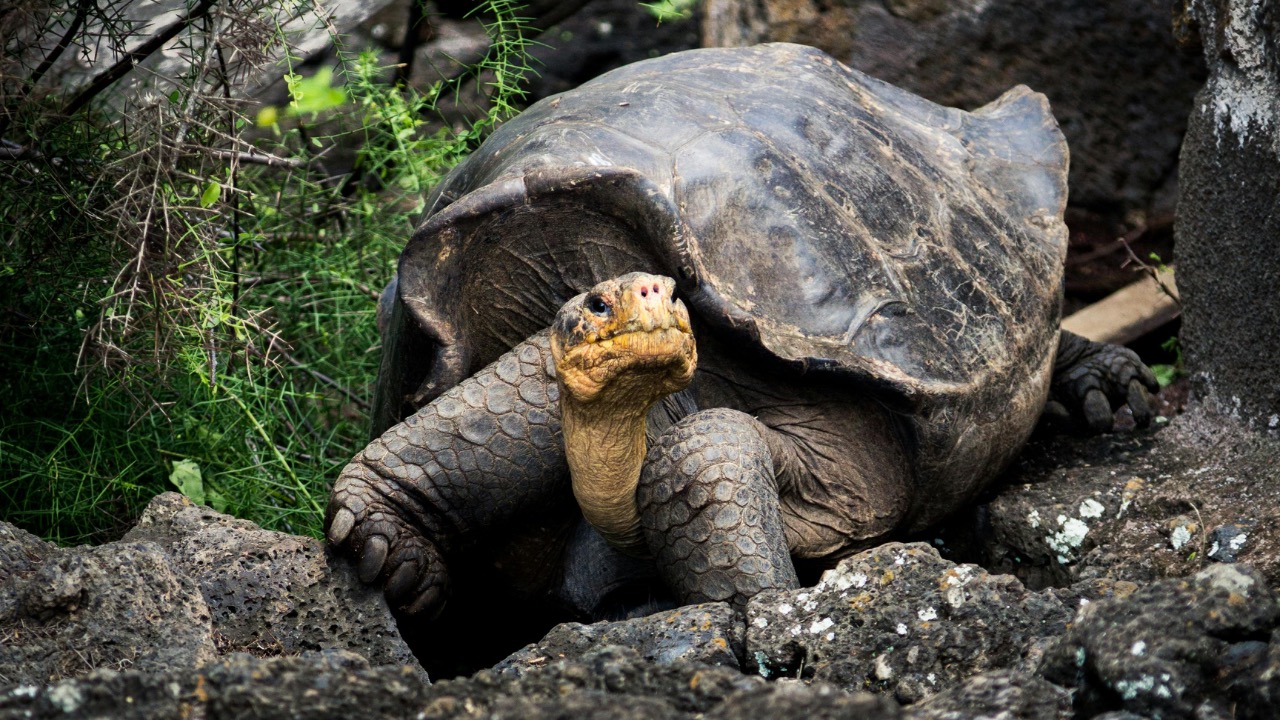
On Española, one of the Galápagos Islands off the coast of Ecuador, the giant tortoise population had collapsed to a handful of survivors by the 1960s. Hunting and habitat degradation had left just 15 individuals of the Española giant tortoise, a crisis that prompted the Galápagos National Park Directorate and partners to start an emergency captive breeding program with the aim of repopulating the species. Among those survivors was a male that would become famous as Diego.
Diego belonged to the species Chelonoidis hoodensis, native only to Española Island in the Galápagos. About 60 years ago, Chelonoidis hoodensis was on the brink of extinction, and Diego was moved into the breeding program that would define his life. Over decades, he fathered more than 800 offspring, an extraordinary contribution that helped rebuild a wild population large enough for authorities to declare the program a success and eventually return him to his home island.
The story of Diego the tortoise is often told with a smile because of the sheer number of hatchlings he produced, but the deeper achievement belongs to the long partnership between the Galápagos National Park Directorate and conservation groups that managed genetics, protected nesting sites and controlled predators. As one account puts it, what happened after the species was nearly lost is one of the most quietly remarkable stories in conservation history, with the Directorate committing to protect the tortoises and their habitat no matter how long it takes.
The Española project also paved the way for even more ambitious work. Efforts to resurrect the Floreana Giant Tortoise, Chelonoidis niger niger, which had been driven to extinction on Floreana Island in the mid 1800s, drew on similar captive breeding and genetic research. In 2008, 50 researchers began studying tortoises that had been relocated to other islands, looking for individuals that carried Floreana ancestry and could form the basis of a restored population. That long bet began paying off earlier this year, when conservationists released Floreana tortoises back onto their ancestral island in what has been described as one of the most ambitious rewilding projects ever undertaken in the archipelago.
For the first time in 175 years, giant tortoises have returned to Floreana Island in the Galápagos, with 158 giant tortoises walking back into a landscape where thousands of Chelonoidis niger once shaped vegetation and soils. After nearly 150 years of silence, those 158 giant tortoises are again part of the island’s destiny. Dr Jen Jones, GCT chief executive, described the moment as truly spine tingling and said it validated two decades of collaboration to restore the island. The Floreana (island of Floreana) giant tortoise, Chelonoidis niger niger, had been locally extinct because of sailors and invasive species, yet patient breeding and habitat work have now given the species a second chance.
These projects show how a single charismatic individual like Diego can capture public imagination, but the real legacy lies in the slow, technical work of moving a species from a few surviving animals to a functioning wild population of giant tortoises that again shape entire islands.
Saiga antelope and the rescue of a prehistoric survivor
Across the steppes of Central Asia, the Saiga Antelope, Saiga tatarica, looks like a relic from another age. The Incredible Saiga Antelope, described as a Survivor of the Steppes, carries a distinctive bulbous nose that filters dust in hot summers and warms air in brutal winters. These nomadic herds once roamed in the millions, sharing the planet with woolly mammoths and saber toothed cats, and their biology reflects that ancient lineage.
In the 1990s, however, the saiga suffered a catastrophic population decline that stunned biologists. Anthony Dancer has described how poaching and economic upheaval resulted in a 95% reduction in numbers, an astonishing and sad record for a large mammal. The result was a wave of uncontrolled hunting and poaching that caused the saiga’s population to crash. By 2000, there were fewer than 50 000 animals left across its range, and the species was widely viewed as a likely candidate for extinction.
Conservationists responded with a mix of anti poaching patrols, community engagement and new economic incentives. Eco tourism projects in what one report called a forgotten region created income tied directly to the survival of the antelope. International agencies and local governments cracked down on illegal hunting and worked to protect key calving grounds. At the same time, campaigns highlighted the saiga’s unusual appearance and deep evolutionary history, turning the animal into an instantly recognizable symbol of steppe conservation.
Those efforts began to show results. A recent assessment highlighted by a global environment program described how saiga numbers have rebounded enough for its status to shift from critically endangered to near threatened in some regions. The piece described a goat sized antelope with a comically big nose that once roamed in the millions and is now stepping up again as grasslands are restored. The recovery is fragile, particularly as climate change and disease still threaten herds, but it demonstrates that even a species that lost 95% of its population can recover when enforcement, habitat protection and local support align.
For the saiga, the forgotten conservation work happened not in laboratories but in dusty border posts, village meetings and remote calving grounds. The species profile now appears in global databases such as the entry for saiga, yet the people who spent years patrolling the steppe or persuading herders to protect water sources rarely see their names in headlines.
California condor: every bird in captivity
In the American West, the California condor once soared over canyons as one of the largest flying birds in North America. By the 1980s, hunting, poisoning and lead bullets had pushed their numbers to the edge of extinction. Human activities had nearly destroyed them, and by 1987 every California condor was taken from the wild to be placed under human care.
At the time, the decision to capture the last wild condors was deeply controversial. Some argued that removing the birds from their habitat would doom them to a life in cages. Others believed it was the only way to prevent total loss. All remaining wild condors were captured and bred in captivity before being reintroduced into their natural habitats, a strategy that required zoos, federal agencies and tribal nations to coordinate closely over many years.
The captive breeding program focused on maximizing genetic diversity and reducing the risk of inbreeding. Biologists tracked lineages, carefully paired birds and used techniques such as double clutching, where eggs are removed to encourage females to lay additional clutches. As numbers grew, managers began releasing condors into selected sites, while also working to remove lead from the environment and reduce poisoning risks.
Today, the species profile for the California condor reflects that history of near loss and gradual recovery. There are now multiple wild populations across the West, and condors have returned to skies where they had been absent for generations. The project is often cited as a model for how intensive, long term intervention can bring back a species that had effectively vanished from the wild.
Yet the work remains precarious. Lead ammunition still threatens condors that feed on carcasses contaminated by fragments, and many birds require veterinary care after exposure. The forgotten part of the story is the ongoing management that keeps the population viable: supplemental feeding stations, tracking transmitters and continuous outreach to hunters to encourage the use of non lead ammunition. The dramatic decision to capture every wild bird was only the beginning of a conservation project that now stretches across decades.
Humpback whales and the power of global restraint
If tortoises and condors were saved by intensive hands on management, humpback whales represent a different kind of forgotten conservation success. Here, the key decision was to stop killing them. Commercial whaling had pushed many humpback populations close to extinction by the mid twentieth century. Hunting fleets targeted the whales for oil and meat, driving numbers down across the world’s oceans.
The resurgence in humpback whale populations over the past five decades is now hailed as one of the great success stories of global conservation. International agreements sharply limited whaling, and some countries ended commercial hunts altogether. As a result, many populations have grown steadily, with some approaching or even surpassing pre exploitation levels. Scientists caution that it is too soon to declare humpbacks fully safe, since threats such as ship strikes, entanglement and climate driven changes to prey remain significant, but the recovery is undeniable.
For the public, humpbacks are often associated with haunting songs and spectacular breaches. The species entry for the Humpback Whale reflects both the animal’s charisma and its complex conservation history. Yet the political work that made the recovery possible, from negotiating international whaling bans to enforcing them on the high seas, rarely features in popular narratives. The humpback story shows that sometimes the most effective conservation project is a collective decision to leave a species alone.
It also illustrates how economic and cultural shifts can support recovery. As whale watching grew into a major tourism industry in countries such as Australia, New Zealand and the United States, living humpbacks became more valuable than dead ones. That change in incentives helped solidify political support for continued protection, turning former whaling ports into advocates for conservation.
Lost and found: rediscovering hidden species
Not every conservation victory involves a famous animal. In forests, rivers and caves around the world, scientists and local communities have been quietly searching for species that vanished from scientific records decades ago. Officially, lost species are those that have been lost to science for at least 10 years, and often much longer. A global initiative has turned the search for these animals and plants into a coordinated effort, treating rediscovery as a powerful antidote to despair.
From Lost to Found Since 2017, 15 lost species have been rediscovered with support from a conservation group now known as Re:wild, including a tap dancing spider and a long unseen mammal. The project maintains a wider list of species sought by expeditions, and the successful rediscoveries have encouraged funders to back searches that once seemed quixotic. One platform describes how the successful rediscovery of lost species can shift public perception, proving that extinction is not always the end of the story and that targeted searches can pay off.

Leo’s been tracking game and tuning gear since he could stand upright. He’s sharp, driven, and knows how to keep things running when conditions turn.