Iran Signals Broader Conflict as Fallout Grows from U.S. Attack
The Middle East has reached a fraught moment where rhetoric, military action, and regional alliances are pushing tensions toward something larger. What began as a campaign aimed at degrading Iran’s nuclear and missile capabilities has quickly turned kinetic, with Tehran launching its own counterstrikes on U.S. and allied targets. The pathway from tit-for-tat exchanges to a broader conflict is narrow, and policymakers on all sides are having to reckon with consequences that go well beyond isolated strikes.
Different capitals are responding in ways that reveal how precarious the situation has become. Some back the U.S. action as a necessary measure to curb Tehran’s ambitions, while others warn it threatens regional stability. What looked like another chapter in long-standing rivalry is now poised to redraw alliances, provoke proxy responses, and test the bounds of diplomatic restraint.
Tehran’s Retaliatory Strikes Expand the Fighting
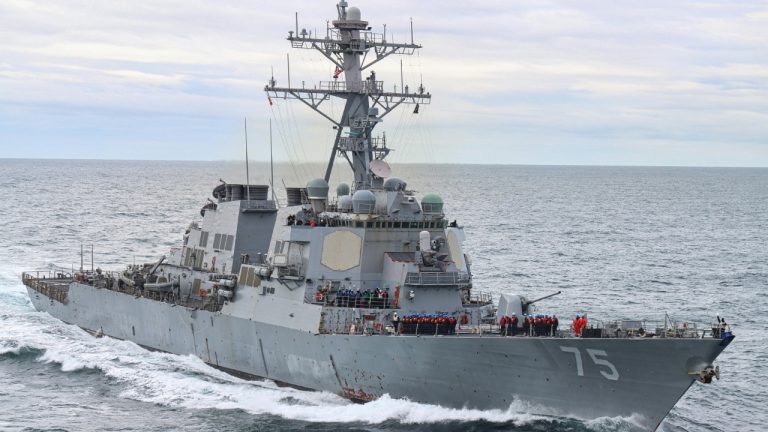
After coordinated U.S.–Israeli airstrikes on Iranian military sites and leadership compounds in Tehran and other cities, Iran responded with missile and drone attacks on U.S. and allied military bases across the Gulf region. Iran framed these actions as defensive responses to an assault that struck at its sovereignty and leadership.
The speed and breadth of Iran’s counterattacks — touching installations in Bahrain, Qatar, Kuwait, Iraq and elsewhere — signal a willingness to shift from rhetoric to kinetic retaliation. It’s not the limited action some officials hoped for; Tehran appears intent on demonstrating capability and resolve. That creates a dangerous cycle where each side feels compelled to escalate to deter the other, widening the conflict’s footprint rapidly.
Shifting Iranian Military Doctrine and Signals
In recent months, senior Iranian officials have altered their strategic posture toward the U.S. and its regional presence. Statements from Iran’s armed forces leadership indicate that Tehran’s doctrine, once focused on containment and deterrence, is evolving toward a posture that accepts offensive retaliation if attacks occur.
This shift matters because it reflects internal calculations in Tehran’s corridors of power. Rather than treating U.S. threats as distant bluster, commanders are preparing for sustained confrontation. That recalibration increases the risk that future U.S. or allied actions — whether intentional or accidental — could produce unpredictable and far-reaching responses.
Proxy Networks Poised to Join the Fight
Iran doesn’t operate in isolation; it has spent decades cultivating a network of allied militias and proxy forces across Iraq, Lebanon, Yemen and Syria. These groups — from Lebanese Hezbollah to Iraqi and Yemeni forces — have long coordinated with or taken direction from Tehran’s Revolutionary Guard.
With Iran now directly engaged, these proxies are positioning themselves to respond in kind. Heightened rhetoric and threats from Iran-linked armed groups suggest that actions against U.S. or Israeli interests won’t stay confined to conventional battlegrounds. That adds complexity: a conflict that starts with state actors can rapidly extend into unconventional or irregular warfare across multiple theaters.
Global Leaders Split Over Escalation Risks
The international reaction to U.S. and Israeli strikes has been far from unified. European leaders have expressed deep concern that military action undermines diplomatic efforts and risks a wider war, calling for a return to negotiations and restraint.
In contrast, some Western allies have backed Washington’s right to defend itself, framing the strikes as necessary to prevent nuclear proliferation or direct threats. Other global powers, notably Russia and China, have condemned the military action as an unprovoked assault. This division underscores the geopolitical risk: the U.S.–Iran confrontation is no longer a bilateral issue but a flashpoint with implications across continents.
Regional Players Fear Broader War
Countries across the Persian Gulf — including Saudi Arabia, the UAE, Oman and others — are watching anxiously. Even governments once hawkish toward Tehran now worry that expanded conflict could spill across borders, disrupt energy infrastructure, and destabilize economies.
Oman, which has long played a diplomatic intermediary role, lamented the collapse of talks that might have prevented military escalation. That sense of regret reflects a broader regional calculation: the cost of a wider conflict could far outweigh the perceived benefits of military pressure, prompting leaders to push for de-escalation even as the guns speak louder.
The Narrow Path Between War and Diplomacy
Though strikes have expanded the kinetic envelope, there are still active calls for negotiations and restraint. Some Iranian intermediaries have signaled a willingness to return to talks under specific conditions, even as Tehran fortifies its military posture.
Diplomatic channels remain one of the few stabilizing forces in play. Whether through the United Nations, European mediation efforts, or back-channel communications, there are actors trying to prevent miscalculations from turning this episode into a prolonged conflict. But with forces poised on multiple fronts and national pride at stake, the margin for diplomatic success is perilously thin.

Asher was raised in the woods and on the water, and it shows. He’s logged more hours behind a rifle and under a heavy pack than most men twice his age.