Historians once claimed Plains Indians were helpless — the real history tells another story
For generations, popular histories and classroom charts framed the Plains tribes as doomed holdouts, brave but ultimately powerless in the face of expansion. That story, built by non‑Native scholars and policymakers, cast Native nations as passive victims rather than political actors. A closer look at the record reveals something very different: Plains communities adapted, negotiated, fought, and strategized with a sophistication that undercuts the old claim that they were helpless spectators to their own dispossession.
Recovering that history requires listening to Native voices and reading familiar documents in new ways. Treaties, battlefield reports, photographs, and even decorative wallpaper show how much agency Plains peoples exercised, and how hard federal officials and cultural tastemakers worked to hide it behind the myth of a people already disappearing.
How the “vanishing Indian” myth took hold
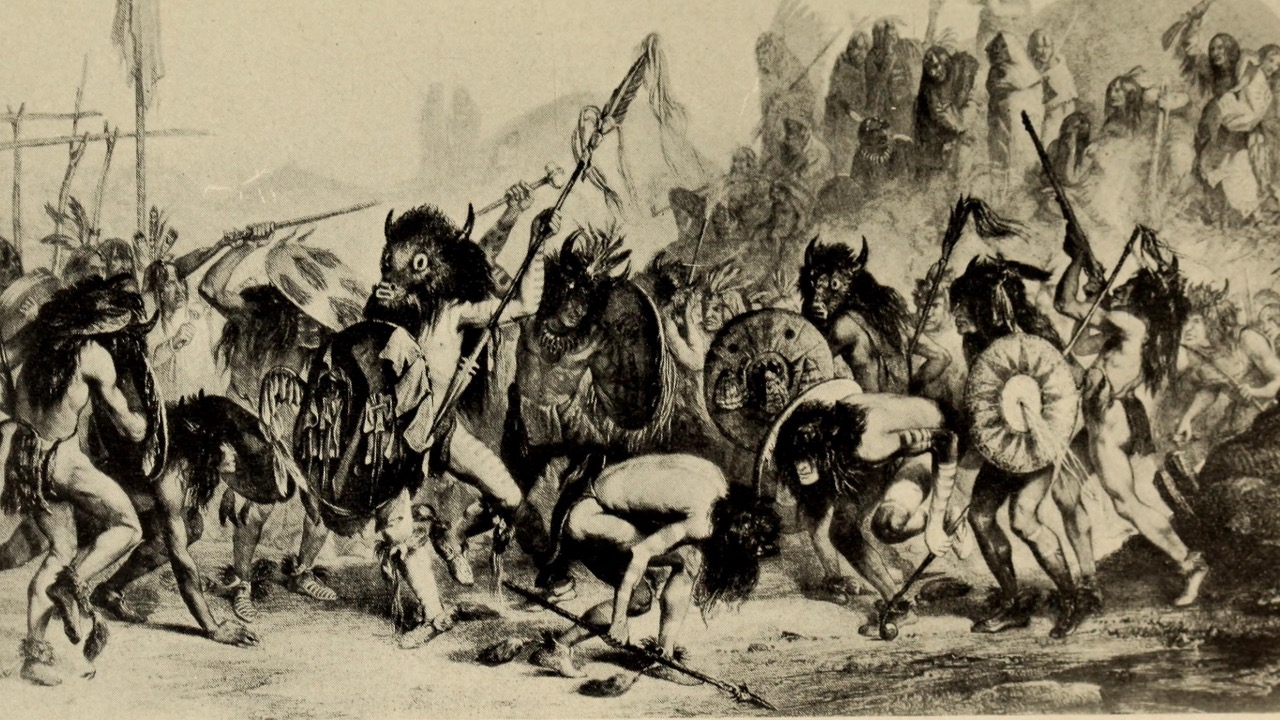
Long before historians wrote about the Plains, white political leaders and artists were already promoting a story of Native decline. In elite circles, the idea that Indigenous communities were destined to fade away circulated as a kind of comforting prophecy. This narrative helped justify policies that seized land and broke treaties, since a people presumed to be vanishing could be treated as a tragic backdrop rather than as sovereign partners.
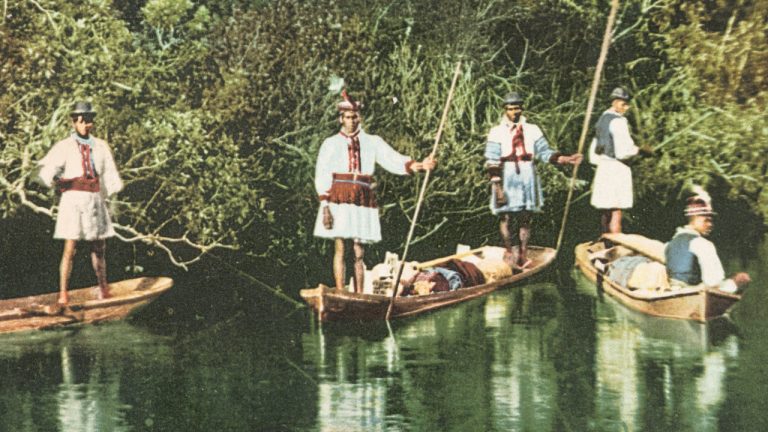
Visual culture carried that message into American homes. French manufacturers such as Zuber sold panoramic wallpapers that wrapped parlors in scenes of an idealized New World. One designer, Deltil, included Native Americans in those landscapes, but he did so in a way that suggested they belonged to an earlier, picturesque era rather than to the political present. The figures appear as decorative types, not as neighbors with legal rights or ongoing claims to territory. In that sense, Zuber and Deltil helped normalize a trope in which Native Americans were visible as symbols yet invisible as citizens.
Religious and academic institutions reinforced the same story. One influential framing insisted that Native Americans had lived in North America for over 13,000 years, but that their traditional cultures were now on a one‑way path to extinction. By presenting Indigenous societies as relics of deep time, that language suggested that dispossession was simply the latest stage in a natural cycle, not the result of policy choices. The same narrative ignored the continued presence and rich diversity of contemporary Nati communities, who were actively defending their land and reshaping their way of life.
Within federal policy debates, the myth of the vanishing Indian made it easier to portray aggressive expansion as inevitable. If Native peoples were already fading, then broken promises could be rationalized as unfortunate but unavoidable. That framing would shape how historians later wrote about the Plains, encouraging a focus on tragic endings rather than on the strategies Native leaders used to confront invasion.
Who the Plains peoples actually were
On the ground, the Plains were not an empty stage waiting for settlers. They were a densely networked region of nations and alliances, stretching across the vast grasslands between the Mississippi River and the Rocky Mountains. The Plains included communities such as the Lakota, Cheyenne, Comanche, Kiowa, Arapaho, and many others, each with its own language, governance, and spiritual traditions. These societies were not static. They had been adapting to environmental shifts and new technologies for centuries.
The area that later observers called The Plains formed part of a continental crossroads. Trade routes linked the region to the Mississippi River and the Rocky Mountains, and to communities far beyond. The Great Plains played a crucial role in American history as a frontier for westward expansion, but before that it had long been a center of Indigenous exchange. Horses, firearms, and metal goods moved along these routes, but so did diplomatic messages and marriage ties that bound nations together.
Archaeological and historical research shows that Their extended tenure in the Plains allowed Native peoples to experience significant alterations in the environment. Between 11,50 and later periods, communities developed sophisticated strategies to hunt bison, manage grasslands, and cope with drought. These were not isolated bands wandering at random. They were societies with deep ecological knowledge and long memories of change.
By the time large numbers of Americans arrived, Plains nations had already navigated upheavals triggered by the spread of horses and guns from the south and east. The horse in particular reshaped life on the Plains. According to accounts of Plains Indians, Before horses were introduced, hunting was a more complicated process. Hunters would surround the bison and try to herd them toward cliffs or enclosures, a method that demanded careful coordination and intimate knowledge of the land. When mounted hunting became possible, it changed warfare, trade, and mobility, but it built on skills that were already present.
How early historians framed Plains resistance
Early non‑Native historians often acknowledged the bravery of Plains warriors while denying their strategic capacity. Narratives of the Sioux War, for example, tended to romanticize dramatic charges and colorful regalia while presenting U.S. military officers as the only real planners. Many publications of the time presented drawings that romanticized the Plains Indians and turned complex conflicts into simple morality plays. One such view of the Sioux War circulated widely, with engravings that highlighted cavalry heroism and framed Native fighters as doomed antagonists outnumbered by sheer numbers arrayed against them.
Those images and texts helped fix a pattern in which Native resistance appeared as a last stand rather than as part of a long campaign. The focus fell on a few famous battles, stripped of context, which fed the notion that Plains peoples were impulsive and reactive. Their diplomacy, intelligence gathering, and logistical planning rarely made it into the record. When they did, they were often credited to individual charismatic leaders instead of being recognized as the work of councils and communities.
Even when scholars studied Indigenous cultures with sympathy, they sometimes framed them as belonging to a closed chapter of history. The label Plains Indians itself, while useful in some contexts, encouraged a flattening of differences among dozens of nations and obscured the political complexity inside each group. That flattening made it easier to describe the entire region as a place where a single, undifferentiated culture met an unstoppable modern state.
Treaties as evidence of political leverage
The treaty record tells a different story. Far from being passive signers, Plains leaders used negotiations to assert sovereignty and to extract concessions from federal officials. The Treaty of Fort Laramie, concluded after years of conflict, is a case in point. In the 19th century, the U.S. Government’s drive for expansion clashed violently with Native Americans’ resolve to preserve their homelands. The resulting agreement recognized, at least on paper, that the United States needed the consent of Native tribes to build roads and forts through their territory.
The text of the Fort Laramie treaty reveals that Native negotiators pressed for guarantees of hunting rights, annuities, and protection from encroaching settlers. These were not the demands of a helpless people. They were the terms of nations that understood the value of their land and the leverage they held over routes that settlers and railroads wanted to control. That the Government later violated many of these promises does not erase the fact that Native signatories shaped the terms in the first place.
Other treaties across the Plains show similar patterns. Native diplomats used their knowledge of rivalries among U.S. officials, and among European powers before them, to play for time and to secure resources. They weighed the costs of continued war against the possibility of regrouping within new boundaries. In some cases, they used treaty payments to acquire horses and weapons that would later be turned against U.S. troops. None of this fits the stereotype of a people who did not understand what they were signing.
Warfare on the Plains: strategy, not futility
Military campaigns on the Plains also look different when viewed from Native perspectives. From the 1850s through the 1890s, a series of armed conflicts between Native American nations and U.S. military forces unfolded across the region. These Major Plains Indian Wars were not isolated uprisings. They were coordinated efforts to defend territory, protect trade routes, and respond to repeated treaty violations.
Plains fighters adapted their tactics to the terrain and to the strengths and weaknesses of their opponents. Mounted warriors used speed and knowledge of the land to strike supply lines and isolated outposts rather than engage in costly frontal assaults. They took advantage of the fact that U.S. units often struggled with long supply chains and unfamiliar weather. In some campaigns, Native forces successfully ambushed columns, destroyed forts, and forced temporary withdrawals.
Federal commanders learned from those setbacks and adjusted their own strategies. One key shift came when the army attacked Plains Indians during the winter, when they divided into small bands, making it difficult for Indians effectively to resist. By targeting villages when food stores were low and horses were weak, U.S. units aimed not only to win battles but to destroy the basis of subsistence. That approach, described in accounts of a kind of thirty years war on the Plains, treated women, children, and elders as targets of logistical warfare.
Such tactics would not have been necessary if Native resistance had been as disorganized as older histories suggested. The very fact that federal planners studied seasonal movements and supply patterns shows that they recognized the resilience and adaptability of their opponents. Plains communities, in turn, responded with their own adjustments, shifting camp locations, forging new alliances, and sometimes relocating to more defensible terrain.
Culture under pressure and the fight to stay visible
Violence on the Plains was only one part of a broader campaign to remake Native societies. Federal officials and missionaries pushed policies that aimed to replace Indigenous cultures with Christian and Euro‑American norms. To avoid removal, “uncivilized” tribal communities were told they could show “progress” by becoming Christian, changing their appearance, attending white‑run schools, and adopting farming practices that matched government models. Communities that complied were sometimes spared immediate relocation, but the price was deep pressure to abandon ceremonies, languages, and governance systems.
Even under that pressure, Plains nations found ways to preserve core practices. Some families sent children to mission schools while maintaining ceremonies in secret. Others used Christian language strategically in petitions and meetings, presenting themselves as civilized by official standards in order to secure better terms. Over time, those strategies helped many communities survive long enough to rebuild cultural institutions in new forms.
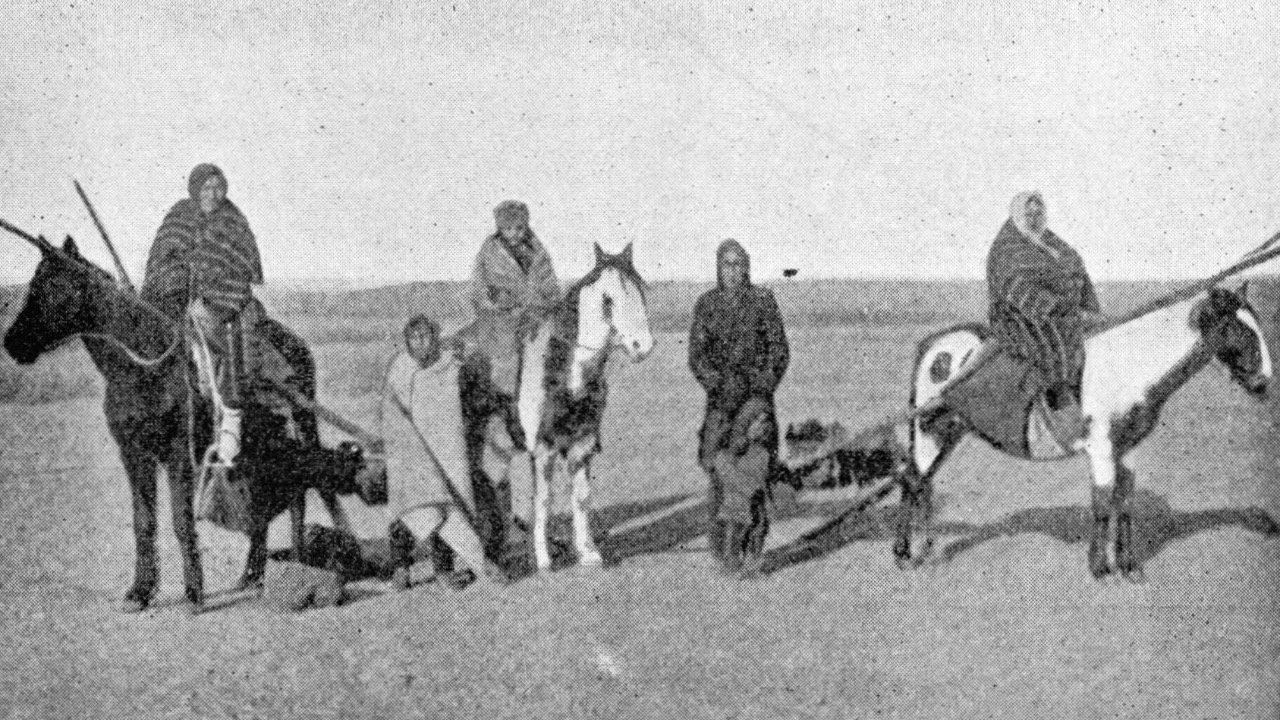
Photography and ethnographic collecting added another layer to the struggle over visibility. Abstract discussions of Native life were accompanied by portraits that froze people in staged poses, often stripped of contemporary clothing or tools that might have signaled change. Much of Indigenous peoples’ experience in America has been shaped by white settler colonialism, politics, and imperialism, and that influence extended to how images were framed and circulated. Interpreting historical photographs of Native Americans now involves asking who controlled the camera, who chose the props, and how those choices reinforced the idea that Indigenous cultures belonged to the past.
Recent scholarship has tried to decolonize Indigenous American history by reading those images against the grain. Details that earlier viewers ignored, such as a watch chain, a book, or a hybrid style of dress, now stand out as evidence of adaptation rather than of purity or decline. In this reading, Plains individuals are not passive subjects but active participants who used the photographer’s studio to assert identity on their own terms.
Land, environment, and the myth of helplessness
The story of helplessness also collapses when set against the environmental history of the Plains. The Great Plains played a crucial role in American memory as a frontier, yet for Native communities it was home, shaped by centuries of attentive management. Indigenous hunters used techniques such as driving herds into corrals or stampeding bison over a cliff, practices that required careful coordination and long‑term planning. These methods reflected an understanding of animal behavior and landscape features that newcomers lacked.
When commercial hunters and railroad crews began to exterminate the area’s buffalo herds, Plains nations faced a crisis that combined ecological and political forces. The destruction of bison was not an accident of market forces alone. It was encouraged by policymakers who understood that starving communities would be easier to force onto reservations. Yet even as herds collapsed, Native leaders sought new ways to secure food and income, including wage labor, small‑scale farming, and participation in regional trade. Those choices were constrained and painful, but they were choices, not the actions of people without agency.
Modern educators now emphasize that no landscape in America is more closely associated to Indigenous peoples than the great plains of North America. Short videos and classroom materials highlight how deeply Native knowledge shaped the region long before railroads and homesteads. That shift in teaching helps counter the lingering impression that the Plains were simply a blank canvas on which American expansion painted its story.
Why the old narrative still matters
The myth of the vanishing Indian has not disappeared. It still surfaces in school textbooks, museum exhibits, and political debates about land and sovereignty. Some public histories continue to treat Native nations as background characters who appear briefly in the 19th century, then vanish when the story turns to industrialization or urbanization. That framing affects how non‑Native citizens understand treaty rights, resource disputes, and cultural claims today.
At the same time, Native scholars and community historians have built a growing body of work that centers Indigenous perspectives. Projects that reinterpret treaties, reexamine photographs, and highlight oral histories show how much has been missing from older accounts. They also draw on institutional resources, from tribal archives to platforms such as Harvard, to reach broader audiences. These efforts insist that Plains history is not a closed chapter but an ongoing story of survival and adaptation.
Digital tools have opened new paths for that work. Online archives such as DocsTeach and catalog entries like Untitled give educators and researchers direct access to treaty texts, maps, and photographs that once sat in distant reading rooms. Crowdsourced discussions, including informal threads where users ask how accurate modern depictions of the American plains really are, show a public appetite for more grounded stories that move beyond clichés.
Funding structures also play a role. Organizations that manage historic sites and collections rely on donors, whether through campaigns linked to Myth of the or through platforms such as Myth of the. Supporters who understand the stakes of representation are more likely to back projects that foreground Native voices instead of repeating dated tropes.

Asher was raised in the woods and on the water, and it shows. He’s logged more hours behind a rifle and under a heavy pack than most men twice his age.