22 Beagles Break Free from Testing Facility Cages—Activists’ Daring Rescue Gives Lab Dogs Their First Taste of Freedom
For a few stunned seconds, the beagles did not seem to know what to do with open air. After a life spent in metal cages at a Wisconsin breeding facility that supplies laboratories, 22 dogs were suddenly in human arms, blinking into daylight and touching grass for the first time. Their escape, carried out by animal rights activists in a high-risk raid, has ignited a fierce debate over how far opponents of animal testing are willing to go and what happens to the animals left behind.
The operation has already led to arrests, the seizure of several puppies by law enforcement and a fresh spotlight on Ridglan Farms, one of the last large-scale beagle breeders for experimentation in the United States. It has also given the rescued dogs a first, fragile taste of ordinary life, even as thousands of others remain inside.
The open rescue that shattered a locked facility
Earlier this year, about 60 activists converged on Ridglan Farms in Dane County and forced their way into the beagle breeding operation. Video shared by campaigners shows doors being busted open as individuals in masks and hoodies fan out through dim corridors of cages, searching for puppies small enough to carry. The target was clear: beagle dogs bred for animal experiments that, in the eyes of these activists, had no chance at a normal life if they stayed.
Supporters describe the raid as an “open rescue,” a tactic in which activists do not hide their identities and claim a moral duty to remove animals from what they see as abusive conditions. The action was reportedly led by prominent animal rights organizer Wayne Hsiung, who has long argued that breaking into facilities to document and remove animals is justified civil disobedience. In social media clips, he can be seen cradling beagle puppies and narrating the chaos as alarms blare in the background.
Activists say the dogs they found were sick and vulnerable, with some appearing underweight and others showing signs of stress. One widely shared video claims that the animals were in urgent need of veterinary care, a claim that is difficult to independently verify but that has become a central part of the campaigners’ moral case for the raid. For them, the images of frightened puppies being passed from cage to carrier are proof that direct intervention was necessary.
Ridglan Farms and the business of breeding lab beagles
Ridglan Farms, located near BLUE MOUNDS in Wisconsin, is one of a small number of companies in the country that specialize in breeding dogs for research. The facility, which promotes itself through its own site at ridglan.net, has long been the focus of protests from anti-vivisection groups who argue that beagles are chosen for experiments precisely because they are gentle and easy to handle.
Campaigners say Ridglan Farms breeds around 3,000 beagles that are sold to laboratories for testing, including pharmaceutical and academic research. The company itself has defended its practices in the past, citing regulatory oversight and the role of animal research in developing new treatments. Critics counter that the very scale of the operation, with thousands of dogs on site, makes meaningful welfare impossible and reduces sentient animals to disposable test subjects.
The raid has revived long-running scrutiny of Ridglan Farms, with one detailed account describing how the Ridglan Farms facility has become a symbol for opponents of dog experimentation. For those campaigners, the raid was not just about a few dozen puppies but about exposing an entire industry that they say operates largely out of public view.
How many dogs were taken, and where are they now
In the immediate aftermath, activists celebrated what they described as a clean break for 22 beagles. One video shared by a prominent campaigner announced that 22 beagles have from a laboratory at Ridglan Farms in Wisconsin and were on their way to safety. Another post framed the same number as dogs saved from “life in a laboratory,” while warning that around eight puppies were still unaccounted for.
Other accounts give a slightly different figure. One campaign update on social media states that 23 beagle puppies from Ridglan Farms in Wisconsin, USA, with 8 puppies intercepted by police. Another clip describes how at least 22 beagles were on their way to safety after activists made their way onto Ridglan Farms, capturing a “scary” moment when a man acting as security confronted the group.
The discrepancy between 22 and 23 dogs has become part of a broader confusion about the exact outcome of the raid. One detailed report describes the Outcome of the operation as “clear as the icy mud underfoot,” suggesting that conflicting activist claims and limited official information have left the public without a definitive tally. What is consistent across accounts is that a group of puppies did leave the facility in activist hands, while another smaller group was seized by law enforcement.
Police response and the eight seized puppies
The jubilation of the rescue was quickly tempered by the arrival of police. Activists say that 8 puppies were intercepted by officers as they attempted to leave the area, a figure echoed in multiple social media posts. One video that framed the operation as BREAKING: 22 BEAGLES breeding facility also notes that 8 of the dogs are now in police custody.
Local coverage describes how Many activists busted in the doors of the facility in Wisconsin, with the help of an Ann Arbor man who was arrested during the action. He later told reporters that the group felt compelled to act because, in their view, no one else would intervene on behalf of the dogs. Authorities have not publicly detailed the condition or current location of the seized puppies, and it remains unclear whether they will be returned to Ridglan Farms or placed elsewhere.
One social media reel states that Activists believe some of the rescued dogs were sick and in urgent need of veterinary care, and that some of the rescuers now face potential legal consequences. The tension between the activists’ framing of themselves as rescuers and law enforcement’s treatment of them as trespassers or thieves is at the heart of the legal fallout that is now unfolding.
First steps on grass for dogs bred for experiments
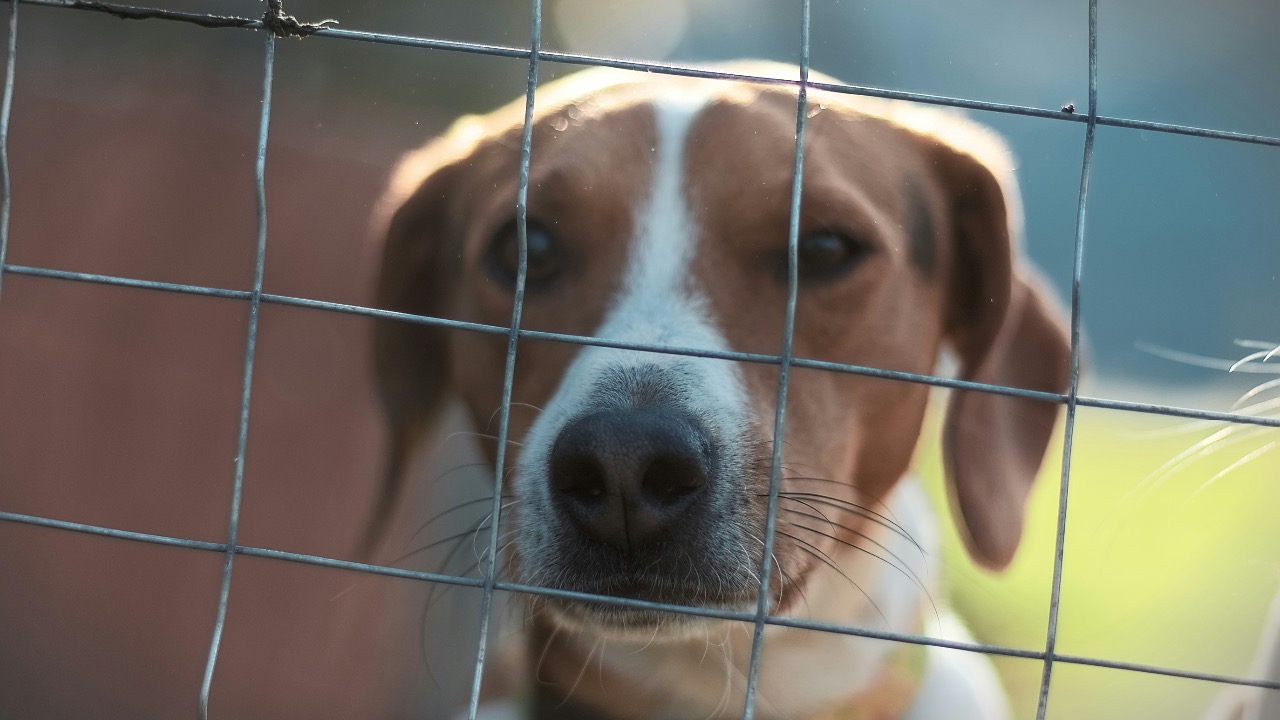
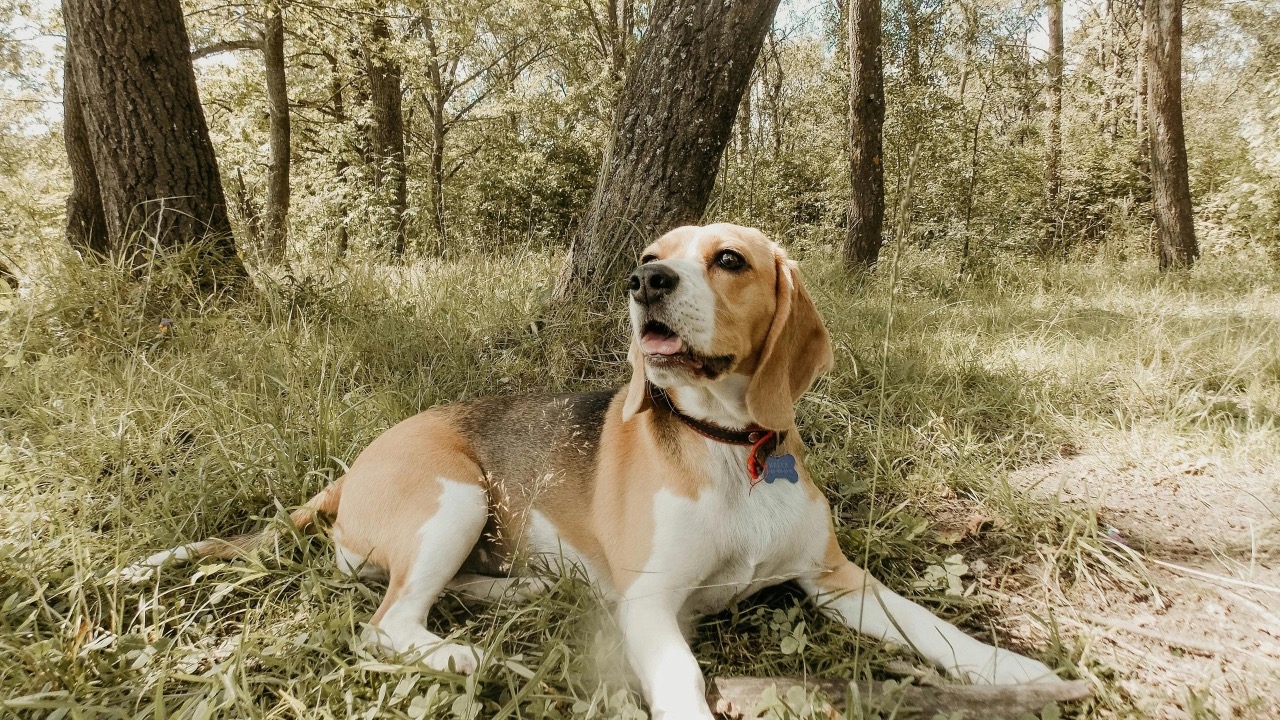
Despite the legal uncertainty, the emotional core of the story lies in what happened to the dogs who made it out. In one widely shared clip, a group of Beagles rescued from animal experimentation are shown playing for the first time in their entire lives. The dogs, still with shaved patches and identification tattoos, stumble awkwardly over toys and grass, clearly unsure at first how to behave in an open space.
Another post from a campaign group states that 22 dogs were, 8 dogs were seized by police. The video focuses on the rescued animals, who are seen cautiously approaching human hands, then gradually relaxing into petting and play. For viewers, these moments have become a visceral illustration of what “freedom” looks like for animals that have known only cages and clinical routines.
Campaigners have used these images to argue that the dogs’ confusion and tentative joy show the psychological toll of life inside a breeding facility. They stress that the puppies were not pets surrendered by owners but animals born into a system designed to supply laboratories, with no expectation that they would ever leave alive.
Inside the facility and the wider geography of protest
The Ridglan Farms raid did not take place in isolation. The facility sits in a rural part of Dane County, a region that has become a focal point for animal rights protests. Mapping tools that locate the farm, such as one place viewer, highlight how close it is to small communities that may have had little idea of what happens inside the sprawling barns.
Additional geographic data, including another location reference and a related mapping entry, show the facility in the context of surrounding farmland and highways. For activists, this geography matters. They argue that communities near such sites should know that thousands of dogs live and die behind those walls, and that public pressure from neighbors can be a powerful tool for change.
Protesters have drawn parallels between Ridglan Farms and other controversial dog breeding operations, such as MBR Acres in the United Kingdom, which has also been the subject of high-profile demonstrations. Hashtags used in the wake of the raid link the Wisconsin action to a wider international campaign against beagle breeding for experiments, suggesting that what happened in Dane County is part of a cross-border strategy rather than a one-off stunt.
Legal jeopardy and the ethics of “open rescue”
From a legal standpoint, the activists who entered Ridglan Farms face serious exposure. Breaking into a commercial facility, removing animals and interfering with business operations can trigger charges ranging from trespass to burglary and theft. In interviews, one Ann Arbor participant who was arrested during the raid has framed his actions as a necessary response to systemic animal abuse, but law enforcement is unlikely to accept moral conviction as a defense.
Supporters of the raid argue that the law itself is part of the problem. They contend that property rights over animals, particularly those bred for research, are so strong that even clear evidence of suffering rarely leads to meaningful intervention. In their view, “open rescue” is a form of civil disobedience akin to sit-ins at segregated lunch counters or pipeline blockades, designed to expose injustice by openly breaking unjust laws.
Critics counter that such comparisons are misplaced and that taking animals from regulated facilities risks undermining legitimate scientific work, while also potentially putting the animals in danger if they carry pathogens or require specialized care. They also point out that activists may misinterpret what they see inside complex operations, especially when they arrive with cameras rolling and a narrative already in mind.
The clash between these perspectives is unlikely to be resolved in a single courtroom. Even so, the Ridglan raid is already being cited by campaigners as a template for future actions, and by industry supporters as a warning about escalating extremism in the animal rights movement.
What the raid reveals about public attitudes to animal testing
Beyond the immediate drama, the images from Ridglan Farms tap into a broader shift in public attitudes toward animal testing. Polls in recent years have shown growing discomfort with the use of dogs and primates in research, even among people who accept some animal experiments as necessary. Beagles, with their floppy ears and gentle demeanor, occupy a particularly sensitive place in public imagination.
Activists have been quick to leverage that emotional response. Campaign videos emphasize that the dogs at Ridglan Farms are no different from family pets who sleep on couches and ride in the back seats of minivans. By showing beagles bred for experiments taking their first wobbly steps on grass, they aim to collapse the distance between “lab animal” and “companion animal” in the public mind.

Leo’s been tracking game and tuning gear since he could stand upright. He’s sharp, driven, and knows how to keep things running when conditions turn.