Expert warns a renewed draft could spark backlash if tensions escalate
As fighting with Iran intensifies and talk of ground troops creeps into cable news chyrons, the once-hypothetical question of a new military draft has jumped back into American living rooms. National security specialists now warn that if Washington ever tried to move from an all-volunteer force to conscription in the current climate, the effort could ignite a fierce backlash instead of the unity past generations remember.
They argue that the United States has not seriously prepared its laws, institutions, or public for that kind of step, even as political rhetoric and social media amplify fears. The risk, experts say, is not just that a draft would be hard to execute, but that a rushed or poorly explained move could fracture trust in government at the very moment leaders would be asking citizens for sacrifice.
How a TV exchange reignited draft anxiety

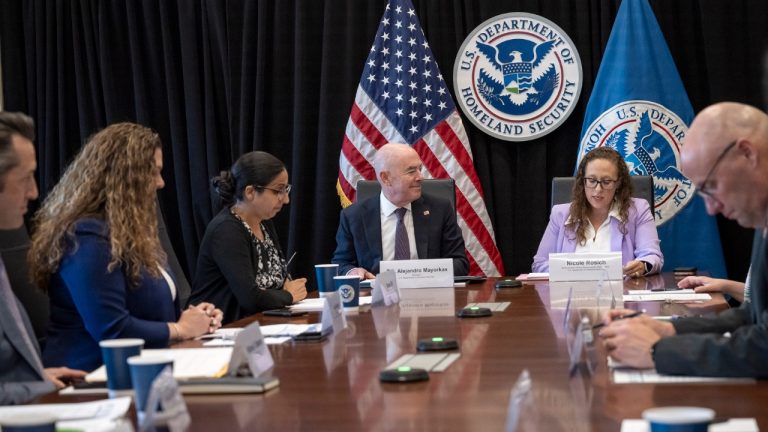
The latest wave of concern did not start on a battlefield, but in a television studio. During a Fox News interview, host Maria Bartiromo pressed White House Press Secretary Karoline Leavitt on whether mobilizing ground troops against Iran would require reinstating conscription. The on-air exchange, which centered on how the current draft system works and what authority the administration has, quickly ricocheted across social platforms.
In a follow up description of the interview, the same report identified Fox News and Karoline Leavitt as central to a renewed debate over whether the United States might again compel service. Within hours, speculation that a draft was imminent spiked, even though officials continued to say there was no current plan to call up conscripts.
Parallel coverage of the conflict has added to the sense of uncertainty. One segment on Newsmaker featured intelligence expert Hal Kempfer, who assessed that the campaign against Iran had significantly degraded nuclear and military capabilities but still lacked clearly defined war goals. That ambiguity, he suggested, could dampen any natural “rally around the flag” sentiment that often follows attacks, making the domestic politics of escalation far more volatile.
Against that backdrop, a Fox affiliate in Los Angeles explained that While the administration says there is no “current plan” for a draft or for sending ground troops, tensions are rising after U.S.-led strikes on Iran. The same report walked through how the Selective Service System functions and why rumors about an automatic call up are misleading.
What the Selective Service can and cannot do
Some of the confusion stems from a basic misunderstanding of what the Selective Service System actually is. The agency describes its own Vision as serving as a “trusted, actively engaged national defense partner” and the “sole source of conscripted manpower” if Congress ever orders a draft. It maintains the registration database of eligible individuals and runs planning exercises, but it does not decide whether conscription will occur.
In a recent public message, Acting Director of Selective Service Joel C. Spangenberg stressed that the agency has no independent power to start conscription. The STATEMENT by SELECTIVE SERVICE ACTING DIRECTOR, issued from ROSSLYN, VA, explained that only Congress can authorize a draft and that a new law would need to be passed to activate conscription.
The same official clarification, which spelled out that the Acting DIRECTOR cannot on his own change that reality, emphasized that even a fully updated database would not by itself trigger call ups. The Acting Director of Selective Service reiterated that a specific statute would have to be passed to authorize conscription.
Legal experts and military family advocates have echoed that point. A widely shared explainer from a Florida television station reminded viewers that President of the cannot unilaterally institute a military draft. Reinstating the system would require Congress to pass new, specific legislation that the President must then sign into law.
Why experts think a rushed draft could backfire
Even with those guardrails, national security specialists warn that the United States is poorly positioned to carry out a draft smoothly if tensions with Iran or another adversary escalate further. A year-long study by analysts at a prominent Washington think tank concluded that the country is “not prepared” to conduct conscription in a way that would be seen as legitimate and effective.
The commentary that grew out of that research argued that preparing for the possibility of a draft should happen before a crisis, not in the middle of one. The authors warned that trying to improvise a system under fire would invite chaos, litigation, and political backlash that could undermine the war effort itself.
A summary of the same findings, highlighted by the National Guard Association, explained that the report relied on historical and comparative research, as well as interviews with policymakers and experts. It concluded that the United States is not prepared to conduct a military draft, pointing to gaps in planning, communication, and public understanding.
Those warnings intersect with a broader political environment defined by sharp partisan divides. One viral social media post framed a separate policy push by Trump allies as something that Experts warn could “backfire on the Republican Party.” A similar dynamic could easily surround any move toward conscription, which would likely be interpreted through a partisan lens rather than as a purely national security decision.
The CNAS study: legal, cultural, and practical obstacles
The think tank team that examined draft readiness did not limit itself to logistics. Its authors described how conscription, a practice most Americans believe should be relegated to the dustbin of history, has reappeared as an uncomfortable but necessary topic in strategy circles. Ignoring the issue, they argued, does not make it less likely; it only makes it harder to manage if it comes.
In a detailed essay, the same experts explained that they had recently conducted a year-long study of the potential challenges the United States would face in executing a draft. They pointed to legal objections to an all-male registration system, high rates of ineligibility among young Americans due to health and criminal records, and the practical question of how professional troops would train and fight alongside conscripts in the future.
Another section of that analysis noted that there are plenty of potential sticking points. The authors cited the possibility of constitutional challenges to male-only registration, the need to update mobilization plans, and the difficulty of integrating conscripts into modern units that rely heavily on advanced technology. They stressed that there are plenty of reasons a future draft could stumble if these problems remain unaddressed.
The same project urged federal agencies to conduct more realistic mobilization exercises and to clarify who would take the lead in an actual call up. Without that work, the authors suggested, even a justified move toward conscription could be swamped by confusion about roles, timelines, and exemptions.
Social media as an accelerant, not just a mirror
Any future draft would unfold in a very different information environment than the Vietnam era. A Defense Department-linked exercise described by one report found that social platforms could be a major barrier to bringing back conscription. Based on the exercise, it appears that Based on the exercise, American culture and resistance to the draft in its historical form may present a major obstacle, and social media could amplify or perpetuate disinformation from adversaries.
Participants in that scenario worried that false claims about who would be targeted, how exemptions would work, or whether the system was rigged could spread faster than official corrections. In the age of TikTok and X, a single viral video or misleading meme can reach millions of young Americans in hours, far outpacing traditional briefings or press conferences.
Foreign intelligence services would likely see an opportunity as well. The same analysis warned that adversaries could use bots and fake accounts to inflame fears, highlight racial or class disparities in call ups, or promote conspiracy theories about political motives behind conscription. That risk would compound existing mistrust in institutions and make any attempt to build a sense of shared duty far more difficult.
Legal structure: Congress, courts, and the President
Beyond politics and public opinion, the legal structure around conscription has changed since the last draft ended. Federal law still requires most young men to register, but the system has not been tested in a large-scale mobilization for decades. Any move to activate it would immediately raise constitutional questions.
One longstanding issue involves gender. The current registration system covers males, and legal analysts expect challenges that argue an all-male requirement violates equal protection principles. The think tank study highlighted the potential for legal objections to the all-male registration system, warning that any draft law that does not address this could be tied up in court.
The process for starting a draft is also more complex than many social media posts suggest. As the Florida explainer noted, Reinstating the draft requires Congress to pass new, specific legislation that the President then signs. The Selective Service System can recommend changes or highlight readiness gaps, but it cannot bypass that constitutional process.
Some recent legislative moves have quietly nudged the country closer to a more automated system. One analysis of congressional action described how a database-driven process would align with Trump’s Department of Government Efficiency, known as the Department of Government Efficiency or DOGE. The author noted that But a database-driven process aligns perfectly with Trump’s Department of Government Efficiency and its penchant for automation, raising questions about whether a future administration could move from registration updates to a draft without resistance.
Public skepticism and the all-volunteer tradition
Since the end of the Vietnam era draft, the United States has relied on an all-volunteer force. That model has survived long wars in Iraq and Afghanistan, in part because military leaders and elected officials have treated conscription as a last resort. Public opinion has hardened around the idea that service should be voluntary.
An explainer aimed at potential recruits pointed out that, although there is currently no active draft, the AlthoughSelective Service System remains in place as a contingency measure. All male U.S. citizens and male immigrants between 18 and 25 are required to register, but the piece stressed that any attempt to reactivate conscription would face significant public pushback, including court challenges.
The same overview asked whether the draft could return in the near term and concluded that many observers consider that unlikely. It explained that Could the Draft in 2025 is a common question, but that the U.S. military has operated as an all-volunteer force for decades and that there is no sign young Americans are about to get called up.
That skepticism is not just philosophical. Surveys and focus groups conducted for the draft readiness study suggested that younger Americans are less likely to view military service as a civic duty than previous generations. Many see it as a specialized profession, closer to law enforcement or firefighting, and assume that those who want to serve will volunteer.
Military families and the human cost of escalation
While policy experts debate statutes and systems, military families are living with the immediate consequences of rising tensions. A report from a national broadcaster described how, as the U.S. conflict with Iran inches closer to a second week and military families face uncertainty over deployment, one organization is stepping up to offer support. The piece captured the anxiety of spouses and children who have already seen loved ones cycle through multiple wars.
For those families, talk of a draft feels less like an abstract civics lesson and more like a signal that the pool of people asked to bear the burden might finally expand beyond the small slice of Americans who currently serve. Some welcome that idea as a matter of fairness. Others fear that conscription would simply layer new stress on a system already straining to care for veterans and active-duty troops.
Advocacy groups have urged policymakers to think about support structures in any serious draft planning. That includes mental health resources, childcare, and employment protections for those called up from civilian life. Without those measures, they argue, a draft could deepen social inequalities by hitting lower-income communities hardest.
Inside the draft-planning community
Within the small world of mobilization planners, the recent surge in public attention has been both a warning and an opportunity. Officials at the Selective Service System and partner agencies have long conducted tabletop exercises and quietly updated procedures, but they now face pressure to explain their work more openly.
Internal and external watchdogs keep an eye on how those agencies operate. The Office of Special Counsel, accessible through osc.gov, handles whistleblower disclosures from federal employees, including those who might raise concerns about draft-related planning. That oversight could become more prominent if conscription moved from theory to practice.
Outside government, organizations like the Center for a New American Security share updates and commentary on platforms such as Twitter and Facebook. Their analysts have used those channels to highlight the findings of the year-long draft study and to press for more transparent mobilization exercises.
How a modern draft might actually work
Behind the scenes, planners imagine a system that looks very different from the paper-based processes of the 1960s. Automatic registration tied to state records, which the Selective Service has already described in its Vision and Missionstatement, could feed into a national database that can quickly generate call up lists. That efficiency could reduce administrative errors but also raises concerns about transparency and due process.
Information portals like USA.gov and recruiting sites such as TodaysMilitary would likely become key hubs for explaining obligations, timelines, and rights. Social media accounts run by the Selective Service, including Twitter and Facebook pages, already push reminders about registration and could pivot to answering questions about classifications and deferments.
Even with those tools, the core challenge would remain political. Any call up would require Congress to define which age groups and skills are needed, how to handle conscientious objectors, and what exemptions apply for caregivers or critical civilian workers. Those decisions would immediately become flashpoints in a polarized media environment.
Why preparation now may prevent crisis later
For the experts who have spent the past year gaming out these scenarios, the lesson is not that a draft is inevitable. It is that ignoring the possibility until the moment of crisis would be a mistake. They argue that serious, public planning could lower the temperature by clarifying what conscription would and would not mean.

Leo’s been tracking game and tuning gear since he could stand upright. He’s sharp, driven, and knows how to keep things running when conditions turn.