Court strikes down D.C.’s 10-round magazine limit
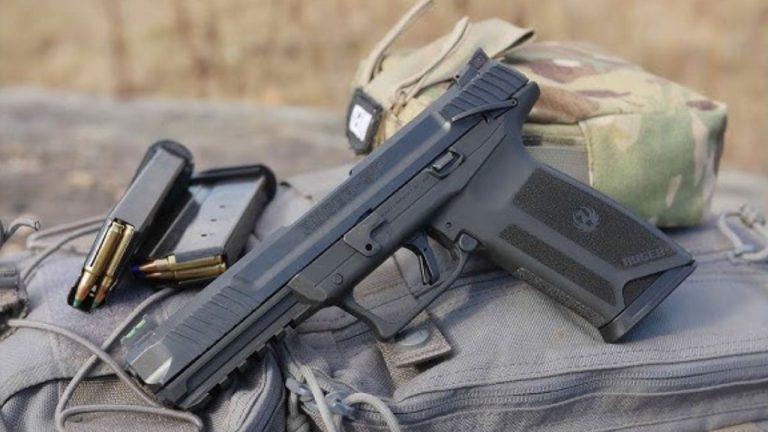
The District of Columbia’s 10-round magazine limit has been struck down by the city’s highest court, a decision that immediately reshapes gun regulations in the nation’s capital and could ripple far beyond it. By holding that magazines holding more than 10 rounds are protected “arms” under the Second Amendment, the court aligned local law with a stricter standard for judging firearm restrictions that has been emerging in recent years.
The ruling, handed down in Benson v. District of Columbia, invalidated a core piece of the city’s gun control framework and raised fresh questions about the fate of similar limits in states such as Illinois, California, and New Jersey. It also underscored a growing divide between courts that see magazine caps as vital public safety tools and those that view them as unconstitutional bans on commonly owned equipment.
What the D.C. court actually decided

The District of Columbia Court of Appeals, described in multiple reports as the city’s highest court, held that Washington’s ban on magazines that hold more than 10 rounds violates the Second Amendment. In doing so, the court concluded that 11+ magazines are “unquestionably arms” and that the District had not produced a historical tradition of firearm regulation that could justify a categorical ban on such equipment. One summary of the decision noted that the court treated magazines that can hold 30 bullets the same way it treated smaller ones, as protected arms in common use for lawful purposes.
The case grew out of the prosecution of a man named Benson, who had been convicted under the District’s magazine capacity law. The appeals court explicitly stated that it was reversing Benson’s conviction for violating the magazine ban and that he could not have received a fair trial under a law that it now deemed unconstitutional. In a detailed analysis, the majority found that magazines capable of holding more than 10 rounds are widely possessed by law-abiding gun owners and that the District had not shown a tradition of comparable limits at the time of the founding or during Reconstruction.
The ruling also highlighted a remarkable posture by the federal government. According to local coverage, the federal prosecutor in the case acknowledged that the District’s magazine ban violated the Second Amendment, even as the District’s own lawyers continued to defend the law. The court noted this concession in its opinion but ultimately rested its decision on its own reading of the Second Amendment and the Supreme Court’s recent guidance.
The Bruen test and the shift in Second Amendment analysis
The D.C. decision sits squarely inside a broader shift in Second Amendment law that began when the Supreme Court adopted a new test focused on text and history. Under that approach, courts first ask whether the regulated item is an “arm” covered by the Second Amendment’s plain text. If the answer is yes, the government must then show that its restriction fits within the nation’s historical tradition of firearm regulation. One account of the D.C. case summarized this approach as “using historical tradition as the standard” for assessing modern gun laws.
Lawyers challenging magazine limits in other states have seized on that framework. In litigation over Illinois’ large-capacity magazine ban, advocates have argued that an appellate court in Washington, D.C., has now applied the Second Amendment and the historical-tradition test in a way that should control similar disputes. A detailed report on those Illinois challenges explained that opponents of the law are asking the U.S. Court of Appeals to treat the D.C. ruling as persuasive authority on Second Amendment grounds, especially on the question of whether magazines with more than 10 rounds are in common use.
The D.C. court’s opinion also reflects a growing skepticism toward interest-balancing tests that weigh public safety against individual rights. Rather than deferring to legislative judgments about how many rounds a person “needs,” the court focused on whether the government could identify analogous regulations from earlier periods of American history. When the District could not point to enduring limits on the number of rounds a civilian could keep in a single magazine, the court concluded that the ban could not stand.
How Benson v. District of Columbia unfolded
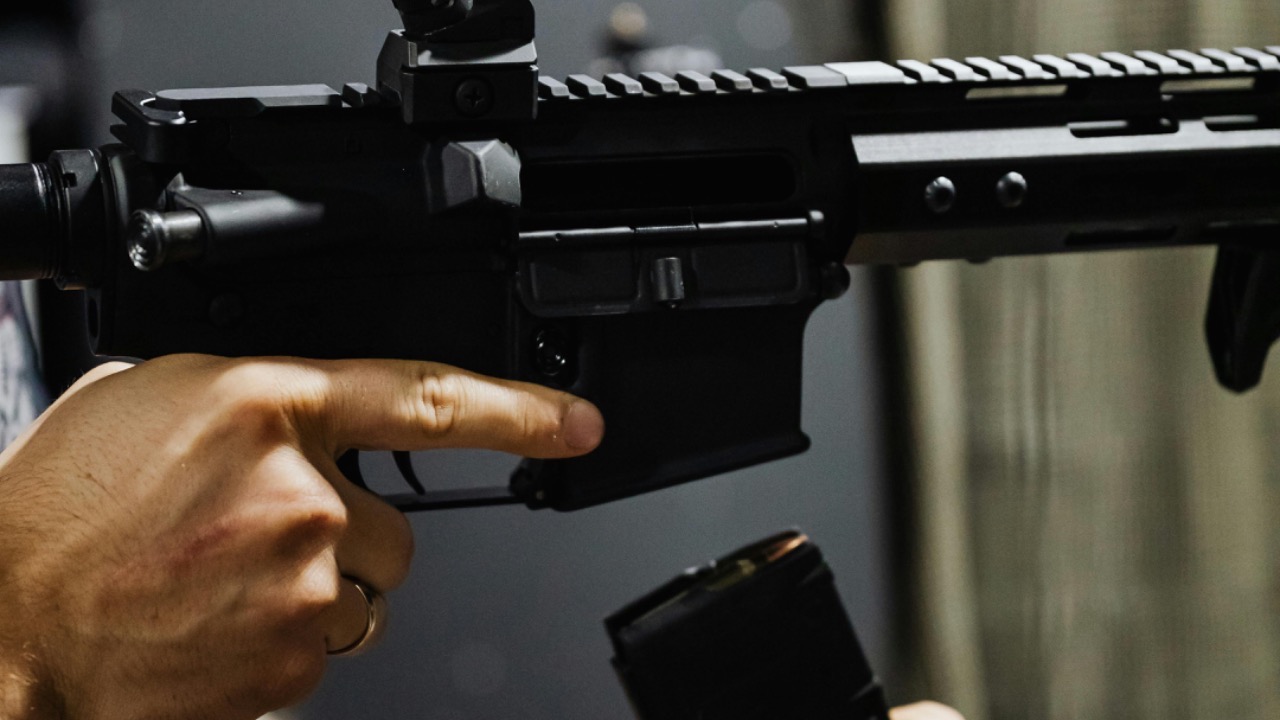
In Benson v. District of Columbia, the defendant was charged after police discovered a magazine that violated the District’s 10-round cap. The law criminalized possession of any magazine that could hold more than 10 bullets, regardless of whether it was loaded. At trial, Benson was convicted under that statute, and his case became a test of how far the Second Amendment extends to firearm accessories that are integral to the operation of modern semi-automatic handguns and rifles.
On appeal, Benson’s lawyers argued that magazines are essential components of many firearms and that caps on capacity effectively ban some of the most common configurations used for self-defense. A federal court reviewing the case later agreed, with one summary of the ruling noting that the court found no historical tradition that would justify banning commonly owned magazines. The appeals panel emphasized that the Second Amendment protects arms “in common use” and that the government had not shown that magazines with capacities above 10 rounds were both dangerous and unusual in a way that would remove them from constitutional protection.
The District countered that its 10-round limit was a reasonable measure aimed at reducing the lethality of mass shootings and gun crime. City lawyers argued that limiting the number of rounds available before a shooter must reload can save lives, particularly in crowded urban environments. The court acknowledged those public safety concerns but held that they could not override the constitutional text and history, especially when the government had not identified comparable restrictions from the founding era.
Why the ruling matters beyond Washington
The immediate effect of the decision is clear. Washington, D.C., can no longer enforce its 10-round magazine limit as written, and people like Benson who were convicted solely under that law now have a path to relief. But the implications extend well beyond the District’s borders. Lawyers in Illinois, for example, have already argued that the D.C. ruling striking down a large-capacity magazine ban should be applied to their state’s restrictions. One detailed piece on those challenges described how plaintiffs are urging federal judges to treat the D.C. case as a blueprint for invalidating Illinois’ own limits on magazines and so-called assault weapons.
California is watching closely as well. The state has long defended its restrictions on large-capacity magazines and assault weapons, with Attorney General Rob Bonta issuing public statements that frame those laws as essential to reducing gun violence. In one official press release, Attorney General Bonta described California’s restrictions on large-capacity and assault weapons as key tools for protecting communities and pledged to continue defending them in court. The D.C. decision, which found no historical basis for a 10-round cap, will likely be cited by opponents of California’s laws as evidence that such limits cannot survive the Supreme Court’s new test.
New Jersey is another state where the impact could be significant. The state has its own 10-round limit, and local commentary has already begun to assess how the D.C. ruling might affect that law. One analysis shared by a regional police-focused page explained that the D.C. court’s decision striking down the magazine capacity cap could influence challenges to New Jersey’s 10-round, particularly if federal courts in the region adopt similar reasoning about common use and historical tradition.
Tension with prior Supreme Court signals
The D.C. ruling arrives against a backdrop of mixed signals from the U.S. Supreme Court on magazine limits. In one recent case, the Court declined to hear a challenge to a state magazine ban, effectively leaving that law in place. A summary of that episode explained that the Supreme Court had rebuffed a challenge to a large-capacity magazine restriction, a move that allowed lower court decisions upholding the law to stand without creating nationwide precedent. That refusal suggested that, at least at that moment, the Court was not ready to intervene directly on magazine caps.
At the same time, the Supreme Court has repeatedly emphasized that the Second Amendment protects arms in common use for lawful purposes, and it has instructed lower courts to abandon interest-balancing tests in favor of a historical inquiry. The D.C. Court of Appeals leaned heavily on that guidance, treating the Supreme Court’s direction as a mandate to scrutinize modern gun regulations far more closely. The tension between the Supreme Court’s willingness to let some magazine bans stand for now and its insistence on a strict historical test has created uncertainty that lower courts are now trying to resolve.
That uncertainty helps explain why the D.C. decision is attracting so much attention. If other appellate courts adopt the same reasoning, magazine limits in multiple states could be at risk, even if the Supreme Court has not yet issued a definitive ruling on the exact question. Conversely, if other courts distinguish the D.C. case or uphold similar laws under their own reading of history, the resulting split could eventually force the Supreme Court to step in.
How advocates on both sides are responding
Gun rights advocates have hailed the D.C. ruling as a major Second Amendment victory. Commentators focused on self-defense law described the decision as a major Second Amendment decision that recognizes magazines as integral to the functioning of semi-automatic firearms. One analysis framed the outcome as confirmation that 11+ magazines are part of the ordinary configuration of many handguns and rifles, not exotic accessories that can be singled out for bans.
National advocacy groups have echoed that message, arguing that Washington’s magazine ban had effectively outlawed standard equipment for some of the most popular firearms sold in America today. A detailed commentary on the case described how the District’s highest court had invalidated the magazine ban and stressed that many modern firearms are sold with magazines that exceed 10 rounds as their standard capacity. For gun owners and industry groups, the ruling affirms that legislatures cannot simply redefine common equipment as contraband by labeling it “large-capacity.”
Gun control advocates, by contrast, warn that the decision could undermine laws designed to limit the lethality of mass shootings. Public safety groups in states like Illinois and California argue that magazine limits can reduce the number of casualties when a shooter must pause to reload, creating opportunities for people to escape or intervene. Officials who support these laws, including figures like Attorney General Rob Bonta in California, have framed them as evidence-based measures that respond to the realities of modern gun violence, even as courts apply stricter constitutional tests.

Leo’s been tracking game and tuning gear since he could stand upright. He’s sharp, driven, and knows how to keep things running when conditions turn.