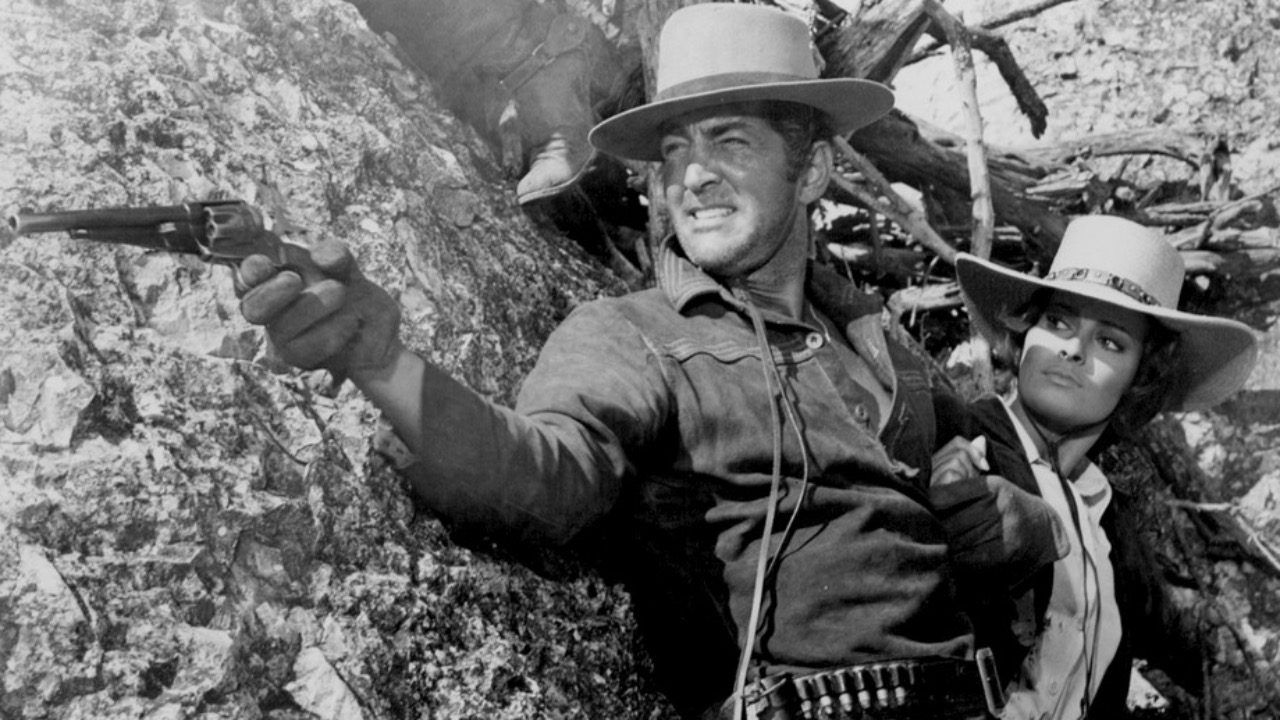
The western films that disappeared — and why they’re hard to find
For a genre built on wide horizons and mythic memory, the Western has a surprising blind spot: a vast portion of its own history has simply vanished. Thousands of cowboy films once shown in small-town theaters and city palaces alike no longer exist in any accessible form, and even many surviving Westerns are locked away, out of reach of audiences. The story of why so many of these movies disappeared, and why the survivors remain scattered or hidden, reveals as much about changing technology and business priorities as it does about the frontier legends on screen.
How Westerns Became Disposable Entertainment
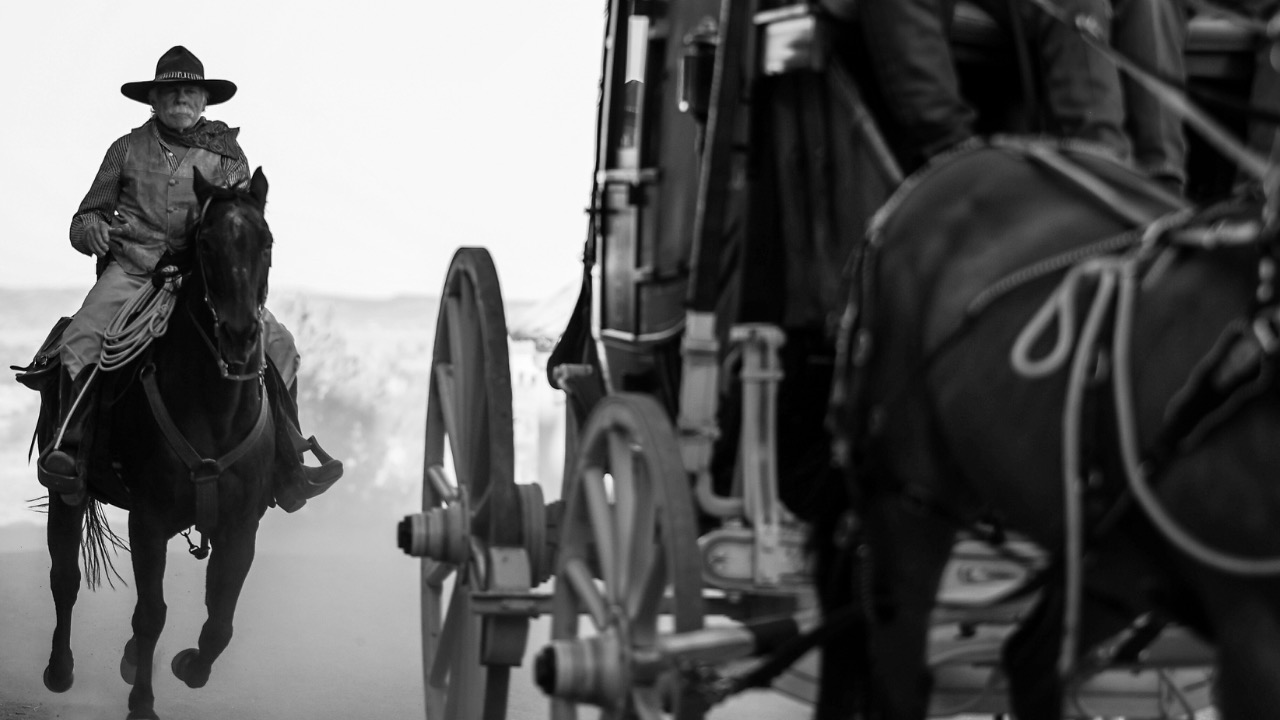
To understand why so many Westerns are missing, it helps to remember how they were treated when they were new. In the silent era and the early sound years, studios saw most films as short-term products, not cultural artifacts. One archivist in Oct explained that if a viewer goes back to the teens and the early 1920s, studios often purposely destroyed the once they were done playing, because they believed there was no further commercial use for them.
Western programmers, in particular, were treated as disposable. These were the quick, low-budget oaters that filled double bills and Saturday matinees. They were churned out in such volume that by the time the genre peaked commercially in the 1950s and 1960s, Hollywood was producing Westerns at an industrial clip. As one analysis of forgotten titles notes, the Western genre peaked when Hollywood was producing them in huge numbers, which is why later viewers are urged to give Why Forgotten Westerns a Second Look. The more Westerns were made, the easier it became for studios to see individual titles as replaceable.
That attitude extended to storage. Keeping reels in climate-controlled vaults cost money, and in an era before home video or streaming, executives saw little reason to spend on films that had already played their theatrical runs. Westerns that were not prestige productions or major hits simply fell to the bottom of the priority list, if they appeared on any list at all.
The Nitrate Problem and Deliberate Destruction
Physical fragility compounded that neglect. Early Westerns were often shot on nitrate film stock, which is chemically unstable and highly flammable. Archivists have described nitrate as both a preservation nightmare and a fire hazard, and they point to specific incidents where fires in studio vaults destroyed thousands of reels. One expert explained that there were nitrate fires that destroyed thousands of films, and that studios, worried about safety and cost, sometimes chose to destroy rather than invest in careful storage.
Beyond the fire risk, nitrate contained silver, which gave it value as scrap. Studios and laboratories occasionally recycled prints to reclaim that silver content. In the process, unique copies of Westerns vanished forever. The economic logic was simple at the time: a print that had finished its bookings was seen as a dead asset, while the recovered silver had immediate monetary value.
Latshaw, a researcher focused on early Westerns, has pointed out how close some titles came to oblivion. He noted that if the print of The Scarlet Drop had not been picked up before a Chilean warehouse was demolished, it would likely have been lost, either in the demolition or to scavengers looking retrieve the silver. That single anecdote hints at how many other Westerns, never rescued in time, were destroyed in similar circumstances.
By the time archivists began to treat film as a medium worth preserving in its own right, many early Westerns had already decomposed, burned, or been stripped for materials. The losses were not random: they fell heaviest on lower-budget productions, serials, and regional Westerns, which rarely received the careful handling reserved for prestige projects.
How Many Westerns Are Gone?
Quantifying the damage is difficult, but preservationists have tried. Film archivists connected with Martin Scorsese’s organization The Film Foundation reported in 2017 that roughly half of all American films made before a certain mid-century cutoff are considered lost. That estimate, cited in a discussion of missing titles, came from archivists at Martin Scorsese’s The Film Foundation, who warned that about half of all American films made a key historical period no longer exist in complete form.
Western films were a major share of early American production, which means they are heavily represented inside that missing half. Silent Westerns, in particular, were often made on the margins of the industry, by small companies that went bankrupt or were absorbed into larger studios. When those businesses folded, their film libraries sometimes ended up in poorly documented storage, or they were discarded outright.
Even among sound Westerns, survival is patchy. Some series starring popular cowboys survived because prints were circulated to television stations in the 1950s. Others, especially poverty row productions that never made the jump to TV syndication, simply dropped out of circulation. In many cases, the only surviving documentation is a title in a trade paper or a still photograph in a press kit.
From Film Reels to Vanishing Files
Loss did not end with the nitrate era. As distribution shifted from theatrical prints to television, then to VHS and DVD, and now to streaming, each format change created new chokepoints. Westerns that were never transferred to video became harder for audiences to see. Those that did receive VHS or DVD releases sometimes went out of print when distributors folded or licenses expired.
Today, the industry is in a transition away from physical media, and that shift has raised alarms among archivists and filmmakers. Commentators who track missing titles argue that as the major distributors focus on streaming, films that are not seen as commercially promising risk falling into limbo. The same discussion that cited Martin Scorsese’s The Film Foundation also warned that the major distributors are not actively looking for every older title, and that many films simply are not being migrated to digital platforms even as major distributors are looking for them only selectively.
For Westerns, the effect is stark. A handful of classics remain in constant rotation, while dozens of smaller, stranger, or more regionally focused Westerns have never made the leap to streaming libraries. Without a current license and a digital master, a film might as well not exist for most viewers, even if a 35mm print sits in a vault somewhere.
Rights, Royalties, and Legal Knots
Legal complications are another major reason Westerns remain hard to find. Many older films have tangled ownership histories. Production companies merged, dissolved, or sold off their libraries piecemeal. In some cases, the rights to a Western are split between an estate, a defunct distributor, and a music publisher that controls the score.
Advocates for access have described how these legal puzzles can strand films. Initiatives focused on missing titles have argued that even when a print survives, rights issues can keep it off screens. Their manifestos describe films that are effectively trapped, not by decay but by contracts that no longer reflect current realities. One group that campaigns for access to unavailable films has outlined this problem in a detailed manifesto on missing, which includes examples of titles that cannot be shown because of unresolved rights questions.
Western films are often caught in these knots. Some used popular songs whose rights were cleared only for theatrical exhibition. Others were co-productions between small companies and regional exhibitors, with contracts that never anticipated streaming. Untangling those agreements requires time and legal expertise, which smaller archives and labels do not always have.
Cultural Shifts and the Western’s Fall from Favor
Even when no legal or technical barrier exists, cultural change can make Westerns less visible. Commenters who have examined the decline of new Western films and shows often point to a combination of factors: there were too many of them, there was no quality control, and cultural attitudes changed. One discussion on Apr framed it as a three-part problem, arguing that the genre oversaturated the market, suffered from uneven quality, and then ran into shifting views about violence and representation, which helps explain why there are and shows in the same volume as before.
Those cultural shifts affect older Westerns as well. Films that rely on stereotypes or simplistic frontier myths can be a tough sell for modern distributors, who worry about backlash or low demand. As a result, some Westerns that still exist are simply not prioritized for restoration or release. They are not banned, but they are quietly sidelined.
At the same time, the Western has always been more varied than its clichés suggest. The call to give forgotten Westerns a second look rests on the idea that beneath the familiar tropes lies a rich archive of regional stories, revisionist takes, and hybrid genres. Analyses that highlight why forgotten Westerns deserve a second look argue that the genre peaked when Hollywood was producing Westerns in great volume, and that this volume produced a surprising number of overlooked gems, which is why they argue that Western genre peaked in a way that left many masterpieces buried.
How Archivists and Fans Are Rescuing Lost Westerns
Against this backdrop of loss, a quiet rescue effort has emerged. Archivists, collectors, and fans are tracking down prints, negotiating access, and sharing discoveries. The story of The Scarlet Drop and the Chilean warehouse shows how fragile these rescues can be. Latshaw’s work to retrieve that print before demolition illustrates the importance of individual initiative in saving Westerns that would otherwise disappear.
Some of this work happens in institutional settings, through film archives and nonprofit organizations. Martin Scorsese’s The Film Foundation, for example, has supported restorations of classic American films, including Westerns, and has helped publicize the estimate that about half of early American films are lost. Their collaborations with archives and studios show how coordinated efforts can bring neglected titles back into circulation, as described in coverage of their projects that is linked through a detailed report on.
Other efforts are more grassroots. Online communities trade information about rare TV broadcasts, out-of-print DVDs, and 16mm prints in private collections. Social media links, such as prompts to share lists of forgotten Westerns on platforms like Twitter sharing tools, help spread awareness of obscure titles and encourage viewers to seek them out.
Magazines and online outlets devoted to Western culture also play a role. Their coverage of lost Westerns, which can be found through social pages like Discovered via citation and image boards such as Discovered on Pinterest, often highlights newly restored films, festival retrospectives, and archival discoveries. By treating these films as newsworthy, they help shift perceptions of Westerns from outdated curiosities to living history.
Streaming, Curation, and the New Gatekeepers
Streaming platforms have become the main way many viewers watch films, which gives their curators enormous power over what is visible. Initiatives focused on missing movies have warned that when a film is not on a major platform, audiences may assume it does not exist. A detailed report on a streaming initiative described how advocates are pressing services to carry more archival titles, and how they have compiled a list of films that are unavailable on any major platform, as highlighted in coverage of a streaming initiative for.
For Westerns, this gatekeeping has a specific shape. A few canonical titles, from landmark revisionist Westerns to family-friendly crowd-pleasers, appear consistently in streaming catalogs. Beyond that small circle, availability drops off sharply. Many mid-century Westerns that once played on broadcast television are not licensed for streaming at all. Others appear briefly on niche services, then vanish when contracts expire.
Advocacy groups have responded by creating public lists of missing films and encouraging rights holders to make them available. One such group maintains a detailed list of missing, which includes titles across genres that are not currently accessible through mainstream channels. Westerns feature prominently on that list, both because of their historical importance and because so many remain locked in legal or logistical limbo.
These efforts have led to some successes, with individual films returning to circulation after years out of sight. Yet the overall pattern remains uneven. Without sustained pressure and financial incentives, platforms tend to favor content that drives immediate viewership, which rarely includes obscure mid-century Westerns.
Why Forgotten Westerns Matter
Arguments for rescuing lost Westerns are not just about nostalgia. They rest on the idea that these films offer a unique window into American history and culture. Analyses that encourage viewers to give forgotten Westerns a second look emphasize how the genre reflected anxieties about war, industrialization, and social change, especially during its 1950s and 1960s peak. They argue that the Western genre peaked commercially when Hollywood was producing Westerns in large numbers, and that this volume produced a wide range of perspectives, which is why they frame the issue as Why Forgotten Westerns a Second Look.
Many lesser-known Westerns experiment with form and theme in ways that challenge the genre’s reputation for formula. Some foreground Indigenous characters or Mexican communities, albeit often through the period’s limited lens. Others grapple with questions of land use, corporate power, and environmental change. Losing these films narrows the record of how American cinema has grappled with its own myths.
There is also a craft argument. Westerns were a training ground for directors, cinematographers, stunt performers, and composers. Early work by later-famous artists often appears in modest Westerns that have never received restoration. Preserving those films helps map the development of film style and technique across decades.
How Viewers Can Help Bring Westerns Back
Although the structural problems are large, individual viewers are not powerless. Archivists and advocates often stress that demand matters. When audiences seek out restored Westerns at repertory screenings, buy physical media releases, or rent titles from specialty platforms, they signal that there is value in these films beyond nostalgia.
Online, sharing information about forgotten Westerns can amplify that demand. Social tools that encourage readers to share pieces about obscure Western masterpieces, such as prompts on Facebook sharing links or LinkedIn share tools, help keep these films in circulation at the level of conversation, even when the films themselves are hard to access.
Some advocates also encourage viewers to support organizations that work on preservation and access. Donations to archives, membership in cinematheques, or participation in crowdfunding campaigns for specific restorations can have direct impact. When a restoration succeeds and leads to a new Blu-ray or streaming deal, it provides a model that others can follow.

Leo’s been tracking game and tuning gear since he could stand upright. He’s sharp, driven, and knows how to keep things running when conditions turn.