Public land access debates heat up ahead of fall hunting season
Across the West and Midwest, hunters heading into the fall season are stepping onto public ground reshaped by fresh court rulings, new federal directives and state-level backlash. Access to those lands has become a front-line political fight, with decisions in Washington and in state capitals determining who can reach millions of acres and on what terms.
From corner-crossing lawsuits to a push for “Open Unless Closed” management, the rules of engagement are shifting quickly. Hunters, landowners and conservation groups are racing to lock in their preferred vision of public access before the first rifle shots echo through the timber.
Corner crossing moves from gray area to green light
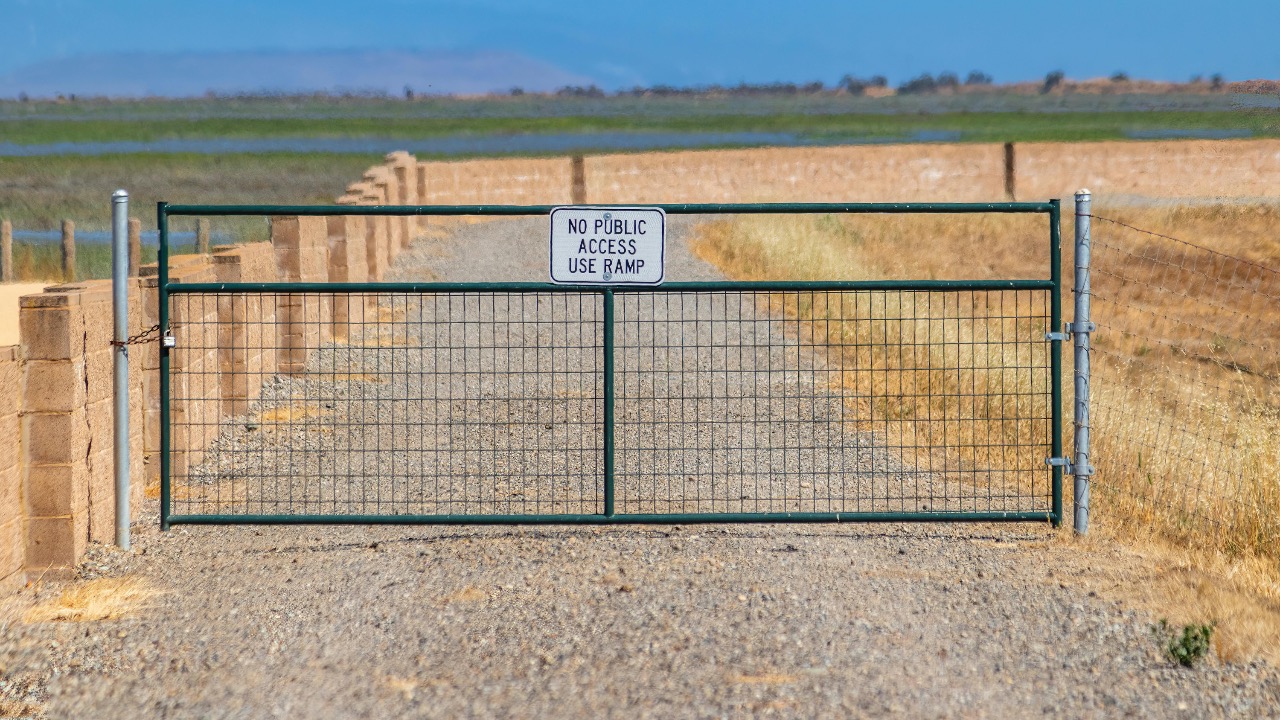
For years, hunters in checkerboarded country faced a simple but risky question: could they step from one square of public land to another at a shared corner without trespassing on the private parcels that met there. That question now has a clearer answer in much of the interior West.
An appeals court decision earlier in 2025 held that corner crossing is not trespassing as long as public land users do not physically touch private land. Advocates for public access said the ruling protects recreation in places where a patchwork of private holdings surrounds federal parcels, a pattern that defines large sections of Wyoming and neighboring states.
Regional reporting indicates the decision means corner crossing is now legal in at least six Western states, including those within the 10th Circuit. Public land users can move from federal land to federal land at a shared boundary point, as long as they avoid any physical contact with the private property that surrounds the federal parcels. That standard rejects the idea that landowners can claim exclusive control over the airspace above those corners.
When the Supreme Court declined to take up a landowner appeal, the lower court ruling remained in place for the 10th Circuit states. That left corner crossing legal in Wyoming, Colorado, Utah, Oklahoma, Kansas and New Mexico, although the precise implications on the ground vary by state law.
State officials have begun to interpret and apply the ruling. A statement from the Colorado attorney general’s office emphasized that it is now legal to corner cross from federal land to federal land, provided a hunter or angler does not touch the private land that surrounds the public parcels. That guidance gives hunters clearer confidence as they navigate GPS maps and fence lines in the field.
In Wyoming, local coverage of the case framed the outcome as another huge win for public lands and for the hunters who had fought access challenges in court. The reporting stressed that as long as public land users do not physically touch private land, corner crossing is legal, which limits the ability of landowners to use claims over airspace to block access to otherwise landlocked federal acres.
Federal policy swings toward “open unless closed” access
While courts have reshaped the rules at the parcel level, federal agencies are moving to expand access from the top down. Secretary Doug Burgum has embraced an “Open Unless Closed” public lands policy that supporters describe as a landmark shift. According to a statement from one national hunting organization, this approach keeps most federal lands open to hunting and fishing unless closure is required for safety or conservation, and it restores access and stewardship across 480 million acres.
That philosophy is now being written into agency directives. In mid January, the Secretary of the Interior issued an order stating that public and federally managed lands should be open to hunting and fishing unless a specific, documented and legally supported exception applies. A companion directive, identified as Secretarial Order 3447, instructs all DOI offices to identify, within 60 days, which lands can be opened to hunting and fishing and to prioritize opportunities for sportsmen.
Advocacy groups that support Secretary Doug Burgum’s “Open Unless Closed” framework have publicly thanked the U.S. Fish and Wildlife Service for taking steps to enhance and expand hunting opportunities within the national wildlife refuge system. They argue that broad access, paired with targeted closures where needed, strengthens both participation and long term conservation funding.
Federal policy debates have also reached into specific gear choices. Legislation branded as Wittman’s Protecting Access for Hunters and Anglers Act passed the House of Representatives in late March. The bill would prohibit the Secretary of the Interior or the Secretary of Agriculture from banning the use of lead ammunition and tackle on certain federal lands unless restrictions are supported by sound science. Supporters frame the measure as a guardrail against what they view as premature or sweeping gear bans that could limit access for everyday hunters and anglers.
Grassroots pushback halts public land sales
Even as federal agencies talk about opening more acres, some hunters remain wary of efforts to dispose of existing public lands. In 2025, a massive federal package nicknamed the “One Big, Beautiful Bill Act” contained a little known amendment that would have facilitated a large scale sale of federal holdings. The provision was buried deep in the legislation, far from the spotlight that usually accompanies major changes to public land policy.
Hunter Nation, a national advocacy group, rallied its members against the proposal. According to the group’s own account, millions of acres were at risk of being sold off before they ever became law. After a surge of pressure, the language authorizing those sales was removed from the bill. Coverage of the episode described it as a win for hunters and a reminder that access politics often hinge on obscure riders and amendments rather than headline grabbing stand alone bills.
That fight echoed earlier concerns raised by conservation groups about previous administrations and what critics described as an expansive push to sell out public lands to the highest bidder. Analyses of that period cataloged a series of policy changes that favored energy extraction and privatization, reinforcing a long running fear among hunters that access could be lost not just through local closures but through outright transfer or sale of federal ground.
Hunter Nation has continued to spotlight public land issues on its social media channels, using platforms such as X and Facebook to mobilize members quickly when new threats or opportunities emerge. Posts from accounts such as Hunter Nation USA and specific threads on X have framed access battles as part of a broader cultural conflict over hunting traditions.
Utah’s license rule sparks backlash on wildlife areas
State wildlife agencies are also rewriting the rules for who can set foot on public lands. In Utah, lawmakers in 2025 passed controversial H.B. 309, which required anyone 18 or older to carry a valid Utah hunting, fishing or combination license to access state wildlife management areas, often referred to as WMA sites. The rule applied even to hikers, birdwatchers and other nonconsumptive users who had no intention of harvesting game.
The law triggered swift backlash from non hunting users who saw it as an unfair barrier to lands they helped support through general taxes and other fees. In response, Utah lawmakers are now moving to replace the 2025 requirement with a free digital permit option. The proposed change would still give managers a way to track and regulate use of WMA properties, but it would no longer force casual visitors to buy a hunting or fishing license simply to walk a trail.
The Utah debate highlights a broader tension that is likely to intensify as fall approaches. Hunters often fund wildlife management through license sales and excise taxes on gear, and some argue that access rules should reflect that financial contribution. Hikers and other recreationists counter that public lands are a shared asset and that access should not be conditioned on buying a product tied to hunting or angling.
Midwestern seasons expand opportunity on public ground
In the Midwest, the access debate is playing out less in courtrooms and more in season structures and bag limits. The Ohio Wildlife Council has approved 2025 to 2026 hunting seasons that increase opportunity on public hunting areas. According to state announcements, the Ohio Wildlife Council voted to raise the antlerless deer limit on public hunting areas from one to two deer, a change designed to better manage populations while giving hunters more flexibility.
The council also adopted other adjustments that affect public land hunters, including changes to specific zones in Defiance and Paulding counties. Local hunting forums that track these decisions have highlighted the higher antlerless limit as a significant shift for those who rely on public areas rather than private leases or family farms.
These moves come as states across the Midwest work to balance herd health, hunter satisfaction and the carrying capacity of public lands that can see heavy pressure during peak weekends. By expanding opportunity where biologists see room for additional harvest, agencies hope to keep public areas attractive while avoiding overcrowding and resource damage.
Western states navigate overlapping rules and expectations
Beyond the courtroom victories on corner crossing, Western states are wrestling with how to harmonize federal directives, state statutes and local expectations. In Montana, for example, the Supreme Court’s refusal to revisit the corner crossing case left the 10th Circuit ruling as persuasive but not controlling, which has kept some access questions in a legal gray area. Landowners, outfitters and public land advocates continue to watch how neighboring states implement the standard.
In states squarely within the 10th Circuit, such as Colorado and Oklahoma, state agencies and attorneys general are already issuing guidance that reflects the new legal reality. In Colorado, the attorney general’s interpretation that corner crossing between federal parcels is permissible as long as no private land is touched has been cited by groups that produce mapping tools and by hunting organizations that train members on access etiquette.
Wyoming has been at the center of the corner crossing litigation and remains a focal point for both celebration and concern. Some landowners there argue that the ruling erodes their control over access to remote ranchlands that border public tracts. Public land advocates counter that the decision simply restores the public’s ability to reach land it already owns, especially in places where checkerboard patterns date back to 19th century railroad grants.
In Utah, the combination of the corner crossing precedent and the WMA license controversy has produced a layered access environment. Hunters may find it easier to legally step between federal parcels in certain parts of the state, while still confronting evolving rules on state managed wildlife areas that sit closer to population centers.
Access politics head into peak season
As hunters scout for fall, the policy mix they encounter reflects years of legal fights and political organizing. The appeals court decision that made corner crossing legal in six Western states, the Supreme Court’s choice to leave that ruling intact within the 10th Circuit, and the Colorado attorney general’s clarification that users cannot touch private land all combine to open up thousands of acres that were effectively landlocked.

Leo’s been tracking game and tuning gear since he could stand upright. He’s sharp, driven, and knows how to keep things running when conditions turn.