The six states with the largest bald eagle populations
Bald eagles have rebounded from the brink of extinction in the continental United States, and some states now host vast concentrations of the national bird. The six leaders are a mix of wild northern frontiers and heavily populated coasts, each offering different lessons about habitat, policy and public enthusiasm for raptors. Together they show how a species that once struggled to survive now shapes tourism, land management and conservation priorities across the country.
How scientists track a national symbol
Before ranking states, it helps to understand how experts count bald eagles. The Bald Eagle Population Size Report, described in an official Update, provides the most current estimates for the lower 48 states. Biologists focus on nesting territories and breeding pairs, then combine those figures with survey data on nonbreeding birds that gather along coasts, rivers and reservoirs. These counts are conservative by design, since the report emphasizes minimum estimates rather than optimistic guesses.
Separate compilations, such as a nationwide table of Bald Eagle Breeding, sort states by the number of nesting pairs and total Bald Eagle Population. One summary of Bald Eagle Population by State 2026 highlights that its table of Bald Eagle Breeding Pairs uses a column labeled with the figure “202” in the header, a reminder that every estimate is tied to a specific survey year and method. A more general explainer on States With the translates those technical reports into a simple ranking that names each State alongside an Estimated Bald Eagle Population.
Outreach groups such as The National Eagle Center also summarize federal data for the public. One of their posts notes that, as of a recent federal estimate, the Fish and Wildlife Service counted a large and growing total when They described national numbers and trends and introduced the discussion with the phrase “As of” to anchor the timeframe. All of these sources agree on the same basic story: bald eagles are surging, but the surge is not spread evenly, and a handful of states account for a disproportionate share of the birds.
Alaska: unmatched stronghold for bald eagles
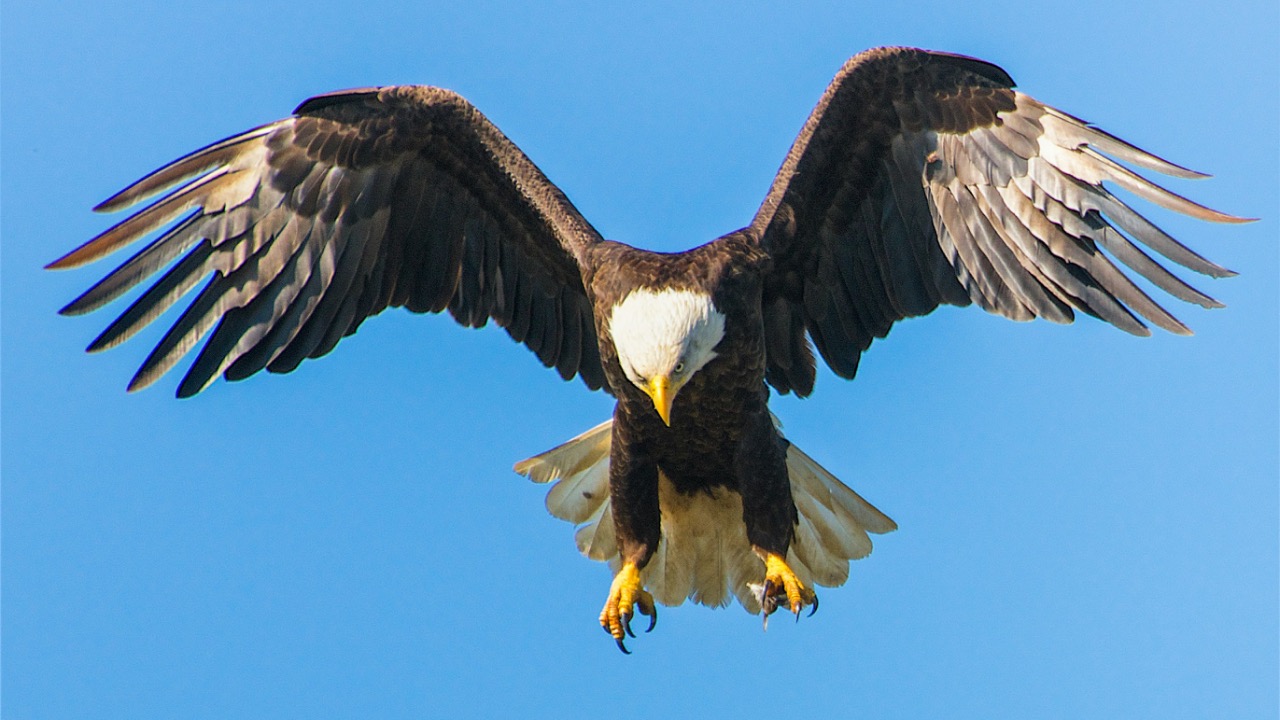
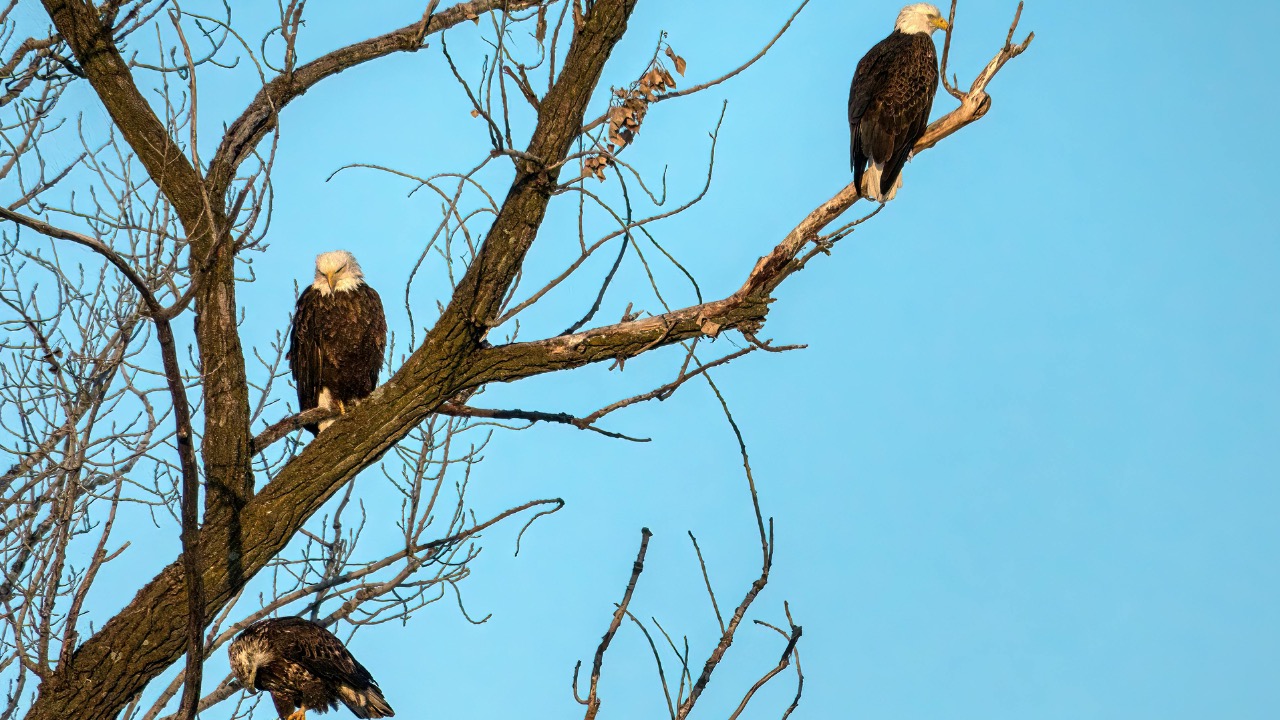
Any ranking of eagle states starts with Alaska. The state’s own wildlife agency describes the bald eagle as Alaska‘s largest resident bird of prey, with a wing span of up to 7.5 feet and 2.3 m from tip to tip. That size, combined with the bird’s white head and tail, makes it a dominant presence along the state’s rivers and coastal inlets. The same profile notes that bald eagles are more abundant here than anywhere else in the United States, which helps explain why visitors routinely describe seeing multiple birds perched in a single shoreline tree.
More recent population snapshots reinforce that dominance. A widely cited summary of eagle numbers notes that Alaskahas the highest population of bald eagles nationwide, with around 30,000 birds. That single figure, 30,000, dwarfs the totals in any other state and reflects the sheer scale of intact habitat across the region.
Geography does much of the work. The state’s vast coastline, archipelagos and salmon rivers create endless feeding opportunities, while relatively low human density reduces direct conflict. General references to Alaska, United Stateshighlight how the state’s size and rugged terrain set it apart from the rest of the country. Even broad overviews of Alaskaemphasize its mountains, forests and long coastline, the same features that support dense eagle concentrations.
For visitors, that abundance translates into reliable wildlife watching. Communities from Haines to the Kenai Peninsula market winter gatherings of eagles along open water, while coastal towns incorporate the bird into local branding and festivals. For biologists, Alaska’s population acts as a genetic and demographic reservoir for the species, a buffer against local setbacks elsewhere in the country.
Minnesota: inland powerhouse on the Mississippi flyway
Among the lower 48 states, Minnesota stands out as a freshwater stronghold for bald eagles. A social media summary that compared states by eagle numbers described Minnesota as holding the second largest concentration of bald eagles among the states, behind Alaska. The same discussion, framed as an answer to the question Which state has the most eagles, described Alaska as home to the largest numbers and then ranked Minnesota second, followed by Florida.
That breakdown attached a more specific figure to Minnesota, stating that the state holds approximately 9,800 pairs. While that number comes from a conversational context rather than a formal census report, it aligns with the idea that Minnesota’s nesting population is measured in the high thousands. The state’s position along the upper Mississippi River and its thousands of lakes provide the mix of tall trees and open water that eagles favor.
Basic geographic references to Minnesota, United States underline that this is a northern state defined by water and forest. Separate overviews of Minnesota describe a landscape of lakes and rivers that freeze in winter yet still leave pockets of open water near dams and power plants, where eagles gather to hunt fish in cold weather.
Citizen science and tourism have grown around that seasonal spectacle. Birdwatchers line the bluffs near Red Wing and Wabasha to watch eagles along the Mississippi flyway, while the National Eagle Center in Wabasha uses live birds and exhibits to explain how recovery unfolded. A broader search result for Minnesota also highlights the state’s identity as the “Land of 10,000 Lakes,” a slogan that, for eagles, translates into countless nesting territories.
Florida: southern refuge with dense nesting
Florida offers a very different setting for bald eagles, yet it ranks among the top states for both nesting pairs and total birds. A detailed conservation report on eagle recovery notes that Florida supports the highest number of breeding bald eagles in the lower 48 states and represents roughly 10 percent of the national total, with 1,166 of 11,040 breeding pairs in one key survey year. Those figures, 1,166 and 11,040, come from a period when the species was still climbing out of its DDT era decline, and they highlight just how critical Florida has been to the rebound.
Later summaries of state rankings echo that picture, grouping Florida with Minnesota as leaders in the lower 48. A social media post that highlighted nesting on artificial structures stated that Alaska has the highest population of bald eagles nationwide, with around 30,000 birds, while Minnesota and Florida lead the lower 48. That pairing reflects the combination of northern and southern refuges that carried the species through its leanest decades.
Geographically, Florida is a peninsula fringed with wetlands, lakes and coastal estuaries, a pattern evident in general overviews of Florida. Those shallow waters support abundant fish and waterbirds, ideal prey for eagles. The state also has a high density of man made structures, from cell towers to light poles, and one recent discussion of nesting behavior highlighted that Florida has the largest number of bald eagles nesting on such artificial supports, a sign of how adaptable the species has become in developed landscapes.
For residents, that adaptability brings eagles into everyday life. Nests appear near suburban golf courses, along busy highways and on the edges of theme park corridors. That proximity creates conflicts over tree trimming and construction, but it also cements public support for protections that keep the birds safe.
Wisconsin: recovery success on the Great Lakes
Wisconsin rounds out the northern tier of eagle rich states. While it does not match Minnesota’s estimated 9,800 pairs, the state has seen a dramatic increase from just a handful of nests in the DDT era to widespread breeding along rivers and lakes. Modern rankings of Bald Eagle Population by State place Wisconsin among the top half dozen states for Bald Eagle Breeding Pairs, reflecting both strong habitat and decades of focused management.
The state’s geography explains much of that success. A general reference for Wisconsin describes a region bounded by Lake Superior and Lake Michigan, threaded with rivers and dotted with inland lakes. Those waters, combined with extensive forests in the north, give eagles ample nesting sites and foraging grounds. Winter brings concentrations along open water below dams, where birdwatchers now expect to see multiple eagles on a single outing.
Wisconsin’s rise also reflects broader national trends. A federal press release on national eagle numbers celebrated how America’s bald eagle continues to soar, a phrase that applied especially well to Great Lakes states that cleaned up waterways and protected nesting trees. Wisconsin’s experience shows how water quality rules, pesticide bans and public enthusiasm can combine to reverse a steep decline.
Maryland: Chesapeake Bay hotspot
Maryland is smaller than many states on this list, yet it hosts a dense concentration of bald eagles along the Chesapeake Bay and its tributaries. The bay’s mix of tidal shallows, fish rich rivers and forested shorelines creates ideal conditions for nesting and winter roosting. Modern rankings of Bald Eagle Population by State place Maryland in the upper tier for Bald Eagle Breeding Pairs, reflecting both resident birds and migrants that move along the Atlantic coast.
Geographic overviews of Maryland stress its close relationship with the Chesapeake, while a separate reference to Maryland highlights its network of rivers and estuaries. Those same waterways host some of the East Coast’s largest communal roosts, where dozens of eagles gather in winter trees near open water.
Maryland’s eagle story is intertwined with broader Chesapeake restoration. Efforts to reduce nutrient pollution, protect wetlands and manage fisheries have improved conditions for fish and waterfowl, which in turn support more raptors. The state’s compact size also means that nesting territories overlap with military bases, shipping channels and suburban development, forcing agencies to coordinate closely to avoid disturbing nests.
Virginia: growing population along rivers and coasts
Virginia, Maryland’s neighbor along the Chesapeake and Atlantic, rounds out the six states with the largest bald eagle populations. Modern tallies of Bald Eagle Population by State list Virginia among the leaders for Bald Eagle Breeding Pairs, reflecting strong growth along the James, Rappahannock and Potomac rivers. Those rivers, along with the lower Chesapeake Bay, provide long stretches of undeveloped shoreline where eagles can nest and hunt.
General references to Virginia describe a state that runs from Appalachian mountains to Atlantic coast, a cross section of habitats that suits eagles at different seasons. A separate overview of Virginia notes its extensive river systems, the same corridors that now anchor eagle recovery.
Virginia’s growth mirrors national trends documented in the Bald Eagle Population Size Report and related outreach. A social media explainer that asked what the estimated bald eagle population is framed the answer by saying, “They are absolutely incredible creatures,” then pointed back to how the Fish and Wildlife Service, in a phrase that began “As of,” summarized national totals. Those national gains are visible on the ground in Virginia, where eagles now nest near busy highways, around reservoirs and within sight of major cities.

Leo’s been tracking game and tuning gear since he could stand upright. He’s sharp, driven, and knows how to keep things running when conditions turn.