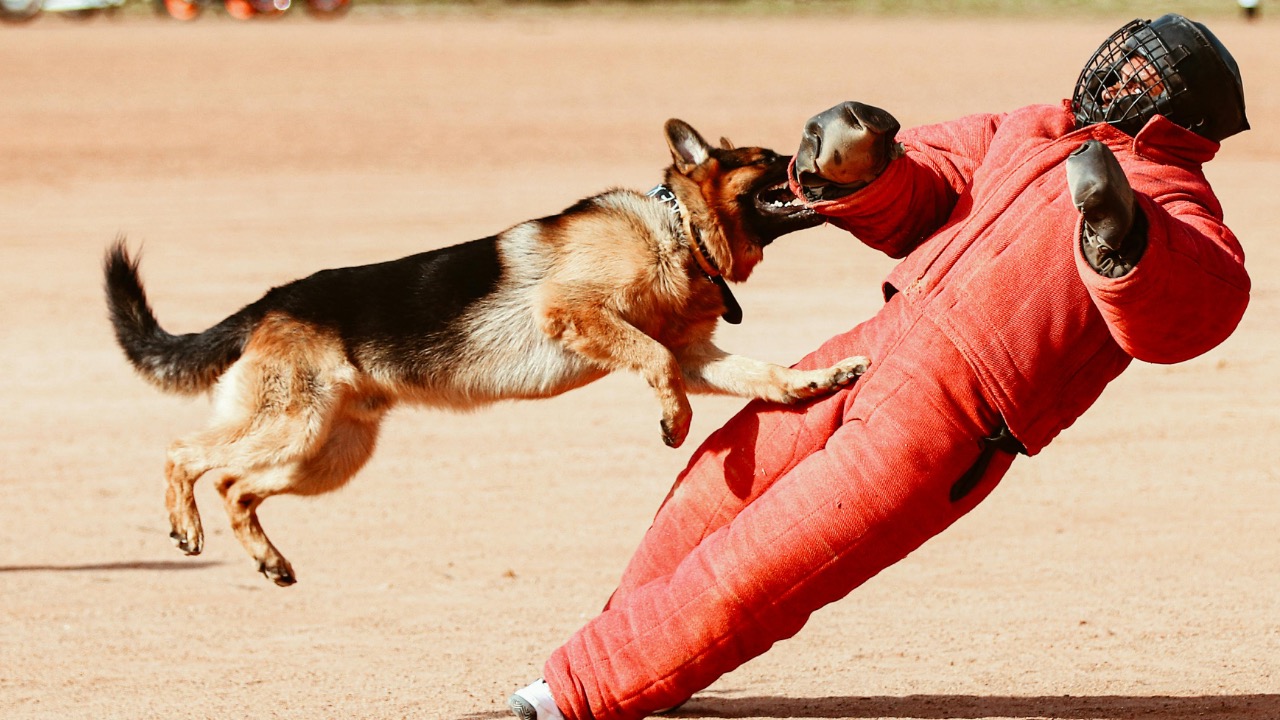
Two dogs stop home intruder—but the aftermath sparks legal outrage
Two dogs that confronted a stranger inside a home were first hailed as heroes, then pulled into a legal and ethical storm that left their owners facing hard questions and mounting bills. The animals had done exactly what many people expect of a family dog when danger appears, yet the aftermath exposed a tangle of criminal law, civil liability and animal policy that few homeowners fully understand. The clash between public praise and private consequences has turned one violent encounter into a wider debate over how the justice system treats dogs that protect their territory.
The night two dogs met an intruder

The confrontation began in the simplest and most terrifying way: a stranger was inside a private home where he had no right to be. Deputies later said that the man, identified as Alex Abraha and described as 21 years old, did not know the homeowner but had still managed to get into the house. In the confusion that followed, two pit bulls confronted him, and the encounter ended with Abraha dead from multiple bite wounds. The scene immediately raised questions about self defense, both for the humans in the house and for the dogs that had acted as its last line of security.
Neighbors and online commenters quickly formed strong opinions. Some argued that the dogs had simply done what any territorial animal would do when faced with a trespasser in the dark. Others focused on the brutality of a mauling that left a young man dead, no matter what he had been doing inside the property. On social media, one discussion captured how sharply divided the public became. In a thread shared by The Cenla Report, one commenter began with the blunt observation that People make decisions for their home and family and described how some would never feel comfortable living with two dogs that had killed a person under their own roof. Another voice countered that the animals were usually gentle and had only reacted to a perceived threat.
Law enforcement focused first on the basic facts. Deputies confirmed that Alex Abraha had no personal connection to the homeowner and that he had entered the property without permission. Online, people like Allison Strickland and Elizabeth Ann Bennett reacted to those details with a mix of relief and grim satisfaction, treating the outcome as proof that the household had been protected from a stranger who never should have been there in the first place. The combination of a young intruder, two pit bulls and a deadly outcome quickly turned the case into a lightning rod for broader arguments about crime and self defense.
From investigation to a decision on the dogs’ fate
Once the immediate shock faded, attention shifted to what would happen to the two pit bulls. Animal control officers took custody of the dogs while investigators examined whether they should be classified as dangerous or destroyed as a public safety measure. The owners faced an agonizing wait. On one side, they had pets that had just protected their home. On the other, they had to reckon with the fact that those same animals had killed someone, even if that person was an intruder.
Public debate swirled around the question of intent and training. Supporters of the dogs argued that they had been kept as family companions, not as weapons, and that any large dog might respond violently if it encountered a stranger moving through dark rooms. Critics pointed to the severity of the injuries and asked whether the dogs had been properly socialized or controlled. The owners found themselves defending not only their pets but also their own judgment in choosing to keep two powerful animals in a household setting.
The turning point came when authorities announced that the dogs would not be euthanized. In a televised update, officials confirmed that the two animals credited with attacking the intruder would be allowed to live, a decision that relieved the owners but angered some members of the public. The segment, which referenced how earlier coverage had focused on the dogs as household protectors, identified the case in connection with a man named Kaw and noted that the decision came after a review in Oct. For animal advocates, the outcome signaled that officials were willing to treat the incident as a form of home defense rather than an unprovoked attack.
That ruling did not erase the controversy. Some critics insisted that any dog capable of killing a person should be removed from a residential neighborhood, regardless of the circumstances. Others worried about what would happen if the dogs ever escaped the property or misread a harmless visitor as another intruder. The owners, meanwhile, now had to live with both the trauma of a violent death in their home and the knowledge that their pets would always carry a reputation as killers, even though they had survived the official review.
Home security footage and the culture of “good dogs”
The case of the two pit bulls did not occur in isolation. Across the country, security cameras have captured a growing archive of dogs confronting suspected burglars, and those clips have shaped how the public thinks about canine self defense. In one widely shared video out of Littleton, a family’s home surveillance system recorded an attempted break-in that unfolded in front of two large dogs. The animals charged toward the door as a masked figure tried to force his way inside, and the intruder quickly retreated. The footage, later described as an attempted home invasion thwarted by two furry members of a family out of Littleton, was replayed as proof that pets can act as effective security partners when alarms or locks might fail. The clip was circulated through broadcasts that highlighted the Mar incident as a textbook example of dogs doing exactly what their owners hoped they would do.
Another report from Littleton, shared by Rogelio Mares and Nexstar Media Wire, showed a similar pattern. In that case, video captured what was described as a possible home invasion, with a suspect approaching a house before two dogs inside launched into a loud, aggressive response. The suspect backed away, and the family later praised their pets for stepping in. One family member described the animals as simply doing their jobs, a phrase that resonates with many dog owners who view their companions as both loved family members and unpaid security guards. Coverage of that incident, which referenced the Colorado community of LITTLETON, reinforced the idea that barking and lunging at the door can be something to celebrate rather than something to correct.
The trend is not limited to large breeds. In a striking case from Riverside, California, a home security camera captured a burglary attempt that began with a thief jumping over a backyard fence. A tiny dog started barking furiously as the intruder tried to ignore the noise. The commotion alerted larger dogs inside the house, who then rushed to confront the stranger. The video, recorded on a system that showed how a chihuahua’s alarm call triggered the rest of the household pack, illustrated how even a small animal can play a key role in defending a property when combined with bigger companions. The clip, which described how events unfolded On January in Riverside, California, fed into a narrative that any dog, regardless of size, can be a powerful deterrent when criminals test a home’s defenses.
A separate clip from a suburban neighborhood near Chicago showed a similar pattern. In that recording, a small chihuahua barked first as masked suspects approached a house, then larger guard dogs joined in and charged toward the intruders. The suspects fled before they could fully enter the home. The video, promoted with the description Shocking Security Footage and the tagline Chihuaua Alerts Pack to Home Invasion Suburban Chicago, reinforced the idea that dogs are not just pets but integral parts of neighborhood safety stories. Each of these clips, replayed and celebrated, helps build a cultural script in which a “good dog” is one that barks, lunges and, if necessary, bites when a stranger appears.
When protection crosses into lethal force
The pit bull case that left Alex Abraha dead sits at the extreme end of that script. Instead of a bark that scared someone off, the encounter ended with a body in the yard and homicide detectives on the scene. The legal system then had to decide whether the dogs’ behavior counted as reasonable force in defense of property and people, or whether it crossed into something that should trigger punishment for the animals and possibly for their owners.
Self defense law in most states focuses on what a reasonable person would do when confronted with a threat. The challenge in cases like this is that the actors are dogs, not people, and they respond to instinct rather than legal training. A homeowner might be justified in using deadly force against an intruder under a “stand your ground” or castle doctrine statute. Translating that logic to animals is far more complicated. Some commenters in the Cenla discussion explicitly compared the pit bulls’ reaction to a human invoking a Stand Your Ground law, arguing that the dogs were only protecting their home and that any dog will do that when faced with a stranger in the middle of the night.
At the same time, the brutality of a mauling raises questions that do not come up in cases involving firearms or other weapons controlled directly by a person. Critics asked why the dogs had to keep attacking once the intruder was no longer a clear threat, and whether better training or containment might have prevented the death. Others pushed back that it is unrealistic to expect dogs to calibrate their level of force in the way a trained human might. The legal system, which is built around human choices, struggles to map those concepts onto animals that act on instinct.
The decision not to euthanize the pit bulls in the case connected to Kaw did not resolve those tensions. Instead, it highlighted a gap between criminal law, which focused on the intruder’s unlawful entry, and animal control policies, which had to decide whether the dogs posed an ongoing danger. For many observers, the outcome felt like a narrow escape for the animals and their owners, rather than a clear statement of principle that could guide future cases.
From hero dogs to civil lawsuits
While criminal investigators weighed whether the dogs should be destroyed, another set of legal risks loomed in the background. Even when authorities clear a dog of criminal consequences, owners can still face civil lawsuits from the families of injured or killed intruders. In some jurisdictions, relatives of a person who dies on private property can sue for wrongful death, even if that person was committing a crime at the time. Insurance companies may also balk at covering claims that involve certain breeds or prior bite histories.
At the same time, the broader world of dog-related litigation has been expanding in less expected directions. One recent investigation examined how a dog rescue group had developed a pattern of suing former clients who surrendered pets that later turned aggressive. In a short video, a woman described how she could not imagine giving up her dog Rudy Uh and called the idea excruciating. The segment went on to explain how some owners who did surrender animals ended up facing lawsuits for thousands of dollars when those pets were later involved in biting incidents. The report, which highlighted the emotional stakes around Rudy Uh and other dogs, showed how quickly a private decision about an animal can spiral into a courtroom battle.
A longer investigation from the same coverage stream traced how several families had surrendered dogs that turned aggressive, only to be sued later by a rescue organization. The owners had believed they were doing the responsible thing by turning over animals they could no longer manage, sometimes after biting incidents or escalating behavior problems. Instead, they found themselves accused of misrepresenting the dogs’ histories and facing demands for thousands of dollars in damages. The story noted that people had been encouraged to Download the 9NEWS app to follow the unfolding cases, and it pointed out that some of the lawsuits had left families feeling trapped between safety concerns and fear of legal retaliation.
These civil disputes may seem far removed from a violent home invasion, yet they reveal how aggressively some organizations and individuals are willing to pursue dog-related claims. For owners of the pit bulls that killed Alex Abraha, the risk is not only criminal scrutiny but also the possibility that relatives of the deceased could seek compensation in civil court. Even if such a lawsuit ultimately fails, the cost of defending it can be crushing. The broader pattern of litigation against dog owners, from rescue contracts to bite incidents, suggests that the legal system increasingly treats dogs as both beloved companions and potential liabilities.
Animal advocates, chained dogs and the ethics of responsibility
The story of the two pit bulls also intersects with a different set of concerns: how dogs are kept and what responsibility owners have to prevent tragedies before they happen. In one widely shared account, an animal advocate described becoming aware of a home where two dogs were chained up outside. After seeing that the animals did not meet the legal requirements for shelter and care, the advocate pushed for intervention. The post argued that if the dogs had been treated differently, a later incident might never have occurred, and it suggested that proper housing and training could have prevented a violent outcome. The narrative, which began with the line that an animal advocate became aware of a home with two dogs chained up outside and then continued with the word After, framed neglect as a root cause of later aggression.
That perspective complicates the picture of dogs as simple heroes or villains. If an animal has been chained, under socialized or used primarily as a deterrent, its reaction to a stranger may be more explosive and less controllable than that of a well integrated family pet. Advocates argue that owners who keep dogs primarily as security devices without providing proper care share responsibility when those animals injure or kill someone. In their view, the law should focus not only on what happens in the heat of a confrontation but also on the months and years of management that shape a dog’s behavior.

Asher was raised in the woods and on the water, and it shows. He’s logged more hours behind a rifle and under a heavy pack than most men twice his age.