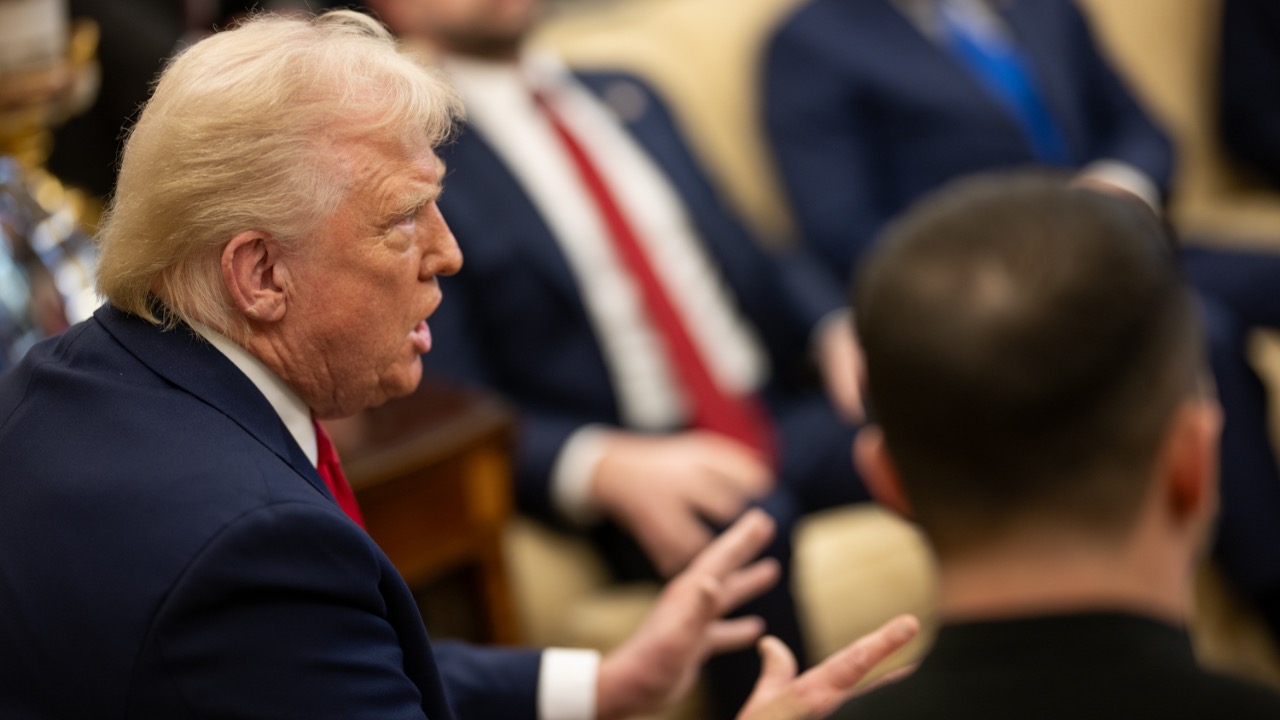
Calls grow for constitutional action as political tensions escalate
Calls for extraordinary constitutional steps are moving from the political fringe toward the center of the national conversation, as confrontations over presidential power, street unrest and media pressure collide. With political tensions rising ahead of the 2026 midterm cycle, lawmakers, civil rights advocates and local leaders are openly weighing tools such as the Twenty-fifth Amendment, the Insurrection Act and aggressive congressional oversight to contain a crisis they say is already unfolding.
The result is a volatile mix: a presidency accused of abusing emergency powers, activists warning of democratic backsliding and opponents debating whether the cure of constitutional intervention could deepen the country’s divisions even further.
From impeachment fatigue to Twenty-fifth Amendment talk
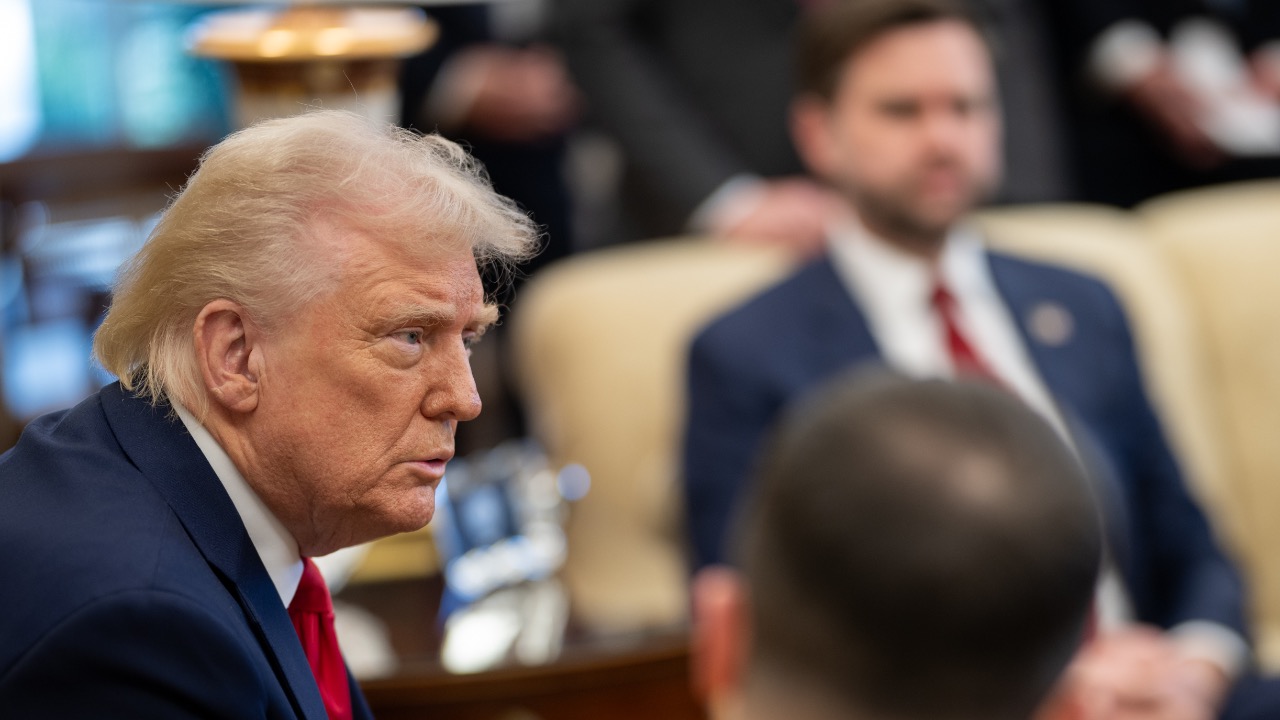
For years, the most dramatic constitutional remedy in American politics was impeachment. That has shifted as lawmakers now discuss removing a president through the Twenty-fifth Amendment, a process that routes power through the vice president and the cabinet rather than through Congress alone. Earlier calls by lawmakers for President Trump’s cabinet and Congress to “boot him from office” signaled how mainstream this once-theoretical option has become, with some members publicly urging the use of constitutional succession tools to address what they describe as a crisis of fitness for office, as seen in one prominent appeal from lawmakers.
The Twenty-fifth Amendment itself lays out a detailed process for such a move. It provides for the temporary transfer of the president’s powers and duties to the vice president, either on the president’s own initiative or when the vice president and a majority of the cabinet declare the president unable to perform the job, as summarized in a widely cited explanation of the amendment. In the complex and unique scenario where a president is considered unable to do the job but refuses to step down, the process shifts into a confrontation between the president and Congress, which must decide whether to side with the cabinet or the president, according to a detailed civics explainer that begins with the words In the.
Calls for such drastic measures are no longer hypothetical. A widely shared social media post described how a United States senator has officially called for the invocation of the Twenty-fifth Amendment, explicitly shifting responsibility to the Vice President and the President’s cabinet, with the argument that only the Vice President and the President’s closest advisers can trigger this constitutional safety valve, as highlighted in a discussion of the Amendment.
Escalating rhetoric and the Insurrection Act
The debate over presidential power is not limited to succession. President Trump’s threat to invoke the Insurrection Act has become a flashpoint in its own right. Civil liberties advocates describe how federal agents’ abuses of authority and violations of constitutional rights were already “brazen and cruel” even before that threat, and argue that using the Insurrection Act would further empower federal forces to undermine rights rather than protect them, as detailed in an analysis of President Trump and his Insurr proposal.
On the ground, the stakes of such a move are visible in places where federal officers have already clashed with demonstrators. In Minnesota, protests erupted after a federal officer shot a man during an immigration enforcement operation, and live updates described how tensions flared as demonstrators confronted federal agents and local police, raising fears that any Insurrection Act deployment would pour fuel on an already volatile situation, as seen in coverage of Minnesota protests.
Elsewhere, live accounts from Minneapolis described how crowds gathered downtown, federal officers deployed crowd control tactics and local authorities tried to keep order while also responding to public anger over the shooting, illustrating how quickly a local incident can become a national test of federal power, as documented in a detailed live blog.
Legal scholars have warned that the Insurrection Act has been invoked sparingly in American history and that its vague standards give presidents wide discretion to send troops into domestic unrest. A guide to past invocations notes that the statute has often been used in response to genuine breakdowns of public order, but that the same language could be stretched to justify crackdowns on political dissent, as explained in a guide to the law.
Media pressure and the fight over public narrative
Political strain is also playing out through the media. The suspension of late-night host Jimmy Kimmel after a confrontation with the administration has become a symbol of what critics describe as President Trump’s growing power over the United States media environment. Reporting on the incident described it as the kind of brute force response that Trump and his loyalists have routinely flexed since the Republican president returned to office, part of a pattern of regulatory and corporate pressure that can reshape public dialogue, according to an analysis of the Kimmel suspension and its context involving Sep, Trump and, Republican allies.
Opponents argue that this climate makes institutional checks even more urgent, since a president who can influence what the public sees and hears can also blunt criticism of constitutional overreach. Civil rights groups have warned that when federal agents and executive branch officials feel insulated from scrutiny, abuses of authority are more likely to spread.
Lawmakers demand accountability as midterm tensions build
Members of Congress are not only debating removal mechanisms but also warning about the broader political environment. Senator Chris Van Hollen has criticized Donald Trump by arguing that Americans are paying more for basic goods because of the administration’s policies, tying economic pain to what he portrays as chaotic governance and calling for stronger oversight of executive actions, as reflected in a post where Sen. Chris Van directly linked Trump to rising costs.
On the House side, Representative Jim McGovern has been a prominent voice in debates over presidential power and congressional responsibility. His profile as a long-serving member who has focused on rules and human rights has positioned Jim McGovern as one of the lawmakers pushing for aggressive use of hearings, subpoenas and budget leverage to rein in what critics see as executive excess.
Not all constitutional rhetoric is aimed at the president. Congressman Roger Williams has urged the Department of Justice and the Department of Defense to investigate Democrats over a video in which, he claims, These Members urged the military to elevate personal politics above duty and engage in blatant insubordination. He warned that history shows such actions undermine military order and discipline and argued that this kind of pressure on the armed forces is itself a threat to constitutional governance, according to his statement that described how These Members crossed a line, a warning he linked to Histor lessons.
As national debates intensify heading into the election year, analysts see three main dynamics that are likely to drive unrest in 2026: the affordability crisis, disputes around federal operations and intensifying political polarization. A security risk assessment argues that these pressures will interact with localized flashpoints, such as clashes over federal enforcement or election administration, to create a more combustible environment, as outlined in a study of rising political tensions.
Civil society warns of a constitutional crisis
Civil rights organizations are increasingly blunt in their language. A broad coalition has condemned politically motivated violence and called on leaders to uphold both rights and the Constitution, arguing that attacks on protesters, journalists and public officials are symptoms of a deeper democratic erosion. The group urged elected officials in both parties to reject incendiary rhetoric and to defend institutions that protect free expression and fair elections, as laid out in a joint civil rights coalition statement.
Local voices are echoing that alarm. An editorial from Jackson Hole described the situation as a constitutional crisis that demands action, urging residents not to treat national turmoil as distant noise but to engage in civic life, press representatives and defend the rule of law in their own communities. The editorial argued that when national leaders test constitutional limits, local institutions such as county commissions, school boards and state courts become vital guardrails, a point made forcefully in a Jackson Hole editorial.

Asher was raised in the woods and on the water, and it shows. He’s logged more hours behind a rifle and under a heavy pack than most men twice his age.