The M79 Grenade Launcher: A Break-Open Design With Single-Shot Capability
The M79 grenade launcher holds a distinctive place in modern small-arms history, pairing a simple break-open mechanism with single-shot 40 mm firepower that infantry could carry on a sling. Its design looks almost quaint beside modular under-barrel launchers and programmable airburst rounds, yet the “blooper” still shapes how militaries think about portable explosives on the battlefield.
Understanding what the M79 is, how it works, and why it refuses to disappear helps explain the evolution of grenade launchers from stand-alone, shotgun-like weapons to today’s rail-mounted systems. It also illustrates why a slow-firing, single-shot tube can still matter in conflicts that revolve around precision and speed.
What happened
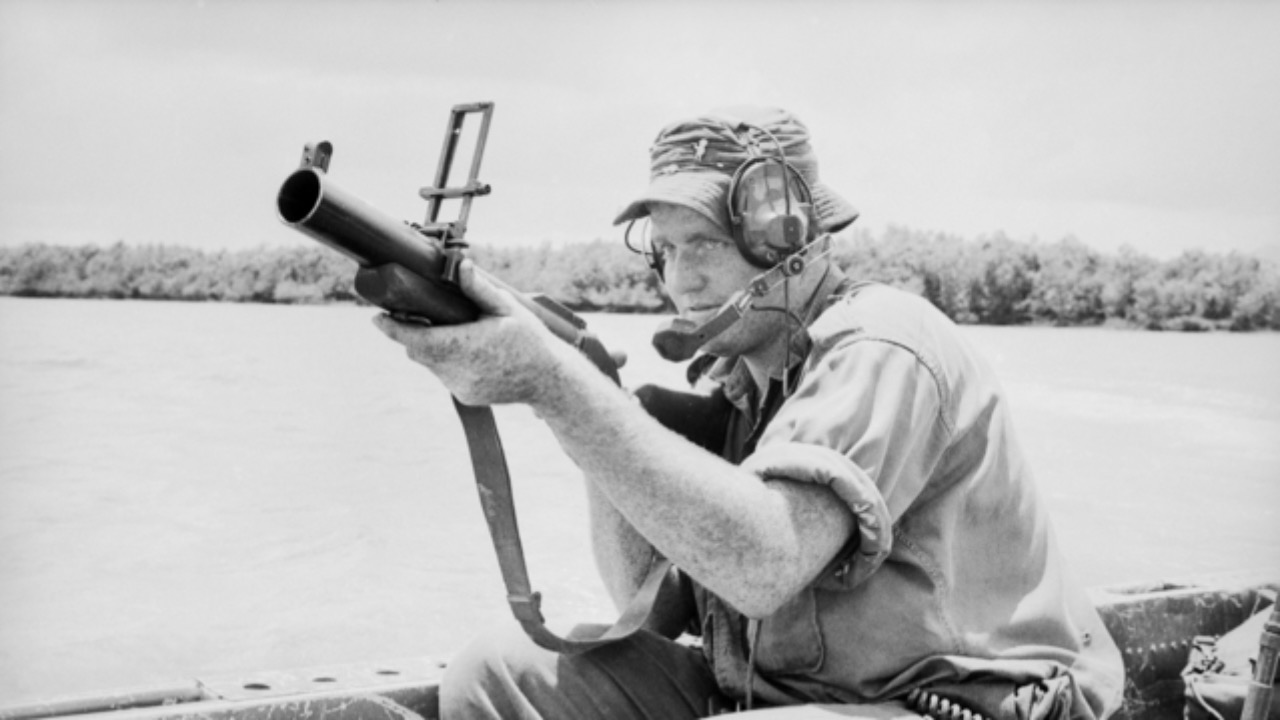
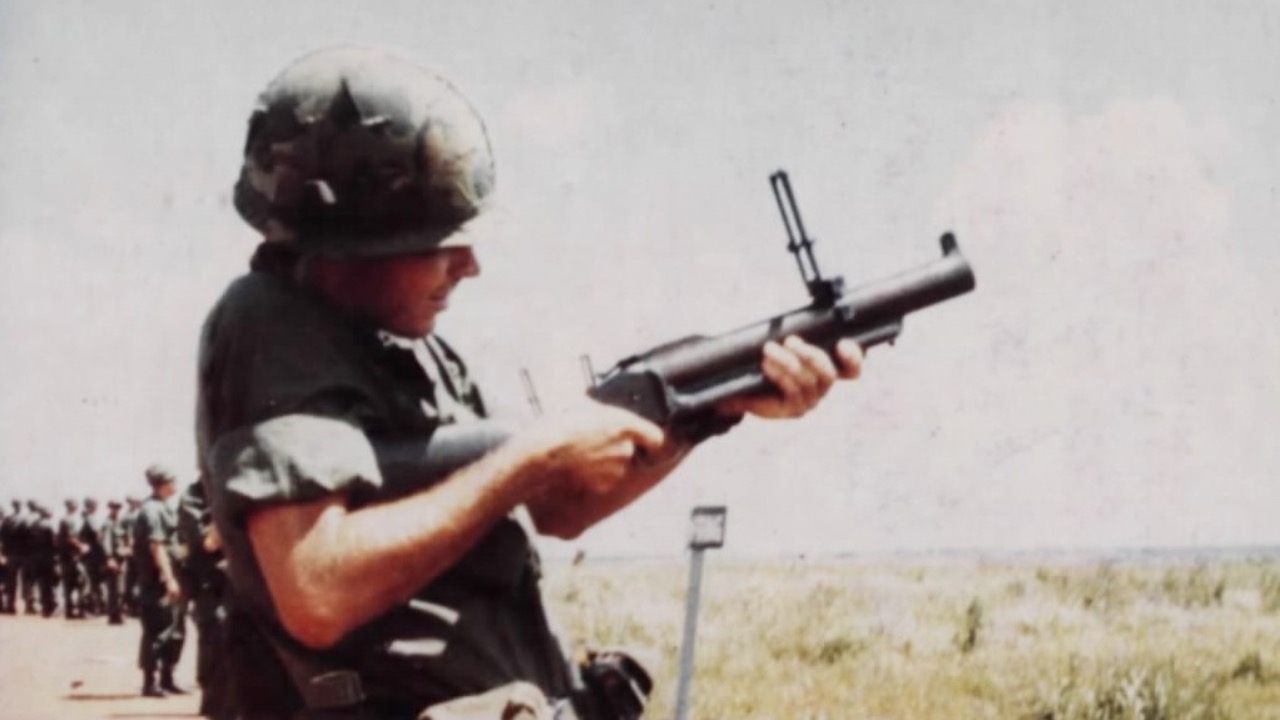
The M79 emerged from a U.S. effort to give individual soldiers organic explosive firepower that filled the gap between hand grenades and mortar support. Designers created a shoulder-fired launcher that used 40×46 mm low-velocity ammunition, with a break-open action that let the user hinge the barrel downward, extract a spent casing, and insert a fresh round. The concept was closer to a single-barrel shotgun than to a rifle, which made it intuitive for troops already familiar with break-action hunting guns.
Its profile was deliberately simple. The M79 used a wooden or polymer stock, a barrel with a rifled bore, and a receiver that locked the barrel in place until the operator pressed a latch to open it. The single-shot nature of the system forced a deliberate firing rhythm. A grenadier would load, close, aim with leaf or ladder sights, fire, then open the launcher again to repeat the cycle. Accounts from users describe this cadence as slow but methodical, with a focus on placing each round where it counted rather than saturating an area.
Operational reports describe how this break-open launcher gave small units the ability to lob explosive projectiles out to roughly 350 meters, beyond typical hand grenade range but below mortar distances. Troops could fire high-explosive, smoke, illumination, and less-lethal rounds, all from the same tube. That flexibility turned the M79 into a kind of pocket artillery piece that a single grenadier could carry without the weight of a mortar baseplate or large ammunition load.
The weapon’s popularity quickly spread, and other countries began to copy or adapt the design. Detailed examinations of regional production show how Vietnamese factories produced their own versions of the launcher, sometimes with cruder machining or local materials, yet still following the same break-open, single-shot template seen in the original U.S. pattern. These imitations highlight how the core mechanical idea was easy to reproduce and maintain, even in austere conditions.
As combat requirements shifted, the U.S. military sought a way to give riflemen grenade capability without dedicating one person solely to a stand-alone launcher. That led to the development of under-barrel systems, particularly the M203, which attached to standard service rifles. The M203 used the same 40×46 mm low-velocity ammunition but mounted directly under the barrel of a 5.56 mm rifle, turning a single weapon into a dual-role platform. Guides to the M203 systemdescribe how this change let a grenadier keep a primary rifle in hand instead of switching between a launcher and a separate long gun.
Despite the shift to under-barrel designs, the original break-open launcher never entirely disappeared. Veterans and weapons instructors still describe the M79 as a favorite for its balance, recoil characteristics, and accuracy with arcing shots. Profiles of the launcher highlight how its simple construction, with few moving parts, kept it reliable in mud, sand, and jungle environments where more complex systems sometimes struggled.
Modern commentary on grenade launchers often traces a line from the M79 through the M203 and into current rail-mounted or standalone 40 mm platforms. Features on contemporary grenade launchers note that the basic idea of a low-velocity, shoulder-fired 40 mm system remains intact, even as accessories, mounting systems, and sighting technology have advanced. Writers who cover the history of the “grenade launcher” category frequently reference the M79 as the archetype that set expectations for what a portable explosive launcher should do for an infantry squad.
At the same time, evaluations of newer hardware such as commercial and military M203 variants show how manufacturers have refined the concept. Detailed reviews of the LMT-produced M203, for instance, describe how the launcher still uses a sliding barrel and single-shot operation but integrates with modern rails and optics, reflecting how the original M79 concept evolved rather than vanished. These assessments of the LMT M203 underline how the core 40 mm low-velocity ecosystem remains relevant.
Why it matters
The M79 matters because it changed how infantry squads thought about organic fire support. Before shoulder-fired 40 mm launchers, a squad relied heavily on hand grenades with limited range or on heavier crew-served weapons that required coordination with mortar teams or vehicle crews. By handing a single grenadier a break-open launcher, commanders effectively gave small units a way to deliver explosive effects at medium range without waiting for higher-level assets.
Its break-open, single-shot design also influenced tactics. The M79 encouraged measured, aimed fire instead of rapid volleys. Grenadiers had to pick targets carefully, compensate for the high arc of the projectile, and communicate with the rest of the squad about where rounds would land. This fostered a style of engagement where the grenade launcher was used to disrupt cover, deny movement corridors, or flush opponents from concealed positions rather than simply to saturate an area.
Ergonomics played a large role in why many users still regard the M79 fondly. The launcher’s dedicated stock and sighting system gave it the feel of a purpose-built shoulder weapon instead of an accessory. Reports from former users often describe the M79 as easier to aim precisely than under-barrel launchers, especially at longer ranges or when firing from awkward positions. Analyses on M79 handling point out that the balance and recoil impulse of a stand-alone launcher can make it more comfortable for repeated firing, since the stock and grip are optimized around the 40 mm round rather than a rifle cartridge.
The shift to the M203 and similar systems did not happen because the M79 failed, but because doctrine changed. When under-barrel launchers appeared, they solved a real problem: a grenadier armed only with an M79 had limited direct-fire capability against close threats. Integrating the launcher with a rifle let one person carry both roles. However, this came with tradeoffs. Under-barrel launchers add weight to the front of the rifle, alter handling, and can be less comfortable to fire repeatedly. Commentaries on the evolution of grenade often stress this balance between flexibility and ergonomics.
The M79 also matters because it established the 40×46 mm low-velocity round as a standard. Ammunition families for high-explosive, training, smoke, and less-lethal effects all grew around this cartridge. That ecosystem persists across modern launchers. Even as militaries experiment with higher velocity 40 mm rounds and airburst munitions, the legacy of the low-velocity standard remains visible in inventories and training pipelines.
Beyond military use, the M79’s design has influenced law enforcement and civilian markets. Police forces and corrections units have relied on 40 mm launchers for less-lethal applications such as sponge rounds and chemical agents. Many of these launchers follow the same break-open or single-shot template because it is easy to train, inspect, and maintain. The M79 showed that a simple hinge, latch, and firing mechanism could handle a wide variety of payloads without complex feed systems.
Culturally, the M79 has become an icon. Its silhouette appears in films, video games, and military histories as shorthand for a particular era of infantry combat. That visibility feeds back into interest among collectors and enthusiasts, which in turn sustains aftermarket parts, training replicas, and modernized clones. Articles that trace the M79’s global spreadhighlight how copies and derivatives still appear in conflict zones, decades after the original design entered service.
The weapon’s imperfections are part of its significance. Critics point to the slow rate of fire, the need for a dedicated operator, and the logistical burden of carrying bulky 40 mm rounds. Supporters counter that these constraints force disciplined use and precise application of force. Commentary that affectionately describes how “the M79 is not perfect but beloved anyway” reflects a broader pattern in small-arms history, where reliable, easy-to-understand tools often outlast more advanced but finicky alternatives.
Modern under-barrel launchers such as the M203 and its successors show how the M79’s core idea adapted to new realities. Guides for current users explain that a rifleman equipped with an M203 launcher can switch between 5.56 mm and 40 mm in seconds, giving squads more flexibility in close and medium-range fights. Yet many of these discussions still reference the M79 as the benchmark for blast effect, trajectory familiarity, and ease of maintenance.
Even in training environments, instructors often use the M79’s simple break-open action to teach fundamentals of 40 mm ballistics before moving students to more complex systems. The clear visual of a hinged barrel, a single chamber, and a manually loaded round helps new grenadiers understand how their ammunition behaves and why safety procedures around low-velocity explosives matter.
What to watch next
The future of grenade launchers will likely continue to balance the virtues of the M79’s simplicity with the demands of modern combat. Several trends are worth watching. One is the growing interest in modular, stand-alone 40 mm platforms that echo the M79’s dedicated form factor while integrating modern rails, optics, and adjustable stocks. These systems aim to recapture the ergonomic advantages of a purpose-built launcher without giving up the flexibility of under-barrel options.
Ammunition is another key trend. Advances in programmable airburst rounds and improved fuzes could change how single-shot launchers are used. If a grenadier can program a round to explode at a precise distance above cover, the slow rate of fire becomes less of a limitation, because each shot can have greater effect. Such munitions are more expensive and require more complex fire control, however, which may favor integrated weapon systems over simple break-open tubes.
Training and doctrine will also shape whether M79-style launchers see renewed interest. Units that prioritize precision and controlled use of explosives may find value in assigning a specialist with a dedicated launcher, particularly in environments where collateral damage is a major concern. By contrast, formations that emphasize flexibility and rapid transitions between rifle and grenade fire will likely continue to lean on under-barrel systems.
Law enforcement and corrections agencies are another area to watch. Their use of 40 mm less-lethal launchers often mirrors the M79’s format, with single-shot, break-open designs that fire sponge, foam, or chemical rounds. As public scrutiny of use-of-force grows, agencies may look for launchers that offer better accuracy, clearer sighting systems, and data logging, while still retaining the basic mechanical reliability that the M79 popularized.
On the commercial side, interest among collectors and enthusiasts is unlikely to fade. Manufacturers and importers already offer replicas and semi-functional clones that echo the look and feel of the original launcher, sometimes adapted to comply with civilian regulations. Reviews of modern M203-style launchers from companies like LMT show that there is a market for 40 mm or 37 mm launchers that combine historical aesthetics with current manufacturing standards. Detailed coverage of the LMT-produced launcher illustrates how companies are positioning these products for both professional and enthusiast buyers.

Leo’s been tracking game and tuning gear since he could stand upright. He’s sharp, driven, and knows how to keep things running when conditions turn.