The XM7 rifle, selected to replace the M4, signals a shift in U.S. Army small arms
The XM7 rifle is moving from prototype to frontline weapon, and with it the U.S. Army is rewriting how small units fight. Replacing the long-serving M4 carbine, the new 6.8 millimeter rifle brings more range, more energy on target, and a different approach to defeating modern armor and sensors.
Behind the change is the broader Next Generation Squad Weapon effort, which links rifle, automatic rifle, ammunition, and optics into a single system. The XM7, now designated M7 as it enters service, is the clearest signal yet that the Army is preparing for near-peer combat where the M4’s lighter 5.56 millimeter round is no longer enough.
The Next Generation Squad Weapon gamble
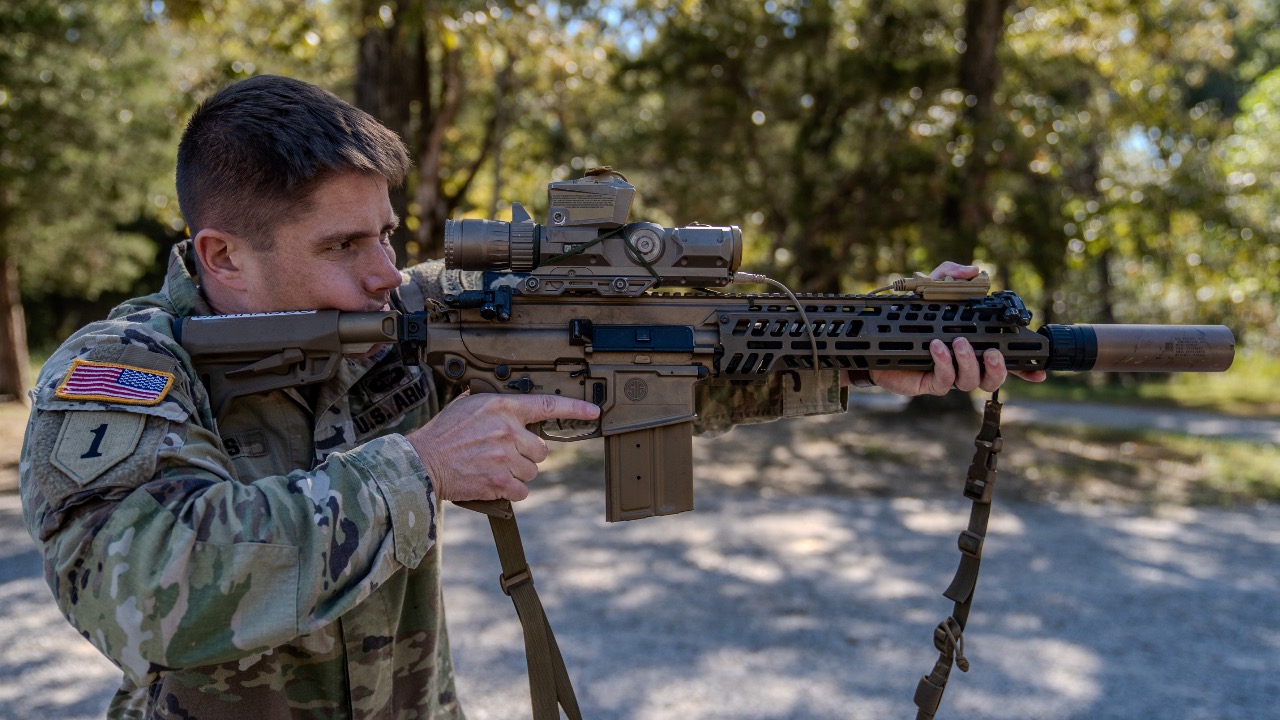
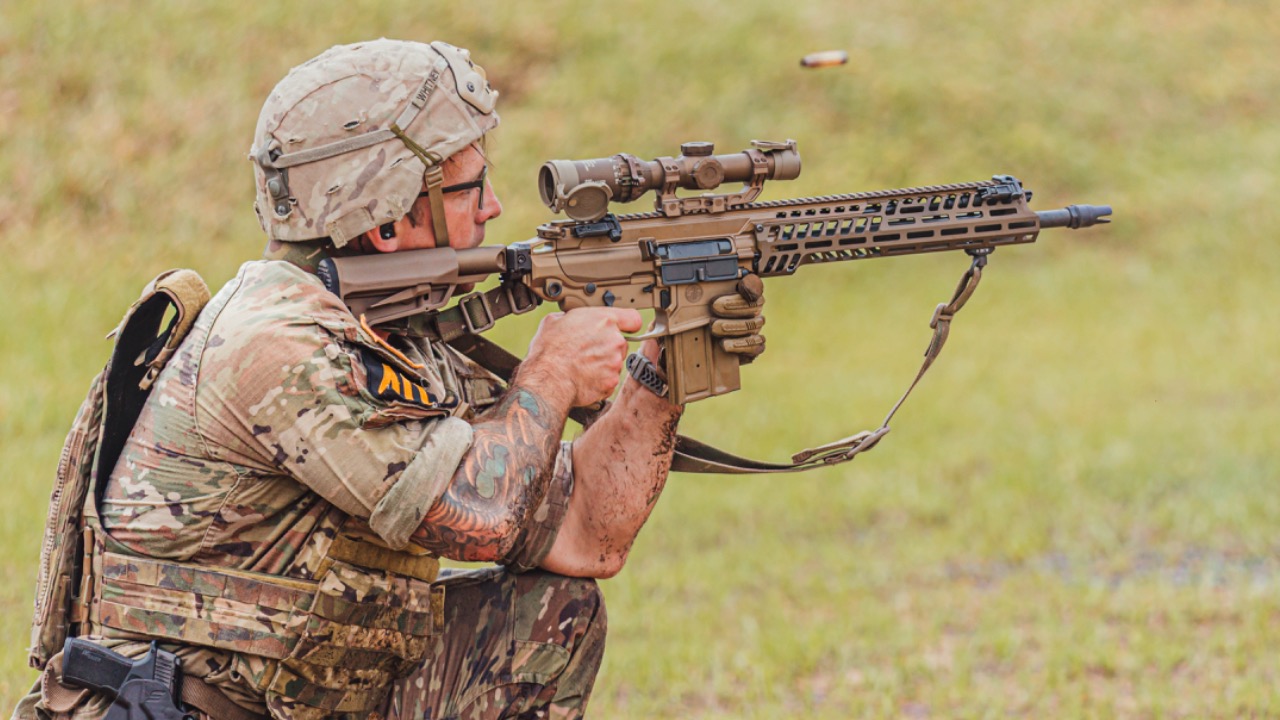
The XM7 grew out of the Next Generation Squad program, an effort to overhaul the Army’s core small arms rather than bolt incremental upgrades onto the M4 and M249. Under the NSGW framework, the service sought a new rifle and automatic rifle built around a common 6.8 millimeter cartridge, paired with advanced fire control optics. The XM7, the military variant of the Sig MCX Spear, emerged from that competition as the selected rifle, while a companion automatic rifle and a family of optics round out the system.
Program documents and allied-language entries describe how NSGW, sometimes referenced as the 次世代分隊火器プログラム, aims to give a nine-person squad a common ballistic baseline at significantly longer distances than 5.56 millimeter weapons. The linked rifle and automatic rifle are meant to share magazines and ammunition, simplifying logistics while raising the squad’s ability to engage enemies who are using improved body armor and fighting from extended ranges.
From M4A1 workhorse to 6.8 millimeter heavyweight
For three decades, the M4A1 defined the American infantry rifle, prized for its light weight, compact size, and compatibility with a wide range of accessories. The XM7 keeps the familiar general layout but shifts to a piston-driven system and a larger cartridge, changes that reflect lessons from Iraq and Afghanistan where adversaries often fought from beyond 5.56 millimeter’s most effective distances. Commentators have described the XM7 as a modernized evolution of the M4 platform, based on the SIG design lineage but scaled for higher pressures and energy.
That shift is now official. The U.S. Army officially to replace the M4A1 in combat units, with early fielding focused on close combat formations. PEO Soldier’s published specifications put the M7 at 6.8x51mm caliber, 8.4 pounds, and 31 inches in length, with the system growing to 14 pounds when fully loaded with the M157 optic and accessories. That weight is a stark contrast with a bare M4A1 and signals a deliberate trade: soldiers will carry fewer but more capable rounds, backed by optics designed to help them exploit the rifle’s extended reach.
The .277 Fury cartridge and the armor problem
The XM7’s most radical change is its ammunition. Instead of 5.56×45 millimeter NATO, the rifle fires a high-pressure 6.8×51 millimeter round derived from SIG’s hybrid-case .277 Fury design. Technical descriptions explain that this cartridge uses a steel base and brass body to contain chamber pressures significantly higher than traditional brass alone, which allows the round to push a relatively small-diameter bullet at very high velocities. The result is energy at distance that rivals or exceeds 7.62×51 millimeter, but in a slightly slimmer package.
Advocates argue that this energy is the real answer to modern body armor. Analysis of the XM7 notes that the new 6.8 millimeter projectile is intended to stay supersonic far beyond typical 5.56 engagement ranges and to penetrate body armor that can stop legacy rounds. One assessment of the XM7 Next Generation characterizes the system’s appeal in simple terms, highlighting the ability to defeat contemporary armor where 5.56 millimeter struggles. That focus on armor penetration explains why the Army accepted higher recoil and heavier ammunition, betting that survivability in high-intensity conflict depends more on first-round effect than on raw magazine count.
Fielding, training, and early soldier feedback
The shift from M4A1 to XM7 is not just a paper decision; units are already training on the new rifle. At Fort Campbell, soldiers have conducted live-fire events that pair the 6.8 millimeter rifle with matching automatic rifles, reinforcing that the transition is as much about ammunition and squad tactics as it is about a single weapon. Reporting from those events emphasizes that the move from 5.56mm to 6.8mm ammo is intended to create a family of squad-level weapons that share a common caliber and deliver consistent performance across roles.
Formal testing has been extensive. The XM7 began field testing in early 2024, and assessments describe more than 25,000 hours of testing across the rifle, ammunition, and optics. Coverage of what soldiers think notes that early reviews of the XM7 have been largely positive, with troops praising its accuracy, controllability in semi-automatic fire, and the clarity of the M157 fire control optic. At the same time, marksmanship instructors highlighted in M7 training material have had to adjust doctrine to account for heavier weapons, different recoil impulses, and new ballistic data, a reminder that technology alone does not deliver lethality without updated training.
Tradeoffs, debates, and what changes at squad level
The XM7 has ignited debate inside and outside the Army over weight and ammunition capacity. A bare M7 at 8.4 pounds, plus a 14 pound fully equipped system, means individual soldiers are carrying more rifle weight before adding body armor, radios, and other gear. Discussions among shooters, including those highlighted in community forums that compare the XM7 vs. M4, often center on the reality that 6.8 millimeter magazines hold fewer rounds and weigh more per cartridge, which could reduce the total ammunition a rifleman can carry on long patrols. Critics worry that in close urban fights, where volume of fire still matters, that trade may feel painful.
Supporters counter that the XM7 is about changing how squads fight, not just swapping rifles. Official comparisons from the Minnesota Army National Guard describe the XM7 vs. M4 as an evolution in action, highlighting a caliber upgrade, more distance, and more impact. The idea is that squads equipped with M7 rifles and matching automatic rifles can engage targets effectively at ranges where adversaries previously felt safe, while the advanced optics reduce the number of rounds needed to achieve hits. That logic is echoed in technical writeups of the M7 rifle, which stress compatibility with SR-25 pattern magazines and integration with the M157 optic as part of a system-level approach.

Leo’s been tracking game and tuning gear since he could stand upright. He’s sharp, driven, and knows how to keep things running when conditions turn.