Trump Blasts Ally as “Clueless”: Germany’s Chancellor Says US “Humiliated” by Iran
Tensions between Washington and Berlin flared into public view this week over how to handle Iran. President Donald Trump fired back at German Chancellor Friedrich Merz after the chancellor openly questioned American efforts in the Middle East. Merz, speaking in Germany, described the United States as appearing outmaneuvered in talks with Tehran. Trump, posting on his social media platform, dismissed the criticism and turned the focus back on Germany itself. The exchange reveals real friction among key allies at a moment when negotiations with Iran remain stuck and the stakes involve regional stability and nuclear concerns.
The Chancellor’s Address in His Home District
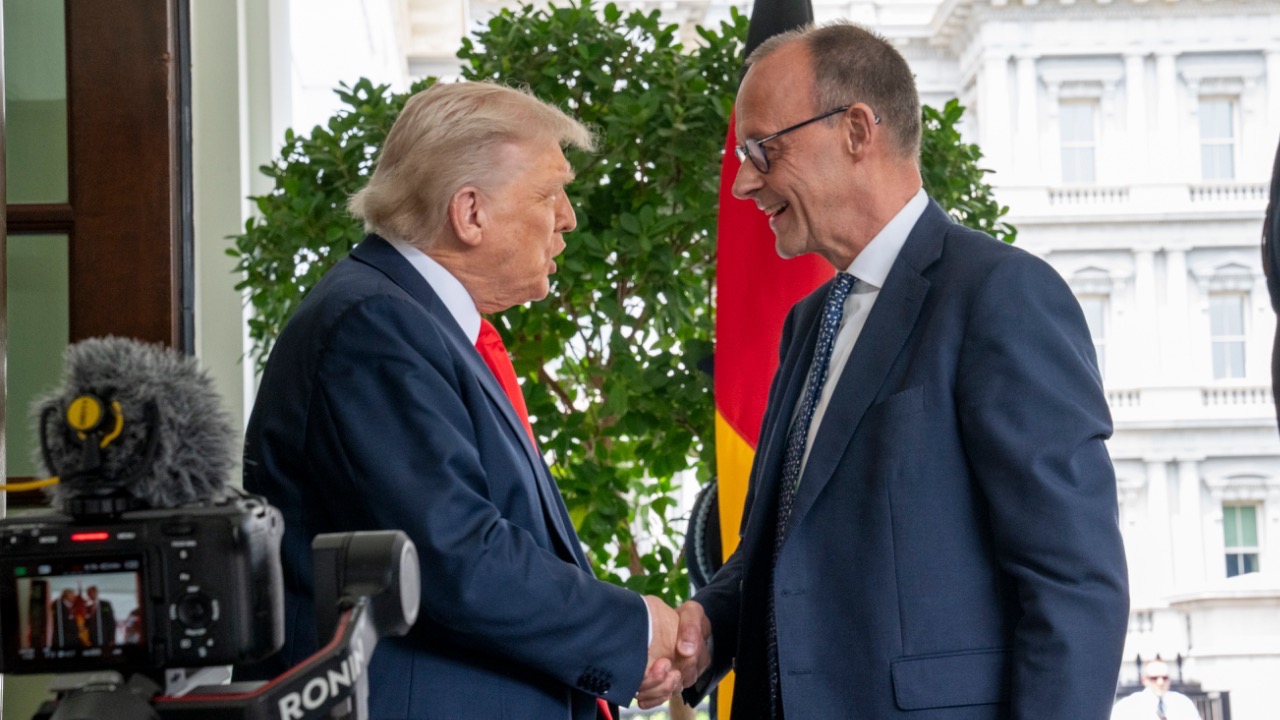
Friedrich Merz chose a familiar setting to share his concerns when he spoke to students in Marsberg. He laid out his view that the American side lacked a clear plan once it engaged with Iranian officials. You notice how he framed the situation as one where Tehran held the upper hand through its representatives, especially those tied to the Revolutionary Guards.
Merz stressed that entering these kinds of talks demands an exit path as much as an entry one. His comments came amid reports of stalled progress and repeated trips that yielded little visible movement. The chancellor presented his thoughts as observations from someone watching a close partner navigate a complex challenge, rather than as an attack. Yet the wording carried weight because it came from the leader of a major NATO member that has supported American positions in the past.
Criticism Focused on American Strategy in the Region
Merz described the United States as facing humiliation from Iranian leadership during the negotiations. He pointed to what he called the absence of a coherent approach from Washington. In his telling, the Iranians appeared stronger than expected and exploited that edge at the table.
You pick up on the practical tone he used with the students. He avoided broad accusations and stuck to the mechanics of conflict resolution. Getting in proves easier than getting out, he noted, echoing a point many diplomats have made over the years about prolonged engagements. The remarks landed at a time when energy prices and security in key waterways like the Strait of Hormuz remain sensitive topics for European economies.
How the President Chose to Reply Online
Donald Trump responded directly through his Truth Social account the day after Merz spoke. He labeled the German chancellor as someone who simply does not understand the dynamics at play. The president argued that allowing Iran a nuclear weapon would endanger the entire world by holding it hostage to the regime.
His post defended the current American actions as overdue steps that previous leaders had failed to take. Trump suggested that Merz overlooked the risks involved and instead focused on criticism. The reply carried the sharp edge typical of the president’s communication style when he feels an ally has crossed a line. It shifted attention from the negotiations themselves to the critic’s judgment.
Pointing Fingers Over Potential Nuclear Developments
Trump highlighted what he saw as Merz accepting the idea of Iran acquiring nuclear capability. He warned that such an outcome would change the global balance in dangerous ways. The president positioned his administration’s moves as necessary to prevent that scenario from unfolding.
In the same message, he reminded readers that he was actively addressing the Iran file in ways others had not. You sense the contrast he drew between his approach and what he viewed as passive acceptance from the German side. The nuclear angle remains central to why these talks matter, given Iran’s history with enrichment programs and international monitoring efforts.
Bringing Up Economic Performance in the Response
The president’s post did not stop at policy differences. He tied the chancellor’s remarks to Germany’s broader economic struggles. Trump noted that the country has faced difficulties in recent years, linking them to what he called poor leadership choices.
This addition broadened the exchange beyond Iran and into domestic territory. You see how it reframed the conversation as one where Merz lacked standing to lecture the United States. Germany has dealt with industrial slowdowns and energy costs heightened by global events, facts that Trump seized on to underscore his point about competence.
Background on the Stalled Discussions with Iran
Talks between the United States and Iran have dragged on without clear breakthroughs in recent weeks. Reports indicate repeated rounds of indirect contacts, sometimes involving travel to neutral locations like Islamabad. Progress has proven elusive, with both sides accusing the other of inflexibility.
The context includes longstanding disputes over Iran’s nuclear program, regional influence, and security in the Persian Gulf. European allies have watched these developments closely because any escalation affects trade routes and energy supplies. Merz’s comments reflected growing impatience in some capitals over the pace and direction of American diplomacy on the issue.
Impact on the Partnership Between the Two Countries
Public disagreements like this one test the strength of the transatlantic relationship at a delicate time. Germany and the United States share deep economic and security ties through NATO and bilateral trade. When leaders trade criticisms openly, it raises questions about coordination on other files.
You can trace similar moments in the past when policy differences spilled into view. The current episode stands out because it involves a core national security concern rather than trade tariffs or defense spending alone. Both sides continue to express support for shared goals in principle, yet the tone suggests underlying strain that diplomats will need to manage quietly.
What Analysts Are Saying About the Public Spat
Observers note that Merz’s remarks broke from the usual diplomatic restraint shown by German chancellors toward the United States. Some see it as an attempt to signal frustration shared by parts of the European Union over the handling of Iran. Others view Trump’s reply as consistent with his preference for direct confrontation over private channels.
The episode has drawn attention to how allies communicate when interests diverge. Analysts point out that Germany has backed certain American initiatives in the region before, including efforts to secure shipping lanes. The public nature of the clash makes reconciliation more complicated but also forces both governments to clarify their positions sooner rather than later.
Broader Questions About Alliance Cohesion
Alliances thrive on alignment, yet they also allow room for honest disagreement when strategies differ. This exchange between Trump and Merz brings those dynamics into focus. It underscores the challenge of managing a multipolar world where no single partner holds all the cards on every issue.
You recognize that the Iran situation sits at the intersection of nuclear nonproliferation, energy security, and great-power competition. How Washington and Berlin resolve their current differences will influence future cooperation on everything from defense budgets to sanctions policy. For now, the two leaders have staked out their views, leaving room for quieter follow-up talks behind the scenes.

Asher was raised in the woods and on the water, and it shows. He’s logged more hours behind a rifle and under a heavy pack than most men twice his age.