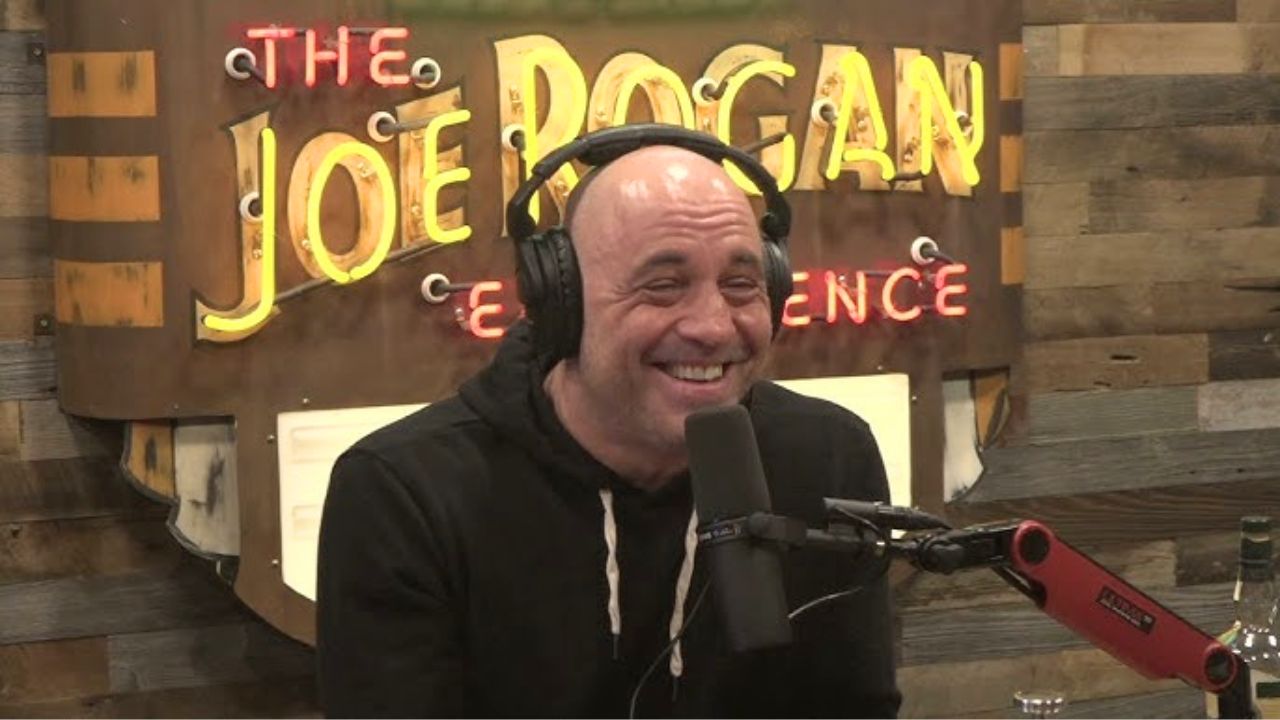
Joe Rogan expresses shock at poll revealing significant number of Americans believe at least one Donald Trump assassination attempt was staged
Joe Rogan reacted with visible disbelief after learning about a new poll suggesting a sizable share of Americans think at least one attempt on Donald Trump’s life was staged. His response underscored a collision of celebrity commentary, political violence and public distrust that has become increasingly hard to ignore.
The exchange, which unfolded on his influential podcast, quickly moved beyond shock. Rogan and his guest used the poll as a springboard into a broader conversation about conspiracy thinking, partisan media, and how many people now assume that even an assassination attempt might be theater rather than reality.
What happened
During a recent episode of “The Joe Rogan Experience,” the host was told about survey results indicating that a significant number of Americans believe at least one of the assassination attempts against Donald Trump was staged. According to a report on the discussion, Rogan appeared stunned as the figures were read aloud and then repeated them back to make sure he had heard correctly, framing the poll as evidence of how far public suspicion has spread in the political arena.
The conversation, described in detail by one account of the episode, unfolded in Rogan’s typical long-form style. After the initial surprise, he and his guest circled around the numbers, trying to understand how a scenario that once would have sounded fringe could now attract substantial support in mainstream polling. Rogan, who often positions himself as skeptical of official narratives, signaled that even he found the idea startling when attached to such a large share of respondents.
Rogan’s guest used the poll to argue that a major portion of the electorate has lost confidence in what they see and hear about political violence. The pair discussed how, in their view, years of partisan spin, selective coverage and online rumor have produced an environment where a deadly attack is not automatically accepted as genuine by a meaningful slice of the public. They treated the poll not as an isolated curiosity but as a data point in a longer trend of distrust.
The podcast segment also touched on Trump’s own role in shaping how his supporters interpret attacks and threats. Rogan and his guest noted that Trump has frequently described himself as a target of a corrupt establishment and has framed legal and political challenges as persecution. In their reading, this narrative primes some backers to see any violent incident involving him either as proof of that persecution or, paradoxically, as something that might be manipulated by hidden actors for political gain.
The conversation also acknowledged that Trump is a uniquely polarizing figure across the broader public. Rogan’s reaction suggested that disbelief in the authenticity of assassination attempts is not confined to one side of the aisle. Instead, the poll numbers were presented as cutting across party lines, with both critics and supporters of the former president apparently willing to entertain the idea that at least one attempt could have been orchestrated or exaggerated for effect.
Rogan’s show, with its large and politically diverse audience, gave the poll an amplifier it would not have had on its own. By treating the numbers as both shocking and worthy of extended discussion, the host helped move the survey from a niche data point into a wider conversation about what Americans are prepared to believe about violence directed at national political figures.
Why it matters
The reaction on Rogan’s podcast matters first because of the platform itself. “The Joe Rogan Experience” reaches millions of listeners, many of whom treat it as a primary source of political and cultural commentary. When Rogan highlights a poll suggesting that a notable share of Americans think an assassination attempt on Trump might have been staged, he is not only reporting on public skepticism, he is also shaping how that skepticism is understood and discussed.
The poll’s core finding, as relayed in the conversation, points to a deeper fracture in public trust. Assassination attempts used to be regarded as clear-cut events, with disagreement focused on motives or security failures rather than on whether the attack happened as described. The idea that a measurable portion of the country suspects staging or manipulation signals a shift in how citizens approach any high-stakes political incident. Many no longer start from the assumption that the basic facts are shared.
This erosion of trust has practical consequences. When people believe that a violent attack on a political figure might be fake or orchestrated, it becomes harder to build consensus around responses, whether they involve security changes, legal reforms, or rhetorical de-escalation. If one group sees a shooting as a genuine act of political violence and another sees it as theater, they will not agree on what should happen next, or even on who is at risk.
The dynamic also feeds directly into the ecosystem of conspiracy theories that has grown around Trump and American politics more broadly. For years, online communities have speculated about “false flag” operations and staged events, often with little or no evidence. A poll that captures a sizable minority endorsing the idea of a staged assassination attempt on a former president suggests that such theories are no longer confined to fringe message boards. They have migrated into mainstream opinion, where they can influence voting behavior and civic engagement.
Rogan’s own posture in the conversation illustrates a second layer of significance. He is known for questioning official narratives and for giving airtime to guests who challenge conventional wisdom. Yet in this case, he reacted with clear surprise that so many Americans would go as far as to suspect staging in an assassination attempt. That reaction hints at a threshold, even among skeptics, beyond which disbelief in institutions begins to look destabilizing rather than healthy.
The episode also highlights how political violence and media coverage interact. Rogan and his guest talked about how graphic footage, selective editing and rapid social media sharing can make any incident feel suspect. When clips of an attack circulate out of context, viewers fill in the gaps with their own assumptions. If they already distrust news organizations, they are more likely to reach for explanations that include staging, cover-ups or hidden agendas.
This cycle is reinforced by partisan media incentives. Outlets that cater to specific ideological audiences often frame incidents involving Trump in ways that confirm preexisting beliefs. Supportive audiences may be told that attacks are proof of a relentless campaign against him, while critical audiences may be primed to see them as distractions or manipulations. In that environment, a poll showing broad suspicion about authenticity reflects not only public attitudes but also the information streams that feed them.
The stakes are especially high because the subject is a former president who remains central to national politics. Trump’s continued presence in public life means that any threat against him is not just a matter of personal security, it is a flashpoint for partisan conflict. If large numbers of people interpret such incidents through a lens of staging or performance, the risk of escalation grows. Opponents may dismiss genuine threats as political theater, while supporters may see even minor incidents as evidence of existential danger.
There is also a risk to law enforcement and security agencies. When significant portions of the public believe that assassination attempts are staged or manipulated, they may extend that suspicion to the agencies tasked with preventing and investigating those attacks. That can erode cooperation, reduce respect for protective measures, and fuel narratives that security services are either complicit in plots or engaged in elaborate cover-ups.
Beyond immediate politics, the poll and Rogan’s reaction speak to a broader cultural moment in which factual consensus is increasingly rare. If citizens cannot agree on whether an assassination attempt is real, it becomes difficult to maintain a shared sense of reality around less dramatic issues such as economic policy or public health. The conversation on the podcast, by treating the poll as both alarming and believable, captured how normalized this fragmentation has become.
What to watch next
The first thing to watch is whether more detailed polling replicates or refines the numbers that startled Rogan. The survey he discussed captured a snapshot of opinion, but follow-up research could show whether belief in a staged attempt on Trump is growing, shrinking or holding steady. Pollsters may also begin to ask more granular questions, such as whether respondents think an entire incident was fabricated, partially staged, or simply misrepresented by media or officials.
Another key question is how political leaders respond, if at all, to the idea that a notable share of the public doubts the authenticity of attacks on a former president. Trump and his allies could choose to highlight such skepticism as proof that people do not trust the establishment, or they might distance themselves from the most extreme claims in an effort to appear more grounded. Their choices will influence whether these theories stay on the margins or move closer to the center of partisan messaging.
Media behavior will also be crucial. If outlets treat the poll and Rogan’s reaction as a curiosity and move on, the moment might fade. If they use it as an entry point into deeper reporting on conspiracy culture and distrust, the public conversation could shift toward understanding why so many people are ready to believe that an assassination attempt might be staged. Long-form investigations into how specific incidents were covered, including what was reported accurately and what was exaggerated or corrected later, could either reinforce or challenge the skepticism captured in the poll.
Rogan’s future handling of similar topics will be another indicator. He has the option to invite guests with expertise in political violence, security, and disinformation to unpack why these beliefs take root. If he does, his show could become a venue for testing and challenging the narratives that fuel suspicion. If instead he leans into the shock value of such polls without deeper scrutiny, that choice could normalize the idea that disbelief in basic facts is simply part of the entertainment.
Social media platforms will remain a central battleground. Clips of Rogan’s reaction, as well as commentary about the poll, are likely to circulate widely. The way algorithms promote or downrank discussions of staged assassination attempts will shape how often users encounter these ideas. Platforms that have already struggled with misinformation face a difficult balance between allowing political speech and curbing content that encourages people to reject verified events in favor of baseless speculation.
Security agencies and watchdog groups may quietly adjust their own strategies in response to rising public suspicion. If a large share of citizens is inclined to see attacks as staged, officials might invest more in transparent briefings, detailed timelines and the release of corroborating evidence when incidents occur. That kind of openness can sometimes counteract conspiracy theories, although it can also be dismissed by those who are already convinced that any official statement is part of the plot.

Leo’s been tracking game and tuning gear since he could stand upright. He’s sharp, driven, and knows how to keep things running when conditions turn.