Why old-school calibers still outshine the new kids on the block
Every few years, a new cartridge shows up with a glossy press release and big promises. Flatter, faster, softer recoil, better ballistics—on paper, it all sounds convincing. But when seasons stack up and tags get filled, a pattern keeps repeating. The cartridges that have been around for decades keep doing the work with less fuss.
Old-school calibers earned their place the hard way. They’ve been carried through bad weather, fed whatever ammo was on the shelf, and used by hunters who didn’t have time to chase trends. When reliability, versatility, and real-world performance matter more than charts, these cartridges keep proving why they refuse to fade away.
.30-06 Springfield

You’ve heard it a thousand times, and there’s a reason for that. The .30-06 still handles nearly any North American game without asking for special treatment. Bullet weights range wide, factory ammo is everywhere, and performance stays predictable across distances.
When conditions aren’t perfect, the .30-06 keeps delivering. It doesn’t need long barrels or tuned loads to work well. You zero it, hunt with it, and trust it. New cartridges may post cleaner numbers, but very few offer the same balance of reach, authority, and flexibility when real hunting replaces theory.
.270 Winchester
The .270 Winchester built its reputation on flat trajectories and dependable terminal performance. Long before laser rangefinders, it gave hunters room for error while still hitting hard enough to anchor deer and elk cleanly.
Even today, the .270 holds its own. Recoil stays manageable, ammo is widely available, and accuracy remains easy to achieve with factory loads. It doesn’t demand specialized bullets or careful tuning. While newer calibers chase efficiency, the .270 keeps doing what it always has—placing shots where you expect them to land.
.308 Winchester
The .308 Winchester thrives because it stays practical. It feeds smoothly, shoots consistently, and performs well from short barrels. Hunters appreciate that it doesn’t punish them at the bench or in the field.
What keeps the .308 relevant is its balance. It carries enough energy for big game while staying easy to manage. Ammo availability never becomes a concern, and performance remains steady across platforms. While newer cartridges focus on long-range efficiency, the .308 keeps delivering predictable results under everyday hunting conditions.
.30-30 Winchester
The .30-30 Winchester doesn’t pretend to be something it isn’t. Inside its range, it works with a level of certainty that modern cartridges sometimes overcomplicate. Woods hunters still rely on it because it fits the terrain.
Short barrels, mild recoil, and reliable expansion make the .30-30 effective where shots happen fast. It doesn’t require dialing turrets or memorizing charts. New rounds may stretch distance, but few match the confidence the .30-30 provides when shots are close and decisions happen quickly.
.45-70 Government

The .45-70 Government proves that speed isn’t everything. What it delivers is momentum, penetration, and authority at close to moderate distances. In thick cover or big-boned game, that matters more than velocity.
Modern loadings have expanded its usefulness, but even traditional loads still get the job done. The cartridge performs well in short rifles and harsh conditions. While newer options chase efficiency, the .45-70 keeps solving the same problems it always has with straightforward, reliable performance.
.243 Winchester
The .243 Winchester earned trust by being easy to shoot well. Mild recoil, flat shooting behavior, and consistent accuracy made it a favorite for deer and varmints alike. It doesn’t intimidate shooters or demand perfect form.
What keeps the .243 relevant is how forgiving it is. Shot placement stays clean, and performance remains reliable with factory ammunition. Newer small-caliber options promise similar results, but few match the balance of control and effectiveness the .243 has delivered for generations.
7mm Remington Magnum
The 7mm Remington Magnum showed hunters what long-range performance looked like before it became fashionable. Flat trajectories and strong retained energy made it effective well beyond typical hunting distances.
Despite its age, it still performs without drama. Factory ammo options remain excellent, and accuracy comes easily. It may not wear a trendy name, but when wind and distance enter the picture, the 7mm Rem Mag continues to show why it set the standard many newer cartridges are still chasing.
.300 Winchester Magnum
The .300 Winchester Magnum earned respect by handling large game at extended ranges without excuses. Power, reach, and reliability define its role, and it continues to fill that role cleanly.
It isn’t gentle, but it’s honest. When you need authority across open country, the .300 Win Mag delivers with predictable results. Newer magnums may promise refinements, but few match the proven track record this cartridge has built over decades of hard hunting.
.35 Whelen
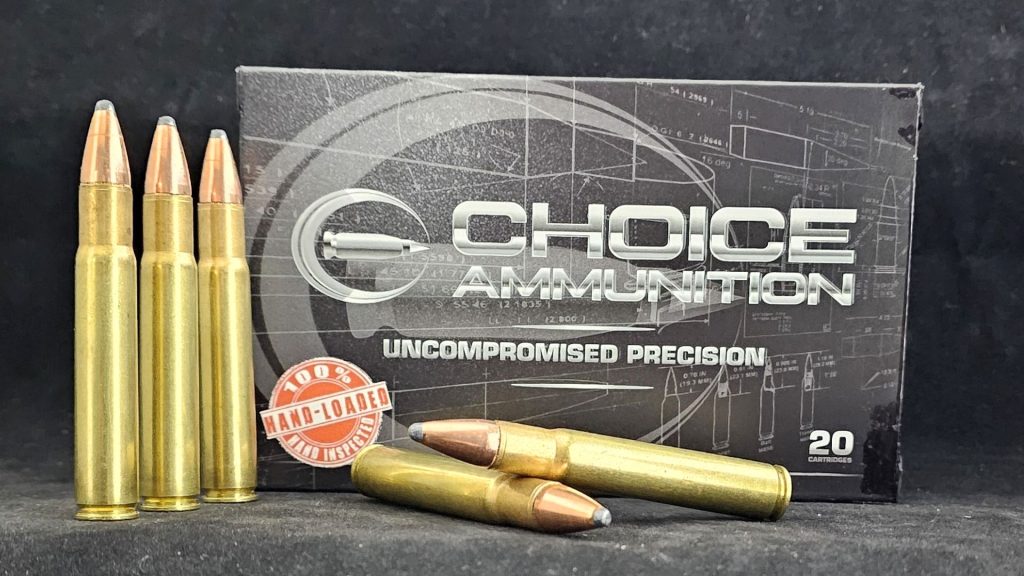
The .35 Whelen never needed mass appeal to work. It delivers heavy bullets with controlled recoil and excellent penetration, especially in timber and broken terrain. Hunters who use it tend to stick with it.
What keeps it relevant is how well it handles real-world shots. It doesn’t rely on extreme velocity. Instead, it delivers consistent terminal performance. While modern cartridges chase efficiency metrics, the .35 Whelen focuses on putting animals down decisively and doing it without fuss.
.375 H&H Magnum
The .375 H&H Magnum remains a benchmark for dangerous and large game cartridges. Its reputation comes from reliability under pressure, not marketing cycles. Feeding is smooth, recoil is manageable for its power, and performance is consistent.
Even today, guides trust it because it works across conditions and continents. New cartridges attempt to refine the same concept, but few surpass the balance the .375 H&H achieved long ago. When the stakes are high, proven performance matters more than novelty.
.22 LR
The .22 LR might be the oldest cartridge on this list, but its usefulness hasn’t faded. Training, small game, pest control—its role remains unmatched. Availability and affordability keep it relevant year after year.
New rimfire designs come and go, but the .22 LR stays dependable. Accuracy, low recoil, and broad firearm support make it irreplaceable. No modern alternative has matched its versatility or staying power, and that alone explains why it continues to dominate.
.44 Magnum
The .44 Magnum earned its reputation in both revolvers and carbines. Power at practical distances and dependable penetration made it effective on game where shot placement matters most.
In the field, it delivers straightforward performance without requiring specialized gear. New handgun and straight-wall cartridges try to fill similar roles, but the .44 Magnum’s consistency and availability keep it relevant. It remains a cartridge you can trust when conditions aren’t ideal and shots happen fast.
Old-school calibers don’t survive because of nostalgia. They survive because they work—season after season, in real conditions, with real hunters behind the trigger.

Asher was raised in the woods and on the water, and it shows. He’s logged more hours behind a rifle and under a heavy pack than most men twice his age.